Table of Contents
- The Twilight of the Golden Horde: A Fractured Empire in the 1390s
- The Storied Rise of a Mongol Legacy
- Sarai, the Heart of the Horde: From Glory to Discord
- Crimea’s Strategic Significance: Crossroads of Cultures and Power
- The Seeds of Fragmentation: Internal Struggles and External Pressures
- Tokhtamysh and Timur: The Ultimate Collision of Titans
- The 1391 Civil War: Rivals in the Shadow of Sarai
- Political Fragmentation and the Rise of Regional Khanates
- The Crimean Peninsula’s Emergence as a Semi-Autonomous Player
- The Role of the Genoese Colonies and European Powers
- Economic Decline and Shifting Trade Routes
- Cultural and Religious Transformations in the Horde’s Remnants
- The Fate of the Tatar Aristocracy and the Rise of Uzbek Power
- The Mongol Legacy: Echoes Through Eastern Europe and Russia
- Conclusion: Fragmentation as a New Beginning
- FAQs
- External Resource
- Internal Link
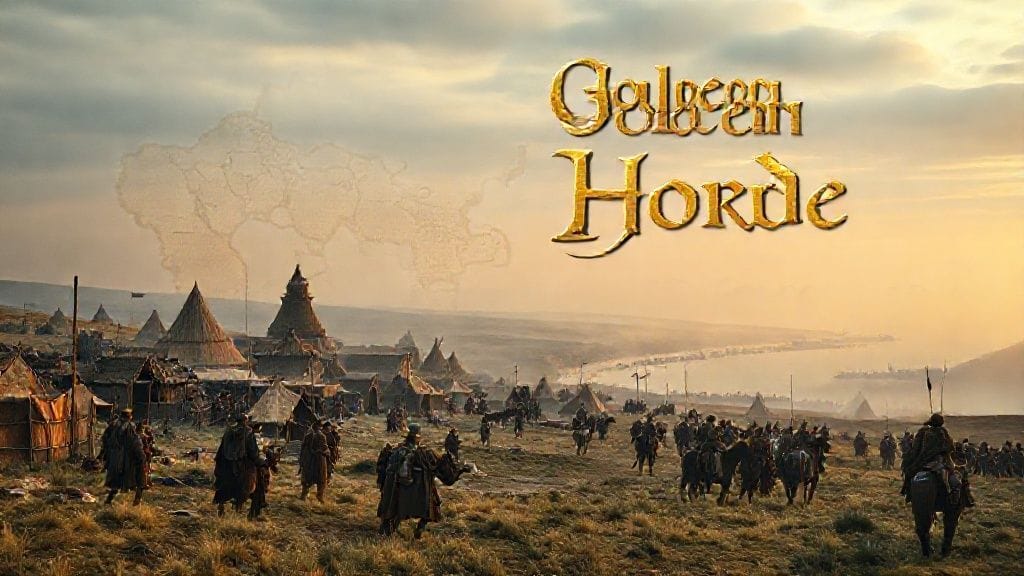
The shadow of dusk fell over the vast steppes in the 1390s, stretching an empire once unparalleled across Eurasia into the folds of division and uncertainty. The Golden Horde, a bastion of Mongol dominance grounded in power and wealth, was no longer an unassailable force but a mosaic crumbling beneath the weight of its own ambitions, conflicts, and external threats. At the core, the storied city of Sarai—the imperial capital—flickered as a symbol of decay, while the Crimean peninsula, perched at the crossroads of empires, began to carve out a destiny of its own. This was a time when powerful khans wrestled not only with each other but with the haunting question: Could the Golden Horde endure or was fragmentation its irreversible fate?
The Twilight of the Golden Horde: A Fractured Empire in the 1390s
If the 13th century had been the age of Mongol conquest, then the late 14th century was a chapter inked with doubt and conflict. The Golden Horde, forged by Batu Khan in the aftermath of the legendary campaigns of Genghis Khan, was by then a sprawling empire stretching from the Caspian Sea to the edges of Eastern Europe. Sarai, the glittering jewel on the Volga, once embodied the Horde’s shimmering might—its marble palaces, bustling bazaars, and thriving trade routes testified to an empire at the zenith of influence. But by the 1390s, that grandeur was marred by civil wars, poaching claimants, and the bruising attacks of external enemies, not least of all — Timur the Lame.
The Golden Horde’s fragmentation during this decade was not just a political disintegration but a profound cultural and economic upheaval. The steppes, once united under a single khan’s banner, now witnessed the rise of local warlords and a shifting balance of power. Crimea, with its natural defenses and wealth, was emerging as a key pivot point, gradually slipping away from Sarai’s fading grip.
The Storied Rise of a Mongol Legacy
To grasp the magnitude of the Golden Horde’s fragmentation, one must first appreciate the empire’s meteoric rise. It was the legacy of Genghis Khan’s unmatched vision of unification and conquest; his grandson Batu Khan unleashed armies north of the Caucasus into the Rus’ principalities and beyond, establishing the Golden Horde by the mid-13th century.
The Horde was a fusion of Mongol warrior traditions and the practicalities of ruling diverse peoples—Slavs, Turks, Iranians, and more. It evolved into a khanate that governed through a combination of military might, tribute, and alliances. Sarai emerged as the capital, a pulsating center of administration and trade, connecting the great Silk Road routes westward.
This vast domain thrived for decades, commanding attention and respect from Moscow to Byzantium. But the very diversity and vastness that made the Horde strong also contained the seeds of its challenge—the difficulty of maintaining centralized control over distant lands and peoples.
Sarai, the Heart of the Horde: From Glory to Discord
Sarai, nestled on the banks of the Volga River, was more than a capital city; it was a symbol of Mongol civilization's adaptation and endurance. Its grand palaces, elaborate mosques, and vibrant bazaars made it one of medieval Eurasia's richest urban centers.
Yet by the 1390s, Sarai reflected the larger fragility of the Horde. Internal strife among competing factions sparked frequent changes in leadership. The once tightly woven structure of governance unraveled as nobles and khans alike pursued their own agendas. Each coup or assassination sent ripples through the city’s markets and courts. The authority of the khan waned, replaced by the clamor of power-hungry warlords.
It was amid this turmoil that rivalries intensified, foreshadowing the collapse of a unified Golden Horde. Sarai was no longer the unchallenged heart but a contested prize.
Crimea’s Strategic Significance: Crossroads of Cultures and Power
Meanwhile, Crimea – a land of rugged coastlines, fertile plains, and the gateway between Europe and Asia – was quietly asserting its importance. Throughout the 14th century, it evolved from a peripheral outpost to a fulcrum of economic and political influence.
Its proximity to the Black Sea enabled burgeoning maritime trade, especially through the Genoese colonies of Kaffa and other ports, linking Italian merchants with the Eurasian interior. The peninsula also became a melting pot of cultures: Tatars, Greeks, Italians, Armenians, and others intertwined in commerce and diplomacy.
In the 1390s, as Sarai’s authority faltered, Crimea’s khans and local leaders seized the opportunity to expand their autonomy, slowly breaking free from centralized rule. The stage was being set for Crimea’s rise as an independent or semi-independent khanate.
The Seeds of Fragmentation: Internal Struggles and External Pressures
The dissolution of the Golden Horde did not happen overnight. It was the result of accumulated tensions and challenges, both internal and external.
Internally, the Horde grappled with dynastic disputes. The line of succession was often blurred, bringing forth rival khans each supported by factions within the aristocracy. The Horde’s vastness made imposing authority difficult, encouraging regional leaders to act with increasing independence.
Externally, the arrival of Timur the Lame (Tamerlane) on the scene would prove fateful. His campaigns devastated the Horde’s core, especially in the early 1390s. His forces sacked Sarai, breaking the city’s might and delivering a psychological blow that echoed across the steppes.
Simultaneously, the growing power of the Grand Duchy of Moscow and other Russian principalities undermined the Horde’s suzerainty over Eastern Europe, adding yet another layer of pressure.
Tokhtamysh and Timur: The Ultimate Collision of Titans
Among the most dramatic episodes of the 1390s was the clash between Tokhtamysh, the ambitious khan determined to restore the Golden Horde’s power, and Timur, whose empire stretched across Central Asia and Persia.
Tokhtamysh, once a protégé of Timur himself, had overreached—attempting to unify the Horde and resist Timur’s encroachments. Their conflicts culminated in brutal confrontations, with Sarai caught in the crossfire.
Despite some initial victories, Tokhtamysh’s forces were ultimately routed by Timur’s campaigns, and the Golden Horde’s capital lay in ruins. This humiliation cemented the fragmentation; the Horde’s authority was shattered, and regional leaders grew bolder in asserting independence.
The 1391 Civil War: Rivals in the Shadow of Sarai
Amid the backdrop of external invasions, Sarai also became the setting for an intense civil war. Factions within the Golden Horde fought for control; alliances were fluid, betrayals common.
The 1391 conflict epitomized the loss of centralized power. Khans rose and fell within months. Battles, assassination plots, and intrigue governed the city’s fate.
This civil war did not merely erode political structures; it fractured the societal fabric. Nobles, merchants, warriors—all lived with uncertainty, caught in the maelstrom of instability.
Political Fragmentation and the Rise of Regional Khanates
By the end of the 1390s, it became evident that the Golden Horde would no longer exist as a unified dominion. Instead, the empire splintered into smaller khanates, each vying for survival and dominance.
The Uzbek Khanate emerged as a significant successor state in the east, ruling over much of the Horde’s former heartland. The Crimean Khanate began to grow in the south, establishing its own identity and trading networks. The Kazan and Astrakhan khanates would also arise in the decades to follow.
This fragmentation was not merely a political affair – it marked the rise of distinct cultural and economic centers, each adapting to new realities.
The Crimean Peninsula’s Emergence as a Semi-Autonomous Player
Crimea’s gradual detachment from Sarai’s influence signaled a pivotal shift in the region’s geopolitics. The peninsula, rich in resources, well-positioned for naval trade, and home to diverse peoples, became the platform for a new power center.
The Khans of Crimea maneuvered with skill—balancing relationships with the remnants of the Golden Horde, the Genoese traders, and emerging powers such as the Grand Duchy of Lithuania and the Ottoman Empire.
This set the stage for Crimea’s future as a central player in Black Sea politics, eventually becoming a vassal of the Ottoman Empire in the 15th century, but maintaining considerable autonomy.
The Role of the Genoese Colonies and European Powers
Fascinatingly, the geopolitical fragmentation of the Golden Horde coincided with greater European involvement in the Black Sea region. The Genoese colonies at Kaffa and Caffa were vibrant hubs, funneling goods between East and West.
Their presence affected the Horde’s economy profoundly—sometimes aiding, sometimes interfering with local rulers. These colonies also played a role in the transmission of ideas, goods, and even diseases.
Other powers, including Venice, Lithuania, and Poland-Lithuania, eyed the black sea’s riches. Their ambitions further complicated the Horde’s decline and fragmented political landscape.
Economic Decline and Shifting Trade Routes
The fragmentation in the 1390s mirrored an economic transition. The Silk Road routes centered in Sarai lost some prominence as instability disrupted trade.
Merchants sought safer, more reliable paths, often shifting towards coastal routes through Crimea and the Black Sea ports. This redirection diminished Sarai’s economic clout, accelerating its decline.
The breakdown of a unified empire also affected taxation and tribute collection, with regional khanates struggling to control their respective domains effectively.
Cultural and Religious Transformations in the Horde’s Remnants
The 1390s not only redefined political boundaries but also transformed cultural landscapes. Islam, which had become prominent in the Horde’s elite, continued to spread, integrating with local traditions.
At the same time, the interaction of Mongol, Turkic, Slavic, and European cultures led to a complex tapestry unique to the region. The Golden Horde’s fragmentation allowed for a blossoming of regional identities, languages, and practices.
Religious tolerance was pragmatic; different faiths coexisted despite political turmoil, shaping the cultural pluralism that defined the Crimean peninsula and other successor states.
The Fate of the Tatar Aristocracy and the Rise of Uzbek Power
The Mongol-Tatar aristocracy, once a united ruling elite, found its power diminished as new khanates emerged. Some factions aligned with Timur, others with Tokhtamysh, but the fragmentation dispersed their influence.
Notably, the Uzbeks under Abu’l-Khayr Khan began consolidating power in the eastern reaches, laying foundations for the Uzbek Khanate’s future dominance.
Meanwhile, Crimean Tatars forged new identities linked to their land, detached from the old Horde’s heritage but carrying its cultural legacy.
The Mongol Legacy: Echoes Through Eastern Europe and Russia
As the Golden Horde fractured, its imprint lingered on Eastern Europe and nascent Moscow. The Horde’s decades of dominance shaped Russian political evolution, military organization, and diplomatic strategies.
The weakening of the Horde created opportunities for Moscow’s rise, allowing it gradually to throw off Mongol suzerainty and establish the foundations of the Russian state.
In this sense, the fragmentation was both an end and a beginning—the slow dissolution of Mongol political power gave way to new centers of power and identity that would shape the region’s destiny.
Conclusion: Fragmentation as a New Beginning
The 1390s witnessed the definitive fracturing of the Golden Horde, an empire that had once seemed invincible. Sarai’s fall, Crimean assertion, civil wars, and the shadow of Timur’s conquests all contributed to this profound transformation.
Yet, fragmentation was not merely a tale of decline. It was a moment of rebirth, where new powers, identities, and political configurations emerged. Crimea’s rise, the Uzbek consolidation, and the eventual shaping of Russia’s destiny all trace back to this turbulent decade.
The Golden Horde’s fragmentation reminds us how empires are living organisms—expanding, contracting, evolving. Even in death throes, they seed the future.
FAQs
What was the Golden Horde?
The Golden Horde was a Mongol khanate founded in the 13th century, covering significant parts of Eastern Europe and Central Asia. It was known for its military prowess, trade networks, and cultural fusion.
What caused the fragmentation of the Golden Horde in the 1390s?
Multiple factors contributed: internal dynastic conflicts, the destructive campaigns of Timur, economic decline, and rising regional powers that chipped away at central authority.
Who was Tokhtamysh, and what was his role?
Tokhtamysh was a khan who attempted to restore the Golden Horde’s unity and power but was defeated by Timur, hastening the Horde’s fragmentation.
Why was Crimea important during this period?
Crimea was strategically located for maritime trade and became increasingly autonomous as central control weakened, emerging as a key political and economic player.
How did the fragmentation affect Eastern Europe?
The weakening Horde allowed Russian principalities like Moscow to grow in power, eventually leading to the decline of Mongol dominance over Russia.
What was the cultural impact of the fragmentation?
It led to the development of distinct regional cultures, blending Mongol, Turkic, Slavic, and European influences, with Islam spreading alongside other religions.
Did the Golden Horde completely disappear after the 1390s?
No, successor states like the Uzbek, Crimean, Kazan, and Astrakhan khanates carried on aspects of the Horde's heritage, but the empire as a whole ceased to exist as a unified entity.

