Table of Contents
- A Moment of Crisis: Europe on the Brink, November 1414
- The Great Schism: A Century of Divided Christendom
- Political Turmoil and Ecclesiastical Discord: The Preconditions to Constance
- Calling the Council: Sigismund’s Bold Gamble
- The Arrival at Constance: A Gathering of Nations and Faiths
- Pope John XXIII: The Controversial Pontiff in a Precarious Position
- The Role of the Empire: Sigismund and the Quest for Unity
- The Three Popes: An Unthinkable Reality Fracturing Europe
- The Opening Session: Setting the Stage for Resolution
- The Early Debates: Doctrine, Authority, and Reform
- The Arrest and Trial of Jan Hus: A Test of Conscience and Power
- The Intrigues Behind the Scenes: Factions, Diplomacy, and Pressure
- The Abdication of John XXIII: The Fall of a Pope
- The Resignation of Benedict XIII and Gregory XII: Towards Reunification
- The Election of Martin V: A New Era for the Papacy
- Reform Amid Triumph: The Limits of Change at Constance
- The Aftermath: Ecclesiastical, Political, and Social Consequences
- Jan Hus’s Martyrdom and Its Reverberations in Bohemia and Beyond
- The Legacy of the Council: Precursor to Reformation and Religious Modernity
- Reflections on Unity and Division: Lessons from Constance
- Conclusion: The End of the Schism or a Step Towards New Conflicts?
- FAQs: Understanding the Council of Constance
- External Resource: Wikipedia Link
- Internal Link: Visit History Sphere
1. A Moment of Crisis: Europe on the Brink, November 1414
The cold November air hung heavy over the imperial city of Constance, nestled alongside the tranquil waters of Lake Constance. Slowly, the city’s ancient stones seemed to pulse with tension—not from the chill— but from the enormity of the moment about to unfold within its towering cathedral walls. Delegates from across Europe began to gather, burdened not just by the weight of armies nor wealth, but the spiritual crisis tearing apart Christendom. The Great Schism, which had fractured the papacy for nearly 40 years, had pushed the continent to the edge of despair. Yet amidst freezing winds and the murmured prayers of anxious pilgrims, a fragile hope took shape: could the Council of Constance heal the wounds and reunite the soul of Europe?
Constance was not simply a city now claiming the attention of kings and princes, cardinals and clergy. It was the very crossroads of history, where faith would meet power in a rare and extraordinary dance toward resolution. In November 1414, the weary eyes of Europe turned here, seeking certainty in an age swept by uncertainty.
2. The Great Schism: A Century of Divided Christendom
To grasp the weight of this meeting, we must journey back to the decades prior. The Great Schism, also known as the Western Schism, was no fleeting crisis. It was the long, painful severance of the Catholic Church’s unity, spawning not one but multiple rival popes. The scandal started in 1378 when the return of the papacy from Avignon to Rome ended with the election of Urban VI—an unpopular choice that led dissenting cardinals to elect antipope Clement VII, who established his court back in Avignon. Thus began decades of competing claims to the throne of Saint Peter, polarizing kingdoms, cities, and souls.
By the time 1414 arrived, three men claimed the papal mantle: Gregory XII in Rome, Benedict XIII in Avignon, and John XXIII in Pisa. Each pope had loyal adherents, and the lines of allegiance were drawn with the precision—and ferocity—of battle formations. The spiritual authority of the Church stood disintegrating; faith was weaponized along political lines. Some kingdoms supported Rome, some Avignon, others Pisa, creating an abyss that undermined Christian Europe's very identity.
The schism was not simply ecclesiastical; it splintered Christendom’s psyche, sowing confusion, doubt, and despair. The faithful wondered if the Church could still provide salvation when its shepherds were so divided.
3. Political Turmoil and Ecclesiastical Discord: The Preconditions to Constance
Behind the scenes of spiritual chaos were the turbulent shifts of early 15th-century European politics. The Holy Roman Empire was fragmented; France and England were locked in the continuing turmoil of the Hundred Years’ War; Italy was fractured among powerful city-states; kingdoms like Hungary and Bohemia played their own games of influence. This fractured political landscape impeded any simple resolution—popes and princes were entangled in a web of alliances and rivalries.
Moreover, the rising call for reform—from voices such as John Wycliffe in England to the radical sermons of Jan Hus in Bohemia—signaled that the schism was just one dimension of a deeper crisis. Corruption, moral laxity among clergy, and questions about Church doctrine and practices created an undercurrent of discontent that threatened to explode.
Into this volatile mix stepped Sigismund, King of Hungary and heir to the imperial title of the Holy Roman Empire. He envisioned the Council of Constance as more than a diplomatic meeting—it was a beacon of hope to restore unity and heal the wounds of Christendom.
4. Calling the Council: Sigismund’s Bold Gamble
Sigismund’s call to convene a general council was audacious in scope and ambition. He issued formal summons that began circulating in 1413, proposing an assembly to address the schism and reform pressing abuses. It was not simply ambition to wield imperial power; Sigismund deeply understood the spiritual and political dangers of a divided Church.
"Unity must be restored," he declared, "for the safety of souls and the peace of nations." What gave unique weight to his initiative was that the three claimants to the papal throne reluctantly agreed—though for very different reasons—to attend or be represented at the council, aware that the legitimacy of their reigns was fragile.
The Council promised a historic gathering: multiple kings, princes, cardinals, theologians, and prelates attending under the aegis of an imperial summons and the fraught hope of ending the Schism.
5. The Arrival at Constance: A Gathering of Nations and Faiths
As the final days of 1414 drew near, waves of pilgrims and dignitaries arrived. Constance swelled from a modest town into a bustling center of action where languages mingled and regional customs clashed with ecclesiastical pomp.
The atmosphere was electrifying—excited, tense, sometimes hostile. Noble entourages set up tents and chambers; clergy in resplendent robes processed beneath banners symbolizing realms torn by division. The city’s inns overflowed, while the poorer inhabitants watched with a mixture of awe and anxiety.
Scholars, monks, and lay observers scribbled fervently, keen to participate in the moment when history would be written. The council was not only about theology; it was a stage for power, diplomacy, and ambition.
6. Pope John XXIII: The Controversial Pontiff in a Precarious Position
Among the three popes, John XXIII was perhaps the most flamboyant and divisive figure. Elected by the Council of Pisa in 1410 in an attempt to mend the schism, his election had only added to the confusion by creating a third claimant. His pontificate was marked by personal ambition, scandals, and a lack of effective governance.
John XXIII arrived in Constance with a mixture of bravado and caution. His presence was vital but unwelcome by many who questioned his legitimacy and moral standing. The pope’s survival instincts were acute; he maneuvered carefully, seeking to preserve as much power as possible amid growing calls for his removal.
His eventual fate—arrest and forced abdication during the council—would symbolize the determination of the Church to reclaim its authority and restore order.
7. The Role of the Empire: Sigismund and the Quest for Unity
Emperor Sigismund emerged as the linchpin of the Council—an energetic, often stern figure who embodied both the hope and the frailty of the medieval order. His political acumen and resolute vision made him a natural leader, guiding proceedings toward compromise and resolution.
Despite immense resistance, Sigismund used his influence to mediate between factions, exert pressure on the reluctant popes, and shield reformist voices. His famous journey to Constance, crossing treacherous terrain and dodging political dangers, was itself a powerful act of commitment to peace and ecclesiastical reform.
"Let no man trifle with the peace of the Church and Empire," he reportedly said, reminding all of the high stakes.
8. The Three Popes: An Unthinkable Reality Fracturing Europe
The very notion that Christendom could have more than one pope seemed, to many faithful, a horrendous scandal. Yet by 1414, Europe was suffocated by this reality. Gregory XII represented the Roman line; Benedict XIII held Avignon; and John XXIII sprang from Pisa.
Each pope’s claim had complex layers of legitimacy, backed by different nations and factions. Their simultaneous presence fractured kingdoms and parishes, forcing nobles and commoners to declare loyalty along opaque and often dangerous lines.
Addresses made during the Council repeatedly confronted this paradox: how to restore the singular papal authority vital for unity while preserving the dignity and legitimacy of all involved? The answer was neither simple nor painless.
9. The Opening Session: Setting the Stage for Resolution
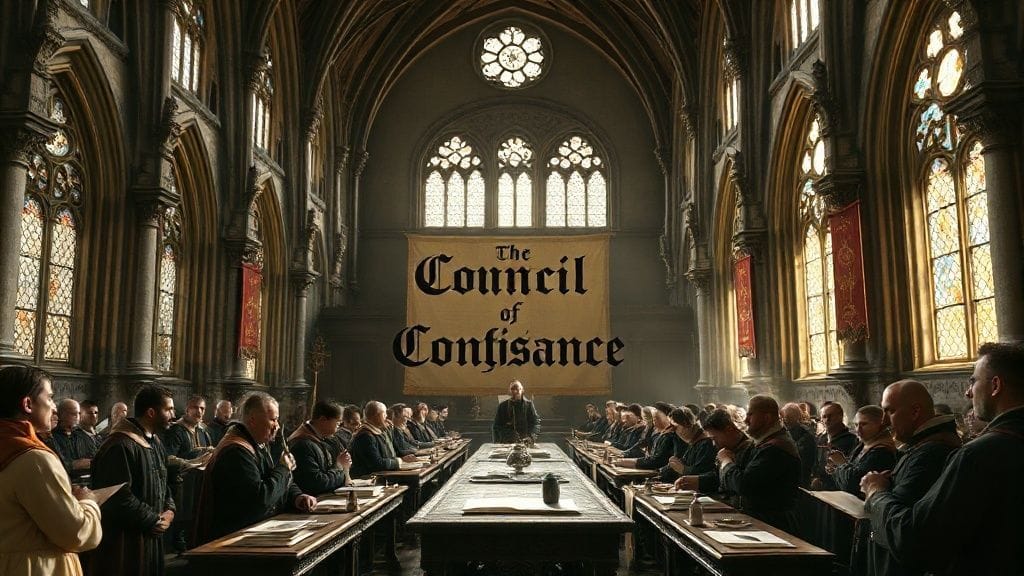
On November 5, 1414, the Council officially opened in Constance’s majestic Cathedral of St. Stephen. The hall was filled with a buzzing mixture of expectation, anxiety, and suspicion.
Sigismund’s opening speech struck a balance of stern admonition and hopeful appeal. He declared the Council’s purpose: to end the Schism and introduce reform. The assembled cardinals and theologians took their seats with heavy hearts.
The tone was grave, as hard truths would have to be faced immediately. Many understood that the Council’s success or failure would shape the continent’s spiritual and political life for generations.
10. The Early Debates: Doctrine, Authority, and Reform
The Council's first weeks were dominated by fierce debates. Some delegates pushed for sweeping reforms addressing clerical abuses—simony, nepotism, and moral decay—that had fueled disillusionment.
Others insisted that solving the Schism must come first and that reforms could not undermine papal authority. Intellectual giants such as Jean Gerson argued eloquently for conciliarism, the principle that a council could have authority over the pope, shaking centuries-old beliefs.
Religious doctrine was scrutinized alongside governance, reflecting the intertwined nature of faith and power.
11. The Arrest and Trial of Jan Hus: A Test of Conscience and Power
Perhaps no episode captured the tension of the Council more than the fate of Jan Hus, a Czech reformer preaching against corruption and doctrinal errors. Initially granted safe conduct by Sigismund to attend and defend his views, Hus instead found himself arrested, tried for heresy, and condemned.
His steadfast refusal to recant and subsequent execution in July 1415 sent shockwaves through Bohemia and the wider world. Hus became a martyr for religious reform and foreshadowed the seismic upheavals of the Reformation a century later.
The Council’s harsh judgment revealed the limits of tolerance—and the fierce grip of traditional power structures.
12. The Intrigues Behind the Scenes: Factions, Diplomacy, and Pressure
Beyond the public sessions, Constance was alive with whispers, alliances, and betrayals. Cardinals lobbied for their own agendas; kings sought advantage; spies and informers prowled the corridors.
Diverse interests pulled the Council in multiple directions, complicating compromise. Yet amid the intrigues, a slow but steady momentum built toward ending the Schism.
Hard-won negotiations, subtle diplomacy, and the influence of Sigismund’s firm hand created a crucible of realpolitik balanced with spiritual ambition.
13. The Abdication of John XXIII: The Fall of a Pope
A dramatic turning point came in May 1415 when John XXIII attempted to flee the Council due to mounting opposition but was captured and imprisoned by forces loyal to the Emperor. Forced to abdicate his claim, John’s fall marked a symbolic victory for the Council and a step closer to unity.
His humiliating removal shocked Europe and underscored that the old ways—papal absolutism and intrigue—could no longer maintain their grip.
14. The Resignation of Benedict XIII and Gregory XII: Towards Reunification
Following John’s downfall, the two remaining popes faced growing pressure. Gregory XII agreed to abdicate but only under conditions preserving his authority and dignity; this complex negotiation delayed proceedings but eventually succeeded.
Benedict XIII, more stubborn and entrenched, refused to resign and was excommunicated. His supporters dwindled, marking the final collapse of the Avignon line.
The dual resignations paved the way for a single, universally recognized successor.
15. The Election of Martin V: A New Era for the Papacy
In November 1417, after months of tension and debate, the Council elected a single pope: Oddone Colonna, who took the name Martin V. His election was hailed as the end of the Great Schism.
Martin V brought a measured and conciliatory presence that promised to restore stability. Yet he also inherited a Church weakened by decades of division and corruption.
The papacy’s return to Rome under his leadership marked a new chapter—but challenges persisted.
16. Reform Amid Triumph: The Limits of Change at Constance
Though the Council succeeded in ending the schism, its reform agenda remained largely unfulfilled. Resistance from entrenched interests, theological conservatism, and political complexities hindered sweeping changes.
Many hoped for a profound cleansing of the Church, yet the final acts revealed compromises that left many grievances unresolved. The seeds planted at Constance would sprout in later reform movements but the immediate impact was limited.
17. The Aftermath: Ecclesiastical, Political, and Social Consequences
The end of the Schism restored formal unity to the Catholic Church, stabilizing a fragile Europe. Politically, it strengthened Sigismund’s influence and set precedents for imperial involvement in ecclesiastical affairs.
Socially, the Council’s harsh treatment of figures like Hus inflamed nationalist and reformist sentiments, especially in Bohemia, foreshadowing decades of conflict.
Economically, the Church’s recovery aided stability but underlying tensions simmered, revealing how spiritual unity alone could not erase deeper fractures.
18. Jan Hus’s Martyrdom and Its Reverberations in Bohemia and Beyond
Jan Hus’s execution galvanized resistance to papal authority and inspired the Hussite movement, which would challenge the Church militarily and ideologically in the decades to come.
Hus’s ideas on vernacular preaching, communion for laity, and criticism of clerical abuses anticipated Protestant reforms. His martyrdom was a poignant reminder that the Council’s quest for unity was fraught with human cost.
19. The Legacy of the Council: Precursor to Reformation and Religious Modernity
Though the Council of Constance achieved its immediate goal, it failed to resolve the deeper issues troubling Christendom. Its conciliarist ideas, while influential, eventually gave way to papal centralization.
Yet Constance remains a landmark—the last great medieval council before the seismic shifts of the Reformation. It embodies the complexities of faith, power, and reform wrestling in a world on the cusp of modernity.
20. Reflections on Unity and Division: Lessons from Constance
The Council stands as a profound study in the paradox of unity sought through division. It teaches us about the fragile balance between spiritual authority and political power, about the dangers of fragmentation, and the enduring human yearning for coherence—both earthly and divine.
Even today, the echoes of Constance remind us that institutions, faiths, and societies are perpetually tested by competing loyalties and visions.
21. Conclusion: The End of the Schism or a Step Towards New Conflicts?
The Council of Constance closed a dark chapter in European history, yet it did not fully heal the wounds beneath the surface. Its ending of the papal schism was a crucial step, but unresolved issues of reform, national identity, and religious authority would ignite future conflicts.
Still, the courage to confront division, to assemble a continent’s leaders under a shared purpose, and to insist on peaceful resolution remains an inspiring legacy. The Council was not a perfect solution, but a vital moment of hope amid chaos.
22. FAQs: Understanding the Council of Constance
Q1: What caused the Great Schism that the Council of Constance sought to resolve?
The Great Schism was primarily caused by rival claims to the papal throne following the return of the papacy from Avignon to Rome in 1378. Disputes over legitimacy led to multiple popes reigning simultaneously, fracturing Christendom politically and spiritually.
Q2: Who was Sigismund, and why was his role pivotal?
Sigismund was King of Hungary and later Holy Roman Emperor. His political skill and determination to restore unity were crucial in convening and directing the Council, guiding Europe through ecclesiastical chaos towards reconciliation.
Q3: Why was Jan Hus’s trial and execution significant?
Hus was a reformer whose calls for Church purification challenged authority. His trial demonstrated the limits of reform tolerance and sparked a powerful religious movement in Bohemia, foreshadowing the Protestant Reformation.
Q4: How did the Council resolve having three popes at once?
Through negotiation, pressure, and political maneuvering, the Council forced John XXIII to abdicate, persuaded Gregory XII to resign, while Benedict XIII was isolated and excommunicated, allowing election of a single pope, Martin V.
Q5: Did the Council achieve church reform?
The Council discussed reform extensively, but most proposals were diluted or ignored due to resistance. Real reform would emerge later, during the Protestant Reformation.
Q6: What was conciliarism, and did the Council support it?
Conciliarism is the belief that a general council has authority over the pope. The Council of Constance advanced this idea by asserting its power to depose and elect popes, though papal supremacy would later be reasserted.
Q7: How did the Council impact European politics?
The Council strengthened imperial influence in church affairs but also intensified nationalist religious movements, like in Bohemia, complicating politics.
Q8: Why is the Council of Constance historically important?
It ended one of the Church’s darkest crises, restored a unified papacy, and set theological and political precedents that would influence Europe’s religious landscape for centuries.
23. External Resource: Wikipedia Link
For a comprehensive overview, visit the Council of Constance – Wikipedia page.
24. Internal Link: Visit History Sphere
🏠 Visit History Sphere → https://historysphere.com/

