Table of Contents
- The Twilight of a Crusader Dream: Prelude to Varna
- Europe on the Brink: The Geopolitical Landscape of 1444
- The Ambitious King Władysław III and His Crusading Vision
- The Ottoman Tide: Sultan Murad II’s Dominance
- Assembling the Crusade: Allies and Aspirations
- Crossing Borders: The March to Varna
- The City of Varna: Strategic Jewel on the Black Sea
- The Calm Before the Storm: Final Days of Preparation
- November 10, 1444: The Clash at Varna Begins
- The Battle’s Fury: Cavalry Charges and Infantry Struggles
- King Władysław’s Final Stand and the Turning Point
- Collapse of the Crusaders: Death and Defeat
- The Aftermath on the Bloodied Fields
- The Immediate Political Consequences: Hungary, Poland, and Byzantium
- The Ottoman Empire’s Ascendancy Post-Varna
- Myth and Memory: How Varna Shaped European Imagination
- Lessons and Legacies: The Failure of the 1444 Crusade
- Varna in the Shadow of History: Reflection on Historical Narratives
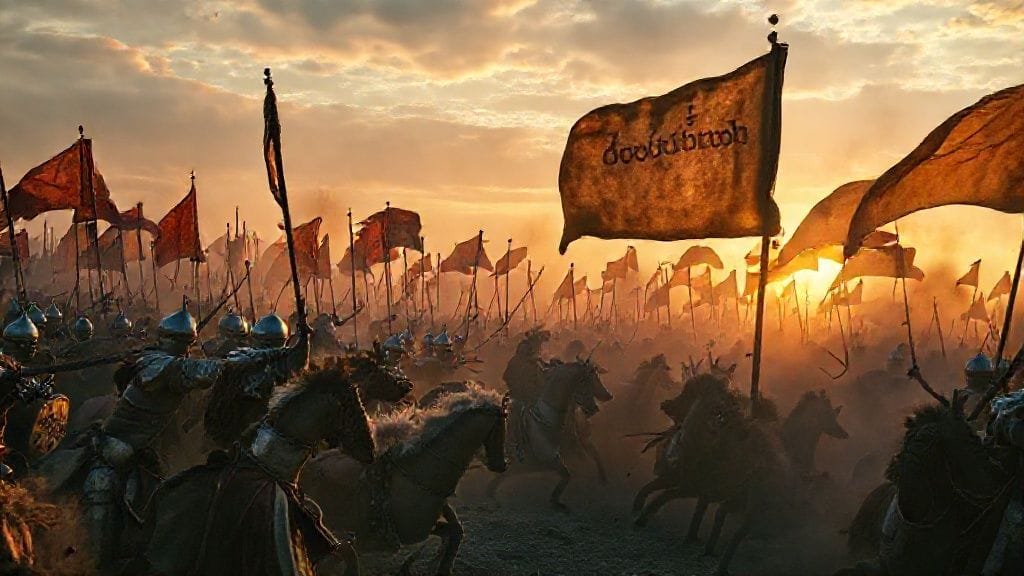
On a bitterly cold morning of November 10, 1444, the golden dawn over the Black Sea was obscured by the looming shadows of war. The air, thick with mist and the murmurs of an anxious army, bore witness to the trembling hopes of a crusading force that had come together from across Central and Eastern Europe, led by a king barely in his twenties. The fields near the Bulgarian city of Varna echoed with the clamor of thousands of warriors, armor clinking, banners fluttering, prayers whispered fervently. This was not just a battle; it was a collision of worlds — the last breath of a fading Christian crusade against the unstoppable surge of the Ottoman Empire.
The Battle of Varna, fought on that early November day in 1444, stands as one of the most poignant and defining clashes of the late Middle Ages. It was a battle steeped in desperation, ambition, and the tragic failure of a last-ditch attempt to stem the Ottoman tide that had consumed vast swathes of Southeastern Europe. Yet, it was far more than a mere military defeat. It was the shattering of a dream — a dream that Europe could still unite under the banner of Christendom to roll back the Ottoman conquests. The battle’s outcome would reverberate through the centuries, shaping the political contours of Europe and the Islamic world alike.
The Twilight of a Crusader Dream: Prelude to Varna
To understand the Battle of Varna, one must first grasp the desperate urgency that ripped through Europe in the early 15th century. The Ottoman Empire, under the fierce and calculating Sultan Murad II, had grown from a small Anatolian beylik into a sprawling empire that threatened the very heart of Christendom. Constantinople had been encircled, the Balkans carved up, and the Byzantine remnants clinging to life. The shadow of Ottoman power passed like a storm over Hungary, Poland, and the fragmented states along the Danube.
Efforts to resist had been feeble and disunited. The memory of the great Crusades seemed a relic of another era — one when Western knights rode with the zeal of holy vengeance. But by 1444, a new generation of leaders believed that the hour to act had come. The so-called "Crusade of Varna," despite its mixed preparation and fragile alliances, was launched with the dream of pushing back the Ottoman frontier once and for all.
Europe on the Brink: The Geopolitical Landscape of 1444
Europe in the mid-15th century was a fractured mosaic of kingdoms, duchies, and principalities, each with competing interests. The Kingdom of Hungary, under King Władysław III, found itself on the front line against Ottoman expansion. To the north, the Kingdom of Poland shared a dynastic union with Hungary, intensifying stakes in the region. To the west, the Holy Roman Empire was distracted by internal strife, and Italy was embroiled in its own wars of city-states.
Meanwhile, across the Danube, the Ottomans had extended their influence with relentless precision. Their vassal states in the Balkans ensured a steady supply of troops and a buffer zone into Europe. With the conquest of Constantinople still two years away (1453), the Ottomans used diplomacy and warfare to isolate European opposition. Yet, cracks appeared: the death of Sultan Murad II’s father had triggered moments of vulnerability, and some European powers saw an opening.
The Ambitious King Władysław III and His Crusading Vision
At the heart of the crusading effort stood a young and ambitious monarch: Władysław III of Poland and Hungary. Crowned King of Hungary at the age of 15 and King of Poland at 14, Władysław was imbued with the ideals of chivalry and Christian duty. His ascension to the throne coincided with an intensification of Ottoman pressure on his realm, and he consciously embraced the crusader mantle.
Known by some historical sources as “Władysław of Varna” after his death, the young king believed he had a divine mission to liberate Europe from the Ottoman threat. His charisma was evident in the ability to rally various European nobles and armies around the cause, including support from Venetian mercenaries and the Moldavian prince, Stephen II. Aptly, his youth and zeal symbolized hope for a Europe uniting against the eastern menace.
The Ottoman Tide: Sultan Murad II’s Dominance
Opposing Władysław was Sultan Murad II, an adept and ruthless ruler whose reign saw the Ottomans at a zenith of power. Murad himself was a seasoned warrior, a man who had consolidated control over Anatolia and southeastern Europe. He orchestrated a multi-pronged approach of military conquest combined with deft alliances and strategic marriages.
Despite an earlier truce with Hungary, Murad was ever ready to strike at weakness. When the crusader forces prematurely broke an armistice in 1444, Murad returned from his temporary retirement, personally taking command of his army. His tactical acumen during the Battle of Varna would prove decisive, combining heavy cavalry (the famed Sipahi), archers, and infantry in seamless harmony.
Assembling the Crusade: Allies and Aspirations
The crusading force that gathered near Varna was a remarkable yet fragile coalition. Apart from Hungarian and Polish troops, the allied army included contingents from Wallachia, Moldavia, and various mercenaries from Venice and other Italian states. However, mistrust and differing priorities hampered cohesion.
The weapons of war ranged from medieval plate armor to longbows and crossbows, while war elephants and advanced siege engines remained a thing of the past. The logistical challenges of sustaining a large army in enemy territory were daunting, with supply lines stretched thin and morale depending heavily on swift victory.
Crossing Borders: The March to Varna
Marching towards Varna in the late summer of 1444, the crusaders crossed the rugged Balkans, negotiating hostile terrain and the risk of ambushes. The dry air was heavy with the scent of pine and the distant roar of the Black Sea waves. Local populations watched the passing army with a mix of hope and fear — whether for liberation or the conquest that might follow.
This army was marching not just with weapons and soldiers but ideas of honor and religion etched into their banners. Tales circulated in campfires of glorious victories past and the sacred duty to protect Christendom. Yet doubts simmered beneath the surface; the alliance’s unity was brittle, and time was not on their side.
The City of Varna: Strategic Jewel on the Black Sea
Varna was more than a backdrop—it was a prize and a point of strategic importance. As a key port on the western Black Sea coast, Varna controlled access to naval routes and trade networks. Historically coveted by Byzantines, Bulgarians, and now Ottomans, the city’s fortifications were strong but vulnerable.
Occupation of Varna by the crusaders was meant to be a symbolic blow, a foothold from which to extend their influence. But the Ottomans’ ability to rapidly mobilize around the city complicated the crusaders’ plans, turning Varna into a volatile powder keg.
The Calm Before the Storm: Final Days of Preparation
In the days preceding November 10, tension gripped the crusader camp. Leaders debated strategy, hours were spent drilling, and prayers filled the cold air. Władysław convened councils of war, trying to iron out disagreements. Morale wavered — some soldiers questioned the wisdom of engaging a larger, better-prepared Ottoman force.
Sultan Murad, in contrast, was resolute and confident, personally inspecting his troops and delivering stirring speeches. The tension was palpable, a silent countdown to the moment the drums of war would begin their thunderous beat.
November 10, 1444: The Clash at Varna Begins
As dawn broke, the two armies faced each other on the slopes near Varna. The air was biting, and the ground was soaked from recent rain, turning the fields into a muddied battleground. Trumpets sounded, flags raised, and the silence shattered by war cries and the clash of steel.
The battle opened with exchanges of arrow volleys, gradually escalating into full-scale cavalry charges. The legendary Polish winged hussars, although not yet fully developed as in later centuries, fought with desperate valor. Yet the Ottomans unleashed their disciplined Janissaries in a formation rarely seen in European warfare, blending speed, firepower, and coordinated maneuvers.
The Battle’s Fury: Cavalry Charges and Infantry Struggles
For hours, the battle shifted, ebbing like a merciless tide. Crusader knights thundered forward, attempting to break Ottoman lines. Arrows whistled, lances shattered, and the ground was churned with the fury of thousands of men and horses. The thick smoke of fires mingled with the screams of the wounded—creating a nightmarish tapestry of horror and heroism.
Yet despite moments of success, the crusaders struggled to maintain their cohesion. Ottoman commander tactics exploited gaps and feigned retreats, drawing crusader knights into deadly traps. The multiethnic nature of the crusader force added to the confusion, as commands were misinterpreted under the chaos of battle.
King Władysław’s Final Stand and the Turning Point
The death of King Władysław III marked the battle’s tragic turning point. Historical records differ in the exact moments, but the young king fell amidst the chaos—some accounts depict him fighting valiantly until his death; others suggest he was wounded and left surrounded.
With their leader down, the crusaders’ morale shattered. Panic spread. Retreats became routs. Ottoman forces pressed their advantage relentlessly, ensuring no quarter was given. The once proud army was overwhelmed, and the fields near Varna were stained with the blood of thousands.
Collapse of the Crusaders: Death and Defeat
By nightfall, the crusader cause lay in ruins. Survivors fled with stories of carnage and betrayal. The loss was not only military but psychological — a blow from which European hopes of halting Ottoman expansion in the near future would struggle to recover.
Casualty estimates vary, but thousands of crusaders perished, including many nobles and knights who had vowed to turn the tide of history. The defeat was total, and the balance of power in southeastern Europe tipped decisively to the Ottomans.
The Aftermath on the Bloodied Fields
The immediate aftermath was grim. The Ottomans secured Varna and extended their dominion further into the Balkans. Prisoners were taken, ransoms demanded, and the wounds of war left scars on families and kingdoms.
News of the defeat spread across Europe like wildfire. Shock and despair permeated courts and cities. Yet some hoped the sacrifice of Władysław and his men might galvanize future resistance. For others, it was a somber reminder of the shifting nature of power.
The Immediate Political Consequences: Hungary, Poland, and Byzantium
In the catastrophe’s wake, political turmoil engulfed Hungary and Poland. The Polish crown passed to other hands, while Hungary’s frontier defenses were shaken. The Byzantine Empire, hesitant and weakened, lost yet more hope for salvation.
Diplomatic recalibrations ensued, with some further armistices signed with the Ottomans. The dream of an all-encompassing crusade slowly faded from elite circles, replaced by realpolitik and compromises.
The Ottoman Empire’s Ascendancy Post-Varna
The Battle of Varna consolidated Ottoman control in the Balkans and signaled a new era of dominance. Murad II reasserted his authority decisively until his death in 1451, after which Mehmed II would conquer Constantinople in 1453—the event often considered the final nail in the coffin for Eastern Christendom’s medieval world.
The Ottomans employed Varna’s victory as both practical leverage and symbolic triumph. Their military innovations and statecraft set the stage for centuries of influence spreading from the Mediterranean to Central Europe.
Myth and Memory: How Varna Shaped European Imagination
Throughout subsequent centuries, the Battle of Varna entered into European lore. Władysław became a martyr figure, symbolizing youthful bravery against overwhelming odds. Poems, ballads, and later historiographies enshrined Varna as the “last crusade,” evoking nostalgia for a vanished age of knights and religious wars.
Yet the memory was complex — mingling heroism with despair, inspiring resistance but also caution. Varna’s tale became a prism through which Europeans viewed their relationship with the Ottoman world.
Lessons and Legacies: The Failure of the 1444 Crusade
The defeat at Varna underscored the fragility of pan-European alliances and the limitations of medieval warfare against a rival adapting rapidly. It revealed the necessity of centralized leadership, unified command, and modern military reforms—lessons absorbed too slowly by some European powers.
Politically, it marked a turning point — ushering in a gradual acceptance that the Ottoman Empire was a permanent and formidable neighbor, not a fleeting invasion. The crusading ideal, while not extinguished, lost much of its immediate urgency.
Varna in the Shadow of History: Reflection on Historical Narratives
Today, the Battle of Varna remains a compelling chapter in the narrative of East-West encounters. It reminds us how borders, religions, and ambitions collide with human cost and enduring consequences. It is a story not only of clashing armies but of dreams deferred and history in motion.
Through renewed scholarship and reflections on cultural memory, Varna invites us to consider the complexities of conflict — no simple tale of good versus evil, but a human drama played on a stage where fate, leadership, and courage intertwined in tragic splendor.
Conclusion
The Battle of Varna was not merely a clash of swords and spears; it was the collision of epochs — the medieval crusading zeal facing the dawn of the Ottoman empire’s ascendancy. This moment in 1444 epitomizes the complexities of history: youthful ambition met with seasoned power, religious fervor confronted with calculated pragmatism, and a fragmented Europe challenged by a rising empire.
The loss at Varna broke the momentum of Christian resistance in southeastern Europe and heralded a new power balance that shaped continents for centuries. Yet beyond the military defeat lies a human story—a young king’s tragic fall, the bravery of thousands caught in the sweep of history, and the stubborn dreams that survived in memory and legend.
Varna teaches us that history unfolds not in absolutes but in shades of humanity. It compels us to remember courage and consequence alike, inspiring reflection on what defines not only victory and loss but resilience itself.
FAQs
Q1: What were the main causes of the Battle of Varna?
A1: The battle stemmed from rising tensions between the expanding Ottoman Empire and the European kingdoms of Hungary and Poland. After a temporary truce collapsed, Christian leaders sought to push back Ottoman advances to protect their territories and assert religious and political dominance.
Q2: Who was King Władysław III, and why is he significant?
A2: Władysław III was the young King of Hungary and Poland who led the crusading army at Varna. His death in battle and role as a crusading leader made him a martyr figure in European history, symbolizing youthful zeal and tragic defeat.
Q3: How did the Ottoman Sultan Murad II influence the outcome?
A3: Sultan Murad II was an experienced and strategic military leader who personally commanded Ottoman forces at Varna. His tactical decisions and the disciplined nature of the Ottoman troops were crucial in defeating the larger but less unified crusader army.
Q4: What were the immediate political consequences of the defeat?
A4: The loss weakened Hungary and Poland’s frontier defenses, led to political instability, and diminished hopes of halting Ottoman expansion. It shifted diplomatic calculations toward accommodation, while the Ottomans tightened control over the Balkans.
Q5: How did the Battle of Varna affect European-Ottoman relations in the long term?
A5: Varna marked the beginning of Ottoman dominance in Southeast Europe and demonstrated the limits of crusader military efforts. It forced Europe to acknowledge the Ottomans as a significant political and military power, influencing centuries of conflict and diplomacy.
Q6: Why is the Battle of Varna remembered in European cultural memory?
A6: The battle symbolizes lost crusader dreams and heroic sacrifice, inspiring ballads, poetry, and historical reflection. It stands as a poignant example of medieval heroism and the tragic cost of conflict, shaping narratives of East-West encounter.
Q7: Were there any notable tactical innovations or military aspects in the battle?
A7: The Ottomans effectively used their Janissary infantry alongside cavalry tactics, emphasizing discipline and coordination. This contrasted with the crusaders, whose multiethnic forces struggled to maintain cohesion under attack.
Q8: How does the Battle of Varna fit into the broader history of the Crusades?
A8: Although often identified as one of the last significant crusading efforts in Europe, Varna took place in a different geopolitical context, representing a shift from classical crusades to localized resistance against Ottoman expansion. It illustrates the waning influence of crusading ideology in late medieval Europe.

