Table of Contents
- The Dawn of Tensions: Prelude to the Second Battle of Kosovo Polje
- The Legacy of the First Battle: Shadows That Loomed Over 1448
- A Fragmented Balkans: Kingdoms, Empires, and the Ottoman Threat
- Sultan Murad II’s Ambition: Reclaiming the Balkans
- The Formation of the Christian League: John Hunyadi at the Helm
- Armies on the March: The Rigid March Toward Kosovo Field
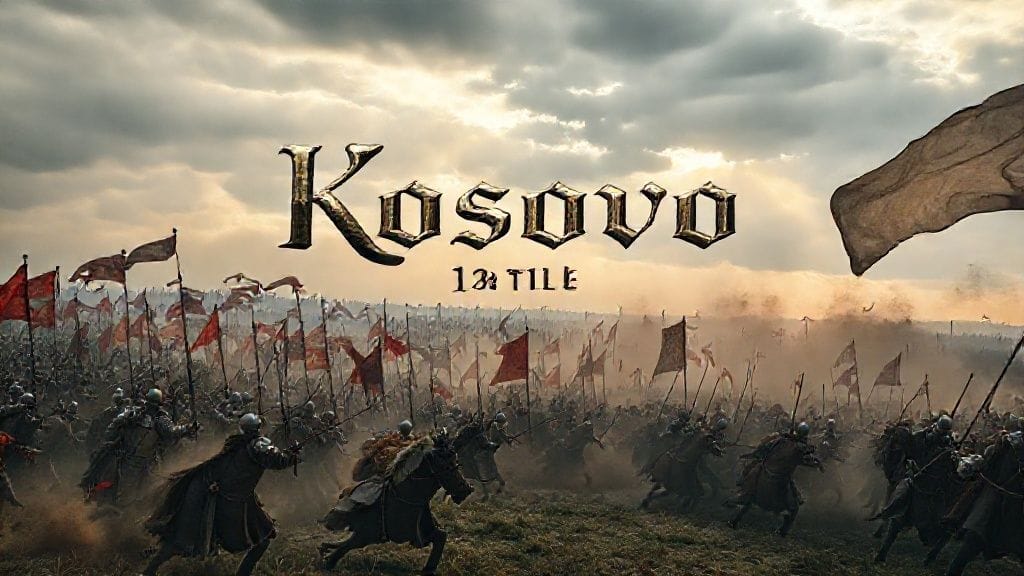
- October 17, 1448: The Battlefield Awakes under Grey Skies
- Clash of Titans: Strategy, Surprise, and Brutality Unfold
- The Decisive Moments: Turning the Tide on Kosovo Field
- The Aftermath of Defeat: A Christian World in Disarray
- The Ottoman Consolidation: Expanding a Growing Empire
- The Fate of John Hunyadi: From Hope to Captivity
- Political Reverberations: Hungary, Serbia, and Beyond
- Impact on the Balkan Peoples: Cultural and Human Costs
- The Battle’s Place in History: Myth, Memory, and Identity
- The Second Battle’s Long Shadow in European Strategy
- Kosovo Polje Today: Between Myth and Historical Reality
- Conclusion: Lessons from the Battlefield of Endurance and Loss
- Frequently Asked Questions
- External Resource
- Internal Link
The Dawn of Tensions: Prelude to the Second Battle of Kosovo Polje
The chill of early October 1448 hung heavy over the lands stretching across the Balkan Peninsula. A grey mist clung stubbornly to the Kosovo Field, rolling slowly over the undulating hills where history was about to carve another chapter. The air was dense not merely with fog but with the weight of uncertainty, fear, and determination. Men mounted upon weary horses, faces etched with resolve and dread, prepared to confront a destiny that would shape centuries.
This was not the birth of conflict in the Balkans—it was, rather, a somber reprise, a grim echo of the fateful clash half a century earlier. The Second Battle of Kosovo Polje was about to unfold, a battle that would once again pit Christian kingdoms against the surging might of the Ottoman Empire. But unlike the first encounter that had mythologized the Kosovo plain, this engagement was woven into the complex tapestry of shifting alliances, imperial ambitions, and the struggle for Balkan survival.
The Legacy of the First Battle: Shadows That Loomed Over 1448
The first Battle of Kosovo, fought on June 28, 1389, had become a legend—an emblem of sacrifice and Serbian valor against a rising power. Prince Lazar of Serbia and Sultan Murad I fell on that field, sealing a moment both tragic and heroic. Yet the battle's aftermath did not result in an immediate Ottoman conquest; rather, it initiated a slow, agonizing erosion of Balkan independence.
By 1448, decades had passed. The Serbian state was fragmented, with local lords playing a perilous game of allegiance between the Ottomans and Christian powers. The mythic aura of the first Kosovo had become a rallying cry, but it was also a grim reminder of vulnerability. The Second Battle was less about legend and more about concrete survival—territories at stake, lives to defend, and empires to challenge.
A Fragmented Balkans: Kingdoms, Empires, and the Ottoman Threat
The Balkans of the mid-fifteenth century were a chessboard of fractured realms and ambitious rulers. The Kingdom of Hungary, under the leadership of John Hunyadi, a capable and charismatic commander, had become the bulwark of Christian resistance. Meanwhile, the Ottoman Empire was under the rule of Sultan Murad II, a seasoned ruler who had consolidated his power and looked westward to expand his dominion.
Between these forces lay Serbia, Bosnia, Wallachia, and others, each entity balancing self-preservation with the fluid politics of allegiance. Religious, ethnic, and political fault lines ran deep, and the Ottoman threat was both a unifier and a source of factionalism. The stage was thus set for a monumental confrontation—one whose stakes were no less than control over the gateway to Europe.
Sultan Murad II’s Ambition: Reclaiming the Balkans
Sultan Murad II returned to power in 1446 after an earlier abdication, his sights firmly set on stabilizing and expanding Ottoman influence in the Balkans. His prior reign had already seen significant victories, but the 1440s presented new challenges. Christian powers had regrouped, inspired largely by the indomitable presence of John Hunyadi.
For Murad, Kosovo was the crossroads of imperial destiny. Beyond mere military conquest, it symbolized supremacy over the Balkan Peninsula and dominion over routes to Central Europe. With a seasoned army, including the feared Janissaries and skilled cavalry, Murad marshaled his forces with the precision of a master strategist preparing a decisive strike. Kosovo Field would once again witness the clash of empires.
The Formation of the Christian League: John Hunyadi at the Helm
John Hunyadi, the Regent of Hungary and Warden of the Southern Frontier, was a figure forged in conflict. His rise from a noble of modest background to the leader of Christian resistance was marked by fierce dedication and tactical brilliance. In 1448, Hunyadi rallied an alliance that bridged ethnic and religious divides—Hungarians, Serbs, Wallachians, and even mercenary forces.
This coalition was not without internal tensions. Distrust, competing ambitions, and political rivalries simmered beneath the surface. Yet Hunyadi’s leadership commanded enough unity to mobilize an army estimated at around 24,000 men. His strategic objective was clear: to stop the Ottoman advance at Kosovo Polje, to safeguard Hungary and its neighbors, and to restore Christian dominance.
Armies on the March: The Rigid March Toward Kosovo Field
As October approached, vast armies traversed rugged terrain to converge on Kosovo Field. Ottoman war banners fluttered alongside ironclad Janissaries and Sipahi cavalry, while the Christian coalition marched with pride and apprehension.
Logistical difficulties, harsh weather, and the weariness of months-long campaigns weighed heavily on soldiers and commanders alike. Yet the urgency of the moment kept spirits burning. Camps were pitched, scouts sent into the hills, and defensive positions surveyed. Each side sought to anticipate the other’s moves, knowing that in the coming battle, every decision might tilt fate.
October 17, 1448: The Battlefield Awakes under Grey Skies
When dawn broke on October 17th, Kosovo Field lay drenched in a cold mist that blurred the outlines of banners and formations. Silence hung thickly—only pierced by the nervous whispers of commanders and the restless shifting of armour.
The terrain itself was unforgiving: a vast plain ringed by hills, fertile but exposed, offering little refuge. The sun struggled to penetrate the clouds as the two armies took positions. The Ottomans formed in their familiar disciplined ranks; the Christians arrayed with determination, their hope resting on Hunyadi’s leadership.
The air was electric—a pregnant pause before the storm.
Clash of Titans: Strategy, Surprise, and Brutality Unfold
The battle erupted suddenly, a furious tempest of steel and horseflesh. Initial skirmishes escalated into a grinding melee. Hunyadi deployed his heavy cavalry with valor, seeking to disrupt Ottoman lines, but the disciplined Janissaries absorbed pressure with silent efficiency.
Ottoman commanders exploited the terrain cleverly, using feigned retreats and rapid counterattacks to unsettle the coalition forces. Amid screeches of war cries and the clang of swords, chaos ruled parts of the battlefield. Yet many Christian soldiers held ground stubbornly.
Stories from that day tell of single combats, desperate charges, and moments where hope flickered dangerously close to collapse.
The Decisive Moments: Turning the Tide on Kosovo Field
As hours wore on, Ottoman superiority in numbers and cohesion began exacting a heavy toll. Hunyadi's troops faced flanking maneuvers and relentless pressure. Panic slowly crept into the ranks, and cohesion frayed.
One crucial moment was the Ottoman cavalry charge that shattered the Christian center, causing a catastrophic collapse. Hunyadi narrowly escaped capture, but thousands of his soldiers were slain or taken prisoner.
The battle concluded with an overwhelming Ottoman victory—bloody and decisive. Kosovo Field fell silent once more, stained by the sacrifices of countless warriors.
The Aftermath of Defeat: A Christian World in Disarray
The crushing defeat sent shockwaves through Hungary and the broader Christian world. The fragile coalition unraveled, confidence shattered. Hungarian nobles debated retreat and reparations, while Serbia and neighboring states reconsidered their allegiances.
Fear now gripped the Balkans more intensely. The doors to Central Europe seemed ajar for the Ottomans, and Hunyadi’s dream of a united Eastern Christendom was temporarily extinguished. But in the darkness also stirred a determination not to yield.
The Ottoman Consolidation: Expanding a Growing Empire
Buoyed by victory, Sultan Murad II advanced Ottoman authority deeper into the Balkans, establishing stronger control over vassal states and frontier territories. The empire’s administrative and military reforms ensured a durable hold on these lands.
Yet Murad also showed pragmatism, incorporating Christian lords as semi-autonomous vassals, thus weaving a complex web of power that preserved Ottoman expansion without exhausting local populations.
The Fate of John Hunyadi: From Hope to Captivity
Despite his escape from the battlefield, John Hunyadi’s fortunes dimmed. Soon after Kosovo, he was captured in Wallachia by rival forces aligned with the Ottomans, marking a temporary nadir in his career.
However, his enduring resilience and network of supporters eventually secured his release, enabling him to re-emerge as a symbol of resistance. His story embodies the tumult and hope of the era—a man who would fight beyond this defeat for the survival of Christendom.
Political Reverberations: Hungary, Serbia, and Beyond
The defeat at Kosovo had far-reaching political consequences. Hungary’s influence waned, and internal conflicts over succession and policy emerged. Serbian and Bosnian nobles increasingly aligned with the Ottomans, further fracturing Christian unity.
Western Europe watched with concern but offered limited aid. The battle highlighted the disjointed nature of European efforts to confront the Ottoman threat—a lesson painfully learned amid growing geopolitics.
Impact on the Balkan Peoples: Cultural and Human Costs
Beyond politics and power, the Second Battle of Kosovo was a human tragedy. Thousands perished or were displaced. The cultural landscape shifted as Ottoman administration enforced new social structures, while local traditions both resisted and adapted.
This epoch laid foundations for centuries of cultural intermingling, conflict, and identity reformation—echoes still heard in the complex mosaic of the Balkans today.
The Battle’s Place in History: Myth, Memory, and Identity
Unlike its predecessor, the second battle did not acquire the romantic martyrdom of 1389, yet it solidified the Kosovo Field’s role as a symbol of Balkan struggle. It was less a story of glorious sacrifice and more a testament to endurance amidst adversity.
Historians view it as a pivot point—where old medieval kingdoms gave way to emerging empires and where memory itself became a battleground for national narratives.
The Second Battle’s Long Shadow in European Strategy
For Europe, Kosovo 1448 was both a warning and a call to arms that often went unheeded. The failure to unite effectively against the Ottomans foreshadowed future retreats and loss of territories.
Yet it also spurred military innovations, diplomatic maneuvering, and ideological developments that would shape the continent’s approach to empire and defense for centuries.
Kosovo Polje Today: Between Myth and Historical Reality
Visiting Kosovo Polje today, one encounters layers of history and symbolism. Monuments, churches, and memorials commemorate the site, attracting pilgrims, tourists, and scholars alike.
The field stands as a living landscape where past and present entwine—reminding humanity of the price of war and the persistence of memory.
Conclusion
The Second Battle of Kosovo Polje was more than a military clash—it was a turning point drenched in courage, tragedy, and the raw realities of a fractured world. It exposed the fragile unity of Christian Europe, the strategic genius of relentless empires, and the human cost woven into every sword stroke.
Yet in those foggy dawns and battle cries lies an enduring message: history is shaped not only by victories and defeats but by the will to endure, adapt, and dream. Kosovo’s fields remind us that even in the shadow of loss, resilience kindles the spark of future hope.
Frequently Asked Questions
1. What caused the Second Battle of Kosovo in 1448?
The battle arose from Ottoman ambitions to solidify their hold on the Balkans and Christian powers’ efforts, led by John Hunyadi, to halt their expansion. It was also fueled by the fragmented political landscape and lingering tensions after the first battle in 1389.
2. Who was John Hunyadi and what role did he play?
John Hunyadi was the Regent of Hungary and a skilled military leader who forged a coalition of Balkan forces seeking to push back Ottoman advances. He led the Christian armies during the battle but ultimately suffered defeat.
3. How did the battle affect the Balkan kingdoms?
The defeat weakened Christian states like Hungary and Serbia, increasing Ottoman dominance. Many local rulers became vassals to the Ottoman Empire, altering political and social dynamics across the region.
4. What was the significance of Sultan Murad II in this event?
Murad II was the Ottoman Sultan and strategist who orchestrated the victory. His leadership enabled the consolidation of Ottoman power in the Balkans, positioning his empire for further European expansion.
5. How is the Second Battle of Kosovo remembered today?
Though less romanticized than the first, the battle is remembered as a critical historical moment in the Balkans, symbolizing endurance and the complex struggles for control in the region.
6. Did the battle influence wider European politics?
Yes. The defeat highlighted divisions in Europe and the need for coordinated defense against the Ottomans, influencing future military, diplomatic, and religious policies.
7. What was the human cost of the battle?
Thousands died or were captured, with immense suffering for local populations. The battle also triggered migrations and cultural shifts under Ottoman rule.
8. Where can I learn more about the Second Battle of Kosovo?
Detailed historical accounts and analyses can be found in academic texts and on reliable online platforms such as Wikipedia.

