Table of Contents
- The Dawn of a Fateful August Day
- England on the Brink: The Wars of the Roses
- Richard III’s Reign: A Crown on Shaky Ground
- Henry Tudor: The Exiled Challenger
- The March to Bosworth: Forces Aligning
- The Battlefield Landscape: A Stage for Destiny
- The Clash Commences: First Blows and Tactical Movements
- Betrayals and Shifting Loyalties in the Heat of Battle
- The Death of a King: Richard III’s Final Stand
- The Rise of Henry Tudor: A New Dynasty Begins
- Immediate Aftermath: Coronation and Consolidation
- The End of the Plantagenet Legacy: Symbolism and Reality
- The Tudor Dawn: Political and Social Transformations
- Cultural Reflections: Bosworth in Art and Memory
- Historical Debates: Myths, Legends, and Truths
- The Battle’s Impact on England and Europe
- Archaeological Discoveries and Battlefield Research
- Remembering Bosworth: Commemorations Through the Ages
- Lessons From Bosworth: Power, Loyalty, and Change
- Conclusion: The Battle That Shaped Modern England
- FAQs: Common Questions About Bosworth
- External Resource
- Internal Link
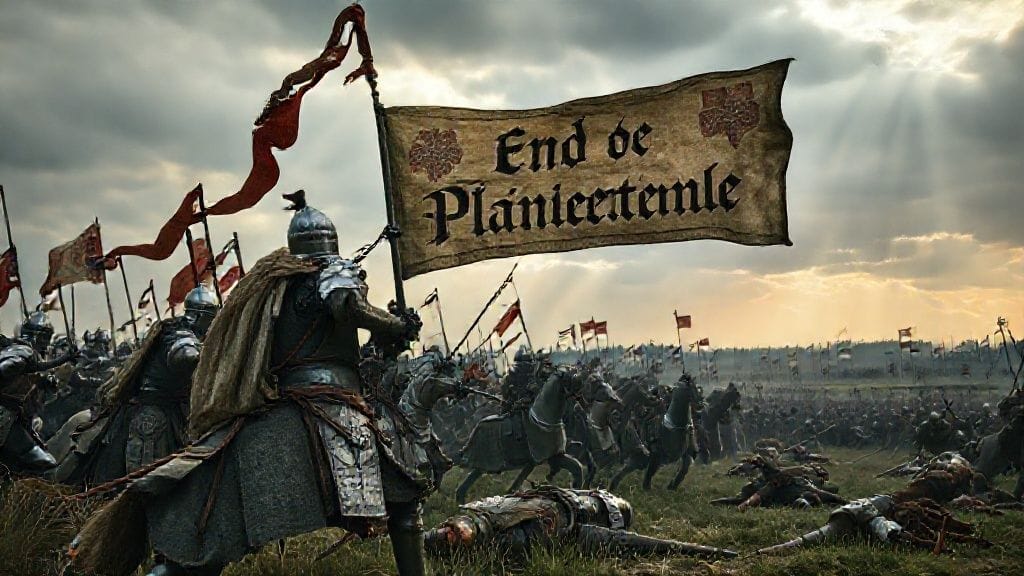
On the morning of August 22nd, 1485, a dense mist clung stubbornly to the rolling hills of Bosworth Field in Leicestershire, England. The early light seeped through the fog, painting the rural landscape in muted grays and greens—an eerie, almost otherworldly canvas for what was about to unfold. Mounted knights, clad in gleaming armor and bearing banners fluttering with the insignias of rival houses, amassed on either side, their breath mingling with the cool air in tense clouds. For hours, the grounds of Bosworth would be soaked not only with blood but with the fate of a nation. This was no mere battle—it was the decisive crucible in a civil war that had ravaged England for decades. The day would mark the fiery end of the Plantagenet reign and the startling rise of a new dynasty, one destined to steer England into an era wholly different from the troubled past it sought to bury.
England on the Brink: The Wars of the Roses
The late 15th century in England was a tempest of fraternal strife, noble rivalry, and seismic political upheavals known collectively as the Wars of the Roses. This dynastic conflict pitched two branches of the royal House of Plantagenet—the Lancasters and the Yorks—against each other in a protracted struggle for the English throne. The name “Wars of the Roses” derives from the emblems associated with each faction: the red rose of Lancaster and the white rose of York. It was not simply a quarrel over power; it was an existential war that tore at the fabric of the realm—redefining loyalties, destabilizing governance, and staining the lands with ceaseless bloodshed.
The throes of this civil war stretched back to 1455, when the Battle of St. Albans first showed just how brittle England’s political structure had become. Over the following three decades, kings were crowned and deposed, baronial factions rose and fell, and the legitimacy of rulers constantly shifted like sand slipping through fingers.
By 1485, the scars of fifteen years of relentless warfare were etched deeply into the national consciousness. It was a landscape rife with uncertainty, where even the loyalty of one’s closest allies might betray with fatal consequences.
Richard III’s Reign: A Crown on Shaky Ground
A figure both enigmatic and polarizing, Richard III ascended to the throne under contentious circumstances in 1483. Having served as the Lord Protector for his nephew, the young Edward V, his rapid maneuvering to assume kingship fuelled rumors and resentment. The tragic fate of Edward V and his brother—last seen in the Tower of London and never heard from again—cast a dark shadow over Richard’s claim.
Richard’s reign lasted barely two years but was tumultuous enough to alienate many nobles and stir rebellion. The king’s drive to reinforce his position was marked by legal reforms and a stern hand, yet the mystery surrounding his nephews’ disappearance haunted his legacy. His rule was destabilized further by the gathering storm of opposition, coalescing around Henry Tudor, a distant Lancastrian claimant whose outsider status paradoxically offered a beacon of hope to many weary of Yorkist rule.
Henry Tudor: The Exiled Challenger
Henry Tudor was a figure shaped by exile and resilience. A grandson of the Beaufort family—an illegitimate but later legitimized branch of the Lancastrian line—his claim to the throne was tenuous but imbued with the symbolic weight of the old regime. Forced into Welsh obscurity and then exile in Brittany and France as a child, Henry’s return to English soil was laden with political risk but profound ambition.
He embodied both the hope for renewed peace and the uncertainty over the future. Unlike the powerful magnates jockeying for control, Henry had spent years abroad, cultivating support among discontent nobles and foreign powers eager to see a change in the English monarchy. His invasion—though modest in size—was meticulously timed to exploit the fracturing loyalties within Richard’s camp.
The March to Bosworth: Forces Aligning
In the summer of 1485, Henry Tudor landed in Wales, gathering an army from a patchwork of disaffected Yorkists, Lancastrians, and mercenaries. News of his arrival sent ripples through Richard’s regime, prompting the king to assemble his own forces hastily. A race ensued as both armies maneuvered across the Midlands, gathering strength and seeking advantage.
Richard’s strategy was aggressive—an attempt to confront Henry before the opposition could consolidate further. The king’s troops, laced with seasoned knights and loyal retainers, faced a motley but determined force. The local nobility, long weary of civil war, watched with bated breath as these rival factions converged near the village of Ambion Hill.
The Battlefield Landscape: A Stage for Destiny
Bosworth Field itself was a seemingly benign stretch of pasture: gently rolling hills and open expanses framed by hedgerows and small woods. Yet beneath this tranquil facade, the ground bore witness to centuries of conflict. The terrain, with its subtle rises and slopes, played a pivotal role in shaping tactical choices.
The morning fog and uneven landscape concealed movements and delayed full engagement. Commanders on both sides had to rely not only on strategy but on the loyalty and discipline of their men. By midday, the sun pierced the haze, revealing the grim tableau—flags snapping in the breeze, armor gleaming ominously, and horses snorting with nervous energy.
The Clash Commences: First Blows and Tactical Movements
The battle began with cautious probing and skirmishing—arrows darkening the sky, lances thrusting forward—before descending into brutal melee. Every charge was a desperate gamble; every parry potentially life-saving. Richard, commanding from the front, sought to exploit weaknesses in Henry’s smaller force.
Notable in the fight were the Burghers and the Stanleys—two families whose allegiance would prove decisive. Richard commanded the loyalty of many, but cracks appeared as the battle swayed back and forth. Henry’s knights fought with a blend of desperation and hope, aware that victory would crown not just a king but a new era.
Betrayals and Shifting Loyalties in the Heat of Battle
Perhaps the most dramatic element of Bosworth was the pivotal flipping of allegiances. It is recorded that the Stanley family—especially Lord Thomas Stanley and his step-son Sir William Stanley—originally maintained a cautious neutrality, hedging their bets between the two monarchs.
When Richard III personally charged toward Henry Tudor, intending to kill him and end the war, this gamble became starkly clear. The Stanleys’ intervention at the crucial moment, charging against Richard’s flank, shattered the Yorkist king’s protection, turning the tide irreversibly.
Betrayal in the high stakes game of medieval politics was deadly and sudden. Richard’s valiant but doomed charge remains one of the most iconic images of medieval warfare.
The Death of a King: Richard III’s Final Stand
Richard III’s last moments are immortalized not only in chronicles but in the collective imagination. Forced to dismount as his situation grew desperate, he fought fiercely and alone, a king confronting his fate with indomitable resolve.
Contemporary sources tell of his personal bravery amid encirclement; archaeological evidence later uncovered his remains on Bosworth Field itself, reopening debates about his physical condition and the final moments of his life. His death ended a line of Plantagenet rulers that had dominated England for centuries.
The Rise of Henry Tudor: A New Dynasty Begins
With Richard’s fall, Henry Tudor was proclaimed King Henry VII on the very battlefield where his claim had been won. His manner was conciliatory but firm—he sought to unite the fractured kingdom through marriage to Elizabeth of York, daughter of Edward IV, thus symbolically merging the houses of Lancaster and York.
The establishment of the Tudor dynasty heralded a significant departure from past conflicts. Henry’s reign focused on consolidating power, restoring order, and building a centralized monarchy that could withstand internal dissent and foreign threats.
Immediate Aftermath: Coronation and Consolidation
Henry VII’s coronation in October 1485 was both a political event and a cathartic moment for a nation weary of war. His government swiftly moved to neutralize potential rivals, enforce loyalty among the nobility, and reform administrative systems.
However, the new king’s hold on the throne was fragile. The early years of his reign were fraught with plots, such as the Lambert Simnel and Perkin Warbeck pretenders, testing the resilience of the Tudor claim. Yet Henry’s prudence and strategic marriage alliances solidified the dynasty’s survival.
The End of the Plantagenet Legacy: Symbolism and Reality
The fall of Richard III and the advent of Henry VII did not just mark a dynastic change; it was seen by many as the symbolic closure of medieval England’s fractious feudal struggles. The Plantagenets had presided over centuries characterized by wars, rival houses, and contested succession.
Yet, the end of their reign was as much a social and political transformation as a dynastic shift. Monarchic power was increasingly centralized, the nobility’s autonomous power curtailed, and the groundwork laid for the early modern state.
The Tudor Dawn: Political and Social Transformations
Henry VII’s reign set the stage for the profound changes that defined the Tudor era: stronger royal authority, a more efficient bureaucratic government, and the foundation for England’s global ambitions. The monarch’s control over finances, military, and justice increased markedly.
Simultaneously, the cultural landscape began to shift, embracing Renaissance ideas, early humanism, and changes in art and literature that reflected a society moving beyond its medieval roots.
Cultural Reflections: Bosworth in Art and Memory
The Battle of Bosworth has long captivated historians, artists, and the public imagination. From Shakespeare’s dramatic portrayal of Richard III as a tragic villain to the grand tapestries and paintings of later centuries, Bosworth’s memory has been shaped as much by legend as fact.
Fascination with the battle surged anew periodically, particularly with modern interest in medieval archaeology and historical revisionism challenging traditional narratives.
Historical Debates: Myths, Legends, and Truths
Richard III’s reputation, largely shaped by Tudor propaganda and Shakespearean drama, has been subject to reconsideration. Recent scholarship and the discovery of his skeletal remains under a Leicester car park have prompted debates about his physical deformities, the circumstances of his death, and the fairness of his vilification.
Likewise, the exact size of armies, battle tactics, and the nature of political allegiances remain topics of scholarly scrutiny, demonstrating that even centuries later, Bosworth still holds mysteries.
The Battle’s Impact on England and Europe
Bosworth Field did not only redraw England’s political landscape—it sent ripples across the wider European theater. Establishing the Tudors aligned England closer with certain European powers while recalibrating diplomatic relations.
The end of the Wars of the Roses allowed England to participate more assertively in continental affairs, setting the ground for later conflicts and transformations in the 16th century.
Archaeological Discoveries and Battlefield Research
For centuries, the exact location and details of the Battle of Bosworth remained uncertain. It was not until extensive archaeological efforts in the 21st century, spearheaded by teams from local and national historical organizations, that the battlefield was more precisely identified.
Discoveries of weapons, armor fragments, and other battlefield detritus have helped recreate the intensity of the fight and offered evidence to confirm contemporary accounts.
Remembering Bosworth: Commemorations Through the Ages
The battle has been commemorated periodically through monuments, reenactments, and scholarship. The Bosworth Battlefield Heritage Centre provides a tangible link for visitors eager to connect with this pivotal moment.
Anniversaries of the battle have inspired reflection both on its military significance and on the broader themes of power, legitimacy, and national identity.
Lessons From Bosworth: Power, Loyalty, and Change
Bosworth Field teaches enduring lessons about the nature of power—its fragility and its capacity to transform societies. It encapsulates the volatility of loyalty and the unpredictable alliances that shape history.
The battle reminds us that history is a living narrative, woven from triumphant moments and tragic losses, forging the destinies of nations.
Conclusion
The Battle of Bosworth Field was far more than a bloody confrontation on a summer’s day in 1485—it was the crucible in which medieval England’s fractured Past clashed with the promise of a new dawn. The death of Richard III and the birth of Henry Tudor’s reign signified an end to generations of internecine war and the beginning of a more centralized, powerful England poised on the brink of transformation.
What makes Bosworth truly extraordinary is its human drama: kings and common soldiers alike locked in a desperate struggle where loyalty mingled with betrayal, courage bristled under the threat of doom, and history pivoted irrevocably. Today, the echoes of that day ripple through time, reminding us of the costs of power and the fragile threads upon which legacies are built.
Bosworth is a story of endings and beginnings, a testament to the endurance of a nation and the unfolding saga of its people.
FAQs
1. What caused the Battle of Bosworth Field?
The battle was the culmination of the Wars of the Roses, a dynastic conflict between the Houses of Lancaster and York over the English throne. By 1485, Richard III’s contested rule faced challenge from Henry Tudor, a Lancastrian claimant.
2. Who were the key figures in the battle?
The main figures were King Richard III, the reigning Yorkist king, and Henry Tudor, the Lancastrian challenger. Families like the Stanleys also played crucial roles in shifting the battle’s outcome.
3. Why was the Battle of Bosworth significant?
It ended the Plantagenet dynasty’s nearly 300-year reign, initiating the Tudor dynasty and bringing relative stability after decades of civil war.
4. How did Richard III die?
Richard III died during the battle, reportedly fighting fiercely on foot after his horse was killed. His remains, discovered in 2012, confirmed he died on the battlefield.
5. What happened to Henry Tudor after the battle?
Henry Tudor was crowned King Henry VII and solidified his claim through marriage and political reforms, founding the Tudor dynasty.
6. How reliable are historical accounts of Bosworth?
Many accounts were written after the battle and influenced by Tudor propaganda; however, modern archaeology and scholarship have helped clarify many aspects.
7. Has Bosworth Field been excavated?
Yes, recent archaeological work has uncovered weapons and remains, helping to precisely locate the battlefield and understand the battle’s dynamics.
8. How is the Battle of Bosworth remembered today?
Through historical research, museum exhibits, commemorative events, and cultural representations, Bosworth remains a significant symbol in English history.

