Table of Contents
- The Last Light of Al-Andalus: Granada, January 1492
- The Slow Decline of the Emirate: Prelude to the Fall
- The Catholic Monarchs: Ferdinand and Isabella’s Vision for Spain
- The Strategic Siege: Military Maneuvers of the Final Campaign
- Boabdil’s Dilemma: The Last Sultan’s Burden
- The Surrender at the Alhambra: Tears on the Palace Walls
- The Capitulations of Granada: Terms and Consequences
- The Aftermath: A New Spain Takes Shape
- Muslim Communities in Transition: Conversion, Exile, and Resistance
- The Expulsion of the Jews: 1492 and Religious Homogeneity
- Reconquista’s End as a Global Turning Point
- The Alhambra’s Architectural Elegy: From Fortress to Symbol
- Cultural and Intellectual Shifts After the Reconquista
- Memory and Myth: The Fall of Granada in Spanish and Arabic Narratives
- Granada Today: Heritage, Tourism, and Identity
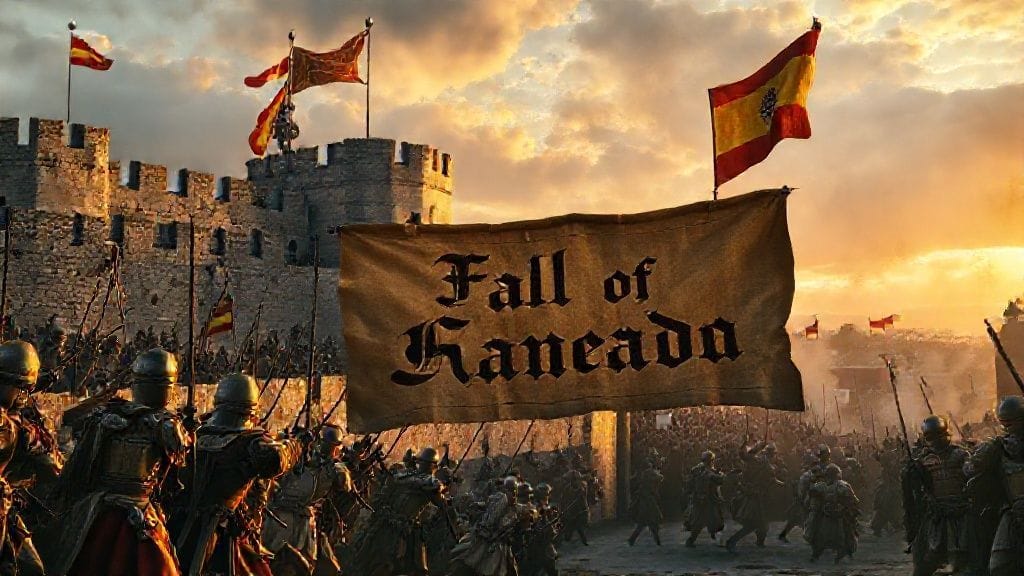
The winter chill of January 2, 1492, bit sharply into the Andalusian air. As dawn broke over the snow-capped Sierra Nevada, the city of Granada — the last fortress of Muslim rule on the Iberian Peninsula — awoke to an uncertain silence. For centuries, this place had stood as a beacon of vibrant culture, art, and faith. Now, beneath the imposing walls of the Alhambra, its red stone fortress and intricate palaces, the final chapter of the Reconquista was drawing to a close.
This was the moment when an era ended—an epoch defined by a clash of civilizations, faiths, and empires. The fall of Granada was not merely a military conquest but a profound turning point that reshaped the future of Spain and reverberated across continents. As the Muslim Emirate, fragile and beleaguered, surrendered to the Catholic Monarchs Ferdinand and Isabella, the Renaissance dawned on a new, unified Spain—a country that would soon embark on voyages across the ocean, carving out an empire unlike any before.
But the fall of Granada was more than the triumph of arms and politics. It was a tapestry of human sorrow, political calculation, cultural upheaval, and religious transformation. Of a young Sultan torn between surrender and resistance. Of a court once resplendent in Moorish splendor now confronting an irrevocable change. Of long-standing communities facing exile, forced conversion, or relocation.
To understand this watershed event requires journeying back to centuries of conflict and coexistence, to the dynasties vying for power, to the landscapes and ideologies that shaped Spain’s turbulent heart. It demands that we hear the whispers of those who mourned loss and those who celebrated new beginnings.
This is the story of the fall of Granada—the last light of Al-Andalus flickering, then extinguished, yet sparking a transformation that would define the modern world.
The decline of Granada did not begin overnight; it was the culmination of nearly eight centuries of shifting power on the Iberian Peninsula. Since the early 8th century, Muslim armies had swept across a fractured Visigothic Spain, establishing Al-Andalus. For generations, Granada, founded by the Nasrid dynasty in the 13th century, became a jewel — a beacon of Islamic culture, scholarship, and refined artistry amidst often volatile politics.
The Emirate survived as a vassal state, maintaining fragile peace with the Christian kingdoms pushing southwards. Yet this uneasy balance could not last. As the centuries progressed, the Reconquista—the Christian reconquest aimed to reclaim lost territories—intensified. Christian kingdoms such as Castile, Aragon, and Portugal grew in strength and ambition, their monarchs fueled by religious zeal and desire for unification.
By the late 15th century, two figures came to symbolize this new vision: Ferdinand of Aragon and Isabella of Castile. Married in 1469, their union was more than matrimonial—it was a melding of two powerful kingdoms intent on completing the Reconquista. Their political acumen, combined with zealous Catholicism, forged a path toward a Spain united under Christian rule, and for them, Granada was the final prize.
Within Granada, political factionalism and dwindling resources weakened the Nasrid dynasty’s hold. Boabdil, Muhammad XII, inherited a fractured realm, beset by internal strife and external threats. His hesitation, his attempts at negotiation, but also his ultimate decision to defend his realm with dignity and hope, characterized the final chapter of Muslim rule. His story would become legend — the tragic ruler forced to surrender his heritage.
The war itself spiraled into a brutal siege that combined relentless military pressure with calculated diplomacy. Ferdinand and Isabella invested unprecedented resources—launching coordinated assaults, cutting supply lines, and exploiting political divisions within the Emirate. The siege tested the endurance of soldiers and civilians alike, as starvation and hardship grew.
January 1492 saw the inevitable approach of surrender. Within the walls of the Alhambra, Boabdil negotiated terms with the Catholic Monarchs, seeking to secure safeties for his people and preserve some autonomy. The Capitulations of Granada, signed with solemn formality, promised religious tolerance and protections. Yet, these promises soon faltered.
The imagery of that day — Boabdil stepping out of Granada, looking back at the city he could no longer rule, tears staining his face — is seared into history and memory. It is a moment vivid with emotional weight, symbolizing not just a political defeat but the end of centuries of a vibrant cultural epoch.
The consequences were profound. Politically, Spain emerged unified and strengthened, poised to enter a new era of exploration. Economically, the end of Muslim rule facilitated integration of Andalusia into Christian Spain’s expanding system. Culturally, it precipitated the marginalization of Muslim and Jewish populations, culminating in forced conversions and expulsions that would leave deep scars.
Yet, the fall of Granada was more than a localized event—it marked a shift in global dynamics. 1492 witnessed, alongside this, Columbus’s voyage, intertwining Spain’s fate with centuries of colonialism and cross-cultural exchanges far beyond Europe.
Today, the Alhambra stands not only as a magnificent monument of Moorish architecture but as a testament to a layered history—one of conquest, loss, and enduring legacy. Granada’s fall remains emblematic of the tensions and transitions that shape human civilizations—the fragile coexistence and eventual clash of cultures and faiths.
Conclusion
The fall of Granada was a moment of immense paradox: an end that was also a beginning; a story of loss that unveiled new frontiers. It closed the chapter on a multicultural, polyphonic Andalusia and heralded the birth of a unified Spain ready to step onto the world stage with unprecedented ambition. Beyond politics and conquest, it revealed the resilience and tragedy of human communities caught in the tides of history.
Boabdil’s tears remain a potent symbol—of leadership weighed down by impossible choices, of cultures intertwined by centuries of struggle and harmony, and of history’s relentless march. The echoes of Granada’s fall resonate still, inviting us to remember that the stories of empire and reconquest are never merely about power, but deeply embedded in the human heart.
FAQs
Q1: What were the main causes behind the fall of Granada in 1492?
A: The fall was due to a combination of military pressure from the Catholic Monarchs, internal divisions within the Nasrid dynasty, dwindling resources, and the strategic ambition of a unified Christian Spain completing the Reconquista.
Q2: Who was Boabdil, and what role did he play?
A: Boabdil, or Muhammad XII, was the last Nasrid Sultan of Granada. Torn between resistance and negotiation, he ultimately surrendered the city, becoming a tragic figure symbolizing the end of Muslim rule in Iberia.
Q3: What were the terms of the Capitulations of Granada?
A: The Capitulations promised religious tolerance, protection of property, and certain autonomy for Muslims, allowing them to continue practicing Islam. However, these terms were later undermined by forced conversions and expulsions.
Q4: How did the fall of Granada affect Spain culturally and religiously?
A: It paved the way for religious homogeneity, with Muslims facing forced conversion or exile. More broadly, it marked the decline of Islamic influence and a rise in Christian and Catholic dominance in Spanish society.
Q5: Why is 1492 often seen as a pivotal year in world history?
A: Besides Granada’s fall, 1492 was the year Columbus reached the Americas, marking the beginning of European global expansion and colonialism. Together, these events signaled profound shifts in geopolitics and culture.
Q6: What is the legacy of the Alhambra today?
A: The Alhambra remains a masterpiece of Islamic art and architecture, symbolizing the rich history of Moorish Spain. It draws millions of visitors, fostering reflection on multicultural heritage and historical memory.
Q7: Were the promises made to Muslims in Granada upheld after the conquest?
A: Initially pledged by the Catholic Monarchs, these promises gradually eroded. Within decades, Muslims were forced to convert, expelled, or marginalized, particularly after the establishment of the Spanish Inquisition.

