Table of Contents
- The Dusk of a King: Hammurabi’s Final Days
- Babylon at the Crossroads: The Heart of Mesopotamia
- The Rise of a Conqueror: Hammurabi’s Early Reign
- The Code That Shaped Civilizations: Hammurabi’s Law
- Mesopotamia’s Turbulent Landscape: Politics and Rivals
- The Expansion of an Empire: Conquest and Consolidation
- Hammurabi’s Death: A King’s Passing in c. 1750 BCE
- The Immediate Aftermath: Succession and Stability
- Babylon After Hammurabi: The Legacy of a Monarch
- The Code’s Endurance: Legal and Social Impact
- Economic Life under Hammurabi: Trade, Agriculture, and Society
- Religion and Kingship: Divine Mandates and Human Authority
- Artifacts and Archaeology: Unearthing Babylon’s Past
- Hammurabi in Historical Memory: From Antiquity to Modernity
- Lessons from Babylon: The Ancient Echoes in Today’s World
- Conclusion
- Frequently Asked Questions (FAQs)
- External Resource
- Internal Link
1. The Dusk of a King: Hammurabi’s Final Days
In the dusty heat of an ancient Mesopotamian evening, the city of Babylon lay bathed in the amber glow of a setting sun. The twilight breeze carried whispers through the massive mudbrick walls, as if the city itself mourned the approaching death of its greatest ruler. Hammurabi, the sixth king of the First Babylonian Dynasty, was nearing the end of his life around 1750 BCE. Known across Sumer and Akkad as the lawgiver and empire-builder, his final days were marked by a fragile hold over his vast kingdom—an empire that stretched across the fertile crescent between the Tigris and Euphrates rivers.
Though the king’s death was inevitable, its impact rippled through the corridors of power and the lives of thousands. Hammurabi was not merely a monarch fading into oblivion; he was the architect of a new social and legal order, the symbol of Babylon’s rise from a modest city-state to a Mesopotamian superpower. His passing represented more than a personal end. It marked a pivotal moment, a shifting of eras in one of history’s most fertile cradles of civilization.
2. Babylon at the Crossroads: The Heart of Mesopotamia
To grasp the magnitude of Hammurabi’s death, we must first understand Babylon’s position circa 1750 BCE. This was no mere city; Babylon was the lifeblood of Mesopotamia, situated strategically along the Euphrates River. The city’s walls enclosed bustling markets, ziggurats towering towards the heavens, and palaces humming with administrative might.
Mesopotamia—or “the land between rivers”—had long been a patchwork of competing city-states, each with its own gods, kings, and ambitions. The region’s flat plains and fertile soil brought prosperity but also exposed it to incessant conflict and shifting alliances. By Hammurabi’s reign, Babylon was poised to eclipse neighbors such as Larsa, Isin, Mari, and Eshnunna, primarily through military might and shrewd diplomacy.
The city pulsed with trade caravans, irrigation canals sculpted the landscape, and the scribes recorded laws that would influence generations. Babylon’s vast cultural and political milieu framed the narrative of Hammurabi’s reign and death alike.
3. The Rise of a Conqueror: Hammurabi’s Early Reign
Ascending the throne around 1792 BCE, Hammurabi inherited a fragile kingdom. His father, Sin-Muballit, had established Babylon as an emerging power, but it was Hammurabi who transformed this modest city-state into an empire. His early years on the throne were marked by a patient balance—strengthening his capital, forging alliances, and waiting for the opportune moment to strike.
Hammurabi was not only a warrior king but also a visionary. He cultivated a court of skilled diplomats, scribes, and generals, setting in motion campaigns to unite Southern Mesopotamia under his rule. Within two decades, he had subdued rivals one by one, from the city of Larsa to the formidable Elamites on the east.
But beyond conquest, Hammurabi saw the importance of law and order as the foundation of a durable dynasty. His belief in justice as divine mandate guided his governance, ensuring that his rule was remembered not just for swords but for statutes.
4. The Code That Shaped Civilizations: Hammurabi’s Law
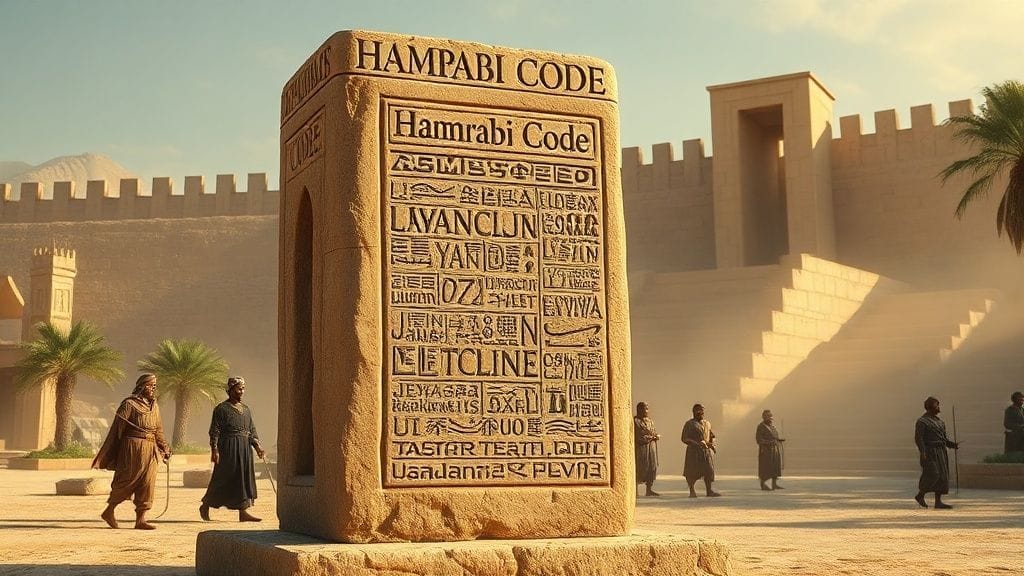
Arguably, the most enduring legacy of Hammurabi is his eponymous law code. Thousands of years before modern legal systems, Hammurabi inscribed a comprehensive set of laws on a towering basalt stele—a monument to justice carved in stone.
Comprising 282 laws, the Code of Hammurabi addressed diverse aspects of daily life: commercial contracts, property rights, family relations, labor conditions, and penalties for theft or fraud. It introduced the famous principle of “an eye for an eye,” yet its legal philosophy combined strictness with pragmatism.
The code was revolutionary for its time, signaling that kingship was responsible for maintaining societal balance and protecting the weak from the strong. Public and permanent, the stele was displayed prominently in Babylon so that all citizens could know the law—a radical transparency in justice.
5. Mesopotamia’s Turbulent Landscape: Politics and Rivals
The political terrain of Mesopotamia was a chessboard of fierce competition. Every king sought to expand territory, control trade routes, or enhance prestige through military victories and religious patronage.
Hammurabi’s contemporaries ranged from warlords to priest-kings, each with fluctuating allegiances. The city of Mari, for instance, was a wealthy commercial hub that Hammurabi struck down to secure northern routes. To the east, Elamites threatened Babylon’s borders, while in the south, the cities of Isin and Larsa contested for regional dominance.
Navigating this volatile environment required tactical genius. Hammurabi alternated between soft diplomacy—marriage alliances, tribute collection—and hard power—the deployment of troops and brutal sieges.
6. The Expansion of an Empire: Conquest and Consolidation
Between 1792 and his death around 1750 BCE, Hammurabi embarked on monumental military campaigns that reshaped Mesopotamia’s map. His conquests unified disparate city-states into a cohesive Babylonian empire, often under a centralized bureaucratic system.
His forces were well-disciplined, employing chariots, arquebuses (later foundations of Mesopotamian warfare), and infantry supported by engineers who built canals and fortifications. The conquest of Larsa in 1763 BCE was a turning point, opening access to the prosperous southern marshlands and trade networks.
After subjugating his foes, Hammurabi rarely imposed harsh occupation. Instead, he incorporated defeated cities into his realm by appointing governors loyal to Babylon and harmonizing local traditions with imperial order.
7. Hammurabi’s Death: A King’s Passing in c. 1750 BCE
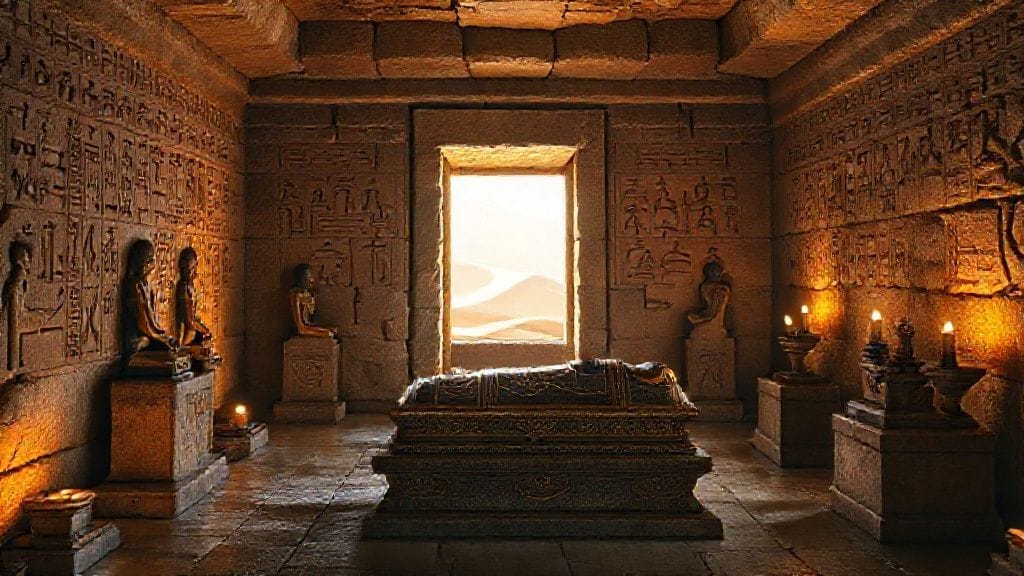
The exact circumstances surrounding Hammurabi’s death remain lost to antiquity, but historians date it around 1750 BCE. The king, now aged and weary, likely died in Babylon amid a transition in power fraught with anticipation and uncertainty.
The passing of such a towering figure was profoundly felt. Hammurabi had maintained a delicate balance between conquest and governance; now, his successors faced the daunting task of preserving this fragile unity. Did his death trigger unrest? How did Babylon’s institutions cope?
Ancient texts suggest a peaceful succession—his son Samsu-iluna inherited the throne—though the following decades showed signs of strain as external enemies and internal dissent tested the empire.
8. The Immediate Aftermath: Succession and Stability
Samsu-iluna, Hammurabi’s eldest son, assumed kingship with the colossal legacy of his father looming over him. Unlike Hammurabi’s energetic conquests, Samsu-iluna’s reign was marked by defensive wars, attempts to quell rebellions, and efforts to maintain Babylon’s expanded borders.
The death of such a formidable ruler often creates power vacuums; yet, the Babylonian administrative and legal frameworks crafted by Hammurabi helped cushion the blow. Officials entrusted with taxation, justice, and religion upheld continuity.
Yet the challenges were unavoidable. Rebellions in peripheral territories surfaced, and rival dynasties sought openings to reclaim lost prestige. The empire’s cohesion began to fray, heralding a slow decline from its golden age.
9. Babylon After Hammurabi: The Legacy of a Monarch
Decades and centuries after his death, Hammurabi remained an emblem of wisdom and authority. Babylon retained its importance as a cultural and political beacon, but the empire he forged gradually fragmented under external pressures from the Kassites and others.
Hammurabi’s legal code transcended political upheavals. Its principles influenced subsequent Mesopotamian law and even echoed millennia later in Roman and modern legal traditions.
The symbolic power of Hammurabi as “the lawgiver” endured in Mesopotamian culture, depicted in art and invoked in royal inscriptions to legitimize authority.
10. The Code’s Endurance: Legal and Social Impact
Hammurabi’s Code outlived its creator remarkably. Its inscribed stele, discovered millennia later by archaeologists, revealed a legal system both sophisticated and human.
Beyond punishment, the code reveals social hierarchies—free men, commoners, slaves—each subject to different regulations, reflecting complex class structures. The idea that law should be publicly displayed and known to all was revolutionary and set a template for governance.
Modern scholars laud Hammurabi’s code as one of humanity’s earliest attempts at codified justice, illuminating early ideas on equity, responsibility, and social contract.
11. Economic Life under Hammurabi: Trade, Agriculture, and Society
Babylonian prosperity partly stemmed from Hammurabi’s regulation of economic life. His laws covered commercial transactions: loans, interest rates, sales contracts, and penalties for deceit. This legal clarity facilitated trade in the bustling markets.
Agriculture thrived on perfected irrigation, with canals channeling waters from the Euphrates, supporting crops like barley and dates. Hammurabi’s reign also saw the rise of craftsmen, merchants, and laborers forming the backbone of Babylon’s economy.
This economic vibrancy fed the empire’s taxes and supported monumental building projects, including temples and city walls—testaments to a flourishing civilization.
12. Religion and Kingship: Divine Mandates and Human Authority
Hammurabi’s authority rested not just on conqueror’s might but on divine sanction. Ancient Mesopotamians believed their kings ruled by the will of gods like Marduk, patron deity of Babylon.
The prologue of the Code explicitly states that Hammurabi was chosen by the gods to bring justice and order. Temples and rituals reinforced this sacred kingship, aligning earthly law with divine will.
This fusion of religion and governance gave Hammurabi’s reign a spiritual legitimacy critical to maintaining social cohesion.
13. Artifacts and Archaeology: Unearthing Babylon’s Past
The stele bearing Hammurabi’s Code was unearthed in 1901 in modern-day Iran, stunning historians with its perfectly preserved cuneiform inscriptions. It stands today in the Louvre Museum—a tangible bridge to a distant era.
Excavations across Babylon have revealed city walls, palatial ruins, and artifacts illuminating everyday life: pottery, jewelry, tablets, and seals.
Each discovery deepens our understanding of the world Hammurabi shaped, offering glimpses into the lives of artisans, priests, warriors, and commoners beneath the shadow of a legendary king.
14. Hammurabi in Historical Memory: From Antiquity to Modernity
Hammurabi’s name echoed through the millennia—not only in scholarly circles but in cultural imagination. The lawgiver was emblematic of justice, order, and strong centralized governance.
In the modern era, Hammurabi’s Code is studied as a milestone in the development of the rule of law. It challenges the notion that justice systems began in the West, affirming the profound contributions of Mesopotamia to human civilization.
Literature, art, and political discourse have often evoked Hammurabi as a symbol of rational governance amid human complexity.
15. Lessons from Babylon: The Ancient Echoes in Today’s World
What does Hammurabi’s death and legacy teach contemporary society? At its core, his story reveals the power of law as a social glue and the eternal challenges of empire-building.
Hammurabi’s efforts to balance justice with power, order with compassion, echo in ongoing debates about leadership and governance. His laws underscore the fundamental human quest for fairness, a quest as relevant now as it was nearly four thousand years ago.
His life also cautions about the fragility of political unity, reminding us that the strength of empires often hinges on the wisdom of their laws as much as the might of their armies.
Conclusion
The death of Hammurabi around 1750 BCE was more than the end of a life—it was the sunset of a monumental epoch in human history. This king, who rose from the muddy banks of the Euphrates to rule an empire and codify laws that still resonate, remains an enduring symbol of justice and civilization.
Though time has crumbled the walls of Babylon and silenced its bustling streets, Hammurabi’s vision endures in the very notion of law as a beacon for humanity. His story is a testament to the power individuals hold in shaping societies, and a reminder that the foundations of modern governance rest on the shoulders of ancient giants.
As we reflect on Hammurabi’s life and death, we enter not just the world of ancient Mesopotamia but the ongoing human journey toward order, justice, and collective identity.
FAQs
Q1: Who was Hammurabi and why is he significant?
A1: Hammurabi was the sixth king of Babylon who reigned around 1792–1750 BCE. He is best known for creating one of the earliest and most complete written legal codes, which laid foundational principles for justice and governance.
Q2: What was the Code of Hammurabi?
A2: The Code was a set of 282 laws carved onto a basalt stele, covering topics from property and commerce to family and criminal law. It codified “an eye for an eye” justice and aimed to provide fairness and order within his realm.
Q3: How did Hammurabi expand Babylon?
A3: Through a combination of military conquest, diplomacy, and strategic alliances, Hammurabi unified multiple city-states across Mesopotamia, establishing Babylon as a major empire.
Q4: What happened after Hammurabi died?
A4: His son Samsu-iluna succeeded him, but the empire faced growing external pressures and internal challenges. The centralized control gradually weakened, although the legal and administrative systems persisted for some time.
Q5: How do we know about Hammurabi today?
A5: Archaeological discoveries, particularly the basalt stele of the Code found in 1901, alongside cuneiform tablets and ruins from Babylon, provide detailed insights into his reign and legacy.
Q6: What impact did Hammurabi’s Code have on later civilizations?
A6: The Code influenced subsequent Mesopotamian legal systems and is considered a precursor to later codes, including Roman law, making it a cornerstone in the history of jurisprudence.
Q7: What aspects of Hammurabi’s rule were unique for his time?
A7: His codification of laws publicly accessible to all citizens, his blend of divine and human authority, and his empire-building strategy that combined military prowess with administrative sophistication were remarkable.
Q8: How is Hammurabi remembered in modern culture?
A8: He is frequently cited as a pioneer of legal systems and justice, symbolizing the ancient pursuit of social order, and his code remains a subject of academic study and popular fascination.