Table of Contents
- The Final Day of a King: Sennacherib’s Last Moments in Nineveh
- The Rise of Sennacherib: From Crown Prince to Warrior King
- The Empire at its Zenith: Assyria Under Sennacherib’s Rule
- Nineveh: The Heart of a Mighty Capital
- The Shadowed Hallways: Political Intrigue in the Royal Court
- Religious Tensions and Prophecies Foretelling Doom
- Enemies Within and Without: The Turbulent Geopolitical Landscape
- The Assassination: A Calculated Blow in the Palace of Nineveh
- Who Killed the King? Unraveling the Motives and Players
- The Aftermath: Immediate Chaos and Succession Struggles
- Esarhaddon’s Ascension: From Survivor to Symbol of Continuity
- The Fall of Nineveh: Seeds Planted in 681 BCE
- The Legacy of Sennacherib: Tyrant, Reformer, or Tragic Figure?
- Archaeological Echoes: Rediscovering Sennacherib’s Time
- Assyrian Memory and Modern Interpretations of the Assassination
- Sennacherib in Biblical and Classical Accounts
- The Assassination’s Impact on Mesopotamian Political Culture
- The Broader Ancient Near East: Reverberations Beyond Assyria
- How Power, Faith, and Family Clashed in Ancient Empires
- Lessons from Nineveh: Violence, Succession, and Empire Building
Born in the early hours of a turbulent autumn day in 681 BCE, the city of Nineveh stirred under the weight of shadows long cast by its most formidable monarch, Sennacherib. The great palace, strewn with reliefs of conquest and divine might, suddenly became a theatre of betrayal and bloodshed. In an assassination cloaked in mystery and dynastic vengeance, the king who had lorded over Assyria’s vast empire for nearly a quarter-century fell not on the battlefield, but at the hands of those closest to him—his own sons. The echoes of that violent day would ripple across Mesopotamia and history itself, sealing the fate of a king, a city, and an empire.
The Final Day of a King: Sennacherib’s Last Moments in Nineveh
As dawn broke over the Tigris, Nineveh was a city suspended between trapped destiny and imperial grandeur. The air was thick with incense and the murmurs of courtiers. Deep within the labyrinthine walls of the royal palace, Sennacherib moved through chambers adorned with the spoils of wars past. Yet, beneath the sheen of power, whispers of rebellion stirred like a gathering storm. It would be in this labyrinth, amid familial echoes and political knives, that the old king met his end.
Imagine the scene: a man once so feared by foreign kings and gods now caught unawares by the very sons he had groomed as heirs. The blood that spilled in the palace marked the twilight of Sennacherib’s reign and heralded a grim passage for Assyria. This was not a fleeting coup but a carefully orchestrated act, born of profound fractures within the Assyrian royal family, set amidst the pressures of a sprawling empire stretched to its limits.
The Rise of Sennacherib: From Crown Prince to Warrior King
Before Nineveh’s palace became a blood-soaked stage, Sennacherib was a dynamic force who transformed Assyria. Born as the son of Sargon II, he carried the burden of upholding a legacy of conquest. Ascending the throne in 705 BCE under tumultuous circumstances—following Sargon’s sudden death—Sennacherib swiftly asserted his authority through relentless military campaigns. His reign marked the fluctuation between brutal wars and grand architectural projects, each reinforcing his image as both destroyer and builder.
Sennacherib’s name would become infamous, his military exploits striking fear into the kingdoms of Judah, Babylon, and Elam. His siege of Jerusalem remains etched into historical and biblical memory, symbolizing both the zenith of Assyrian military power and the fragility of imperial control. However, Sennacherib was not merely a warrior king; he was a patron of the arts and a visionary administrator who sought to reconfigure Assyria’s capital into a city worthy of its empire.
The Empire at its Zenith: Assyria Under Sennacherib’s Rule
By the time of his assassination, Sennacherib’s empire stretched across Mesopotamia—an agglomeration of diverse peoples, cultures, and ideologies. Governing this vast territory required ruthless efficiency and a keen sense for diplomacy and suppression. The king’s campaigns carved the map anew, while his infrastructure works, including the ominous “Palace without Rival” and the city's massive aqueduct, highlighted an era of unprecedented ambition.
Yet beneath the surface of Assyria’s dazzling expansion lay growing tensions—ethnic unrest, economic strains, and religious factionalism—which would strain the social fabric and embolden dissent. Governing an empire predicated on fear and divine mandates posed questions of legitimacy, loyalty, and the sustainability of such autocratic power.
Nineveh: The Heart of a Mighty Capital
Nineveh was no mere city; it was a statement. Situated on the eastern bank of the Tigris, this metropolis thrived on its grandiosity and symbolism. The palace walls bore witness to centuries of bloodshed and glory, decorated with reliefs immortalizing gods and kings, winged bulls, and battle scenes. A cosmopolitan hub, it was home to scribes, soldiers, priests, and the personal retinues of the royal family.
However, within its imposing stone fortifications, factionalism brewed quietly. As the nerve center of Assyria’s power machine, Nineveh presided over an empire that both empowered and suffocated its inhabitants. The very architecture of power in Nineveh contained the seeds of paranoia and fatal conflict, made manifest in the king’s assassination.
The Shadowed Hallways: Political Intrigue in the Royal Court
The inner sanctums of Nineveh’s palace were rife with intrigue—a delicate dance of alliances and rivalries. Sennacherib’s family life mirrored the political theatre outside: multiple wives, numerous sons, and conflicting ambitions. At the heart of this dynastic drama were questions of succession and favoritism, with sons engaging not only in rivalry but in outright hostility.
Contemporary chronicles and cuneiform tablets suggest increasing domestic trouble for Sennacherib towards the end of his life. Some sons, alarmed by their father’s disposition or his choice of heir, conspired with courtiers and generals. This was not merely a family spat but a calculated plot driven by power, survival, and the subconscious dread of an ending empire.
Religious Tensions and Prophecies Foretelling Doom
Religion was more than ritual in Assyria; it was a lens through which fate and kingship were interpreted. Sennacherib himself was deeply mindful of the gods, often seeking their favor through monumental constructions and sacrifices. However, the priesthood wielded their own power and could shape political outcomes subtly.
In the lead-up to the assassination, ominous omens and prophecies circulated among both elite and common folk. These portents, inscribed on clay tablets or whispered in the temples, spoke of a violent death and a kingdom’s unraveling. Scholars argue that such religious anxieties exacerbated tensions, making the assassination seem not merely a political move but a fatalistic climax to divine judgment.
Enemies Within and Without: The Turbulent Geopolitical Landscape
Beyond internal strife, the Assyrian empire faced an external world rife with challenges. Babylonia, Elam, Urartu—all vied for autonomy or dominance. Sennacherib’s earlier campaigns had sown terror but also hatred. His ruthless approach to rebellion, including the destruction of Babylon, failed to quell dissent fully.
These pressures added urgency and paranoia to the king’s final years. The uncertainty of loyalty among vassal states and uneasy relationships with neighboring powers created an explosive geopolitical setting. Sennacherib’s assassination thus took place not in isolation but as part of a wider pattern of shifting alliances and fragile control.
The Assassination: A Calculated Blow in the Palace of Nineveh
According to both Assyrian records and later biblical references, Sennacherib was assassinated while praying in the temple of his god Nabu, in the palace precincts. His sons—likely Arda-Mulissu and possibly Nabu-shar-usur—are named as the perpetrators. The reasons remain contested: a power grab, revenge, religious sanction, or a combination.
It was a brutal event, executed with precision and secrecy. Assassination in royal Mesopotamia was not unheard of, but regicide carried immense symbolic weight. The king’s death was both a personal tragedy and a seismic shift in Assyrian history.
Who Killed the King? Unraveling the Motives and Players
The momentum leading to Sennacherib’s murder likely involved complex motivations. Jealousy over succession rights, anger at the king’s policies, fear of diminishing power, or influence from priestly factions may have played roles. Contemporary texts hint at conspiracies involving elite courtiers, military commanders, and religious figures.
Family betrayal is the harshest dimension—sons against father. The complexity of Assyrian royal family stability often hinged on violent deeds, and for Sennacherib, his sons’ hand was fatal. Understanding their motives opens a window into the fragile interplay of loyalty and ambition in ancient empires.
The Aftermath: Immediate Chaos and Succession Struggles
Sennacherib’s assassination did not end with his death; rather, it unleashed a period of turmoil. While one son, Esarhaddon, eventually secured the throne, the transition was anything but smooth. Factional warfare persisted as various parties vied for influence.
The king’s murder destabilized the administration and emboldened rebellious provinces. Assyria’s borders became vulnerable, and internal policies shifted to favor consolidation over expansion. The episode planted a lingering unease that shadowed the empire’s final decades.
Esarhaddon’s Ascension: From Survivor to Symbol of Continuity
Esarhaddon, ultimately victorious among his brothers, emerged as a stabilizing figure. However, his rise was marked by political savvy and deep awareness of his father’s fate. He undertook reforms, rebuilt Babylon, and projected an image of peace and reconciliation.
Yet Esarhaddon’s reign bore the weight of his father’s legacy—a stark reminder of the dangers of palace intrigue. His survival and success testify to the endurance of Assyria’s institutions, even in the face of regicide.
The Fall of Nineveh: Seeds Planted in 681 BCE
The assassination sowed the first cracks in Nineveh’s armor. Though the city survived for several more decades, the internal divisions and weakened central authority contributed to its downfall. In 612 BCE, Nineveh fell to a coalition of Medes, Babylonians, and Scythians, ending the Assyrian Empire.
Sennacherib’s violent end was a harbinger of this decline. The ancient capital’s grand edifices would crumble, turning from symbols of power to mounds of ruins swallowed by time.
The Legacy of Sennacherib: Tyrant, Reformer, or Tragic Figure?
Historical memory portrays Sennacherib in varied lights: as a ruthless despot who razed cities, an innovative builder who uplifted Assyrian art and infrastructure, or a human figure undone by internal conflict. His assassination forces us to reflect on the cost of empire and the fragility beneath grandeur.
Sennacherib embodies the duality of power: glory shadowed by violence, ambition checked by betrayal, and the eternal human struggle within ruling families.
Archaeological Echoes: Rediscovering Sennacherib’s Time
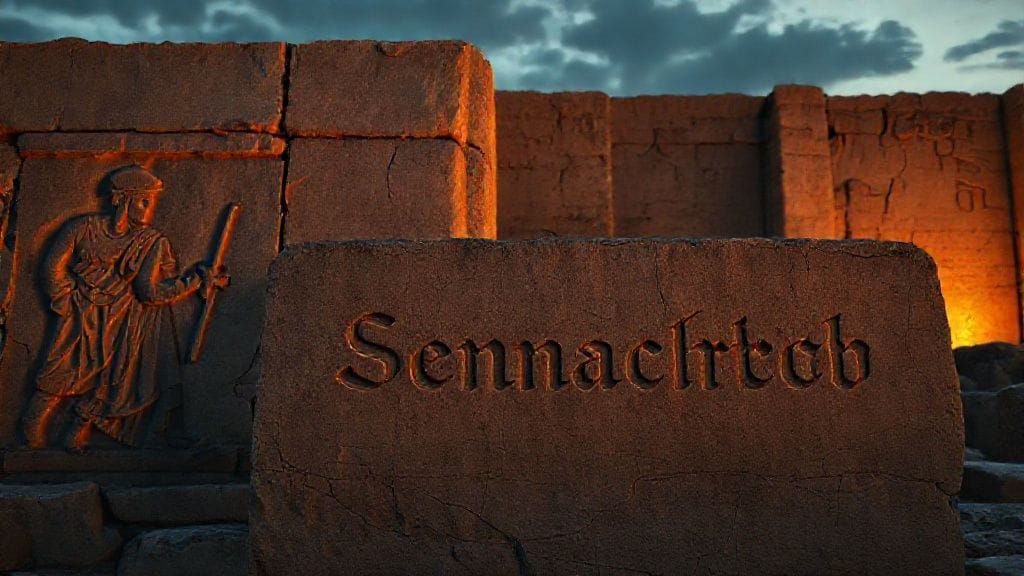
Excavations of Nineveh since the 19th century have unveiled palatial ruins bearing inscriptions and reliefs directly linked to Sennacherib. These artifacts allow historians to reconstruct his reign in vivid detail.
Though the king’s death remains mysterious, the material culture of Assyria preserves his memory—terrifying and magnificent alike—and the brutal reality of court life that culminated in his end.
Assyrian Memory and Modern Interpretations of the Assassination
Modern scholarship has approached Sennacherib’s assassination through multiple lenses: political, religious, and psychological. It serves as a case study in ancient power dynamics but also reflects universal themes of trust, family, and mortality.
Public fascination continues, fueled by biblical narratives and archaeological discoveries, highlighting enduring questions about the nature of leadership and its risks.
Sennacherib in Biblical and Classical Accounts
Sennacherib’s life and death resonate beyond Mesopotamian cuneiform. Biblical texts depict his siege of Jerusalem and his subsequent assassination, often with theological overtones, framing him as an instrument of divine wrath.
Classical historians likewise noted his fate as a cautionary tale about hubris and divine justice. This cross-cultural resonance adds layers to his story, making it one of ancient history’s most enduring dramas.
The Assassination’s Impact on Mesopotamian Political Culture
The regicide of Sennacherib left an imprint on how Mesopotamian rulers managed power, succession, and internal security. It reinforced the precariousness of royal life and contributed to the evolution of court protocols, bodyguards, and propaganda designed to deter plots.
Assyria’s violent tradition of palace coups influenced neighboring cultures and later empires, marking a chapter in the longue durée of ancient political practices.
The Broader Ancient Near East: Reverberations Beyond Assyria
Sennacherib’s assassination reverberated through the complex web of Near Eastern relations. Babylonians, Medes, and Elamites watched closely as Assyria’s internal fractures unfolded, sensing opportunity.
The event thus shifts from a personal tragedy to a pivot point in the decline of Mesopotamia’s hegemonic power and the reshaping of Near Eastern political landscapes.
How Power, Faith, and Family Clashed in Ancient Empires
The story of Sennacherib’s assassination stands as an archetype of political and familial tension in ancient empires. Kingship was a sacred yet vulnerable institution, entangled with divine favor and human ambition.
This narrative reveals how personal relationships—father and sons—intersected with the grand sweep of history, underlining the human dimensions behind ancient power struggles.
Lessons from Nineveh: Violence, Succession, and Empire Building
Ultimately, the assassination teaches profound lessons about the fragile nature of empire and the recurring patterns of history. It reminds us that even the greatest empires rest on precarious alliances, and that power, however absolute, is never secure.
Sennacherib’s violent end and its consequences resonate through time as testament to the costs of ambition and the complexities of ruling an ancient world fraught with rivalries.
Conclusion
The story of Sennacherib’s assassination in 681 BCE is more than a chronicle of murder; it is a human tragedy set against the backdrop of a mighty empire’s twilight. It reveals the paradoxes of power: the king’s unmatched authority lived side by side with vulnerability to betrayal—especially from those closest to him. The violent act that brought down one of Assyria’s most formidable rulers unfolded in a palace etched with walls of conquest, piety, and fear.
Yet, from the bloodshed rose a new order under Esarhaddon, a testament to resilience amid chaos. The assassination underscored Assyria’s internal fragility even as it towered above its contemporaries. More than three millennia later, this event challenges us to contemplate the fragile human realities beneath the veil of imperial splendor, and the timeless struggles over loyalty, power, and survival that shape history.
FAQs
1. Why was Sennacherib assassinated, and who were the main conspirators?
Sennacherib was assassinated primarily due to internal family rivalries over succession, political intrigue within the royal court, and possibly religious tensions. His sons Arda-Mulissu and Nabu-shar-usur are often cited as the main conspirators, motivated by a combination of ambition and fear of being sidelined.
2. How did Sennacherib’s assassination affect Assyria’s stability?
The assassination destabilized the empire, leading to succession struggles and emboldening rebellious provinces. Though Esarhaddon eventually consolidated power, the event exposed vulnerabilities that contributed to Assyria’s eventual downfall.
3. What role did religion play in the events surrounding the assassination?
Religion was central in interpreting the king’s reign and death. Prophecies and omens foretold doom, and the assassination itself took place in a temple context. Religious factions could have influenced court politics and justified the regicide as divine will.
4. How is Sennacherib portrayed in biblical accounts?
Biblical texts often depict Sennacherib as a prideful invader punished by God, emphasizing his failed siege of Jerusalem and his eventual violent death, framing him as an instrument of divine judgment.
5. Who succeeded Sennacherib, and how did he manage to maintain power?
Esarhaddon, one of Sennacherib’s sons, succeeded him. He secured his rule through skillful political maneuvering, reforms, and by rebuilding relations with former enemies like Babylon, projecting an image of stability.
6. What archaeological evidence informs us about Sennacherib’s reign and assassination?
Excavations in Nineveh have uncovered palace ruins, inscriptions, and reliefs depicting Sennacherib’s reign. Though no direct archaeological evidence of the assassination exists, cuneiform texts provide the primary historical accounts.
7. How did Sennacherib’s assassination influence political culture in Mesopotamia?
It highlighted the risks of palace intrigue and regicide, prompting later rulers to strengthen internal security and succession protocols. The event became a cautionary tale within Mesopotamian political and cultural narratives.
8. Why is Sennacherib’s assassination considered a turning point in Near Eastern history?
The assassination marked the beginning of Assyria’s internal decline, shifting the balance of power in the region. It emboldened other powers and presaged the fall of Nineveh and the empire’s eventual collapse.