Table of Contents
- The Final Breath of a Philosopher: Death of Plato in Athens, 348/347 BCE
- Athens in the Fourth Century BCE: A City of Philosophers and Turmoil
- Plato’s Life: From Aristocratic Roots to Philosophical Pinnacle
- The Academy: Birthplace of Western Philosophy and Intellectual Community
- Between Politics and Philosophy: Plato’s Attempts to Influence Governance
- The Last Days: Context and Circumstances of Plato’s Death
- Witnesses of a Legacy: Students and Contemporaries at the End
- Philosophy at a Crossroads: What Died with Plato?
- The Immediate Aftermath: The Academy and the Plato’s Successors
- Athens 348/347 BCE: Political and Social Climate at Plato’s Passing
- Plato’s End and the Fate of Socrates’ Heritage
- How Plato’s Death Changed the Philosophical Landscape
- The Evolution of the Academy Post-Plato
- Platonic Ideas Beyond Death: Influence in the Hellenistic World
- Echoes Through Time: Plato’s Death in Art and Literature
- Revisiting the Ancient Sources: Diogenes Laertius, Plutarch, and Beyond
- The Mystery and Myth Surrounding Plato’s Final Moments
- Philosophical Mortality: Death in the Thought of Plato Himself
- Plato’s Death and the Rise of New Philosophical Movements
- The End of an Era: Athens’ Intellectual Shift After Plato’s Passing
- Conclusion
- FAQs
- External Resource
- Internal Link
The Final Breath of a Philosopher: Death of Plato in Athens, 348/347 BCE
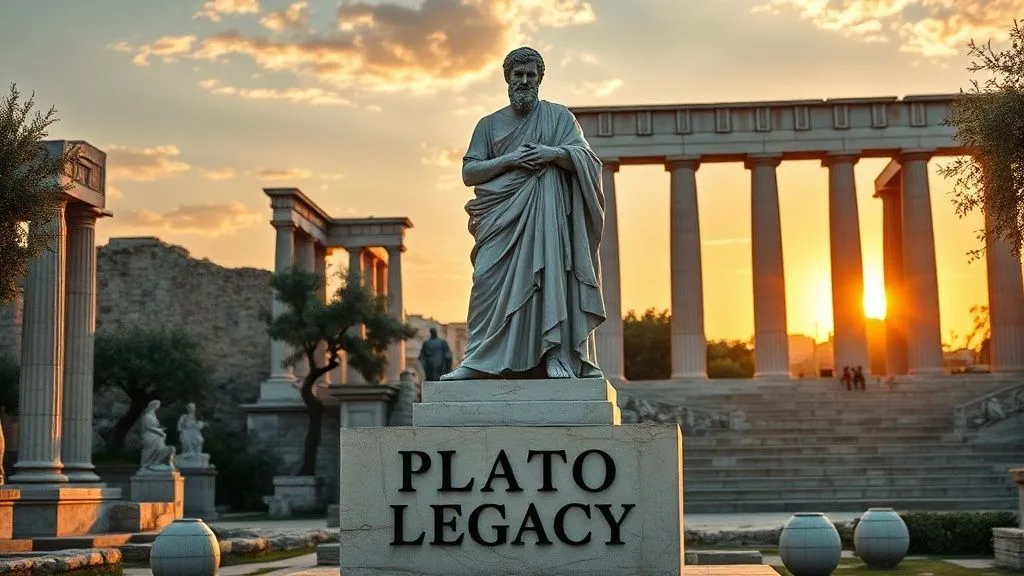
A dim light flickered through the marble columns of the Academy in Athens, the sound of quiet footsteps weaving through the olive groves surrounding the grove where students once debated the nature of justice, reality, and the soul. In the chill of a late afternoon, Plato—aged, worn but still dignified—breathed his last, departing from a world he had not only observed but profoundly reshaped. His death around 348 or 347 BCE marked not just the end of a life but the closing of a seminal chapter in the intellectual history of Athens and, indeed, the Western world. The air was thick with a mingling of reverence and uncertainty, for with Plato’s passing, Athens lost its crowning intellectual luminary.
The city, steeped in political tension and philosophical ferment, stood witness to a transformation that would echo through time. Yet, to fully grasp the significance of Plato’s death, one must enter his world—the Athens of the fourth century BCE—a place where ideas clashed as fiercely as armies once had, where democracy struggled with oligarchy, and where wisdom sought to pierce the veil of reality.
Athens in the Fourth Century BCE: A City of Philosophers and Turmoil
Athens of Plato’s final years was a city still breathing in the aftershocks of the Peloponnesian War—still grappling with the Spartan hegemony, fragile democracy, and recurrent political upheaval. The once-mighty polis, which had birthed democracy and theater, now bore scars of ideological schism and lost imperial glory.
Philosophy flourished amidst this tension, with schools offering not only knowledge but political vision. Plato himself, born into an aristocratic family with ties to the last tyrants of Athens, embodied this complex interplay of tradition, power, and reform. The city was a crucible where idealism and pragmatism vied for supremacy—a place where the pursuit of truth was inextricably linked to the fate of governance.
Plato’s Life: From Aristocratic Roots to Philosophical Pinnacle
Plato’s journey to philosophical immortality began in this charged environment. Born circa 427 BCE into a noble Athenian family, he was steeped early in the city’s aristocratic and political milieu. Yet from the start, his path diverged from mere politics to the realm of ideas, influenced deeply by Socrates—the gadfly of Athens.
His encounters with Socrates would irrevocably shape his conception of philosophy as a moral and political endeavor. After Socrates’ execution in 399 BCE, Plato embarked on travels, absorbing Egyptian and Pythagorean doctrines, cultivating his vision of a world of Forms—a realm of perfect ideals beyond the shadows cast by the imperfect material world.
The Academy: Birthplace of Western Philosophy and Intellectual Community
Perhaps Plato’s greatest legacy was the founding of the Academy around 387 BCE, often considered the first university in history. Nestled just outside the city walls on sacred land once dedicated to Academus, the school was not simply a place for lectures—it was a vibrant community dedicated to lifelong inquiry and dialectic.
The Academy was a microcosm of Plato’s thought: a search for objective knowledge about ethics, politics, metaphysics, and the sciences. It attracted students from across the Greek world, including Aristotle, whose later divergence would spark a rival tradition of thought. Within the groves of the Academy, dialogues reverberated through the centuries.
Between Politics and Philosophy: Plato’s Attempts to Influence Governance
Philosophy in Plato’s mind was inseparable from politics. His ideal state, vividly laid out in the Republic, sought to replace the fickle governance of democracies and tyrannies with enlightened rule by philosopher-kings. The relationship with figures like Dion of Syracuse speaks to his real-world attempts to implement these ideas.
Yet, his political engagements often ended in frustration. Intricacies and betrayals at Syracusan courts revealed the limits of philosophical power over raw political realities. These experiences deepened Plato’s skepticism about human nature and governance, even as they fueled his theoretical visions.
The Last Days: Context and Circumstances of Plato’s Death
The precise circumstances surrounding Plato’s death remain enveloped in uncertainty, a blend of myth and historical speculation. Ancient sources like Diogenes Laertius provide scant details, yet a picture emerges of an old man who continued to teach until his final moments.
It is said that Plato died peacefully in Athens, surrounded by pupils and admirers, the patterns of daily philosophical inquiry unchanged to the end. Some accounts suggest his funeral was marked by honors befitting a distinguished citizen, while others hint at the melancholy mood of a city aware that a luminous star was extinguishing.
Witnesses of a Legacy: Students and Contemporaries at the End
Those present in Plato’s twilight years testify to his enduring charisma and intellectual rigor. Figures like Speusippus, his nephew and successor as head of the Academy, were already poised to carry forward the philosophical torch.
Aristotle, though already forging his path, lingered within the shadow of his teacher’s influence. For the younger generation, Plato’s death was a profound moment: the closing of a direct dialogue with the philosopher who had revolutionized their very understanding of knowledge and virtue.
Philosophy at a Crossroads: What Died with Plato?
Plato’s death marked a philosophical turning point. While his ideas lived on, the fragility of his vision was evident—questions about the nature of knowledge, ethics, and politics remained unresolved. The ideal of the philosopher-king receded further into abstraction as the Hellenistic era dawned with its new concerns for practical ethics and individual salvation.
Was it the death of a great man, or the twilight of an era where philosophy sought to govern cities? Plato’s passing symbolized the tension between the ideal and the real, a dialectic that would animate philosophical discourse for millennia.
The Immediate Aftermath: The Academy and Plato’s Successors
In the wake of Plato’s death, the Academy transformed under the leadership of Speusippus and later Xenocrates. The school grew more formalized, its curriculum expanding, but some say losing the intense visionary spirit that had defined Plato’s tenure.
Debates intensified within the Academy, leading to nuanced branches of Platonism and philosophical refinements that maintained, but also complicated, the founder’s legacy. The institutional survival of the Academy was testimony to Plato’s enduring impact, even as philosophical innovation continued without its creator.
Athens 348/347 BCE: Political and Social Climate at Plato’s Passing
The Athens of 348/347 BCE was a city striving to regain stability after decades of conflict. The fragile democracy wrestled with rising Macedonian power under Philip II, whose ambitions ominously shadowed the city-state.
Social tensions simmered alongside philosophical debates; the murder of political figures and the oscillations between oligarchy and democracy highlighted the volatility. The intellectual vibrancy sparked by Plato shone against a backdrop of uncertainty, a beacon threatened by the storms of history.
Plato’s End and the Fate of Socrates’ Heritage
Plato’s death also underscored a generational succession in preserving and transforming the Socratic legacy. Having immortalized Socrates in his dialogues, Plato left behind a philosophical genealogy that his successors would continually interpret.
With him passed a direct link to the man who had challenged Athenian society with questions about virtue and knowledge. Yet, it fell to others—Aristotle, the Stoics, and later Neoplatonists—to carry the torch into new territories.
How Plato’s Death Changed the Philosophical Landscape
Plato’s death forced the philosophical community to reckon with its future direction. Schools competed and differentiated themselves, such as the Peripatetics founded by Aristotle and the Epicureans promoting an earthly happiness.
His passing allowed for diversification in thought, but also a nostalgic return to his texts as canonical. Plato’s Academy became a historical institution, both guardian and innovator, but inevitably no longer the original firebrand.
The Evolution of the Academy Post-Plato
The Academy flourished into an intellectual powerhouse for centuries, but without Plato, it evolved. The second and third scholarchs moved the school’s focus towards metaphysics and ethics, often emphasizing logical rigor over the grand political visions of their founder.
This evolution mirrored broader trends in Hellenistic philosophy—a turn from the city-state to the individual, from ideal states to personal tranquility.
Platonic Ideas Beyond Death: Influence in the Hellenistic World
Despite Plato’s bodily death, his ideas permeated cultures far beyond Athens during the Hellenistic age. From Alexandria to Rome, Platonic thought influenced mathematics, metaphysics, and theology.
Philosophers such as Plotinus during late antiquity synthesized Platonic ideas with mysticism, demonstrating the timelessness of Plato’s vision. His death was merely a historical punctuation in a conversation still ongoing.
Echoes Through Time: Plato’s Death in Art and Literature
Through the centuries, Plato’s death has inspired artists and writers who sought to capture the gravity of losing a thinker who reshaped humanity’s self-understanding. Renaissance thinkers revered him alongside Aristotle, and Romantic poets imagined his passing as the sunset of an age.
Though historical details are sparse, the symbolic weight of Plato’s death endures—a moment reflecting both human mortality and immortal influence.
Revisiting the Ancient Sources: Diogenes Laertius, Plutarch, and Beyond
Our knowledge of Plato’s death largely comes from late ancient authors like Diogenes Laertius and Plutarch, whose works blend history and anecdote. These sources, while invaluable, carry biases and gaps.
Piecing together the circumstances requires a delicate balance of critical reading and informed speculation, illustrating the challenges historians face in reconstructing such distant moments.
The Mystery and Myth Surrounding Plato’s Final Moments
Ancient anecdotes suggest unusual circumstances—a festival, a dinner party, or a profound final dialogue—but these remain tantalizingly vague.
Some legends claim Plato died in his sleep or while attending a musical contest, adding layers of myth to a historical fact. This interplay of myth and reality deepens the human fascination with the man who dared to question existence itself.
Philosophical Mortality: Death in the Thought of Plato Himself
Plato’s own writings grapple with mortality, most famously in the Phaedo, where Socrates discusses death as a liberation of the soul. It is poignant that Plato’s own death occurred in the city where these very ideas were born and nurtured.
His acceptance of death as a passage rather than an end informs how we might view the philosopher’s final act—not a cessation but a transition to another form of existence or knowledge.
Plato’s Death and the Rise of New Philosophical Movements
The vacuum left by Plato’s death was quickly filled by other philosophical schools evolving from or reacting to his teachings. The Stoics, Epicureans, and Skeptics emerged, each offering unique answers to questions Plato had posed.
This proliferation signifies not an end but a seedbed of intellectual diversity, an inheritance of debate and discovery.
The End of an Era: Athens’ Intellectual Shift After Plato’s Passing
Plato’s death symbolized the fading of classical Athens’ golden intellectual age. The rise of Macedon and changing political realities reoriented the Greek world.
Yet, Athens remained a hub of philosophy, even as the nature of its influence shifted from political engagement toward more abstract, cosmopolitan concerns.
Conclusion
Plato’s death around 348/347 BCE in Athens was both an ending and a beginning. The philosopher who had mapped the contours of ideal forms and earthly realities passed not in upheaval but in the quiet dignity befitting a life devoted to truth.
His death marked the final closure of a living tradition springing directly from Socrates himself, yet it also ignited an expansive intellectual legacy that would resonate through centuries. From the marble groves of the Academy to the libraries of Alexandria, from the debates of Renaissance scholars to the classrooms of today, Plato’s shadow endures.
Though human, mortal, and bound by time, Plato transcended death through the enduring power of ideas—inviting each generation to question, to seek, and ultimately, to dream.
FAQs
1. What were the main causes leading to Plato’s death?
Plato died of natural causes, likely old age, around 348 or 347 BCE. Ancient sources do not mention illness or violence, suggesting he passed peacefully in Athens.
2. Who succeeded Plato as head of the Academy?
Speusippus, Plato’s nephew, became the second scholarch of the Academy, steering the institution after Plato’s death.
3. How did Plato’s death affect the political landscape of Athens?
While Plato was influential intellectually, his death did not cause immediate political change. Athens remained politically unstable, with Macedonian power rising shortly after.
4. What was the importance of the Academy at the time of Plato’s death?
The Academy was a hub for philosophical study and debate, representing the institutionalization of Plato’s ideas and serving as a beacon of intellectual life in Athens.
5. Did any of Plato’s students play a significant role after his death?
Yes, Aristotle notably carried forward and challenged Plato’s teachings, founding the Lyceum and developing his own philosophical system.
6. How reliable are the historical accounts of Plato’s death?
Accounts come from later ancient historians and philosophers and mix facts with legend, requiring cautious interpretation.
7. In what ways did Plato’s death influence subsequent philosophical thought?
His death led to diversification within the Academy and stimulated new schools of thought, such as Stoicism and Epicureanism, built in part on Platonic ideas.
8. Is there any symbolism in the way Plato approached death?
Yes, Plato’s own philosophy viewed death as the soul’s release from the body, reflected poignantly in his last moments framed by his lifelong quest for truth.