Table of Contents
- The Last Breath of a Dictator: Sulla’s Death in Cumae
- From Consul to Dictator: The Rise of Lucius Cornelius Sulla
- Rome on the Edge: Political Turmoil in the Late Republic
- The Shadow of the Civil Wars: Sulla’s Path of Blood and Power
- Italy as a Backdrop: Why Cumae Was Sulla’s Final Stage
- The Anatomy of a Death: Historical Accounts of Sulla’s Passing
- A Man of Contradictions: Sulla the Reformer and Tyrant
- The Legacy of the Proscriptions: How Death Reshaped Rome’s Elite
- The Aftermath in Rome: Power Vacuum and Political Turmoil
- Cumae: The City Witness to the Fall of a Dictator
- Tales from the Sidelines: How Contemporaries Perceived Sulla’s Death
- The Transformation of the Roman Senate Post-Sulla
- Sulla’s Death and the Dawn of a New Republic Crisis
- Reflections on Mortality: Sulla’s Retreat and Final Days
- Echoes Through Time: Sulla’s Influence on Later Roman History
- Conclusion: The End of an Era and the Birth of Unrest
- FAQs on Lucius Cornelius Sulla’s Death and Its Historical Context
- External Resource
- Internal Link
The Last Breath of a Dictator: Sulla’s Death in Cumae
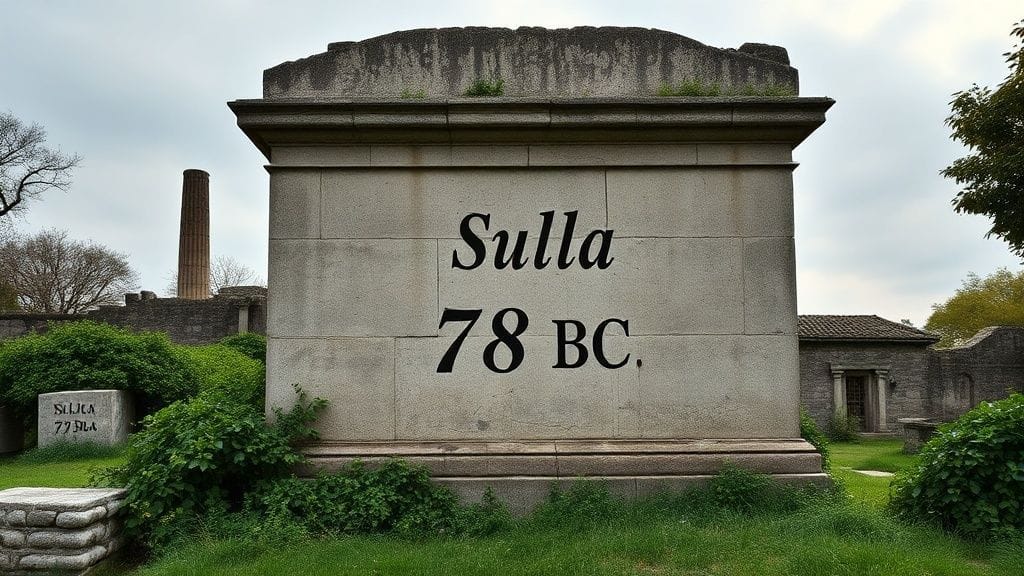
In the oppressive heat of the Italian summer of 78 BCE, the man who had once held the very life of Rome in his hands was fading away. Lucius Cornelius Sulla—general, reformer, dictator, and pariah—lay in his villa near the ancient coastal town of Cumae, surrounded by weariness and silence. The air trembled with the echoes of his past: slain enemies through proscription lists, shattered political alliances, and a city struggling to recover from his iron grip.
Sulla’s death was not marked by fanfare or grandeur but by a quiet retreat from the brutal stage he had dominated for over a decade. This was a dictator who had dictated not just the fate of Rome, but also the very rules by which its future would be shaped—and yet, now, his own story was only moments from closure.
But this was no mere passing. It was the last act in a drama of ambition and mortality, a narrative deeply etched into the foundations of a Republic slowly spiraling toward its own demise.
From Consul to Dictator: The Rise of Lucius Cornelius Sulla
To understand the gravity of Sulla’s death, one must retrace the meteoric path that brought him from a patrician youth to Rome’s most feared and powerful leader. Born into the Cornelii, a family with a respected yet waning political legacy, Sulla showed early brilliance in military and oratory, rising swiftly through Rome’s ranks.
The late 2nd and early 1st centuries BCE were years of immense social disruption for Rome—economic inequality widened, veteran soldiers were often left landless, and political factions jockeyed for control. Sulla’s destiny was forged amidst these tensions. His early campaigns against Rome's external enemies, especially during the Jugurthine War, earned him fame and notoriety; but it was his rivalry with Gaius Marius over command in the Social War and later the Mithridatic War that marked him as an unyielding force willing to surpass all legal and moral boundaries.
The Senate’s fear and admiration culminated in Sulla becoming Rome’s first dictator in over a century, holding extraordinary powers intended to restore order but which he wielded as an agent of ruthless reform and retribution.
Rome on the Edge: Political Turmoil in the Late Republic
The Republic in Sulla’s era was a state teetering on chaos. The centuries-old balance between aristocratic Senate and tribunes, patricians and plebeians, had fractured under rising populism and militarized politics. The land issue, the question of Roman citizenship for Italian allies, and the polarizing rivalry between factions made governance a lethal game.
Sulla’s return to Rome in 82 BCE after his campaign in the East was not a triumphant homecoming but a violent takeover. His subsequent civil war was not just a clash of armies, but a war of ideas—between aristocratic supremacy and popular rights, between old Rome and a new, uncertain future.
Throughout these years, violence stalked the streets; the infamous proscriptions—lists of enemies condemned without trial—decimated opposition and entrenched Sulla’s reign of fear.
The Shadow of the Civil Wars: Sulla’s Path of Blood and Power
Sulla’s march on Rome was unprecedented. Never before had a Roman general so brazenly wielded his legions to seize the city itself. His victories were pyrrhic in many ways, for they split the Republic and sowed seeds of civil strife that would fester long after.
Yet, in the aftermath of his triumph, Sulla did not simply cling to power. He reformed the constitution, empowering the Senate, limiting the tribunes, and reshaping the courts—all in the name of restoring the Republic’s old order.
But the cost was immense: tens of thousands executed, cities pillaged, political enemies exiled or slaughtered, and the fragile institutions of Rome left irreparably shaken.
Italy as a Backdrop: Why Cumae Was Sulla’s Final Stage
Cumae, a city with roots stretching back to Greek colonists, offered Sulla a refuge from the maelstrom of Rome. Situated on the Bay of Naples, its temperate climate and serene landscapes were a stark contrast to the turmoil of Rome’s Forum.
It was here, away from political intrigue and war, that Sulla chose to withdraw. But even retreat could not erase the burden of years spent in ruthless command.
His villa in Cumae became a silent witness to his final days, where illness and reflection took the place of triumph and violence.
The Anatomy of a Death: Historical Accounts of Sulla’s Passing
Ancient sources describe Sulla’s death as prolonged and agonizing. Stricken with what modern scholars speculate to be either liver failure or a neurological condition, possibly paralysis, Sulla’s body betrayed him after years commanding armies and plotting political schemes.
Plutarch paints a harrowing image: the once invincible dictator, now frail, bitterly confronting his own mortality. His last words, reportedly urging mercy toward the young Pompey—a rising figure in Rome—reveal a man paradoxically aware of his fading influence yet unable to repent fully.
His death in 78 BCE closed a violent chapter but opened dozens more in Rome’s troubled history.
A Man of Contradictions: Sulla the Reformer and Tyrant
Who was Sulla? Hero or villain, visionary or despot? A man who cherished Roman traditions and yet trampled upon its laws? His reforms aimed at stabilizing the Republic, yet his methods—especially the bloody proscriptions—alienated many.
Sulla’s personality—arrogant yet deeply pious, ruthless yet meticulous—adds layers of complexity. He restored the Senate’s power but destroyed lives indiscriminately; he passed laws reinforcing aristocratic privilege but inadvertently laid the groundwork for future popular dictators like Julius Caesar.
This paradox lingers in historical memory, challenging simplistic categorizations.
The Legacy of the Proscriptions: How Death Reshaped Rome’s Elite
Sulla’s death cannot be divorced from the bloodshed he unleashed. The proscriptions were political purges resulting in thousands of deaths and confiscations of property.
This reign of terror decimated the traditional aristocracy, creating a climate of mistrust and revenge. Many families lost fortunes, and public life was left deeply scarred. The redistributions of wealth and land had ripple effects for decades.
The traumatic shadow of the proscriptions influenced how Rome politically functioned and how its elites harbored grudges, setting the stage for the future turmoil of the late Republic.
The Aftermath in Rome: Power Vacuum and Political Turmoil
With Sulla gone, Rome faced a precarious power vacuum. His constitutional reforms aimed to prevent the rise of another strongman, but ironically, they contributed to instability.
Various factions scrambled to fill the void, with figures like Pompey and Crassus steadily ascending. The Senate struggled to assert control, while populist leaders found renewed energy.
In this liminal period, old alliances broke down, and new conflicts emerged. Sulla’s death was less an end than a catalyst.
Cumae: The City Witness to the Fall of a Dictator
Cumae, with its ancient temples and proximity to the mystical sites of Roman and Greek myth, now also bore the imprint of history’s gravity. The quiet town that witnessed Sulla’s decline would itself become a symbol of transition—from old Republican values to a new, fraught era.
The geography reflects the narrative: a once-vibrant Rome fading behind a veil of provincial calm.
Tales from the Sidelines: How Contemporaries Perceived Sulla’s Death
Letters, speeches, and later histories reveal mixed reactions. Some mourned the end of a stabilizing force, others rejoiced at the fall of a tyrant. Cicero, then a young political actor, saw Sulla’s demise as a moment of hope for the Republic’s recovery, yet he also understood the fragility of that hope.
Stories abound of senators fearing renewed chaos, veterans grappling with lost patronage, and ordinary citizens uncertain of their future.
The Transformation of the Roman Senate Post-Sulla
Sulla’s reforms enlarged the Senate and tightened its grip on magistracies. However, by limiting the tribunes of the plebs and reinforcing aristocratic control, he alienated crucial segments of Roman society.
After his death, the Senate oscillated between heightened authority and vulnerability, often beset by factionalism and corruption—a sign of the Republic’s deep seated crisis.
Sulla’s Death and the Dawn of a New Republic Crisis
Far from bringing an end to Rome’s troubles, Sulla’s passing heralded new conflicts. Ambitious military leaders vied to fill the void left by the dictator, pushing the Republic further down the path toward the civil wars that would ultimately end it.
In this light, Sulla’s death represents a crucial inflection point—an end imbued with inevitable consequences.
Reflections on Mortality: Sulla’s Retreat and Final Days
As the dictator faced his mortality, the man of iron appeared to confront his limitations. His withdrawal to Cumae was as much a physical rest as a symbolic abdication.
Ancient writers suggest moments of bitterness, regret, and awareness that despite all his power, death was the final equalizer—a humbling thought in stark contrast to his lifetime ambitions.
Echoes Through Time: Sulla’s Influence on Later Roman History
Though centuries distant, Sulla’s impact reverberated throughout Rome’s decline. His precedent of seizing power militarily influenced future usurpers, with Julius Caesar famously crossing the Rubicon years later, arguably inspired by Sulla’s example.
Moreover, debates about constitutional reform, balance of power, and the limits of authority find their roots in the turbulent Sullan era.
Conclusion: The End of an Era and the Birth of Unrest
Lucius Cornelius Sulla’s death was not just the passing of a man but the closing of a chapter in Roman history that etched violence, reform, and political reckoning into the Republic’s core. A figure of towering contradictions, Sulla embodied both the possibilities and perils of power unchecked.
His final days in Cumae reflect the human frailty behind historical grandeur—a potent reminder that even the most formidable must eventually bow to fate.
Yet, the Republic he sought to preserve was only just beginning its descent, and his legacy—violent, uncompromising, transformative—would haunt Rome’s corridors for generations.
FAQs on Lucius Cornelius Sulla’s Death and Its Historical Context
Q1: Why did Sulla choose to retire and die in Cumae rather than Rome?
A: Cumae offered a serene environment away from the political storms of Rome. Sulla’s retreat there suggests a desire to escape the pressures of power and spend his final days in relative peace, though history remembers it as a place witnessing the death of a dictator.
Q2: What illnesses or conditions contributed to Sulla’s death?
A: Ancient sources suggest paralysis or liver failure; modern historians speculate on stroke or a degenerative disease. His death was reportedly painful and prolonged, stripping away the physical strength once emblematic of his rule.
Q3: How did Sulla’s death affect the political stability of Rome?
A: It left a power vacuum that destabilized the fragile peace his reforms sought to impose. Competing generals and politicians soon reignited conflicts, paving the way for future civil wars.
Q4: What were the proscriptions, and how did they shape Rome after Sulla’s death?
A: The proscriptions were lists of enemies condemned to death or exile without trial, used by Sulla to eliminate opposition. Their brutal impact destroyed many elite families and created a corrosive culture of fear and revenge in Roman politics.
Q5: Was Sulla seen as a hero or villain by his contemporaries?
A: Opinions varied widely. Some admired his efforts to restore order, while others condemned his tyranny and cruelty. His complex legacy created rifts that endured beyond his lifetime.
Q6: How did Sulla’s constitutional reforms influence the late Republic?
A: They sought to reinforce senatorial authority and curb populist powers but were ultimately insufficient. His reforms failed to address deeper social and military tensions, contributing indirectly to the Republic’s eventual fall.
Q7: Did Sulla’s death mark the end of the Republican system?
A: No, but it significantly hastened the Republic’s decline by igniting new rivalries and demonstrating the limits of constitutional reform when faced with military ambition.
Q8: How is Sulla remembered in modern historiography?
A: Scholars regard him as a pivotal yet deeply controversial figure—a precursor to Rome’s transition from Republic to Empire, emblematic of the deadly intersection of power, reform, and violence.