Table of Contents
- The Final Days of a Fallen General: Setting the Stage in Alexandria
- Mark Antony: From Rome’s Greatest General to Egypt’s Tragic Lover
- Cleopatra’s Kingdom: Power, Politics, and Passion
- The Aftermath of Actium: A Shattered Alliance
- The Siege of Alexandria: Desperation in the Face of Octavian
- The Weight of Defeat: Antony’s Last Reflections
- The Ill-Fated Message: A Miscommunication With Cleopatra
- The Decision to Die: Honor, Shame, and the Suicide Pact
- Reported Versions of Antony’s Death: Poison or Falling on His Sword?
- Cleopatra’s Grief and Resolve: The Queen’s Own End Approaches
- Rome Awaits: Octavian’s March into Egypt
- The Political Tremors that Followed Antony’s Death
- The Burial and Legacy of Mark Antony: Myth and Memory
- Antony in Literature and Art: A Tragic Hero Through the Ages
- The Death of Rome’s Triumvir: Larger Implications for the Republic’s Fall
- Antony’s Suicide in the Shadow of Empire: Reflections on Loyalty and Ambition
- Modern Historical Debates: Separating Myth from Reality
- Alexandria’s Last Stand: A City at the Crossroads of Empires
- The Human Cost: Families, Soldiers, and Citizens Caught in the Collapse
- Conclusion: The End of an Era and the Dawn of Empire
- FAQs: Understanding Mark Antony’s Demise and Its Historical Resonance
- External Resource
- Internal Link
The Final Days of a Fallen General: Setting the Stage in Alexandria
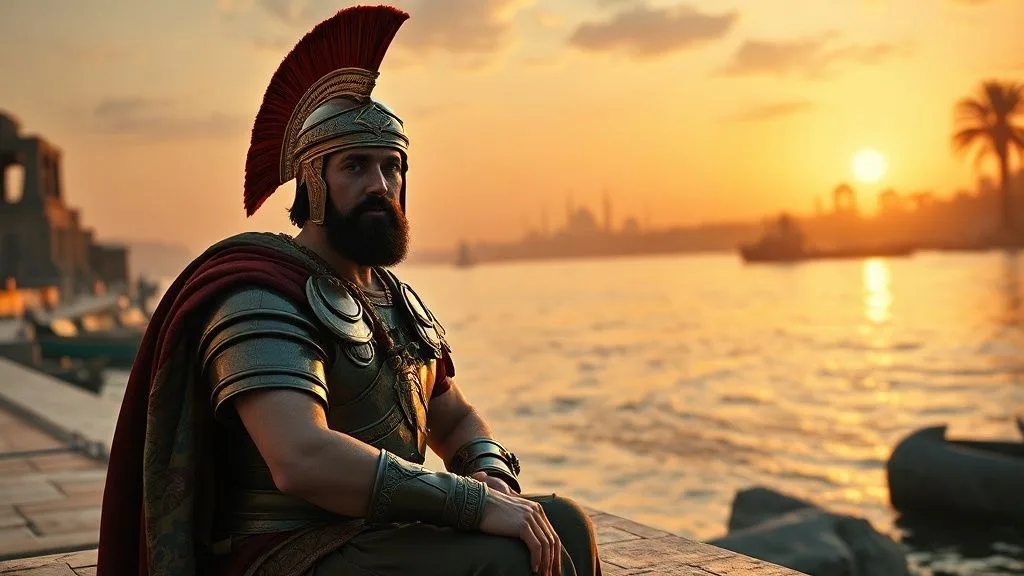
The sun was a fading ember in the Egyptian sky on that late August day in 30 BCE, casting long shadows over the ancient city of Alexandria. The air was thick with tension and despair, mingled with the scents of incense and salt from the Mediterranean breeze. In the palace’s marbled halls, Mark Antony — once Rome’s celebrated general, the master of legions and fleets — found himself ensnared in a web of defeat, betrayal, and heartbreak. His empire crumbled, his allies scattered, and his beloved Cleopatra stood by his side yet powerless to rewrite fate.
In the quiet moments before his final act, Antony’s spirit fought against the crushing tide of loss. His gaze lingered on the pillars and mosaics, symbols of a civilization that had become his refuge in exile, and yet, the walls could not shield him from the approaching darkness. This was more than a military defeat; it was the twilight of a man who had dared to challenge destiny and Rome itself. His story was about to come to a tragic end — a suicide that sealed the fate of an age and echoed through history.
Mark Antony: From Rome’s Greatest General to Egypt’s Tragic Lover
Born Marcus Antonius in 83 BCE into a prestigious Roman family, Antony’s early life was steeped in ambition and military valor. A protégé of Julius Caesar, he rose swiftly through Rome’s tumultuous political ranks due to his charismatic leadership and unrivaled martial prowess. Antony was the embodiment of Roman virility combined with a passionate temperament, known for his oratory skills as much as his battlefield tactics.
Yet, his life became irrevocably intertwined with Cleopatra VII, the enigmatic Queen of Egypt. What began as a strategic alliance blossomed into a love story that scandalized Rome and defied tradition. Cleopatra, a ruler as intelligent as she was alluring, offered Antony not just a kingdom, but a vision of power beyond the republic’s confines. Together, they forged an alliance that threatened the very foundation of Rome and would ultimately lead to their downfall.
Cleopatra’s Kingdom: Power, Politics, and Passion
Alexandria in the time of Cleopatra was a city of astounding wealth and cultural vibrancy, a jewel on the Mediterranean and the last stronghold of the Ptolemaic dynasty. Cleopatra was a ruler versed in the subtleties of diplomacy and survival, wielding her charms and intelligence to maintain Egypt’s independence amid the rising tide of Roman domination.
Her relationship with Antony was a potent mix of love and political necessity. Egypt was both a refuge and a battleground; Cleopatra’s ambitions depended on Antony’s military strength, while Antony sought to secure his grip on power beyond Rome and challenge his rival, Octavian. The coupling alarmed the Roman Senate, who branded Antony a traitor seduced by a foreign queen — a framing that Octavian exploited to his advantage.
The Aftermath of Actium: A Shattered Alliance
The Battle of Actium in 31 BCE was decisive. Octavian’s fleet, commanded by Agrippa, overwhelmed the combined forces of Antony and Cleopatra, shattering their naval supremacy. This defeat was not just military but symbolic: it heralded the collapse of the Triumvirate that once ruled Rome and spelled the doom of Antony’s aspirations.
Fleeing with Cleopatra to Alexandria, Antony faced dwindling supplies and plummeting morale. His supporters abandoned him, and rumours of desertion and betrayal spread swiftly. The dream of an eastern empire collapsed under the relentless advance of Octavian’s legions. Antony was left with little but the walls of Alexandria and a fatal pride.
The Siege of Alexandria: Desperation in the Face of Octavian
As Octavian’s forces laid siege to Alexandria, the city bristled with tension and fear. Antony and Cleopatra’s defenses proved inadequate against the relentless assault. Food shortages and panic took hold. Antony, once a master of war, wrestled with the encroaching reality: his end was near.
The great palace, once a symbol of power and splendor, became a prison guiding him toward a bitter reckoning. Among the turmoil, Antony’s thoughts turned inward — to his honour, his legacy, and the woman who stood silently beside him. The intimate tragedy behind the political collapse was unfolding within these walls.
The Weight of Defeat: Antony’s Last Reflections
For Antony, defeat was a personal affront to his identity. Romans placed immense value on honour and virtus (manly excellence). To be captured or paraded alive by Octavian was unthinkable. The prospect of humiliation weighed heavily on his soul.
Historians recount that Antony, in these final hours, was a man torn between despair and defiance. Some ancient sources speak of him donning his war cloak, preparing for death with the solemnity of a betrayed hero. He was aware that the world he had fought to shape was vanishing.
The Ill-Fated Message: A Miscommunication With Cleopatra
One of the most poignant moments in this saga is the tale of Antony’s miscommunication with Cleopatra. Believing the queen had already taken her own life, he was overcome with grief. According to Plutarch and other chroniclers, he stabbed himself, inflicting a mortal wound.
But Cleopatra survived the attempt and rushed to his side. This tragic misunderstanding formed the emotional heart of Antony’s final moments — a blend of love, despair, and fatal missteps that underlined how deeply personal this historical drama was.
The Decision to Die: Honor, Shame, and the Suicide Pact
Suicide among Roman elites was often regarded as a final assertion of control and dignity. Antony’s decision to end his life was steeped in these cultural values but also shaped by the political context. To die by his own hand was to deny Octavian the symbolic victory of capturing and disgracing a Roman champion.
Both Antony and Cleopatra understood the stakes. Their fates were linked — not just by love but by a shared refusal to surrender their freedom and identity to the conquering Octavian. Antony’s death was both escape and statement: a rupture from honor lost, an act of defiance carved in blood.
Reported Versions of Antony’s Death: Poison or Falling on His Sword?
Ancient accounts vary in how Antony died. Plutarch describes him falling on his sword; other sources mention poison administered by his servants. The stark detail of these differing reports adds layers to the myth-making process surrounding the event.
Regardless of method, the emphasis is on a man's final refusal to live under humiliation. This has made Antony’s death one of antiquity’s most haunting and debated moments. It is incredible how a single event can survive millennia, shrouded in mystery yet so rich in emotional truth.
Cleopatra’s Grief and Resolve: The Queen’s Own End Approaches
After Antony’s death, Cleopatra’s world unraveled rapidly. Stricken with grief, she faced the inevitable: submission to Rome or self-destruction. The narrative often portrays her final act — the famed snake bite — as both a political gesture and personal escape.
Her decision reflects the entwined nature of their destinies. Antony’s suicide was not just an end but a prelude to the last stand of Egypt’s queen, marking the definitive close of the Hellenistic age and the rise of the Roman Empire.
Rome Awaits: Octavian’s March into Egypt
Octavian’s triumph was near. With Antony gone, he entered Alexandria almost unopposed, an ominous figure guaranteeing the end of Ptolemaic sovereignty. This political consolidation paved the way for Octavian’s transformation into Augustus, the first Roman Emperor, forever changing the course of history.
The death of Antony was thus a turning point, a moment when the Republic’s old world collapsed and a new imperial order demanded obedience and efficiency. The fall of Alexandria was both symbolic and strategic.
The Political Tremors that Followed Antony’s Death
Antony’s suicide sent shockwaves not just through Alexandria but across the Mediterranean. It symbolized the death of a Roman political era defined by civil wars and competing aspirations. Octavian’s subsequent actions — consolidation, propaganda, reforms — capitalized on this moment.
The Republic’s finally demise followed swiftly, replaced by the principate and a pax that would echo for centuries. Antony’s death was the fulcrum of this seismic shift — a casualty of ambition, love, and empire.
The Burial and Legacy of Mark Antony: Myth and Memory
Antony’s remains were later interred beside Cleopatra’s in a tomb near Alexandria — a final gesture of their unbreakable bond. Over the centuries, their story inspired countless retellings, often romanticized but never forgotten.
He became a figure embodying the tragic hero: flawed, passionate, and defiant. His legacy traverses history, echoing through Roman annals, Shakespearean drama, and modern imaginings of power and fate.
Antony in Literature and Art: A Tragic Hero Through the Ages
From Plutarch’s biographies to Shakespeare's “Antony and Cleopatra,” the general’s life and death have captivated storytellers worldwide. His demise symbolizes the clash between personal desire and public duty — a theme resonant across ages.
Artistic depictions portray him as a larger-than-life figure torn between love and loyalty, Rome and Egypt, ambition and downfall. Antony’s narrative serves as a canvas on which cultures project ideas of honor, romance, and tragedy.
The Death of Rome’s Triumvir: Larger Implications for the Republic’s Fall
Antony’s suicide was more than an individual tragedy. It was the death knell for the Roman Republic’s last gasp of shared power among equals. His passing cleared the path for Octavian’s absolute rule — the birth of Empire.
This pivot marked a transformation in governance, society, and culture, setting Rome on a new historical trajectory that would shape the Western world for centuries. The republic’s ideals were sacrificed on the altar of imperial stability.
Antony’s Suicide in the Shadow of Empire: Reflections on Loyalty and Ambition
At the heart of Antony’s final act lay profound questions about loyalty — to Rome, to himself, and to Cleopatra. His suicide challenged notions of identity amid turbulent politics. Was he a traitor or patriot? Lover or opportunist? History grapples with such ambiguities.
His death exposes the human fragility behind grand political narratives, reminding us that empire is forged not only by armies but also by the passions and heartbreaks of individuals.
Modern Historical Debates: Separating Myth from Reality
Contemporary historians continue to revisit Antony’s death, sifting through sources, archaeology, and analysis to piece together facts from legend. Some question the exact cause of death, others assess Cleopatra’s role, yet all agree on the event’s profound symbolism.
Modern scholarship invites us to see Antony not just as a figure of antiquity but as a man caught in inexorable historical forces — a tragic hero whose story informs our understanding of power, love, and destiny.
Alexandria’s Last Stand: A City at the Crossroads of Empires
Antony’s demise was inseparable from Alexandria’s fate. Once a beacon of Hellenistic brilliance, the city stood on the edge of transformation. Its fall marked the absorption of Egyptian culture into the Roman milieu, a profound cultural and political amalgamation.
This moment was as much about urban and societal change as individual lives — a city’s final resistance before becoming part of an empire that would outlast it.
The Human Cost: Families, Soldiers, and Citizens Caught in the Collapse
Beyond kings and generals lay the often-unheard voices: soldiers defeated, families displaced, and civilians caught in the crossfire of imperial ambitions. The siege, the deaths, and the political upheaval left scars on Alexandria’s populace.
Antony’s death, while epic and symbolic, also signals the human toll of these epochal events — a reminder of how history is written in blood and tears, not just in triumphs and titles.
Conclusion: The End of an Era and the Dawn of Empire
Mark Antony’s suicide in Alexandria was the closing act of a tragic drama that shaped the ancient world’s destiny. It was a moment of personal despair and political finality, a testament to the complexity of ambition, love, and honor.
From the ashes of his defeat and death, the Roman Empire emerged — stronger, unified, but forever marked by the costs of power struggles. Antony’s story endures as a human narrative amid vast historical change, urging us to remember the fragile humanity behind the grand sweep of empire.
FAQs
Q1: What were the main causes leading to Mark Antony’s suicide?
A1: Antony’s suicide was precipitated by his crushing defeat at Actium, subsequent siege of Alexandria, fear of capture by Octavian, and a deep personal despair compounded by his loyalty to Cleopatra and his Roman sense of honor.
Q2: How did Cleopatra influence Antony’s final days?
A2: Cleopatra was both Antony’s political ally and lover. Their partnership shaped his decisions. Her alleged suicide attempts and the complex emotional dynamics between them influenced Antony’s tragic final act.
Q3: What role did the Battle of Actium play in Antony’s downfall?
A3: The naval defeat at Actium in 31 BCE was catastrophic, dismantling Antony’s military strength and forcing him to retreat to Alexandria, setting the stage for the siege and his eventual suicide.
Q4: How reliable are the historical accounts of Antony’s death?
A4: Ancient sources vary, with accounts from Plutarch, Cassius Dio, and others differing on whether Antony died by poison or sword. These discrepancies have contributed to the mythologizing of his death.
Q5: What were the political consequences of Antony’s death?
A5: Antony’s suicide effectively ended the Roman Republic’s civil wars, allowing Octavian to consolidate power, become Augustus, and inaugurate the Roman Empire.
Q6: How is Antony’s death remembered in literature and culture?
A6: Antony’s death is immortalized in works like Shakespeare’s Antony and Cleopatra, portraying him as a tragic hero torn by love and duty, symbolizing the human face of political tragedy.
Q7: Did Antony’s suicide affect Cleopatra’s fate?
A7: Yes, Antony’s death left Cleopatra isolated. Her subsequent suicide a short time later was deeply linked to his demise, highlighting their intertwined destinies.
Q8: What does Antony’s suicide reveal about Roman values?
A8: It underscores Roman ideals of honor, dignity, and the preference for death over shameful capture, reflecting the profound cultural importance of personal reputation.