Table of Contents
- A Sudden Darkness: The Day Augustus Died
- The Twilight of Rome’s First Emperor
- The Roman World on Edge: Political Climate in 14 AD
- A Life Etched in Power: Augustus’s Path to Emperor
- The Fragile Heir: Tiberius in the Shadows
- Nola’s Quiet Streets and an Empire’s Sigh
- The Final Hours: Augustus’s Last Moments in Nola
- The Emperor’s Legacy in Transition
- The Senate’s Response: Honoring Augustus
- Public Mourning and the Transformation of Rome
- The Power Struggle Begins: Tiberius’s Ascension
- Augustus’s Death and the Stability of the Pax Romana
- The Impact on Roman Society and Culture
- Political Repercussions Across the Provinces
- The Death of a Legend: Myth, Memory, and History
- Augustus’s Tomb and the Cult of the Divine Emperor
- Lessons from the End of an Era
- The Shadow of Augustus in Rome’s Imperial Future
- Conclusion: The Emperor’s Last Breath and an Empire’s Dawn
- FAQs: Understanding the Death of Augustus
- External Resource
- Internal Link
1. A Sudden Darkness: The Day Augustus Died
The sun hung low over the ancient city of Nola on a warm summer day in 14 AD, casting long shadows over its quiet streets. But beneath this serene facade, a monumental event was unfolding that would ripple through the very heart of the Roman Empire. Augustus, Rome’s first emperor and architect of its unprecedented peace and power, was breathing his last. His death marked not just the end of a life, but the closing chapter of an era that had transformed the Republic into a towering empire. The air grew thick with an unimaginable tension—hope, uncertainty, fear, and awe mingled as citizens and senators alike awaited what would come next.
This was a moment pregnant with history: the death of a man who had shaped Rome’s destiny for over four decades, and who had established a model of governance that balanced autocracy and republican façade with subtle genius. Yet the mighty Augustus was mortal, and as he exhaled his final breath, the world he built trembled on the edge of a new dawn.
2. The Twilight of Rome’s First Emperor
Gaius Octavius Thurinus, known thereafter as Augustus, had become the unchallenged figure of Rome by the early years of the first century AD. But on that summer’s day in Nola—far from the marble palaces of the capital—his life, worn by years of political struggle, military campaigns, and relentless governance, neared its end.
His death was no sudden calamity but the slow, measured fading of a man aged 75 by Roman reckoning, gravely ill after years of lingering health complications. Yet the atmosphere was anything but calm. Rome braced itself for what historian Suetonius described as “the loss of its sun.”
3. The Roman World on Edge: Political Climate in 14 AD
The political fabric of Rome in 14 AD was fragile despite the veneer of imperial security. Augustus had spent decades consolidating power, creating a system where the princeps—or “first citizen”—held supreme authority under the guise of republican institutions. The Senate still convened, the assemblies still met, but real power rested with Augustus alone.
Yet, the emperor’s frailty had ignited latent tensions. Would the heirs maintain his legacy, or shatter the delicate balance? His adopted son and stepson, Tiberius, was a shadowy figure, respected but feared, loved but resented. Senators murmured about succession plans; generals pondered their loyalties; the people awaited signs of stability.
4. A Life Etched in Power: Augustus’s Path to Emperor
Understanding Augustus’s death requires peering into the man’s extraordinary ascent. Born in 63 BC, Octavian emerged from the tumultuous aftermath of Julius Caesar’s assassination, clawing his way through civil war, political intrigue, and ruthless rivalry.
Through a blend of military acumen, political savvy, and shrewd propaganda, he transformed Rome. The Republic fractured, and from its rubble, he forged the Principate—the imperial system that would define Rome for centuries. His reign established Pax Romana—the Roman Peace—a time of relative stability, economic growth, and artistic flourish.
Yet Augustus was also deeply conscious of legacy and perception, carefully sculpting his image as Rome’s benevolent father, all while amassing unrivaled control.
5. The Fragile Heir: Tiberius in the Shadows
Tiberius Claudius Nero, Augustus’s adopted son and intended successor, was a complex figure. Skilled but somber, loyal but distant, he represented continuity but also uncertainty.
Augustus’s trust in Tiberius was ambivalent. He had reluctantly elevated him after the deaths of earlier heirs, and the elder man’s waning health forced him to prepare the empire for a transfer of power fraught with potential instability.
In Nola, as Augustus lay dying, Tiberius’s presence was both a reassurance and a reminder of the unresolved questions hovering over Rome’s future.
6. Nola’s Quiet Streets and an Empire’s Sigh
Nola—an unassuming town nestled in Campania—had not been the seat of power, yet on this day it became the focal point of Rome’s political universe. Away from the clamorous capital, the emperor sought rest and respite.
Little is recorded of the scene: the narrow streets, the simple villas, the whispers of attendants and guards. But the death of Augustus here transformed this provincial town into a symbolic crossroads between the old Republic’s legacies and the emerging empire’s fate.
7. The Final Hours: Augustus’s Last Moments in Nola
Accounts from Tacitus and Suetonius, though written decades later, paint a picture both vivid and poignant. The emperor’s body weakened, his voice faded, yet his mind remained sharp.
Surrounded by family and loyal servants, Augustus is said to have looked upon Tiberius and uttered the famous words: “Have I played my part well?” More than a question, it was a moment steeped in self-reflection and the weight of history.
As night cloaked Nola, the once-mighty emperor slipped away, leaving a silence laden with both grief and expectation.
8. The Emperor’s Legacy in Transition
The passing of Augustus did not merely create a vacancy; it inaugurated a transformation. His century-long vision of order called for preservation, but new hands inevitably bring change.
Tiberius’s succession was carefully orchestrated, ensuring continuity but sowing seeds for future dynastic turbulence. Yet Augustus’s death underscored a poignant truth: empires depend as much on myth as on men.
9. The Senate’s Response: Honoring Augustus
Back in Rome, the Senate convened in solemn assembly to proclaim the loss. Senators, who had long been spectators to Augustus’s quiet dominance, now faced the delicate task of honoring a man who had reshaped their institution.
They voted to deify the late emperor, a symbolic act that would set the precedent for future rulers and entwine Augustus in the religious and cultural fabric of Rome.
10. Public Mourning and the Transformation of Rome
Rome’s streets filled with grief and spectacle. The city entered a state between celebration of a hero and fearful anticipation of change.
Massive funeral processions paraded through the Forum. Citizens, soldiers, and plebeians alike wove together expressions of loss, hope, and loyalty.
Augustus’s death became a collective experience—etched into the hearts of Romans and into the soul of the city.
11. The Power Struggle Begins: Tiberius’s Ascension
Tiberius’s path to power was neither swift nor uncontested. Behind the scenes, rival factions jockeyed for influence. Some clung to the republican ideal, others embraced the imperial future.
Despite the tension, Tiberius assumed the title of princeps, cementing the framework Augustus had constructed. Yet the shadow of succession disputes cast a long pall over the early years of his reign.
12. Augustus’s Death and the Stability of the Pax Romana
Significantly, the transition preserved the Pax Romana—Rome’s long peace—avoiding the cataclysmic civil wars of previous successions.
This stability was testament to Augustus’s foresight and the emerging infrastructure of Roman imperial governance. Nonetheless, scholars debate the lasting effects of this moment, noting it as both an achievement and a foreshadowing of future crises.
13. The Impact on Roman Society and Culture
Augustus’s death rippled through all aspects of Roman life. The arts mourned and celebrated simultaneously: poets like Ovid referenced his passing with both reverence and ambivalence.
Society grappled with questions of loyalty, identity, and the nature of imperial authority. Augustus had been not just a ruler but a living symbol of Roman values.
14. Political Repercussions Across the Provinces
Too distant to witness Nola’s quiet final moments firsthand, provincial governors and allies nonetheless learned quickly of their emperor’s death. Their reactions ranged from reverence to opportunism.
Legions stationed across vast territories awaited orders, while local elites recalibrated their loyalties. The centralization of power achieved under Augustus made his death felt across the sprawling empire.
15. The Death of a Legend: Myth, Memory, and History
In the years and centuries following, Augustus’s death became enshrined in myth. Poems, statues, and official histories shaped him into a larger-than-life figure—the founder of an empire, a divine ruler, the eternal father of Rome.
Historians have since peeled away layers of myth to reveal a man of complexity—both ruthless and visionary, deeply human yet emblematic of imperial might.
16. Augustus’s Tomb and the Cult of the Divine Emperor
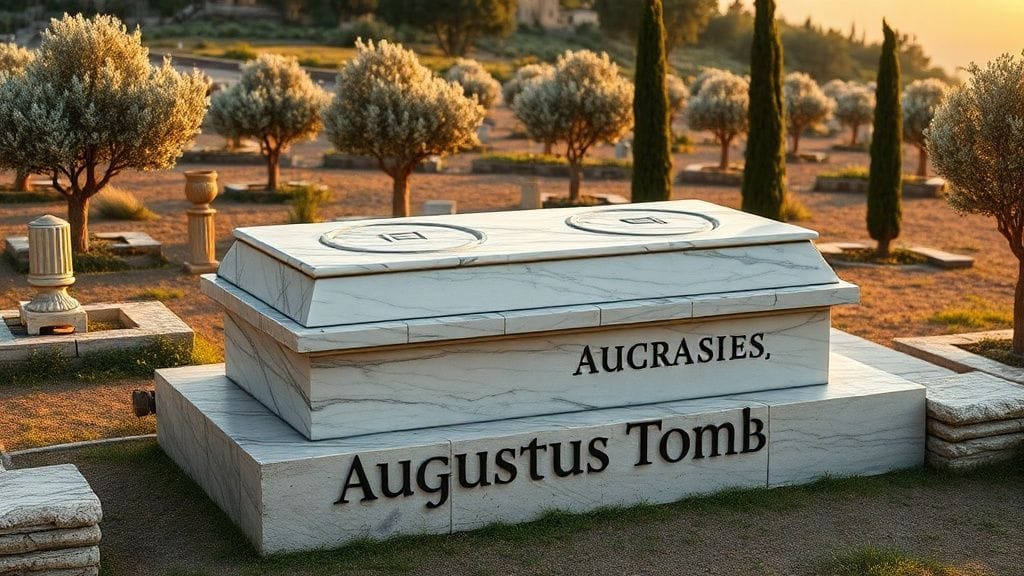
Augustus’s mausoleum in Rome stands as a monumental testament to his reign and death. It became a center of imperial cult worship, blending politics and religion tightly.
The tomb signaled a new era in which emperors were venerated beyond death, sustaining the aura of power even beyond the grave.
17. Lessons from the End of an Era
Augustus’s death embodies the eternal paradox of leadership: no matter the power wielded in life, the sovereign must pass, leaving questions of succession, legacy, and memory.
His reign offers lessons in political innovation, the construction of legitimacy, and the human costs of empire.
18. The Shadow of Augustus in Rome’s Imperial Future
Tiberius and his successors walked in Augustus’s shadow—sometimes struggling, sometimes flourishing under the weight of expectations.
The death of Augustus was not an end but a passage, shaping how the Empire evolved, endured crises, and eventually transformed the ancient world.
Conclusion
The death of Augustus in 14 AD in Nola was more than the passing of Rome’s first emperor; it was the twilight of Rome’s foundational epoch. It marked a profound moment of transition—a space where the grandeur of the old Republic met the promise and peril of imperial rule. His final breath carried the hopes of continuity, but also the inevitability of change.
Augustus shaped Rome not only through victories and laws but through a lasting vision: one where power and symbolism intertwined to define an empire’s identity. His passing echoed across centuries, reminding us of the fragile nature of power and the inexorable march of history. In the silent streets of Nola, an emperor’s final act echoed through the ages, leaving behind a legacy both monumental and deeply human.
FAQs
Q1: Why was Augustus in Nola when he died?
A1: Augustus often retreated to smaller towns like Nola to rest away from the political tensions of Rome. It was a place of relative peace where he spent his final days.
Q2: How did Augustus’s death affect the Roman Empire immediately?
A2: The empire faced uncertainty but avoided chaos, thanks largely to Augustus’s carefully arranged succession plan favoring Tiberius, which preserved political stability.
Q3: Who succeeded Augustus and how?
A3: His adopted son Tiberius became emperor through formal adoption and appointment as heir, supported by the Senate and the army.
Q4: What was the political atmosphere like before Augustus’s death?
A4: Augustus ruled with near-absolute power but maintained republican institutions, creating an environment where succession was delicate and political tensions simmered.
Q5: How was Augustus’s death viewed culturally in Rome?
A5: It was mourned deeply. The emperor was celebrated as both a mortal man and a divine figure, leading to public mourning and the beginning of his imperial cult.
Q6: Did Augustus foresee any dangers in his succession plan?
A6: Historical sources suggest Augustus was cautious and aware of potential instability, evident in his careful grooming of Tiberius and earlier heirs.
Q7: How did the provinces react to the news of Augustus’s death?
A7: Reactions varied but generally showed respect and loyalty, while some regions remained watchful for potential shifts in power or unrest.
Q8: What is the historical significance of Augustus’s death in Nola?
A8: It symbolizes the end of the Republic’s transformation and the solidification of imperial rule, setting the stage for Rome’s next century.