Table of Contents
- The Fateful Day: April 8, 217 CE near Carrhae
- The Rise of Caracalla: From Prince to Emperor
- The Legacy of the Severan Dynasty
- Mesopotamia’s Strategic Importance in the Roman Empire
- Caracalla’s Military Campaigns: Ambition on the Eastern Frontier
- The Road to Carrhae: Tensions and Turmoil
- The Political Landscape of the Roman Empire in 217 CE
- The Assassination: A Violent End in Mesopotamia
- The Role of the Praetorian Guard
- Macrinus: The Man Behind the Plot
- The Aftermath: Immediate Fallout in Rome and the Provinces
- How Caracalla’s Death Changed Imperial Policy
- The Impact on Roman-Mesopotamian Relations
- Historical Accounts: Cassius Dio and Beyond
- The Symbolism and Memory of Caracalla’s Death
- From Tyrant to Martyr: Shifting Historical Perspectives
- The Severan Legacy Post-Caracalla
- Lessons in Power and Betrayal from Ancient Rome
- Archaeological Traces Near Harran
- Cultural Echoes: Caracalla in Literature and Art
- Conclusion: The Death that Reshaped an Empire
- FAQs about Caracalla’s Assassination
- External Resource
- Internal Link
1. The Fateful Day: April 8, 217 CE near Carrhae
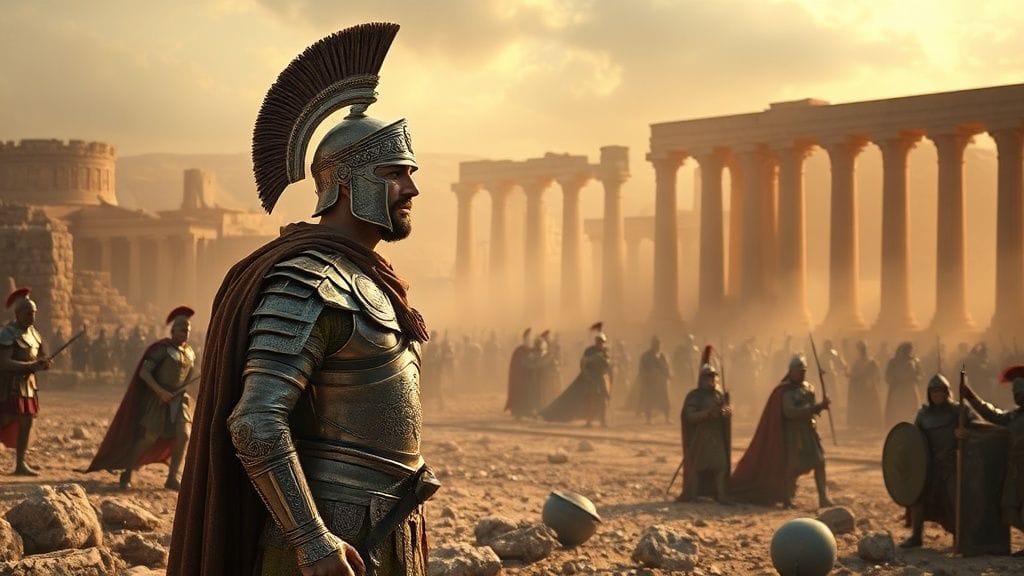
Under a harsh Mesopotamian sun, the vast expanse near Carrhae bore witness to an event that would send tremors through the Roman Empire: the assassination of Emperor Caracalla. It was April 8, 217 CE, when the sword of treachery struck deep into the heart of one of Rome’s most controversial rulers. The arid landscape of Harran—ancient Carrhae—became more than just a backdrop for military maneuvering; it became a silent tomb for the man who sought to expand Rome’s dominance into the East. The tension clung to the air like dust, as Caracalla’s life, marred by brutality and ambition, came to a sudden and fateful close.
2. The Rise of Caracalla: From Prince to Emperor
Born Lucius Septimius Bassianus on April 4, 188 CE, Caracalla was the son of Emperor Septimius Severus and Julia Domna. His ascent to power was forged in a furnace of familial rivalry and political intrigue. Crowned co-emperor with his father in 198 CE and elevated to sole ruler after Septimius Severus’ death in 211 CE, Caracalla’s reign was marked by his notorious temperament and bold decisions. He earned his nickname “Caracalla” from the distinctive Gallic cloak he favored, symbolizing a man both military and austere.
Yet, his rule was anything but peaceful. The young emperor’s early purges of rivals—including his own brother Geta—sowed seeds of fear and resentment. Over time, Caracalla grew increasingly isolated, his mindset fixated on power and military conquest. His acts of cruelty and generosity interwove, creating a complex figure both feared and respected.
3. The Legacy of the Severan Dynasty
The Severan dynasty, initiated by Septimius Severus, represented a new chapter in Roman imperial history: a dynasty of strong military emperors born outside Rome’s traditional aristocracy, emphasizing loyalty from the provinces and the army. Caracalla inherited this legacy but struggled to maintain its balance. His policies were intertwined with an effort to consolidate imperial power through military strength and legal reforms, such as the famous Constitutio Antoniniana in 212 CE, which granted Roman citizenship to all free men within the empire.
Yet beneath the grandeur, cracks appeared. The dynasty’s emphasis on military might and centralization clashed with the traditional senatorial elite. Caracalla’s heavy taxation to fund his campaigns bred dissatisfaction, and his volatile personality alienated many.
4. Mesopotamia’s Strategic Importance in the Roman Empire
Mesopotamia, the ancient land nestled between the rivers Tigris and Euphrates, was a prize coveted not only for its richness but also for its strategic position. For the Roman Empire, controlling this region meant a buffer against the rising power of the Parthian and later Sasanian empires. The city of Carrhae itself held a symbolic weight—infamously known for the crushing defeat of the Roman Crassus centuries earlier in 53 BCE.
By the early 3rd century CE, Mesopotamia was a turbulent frontier where Rome’s eastern ambitions met fierce resistance. For Caracalla, the region was both a challenge and an opportunity—a proving ground for imperial might.
5. Caracalla’s Military Campaigns: Ambition on the Eastern Frontier
Caracalla’s tenure as emperor was punctuated by his relentless military zeal. In the East, he faced the Parthians, Rome’s perennial rivals. His campaign of 216-217 CE was designed to assert dominance and secure the frontier with decisive action. Marching his legions across harsh deserts and ancient cities, Caracalla sought glory—and security.
But his campaign was not just a military operation; it was also a political statement. Caracalla portrayed himself as a warrior emperor, leading from the front lines, donning armor and engaging in battle personally. The soldiers admired this, but the fatigue and frustrations of war weighed heavily on all.
6. The Road to Carrhae: Tensions and Turmoil
As Caracalla advanced toward Carrhae, unrest brewed beneath the surface. His strained relations with his own army and generals created an atmosphere ripe for betrayal. Rumors spread of discontent regarding his leadership style—a volatile mix of cruelty, paranoia, and erratic decisions.
The harsh climate made morale fragile. Caracalla’s insistence on rigorous discipline, combined with his disregard for his soldiers' welfare, fueled resentment. Nearby, generals plotted quietly, sensing an opportunity. The emperor’s fate was sealed not on the battlefield against Rome’s enemies, but by the hand of trusted men.
7. The Political Landscape of the Roman Empire in 217 CE
At the time of Caracalla’s assassination, Rome itself was a cauldron of uncertainty. The Severan dynasty, while still fresh in memory, faced growing opposition. The Senate viewed Caracalla with suspicion and often outright hostility. The army, though loyal in appearance, was fractured; many soldiers tired of endless campaigns and heavy taxation.
The empire’s vast expanse strained its administrative capacity. Governors juggled loyalty to Rome with local interests, while external threats from Germanic tribes and Eastern kingdoms demanded constant vigilance. Within this volatile environment, political assassinations were a known and dangerous instrument.
8. The Assassination: A Violent End in Mesopotamia
On that ill-fated day in April 217 CE, Caracalla stopped by a roadside spring near Carrhae to relieve himself—a moment of vulnerability that would prove fatal. The assassin, a soldier named Marcus Opellius Macrinus, had been carefully plotting behind the scenes.
Macrinus, the commander of Caracalla’s cavalry, struck swiftly, driving a dagger into the emperor’s side. “Sic semper tyrannis” seemed to echo in the arid air as the tyrannical ruler fell. The assassination was brutal, sudden, and shocking—a violent rupture that ended the reign of one of Rome’s most enigmatic emperors.
9. The Role of the Praetorian Guard
The Praetorian Guard, Rome’s elite imperial bodyguard, played a complex role in Caracalla’s downfall. Traditionally guarantors of the emperor’s safety, they had grown increasingly politicized and powerful. Caracalla, wary of their influence, had alienated many in this elite corps by promoting soldiers based on loyalty rather than merit.
Macrinus’ plot had tacit support—or at least acquiescence—from parts of the Guard eager to remove Caracalla. Their involvement underlines the shifting power dynamics within the empire, where the line between protector and assassin was dangerously blurred.
10. Macrinus: The Man Behind the Plot
Marcus Opellius Macrinus was no mere conspirator; he was a man of ambition and pragmatism. Born in Mauretania, a Roman province in North Africa, Macrinus was the first emperor who rose from the equestrian order rather than the senatorial class. His career was marked by administrative prowess and military competence.
Upon Caracalla’s death, Macrinus proclaimed himself emperor, marking an unusual upward leap in Roman aristocracy. Yet his reign would be brief and unstable, as he inherited the consequences of Caracalla’s policies and the empire’s turmoil.
11. The Aftermath: Immediate Fallout in Rome and the Provinces
News of Caracalla’s assassination traveled fast, stirring shock and confusion throughout the empire. The Senate, long hostile to the emperor, cautiously accepted Macrinus, though many provincials and military leaders remained skeptical.
The transition was anything but smooth; armies loyal to Caracalla’s memory initially resisted Macrinus. Revolts and unrest flared, accompanied by suspicion and instability. The empire’s eastern frontier, where Caracalla had sought to expand Rome’s power, became an uncertain battleground, embroiling diplomacy and military affairs.
12. How Caracalla’s Death Changed Imperial Policy
With Caracalla’s demise, the empire shifted from an aggressive military campaign in the East to a moment of political recalibration under Macrinus. Policies focused more on consolidation than expansion. Yet the economic strain and rising internal dissent meant the period was marked less by stability and more by cascading crises.
Caracalla’s Constitutio Antoniniana remained a foundational legal legacy, but his harsh methods faded in favor of more pragmatic governance—though the scars of his rule influenced Rome’s political culture deeply.
13. The Impact on Roman-Mesopotamian Relations
Caracalla’s death removed a volatile actor from the Roman eastern frontier. However, the resulting power vacuum emboldened Rome’s rivals, especially the Parthian and soon-to-rise Sasanian dynasties, who sought to reclaim territory and influence.
The fragile peace temporarily held, but hostilities resumed with renewed vigor in the following decades. Rome’s eastern ambitions were curtailed, marking a turning point in the empire’s relations with Mesopotamia.
14. Historical Accounts: Cassius Dio and Beyond
Much of what we know about Caracalla’s assassination comes from Cassius Dio, a senator and historian who witnessed the events firsthand. His accounts blend scathing criticism of the emperor’s cruelty with fascination at the drama of his downfall.
Other sources, like Herodian and the Historia Augusta, provide fragmented but evocative details, underscoring the chaos of the era. Their narratives shape our understanding—an intricate mix of fact, rumor, and political bias.
15. The Symbolism and Memory of Caracalla’s Death
Caracalla’s violent end was emblematic of the perils of power in ancient Rome—a stark narrative of ambition, betrayal, and mortality. His assassination became a cautionary tale illustrating the precariousness of imperial authority.
Later Romans and historians remembered Caracalla both as a tyrant and a reformer, a man whose excesses overshadowed his contributions. The brutal manner of his death added a layer of dramatic irony that resonated through time.
16. From Tyrant to Martyr: Shifting Historical Perspectives
Over centuries, perspectives on Caracalla evolved. Initially vilified for his despotism, modern historians have re-examined his legal reforms and military initiatives more sympathetically. Some see him as a complex figure shaped by the demands and contradictions of his time.
His assassination is now viewed not merely as a violent coup but as a turning point that foreshadowed the empire’s gradual transformation during the turbulent 3rd century.
17. The Severan Legacy Post-Caracalla
Despite the dynasty’s decline following Caracalla’s death, the Severan period left a lasting imprint on Rome’s governance and military structure. Campaigns in the East, administrative reforms, and legal codifications influenced succeeding emperors.
The dynasty’s emphasis on military loyalty and provincial inclusion persisted, even as turmoil grew. Caracalla’s assassination marked the beginning of a century characterized by repeated crises and power struggles.
18. Lessons in Power and Betrayal from Ancient Rome
Caracalla’s final moments remind us of the fragile nature of power in any era. His assassination by those closest to him illustrates themes of ambition, mistrust, and the human cost of absolute rule.
For modern readers, the episode offers a vivid lesson on how authority can both elevate and destroy, and how history often turns on small, decisive moments.
19. Archaeological Traces Near Harran
Today, the region around ancient Carrhae—modern Harran in southeastern Turkey—retains faint echoes of the past. Ruins, inscriptions, and artifacts bear witness to the layers of history that unfolded there.
Despite centuries of change, archaeologists continue to explore these lands, seeking clues to the events surrounding Caracalla’s death and the broader Roman presence in Mesopotamia.
20. Cultural Echoes: Caracalla in Literature and Art
Caracalla’s life and death have inspired artists, playwrights, and writers through the ages. From Renaissance portraits to cinematic portrayals, his image oscillates between tyrant and tragic figure.
Literary works often explore his obsession with power and the fatal consequences that followed, reinforcing his enduring place in the cultural imagination.
21. Conclusion: The Death that Reshaped an Empire
Caracalla’s assassination near Carrhae on that spring day in 217 CE was more than an emperor’s demise—it was a defining moment in the Roman Empire’s history. His turbulent reign, marked by ambition and ruthlessness, ended abruptly, ushering in a period of uncertainty, recalibration, and eventual transformation.
In the arid plains of Mesopotamia, the fall of a ruler reverberated through centuries, a haunting reminder of the precariousness of power and the vast human drama behind the rise and fall of empires.
Conclusion
The assassination of Caracalla is a vivid example of how history turns on sudden acts rooted in complex political and personal tensions. His reign encapsulates the challenges of leadership amid an empire stretched to its limits, and his death underscored the dangers faced by rulers isolated by power and paranoia. From the sun-scorched plains near Carrhae emerged not just an ending, but a catalyst that reshaped the Roman world.
This episode invites reflection on ambition, loyalty, and betrayal—not just as abstract concepts but as human experiences played out on history’s grand stage. Caracalla’s life and death remind us how intimately the fate of individuals intertwines with the destiny of civilizations.
FAQs
Q1: What led to Caracalla’s assassination near Carrhae?
A1: A combination of Caracalla’s ruthless leadership style, strained relations with his army, and political mistrust triggered a conspiracy led by his cavalry commander Macrinus, leading to his murder.
Q2: Who was Macrinus and why did he kill Caracalla?
A2: Macrinus was commander of Caracalla’s cavalry and an ambitious equestrian officer. Seeing an opportunity to seize power and end harsh imperial rule, he orchestrated and directly carried out the assassination.
Q3: How did Caracalla’s death impact the Roman Empire’s eastern policy?
A3: It ended Caracalla’s aggressive campaigns, leading to a period of recalibration and temporary withdrawal from expansionist policies, though conflicts with eastern powers resumed later.
Q4: What role did the Praetorian Guard play in the assassination?
A4: Parts of the Praetorian Guard tacitly supported Macrinus, reflecting their increasing political influence and dissatisfaction with Caracalla’s leadership, thereby undermining the emperor’s security.
Q5: How is Caracalla remembered by historians?
A5: Historically, Caracalla is depicted as a tyrant and brutal ruler, but modern scholarship recognizes his administrative reforms and military commitment, painting a more nuanced portrait.
Q6: What archaeological evidence exists near the site of Caracalla’s death?
A6: While limited, archaeological remains near Harran provide insights into Roman military presence and infrastructure, helping contextualize the environment of his final days.
Q7: How did the Severan dynasty change after Caracalla’s death?
A7: The dynasty weakened significantly, with Macrinus assuming the throne briefly before being overthrown, leading to decades of instability known as the Crisis of the Third Century.
Q8: Why is the assassination near Carrhae significant in Roman history?
A8: It represents a turning point, revealing the fragility of imperial power and the dangers emperors faced—even far from Rome—setting the stage for wider political upheavals.