Table of Contents
- A Sunset Over the Roman Empire: The Final Days of Diocletian
- Who Was Diocletian? The Emperor Who Changed Rome Forever
- The Tetrarchy: A Radical Vision to Save an Empire
- Power and Politics: The Struggles Within the Tetrarchy
- The Crisis That Marked the End of an Era
- Diocletian’s Abdication: The First Emperor to Step Down by Choice
- Spalatum (Split): The Emperor’s Quiet Refuge on the Adriatic Coast
- The Landscape of Dalmatia: Nature, Politics, and Sanctuary
- The Last Years of Diocletian: Between Retirement and Lingering Influence
- Diocletian’s Death in 311: A Turning Point for Rome’s Future
- The Aftermath: How Rome Reacted to the Emperor’s Passing
- The Tetrarchy in Turmoil: Civil Wars and Power Struggles Following Diocletian
- The Legacy of Diocletian’s Reforms: Administrative, Military, and Religious
- Dalmatia’s Place in Roman History: A Backdrop for an Imperial Exit
- Diocletian’s Palace in Split: From Imperial Residence to World Heritage
- Footprints of an Emperor: Diocletian’s Enduring Impact on European Identity
- Memory and Myth: How Diocletian’s Death Was Remembered Through the Centuries
The late afternoon sun cast long shadows over the Adriatic Sea as the aged emperor gazed out from the fortress walls of his palace. Diocletian, once the indomitable ruler who had reshaped the Roman world, now found himself far from the marble halls of power in Rome, in the quiet town of Spalatum (modern-day Split). It was the year 311, and though his days of wielding the imperial purple were behind him, the tremors of his legacy would ripple through history for centuries.
Few figures in ancient history embodied transformation and contradiction like Diocletian. As the first Roman emperor to voluntarily abdicate, his death marked not just a personal ending but a symbolic punctuation to an age of monumental change. To understand the significance of his final years and passing, one must journey through the political upheavals, bold innovations, and human struggles that defined a world on the brink of new epochs.
Who Was Diocletian? The Emperor Who Changed Rome Forever
Born Diocles in the late third century, Diocletian rose through the military ranks by sheer talent and determination, a testament to the empire’s evolving social fabric. He stepped onto the throne in 284 AD, at a moment when Rome teetered on collapse, plagued by economic inflation, relentless barbarian invasions, and a fractured political order. His reign would come to symbolize both the empire’s last robust attempt at revival and the prelude to its eventual fragmentation.
Unlike many emperors before him, Diocletian wielded power with an iron will, enforcing strict reforms to stabilize the empire’s vast territories. His vision was grand: to divide power and create a more manageable structure that could respond swiftly to multiple threats. Diocletian’s rise was emblematic of the late imperial Roman world—a time when military discipline and bureaucratic innovation intersected.
The Tetrarchy: A Radical Vision to Save an Empire
In a world stretching from Britain’s misty edges to Egypt’s burning sands, ruling alone had become impractical. Diocletian’s genius solution emerged in the form of the Tetrarchy — a system of four rulers sharing imperial authority. Alongside his trusted co-emperor Maximian in the West, and two junior emperors (Caesars) in charge of the empire’s frontiers, Diocletian set the stage for a new model of governance.
This unprecedented political arrangement aimed to secure boundaries, streamline administration, and prevent the civil wars that had plagued Rome for decades. It also reflected a dynamic shift in imperial ideology—power was no longer symbolic solely of one man’s divine right but tied to structural balance. The empire was no longer a singular entity but a complex organism demanding coordinated stewardship.
Power and Politics: The Struggles Within the Tetrarchy
Yet, the Tetrarchy, bold as it was, sowed seeds of discord. Beneath the planned unity lay rivalries, ambitions, and competing visions. The Caesars looked to their turn as Augusti, while regional factions jockeyed for influence. Amid the shifting alliances, personal loyalty battled with political expediency.
Diocletian himself embodied this tension; his strict discipline and reforms earned admiration but also resentment. His efforts to enforce religious uniformity — especially the controversial persecution of Christians — intensified divisions within the empire’s diverse population. Meanwhile, the elites and soldiers growing accustomed to decentralized power began to chafe under the system’s rigidity.
The Crisis That Marked the End of an Era
By the early fourth century, cracks in the Tetrarchic design deepened. Diocletian’s co-emperor Maximian abdicated alongside him in 305, shaking the imperial foundations. The subsequent power vacuum triggered civil wars and rebellions that tested the system’s durability. Amid this turbulence, Diocletian had already retired, choosing a path few emperors dared walk.
His abdication, a historic move in 305 AD, stunned contemporaries. While most rulers clung to power until death, Diocletian stepped back, retreating to the calm of Spalatum. This act raised questions: Was it wisdom, exhaustion, or disillusionment? The answer remains part of his enduring enigma.
Diocletian’s Abdication: The First Emperor to Step Down by Choice
Choosing retirement was a monumental break from tradition. Diocletian’s withdrawal from political life was not a quiet fading but a deliberate statement. He left the burdens of sovereignty to his successors but kept a watchful eye on the empire’s fate from afar. Some historians suggest he sought peace after years of unrelenting responsibility; others read in this the seeds of tragic foresight.
His voluntary abdication provided a precedent, albeit a rare one, for imperial submission to the natural rhythms of life and leadership transitions. It challenged the idea of absolute power as eternal and hinted at the possibility of governance as service — a profound, if fragile, philosophical shift.
Spalatum (Split): The Emperor’s Quiet Refuge on the Adriatic Coast
The city of Spalatum, nestled along the Dalmatian coast, became Diocletian’s sanctuary. Far from the marble forums and violent intrigues of Rome, this Mediterranean jewel offered cool sea breezes and rocky serenity. Here, the emperor built a lavish palace — a fortress of stone and artistry that blended imperial majesty with local tradition.
The palace was more than a residence; it was a symbol of withdrawal and endurance. Its staggering walls, commanding towers, and intricate architecture reflected a controlled power even in retirement. It spoke of an emperor who, though relinquishing the purple, retained his identity and dignity.
The Landscape of Dalmatia: Nature, Politics, and Sanctuary
Dalmatia was a land of rugged coastlines, dense forests, and strategic harbors. In Roman times, it was a vital province bridging east and west, a crossroads for trade and military campaigns. For Diocletian, it was both a political outpost and a personal refuge.
The locality’s distinctive geography shaped its role in imperial affairs. The Adriatic Sea connected it to distant provinces, while its hills provided protection from invaders. It was a fitting place for an emperor seeking to remain at the heart of empire while embracing solitude.
The Last Years of Diocletian: Between Retirement and Lingering Influence
During his years in Spalatum, Diocletian did not fade into irrelevance. He continued to wield influence behind the scenes, advising and writing, and possibly guiding policy indirectly through loyalists. Though he had abandoned the throne, the empire had not abandoned him.
Yet his health waned, and with it, the certainty of imperial order. Around him, the Tetrarchy dissolved into fractious civil wars that would eventually propel Constantine the Great to power. Diocletian’s death in 311 occurred amid these darkening clouds, a quiet end marking a tumultuous transition.
Diocletian’s Death in 311: A Turning Point for Rome’s Future
The death of Diocletian was not a grand event celebrated with fanfare but a somber passage. It happened in a world still convulsed by conflict and uncertainty. Nevertheless, it symbolized the definitive closure of one chapter and the opening of another in Roman history.
His passing freed surviving emperors from past constraints, accelerating the empire’s shift towards reunification under Constantine but also towards new ideological directions, including Christianity’s rise as the state religion. Diocletian’s life and death thus framed a moment of profound transformation.
The Aftermath: How Rome Reacted to the Emperor’s Passing
News of Diocletian’s death traveled slowly through the vast empire. In political centers like Rome, Constantinople, and Milan, reactions ranged from cautious reflection to opportunistic maneuvering. For many soldiers and civilians, the fading memory of the stern emperor mixed with relief, hope, and fear of what would come next.
Religious tensions remained high. Diocletian’s persecutions had left deep scars, and his death was sometimes seen as divine judgment. Meanwhile, ambitious generals eyed the throne amid the ensuing vacuum of power.
The Tetrarchy in Turmoil: Civil Wars and Power Struggles Following Diocletian
Without Diocletian’s commanding presence, the fragile Tetrarchy unraveled. Constantine, Maxentius, Licinius, and others engaged in deadly competition. Rome, once united under a single rule, fractured further—the empire’s political map redrawn with blood and ambition.
The Tetrarchic ideal of balance collapsed, replaced by a new imperial order. This chaotic interregnum set the stage for decades of change, leading eventually to Constantinople’s rise and the transformation of Roman identity.
The Legacy of Diocletian’s Reforms: Administrative, Military, and Religious
Despite ensuing chaos, Diocletian’s reforms left an indelible imprint. His administrative divisions shaped governance for centuries. The strengthening of provincial administrations and military restructurings improved efficiency and defense.
Religiously, his persecution of Christians was devastating, yet it paradoxically intensified Christianity’s resilience and spread. Economically, his attempts to curb inflation—even if partially successful—reflected a new era of imperial interventionism.
Dalmatia’s Place in Roman History: A Backdrop for an Imperial Exit
Dalmatia, often overshadowed by Italy or Gaul, gained historical prominence through Diocletian’s final chapter. It became a symbolic locale, a nexus where imperial grandeur met provincial reality. Here, one of Rome’s greatest emperors transitioned from power to peace, anchoring the province’s identity to Rome’s enduring saga.
The legacy of this region and its preserved architecture continues to fascinate historians and tourists alike, bridging ancient and modern worlds.
Diocletian’s Palace in Split: From Imperial Residence to World Heritage
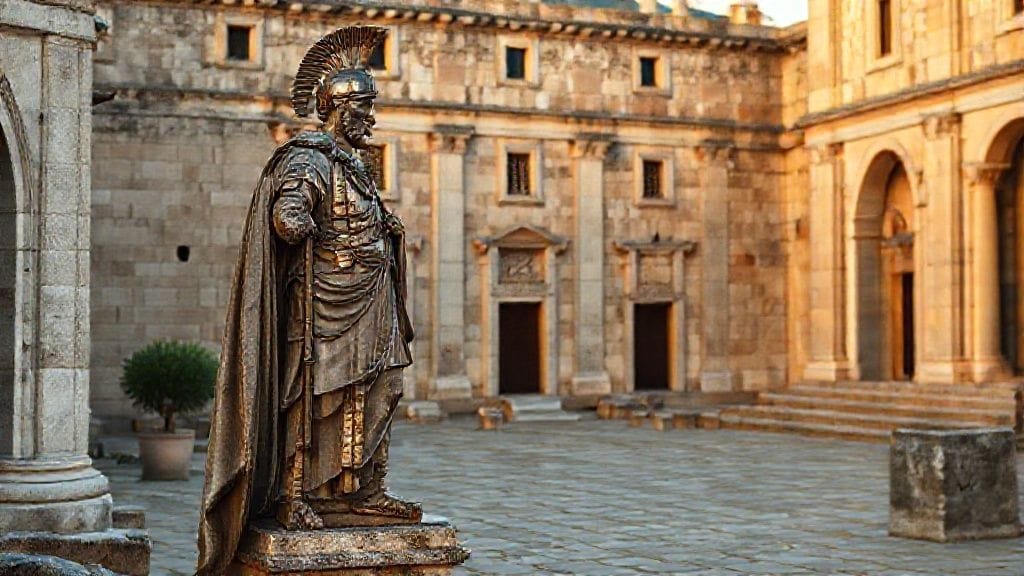
Today, the ruins of Diocletian’s palace stand as a monumental link to antiquity. More than a ruin, it is a living part of Split’s urban fabric, with people inhabiting its walls, cafes spilling into ancient courtyards, and festivals echoing through colonnades.
The palace’s survival through wars, earthquakes, and centuries of change testifies to the emperor’s enduring impact—not just on governance but on culture and architecture. UNESCO’s recognition of the site underlines its global importance.
Footprints of an Emperor: Diocletian’s Enduring Impact on European Identity
Diocletian’s story resonates beyond the annals of Roman history. He symbolizes transformation—of empire, power, and governance. His reforms prefigured medieval administrative systems; his legacy influenced Christian and secular authorities alike.
From Dalmatia to Byzantium, his imprint remains visible in political ideas, urban landscapes, and cultural memory. The emperor who retired to a palace by the sea shaped the contours of Europe’s path, reminding us of impermanence amid ambition.
Memory and Myth: How Diocletian’s Death Was Remembered Through the Centuries
Over the centuries, Diocletian’s figure evolved into legend and myth. Medieval chroniclers alternately depicted him as a tyrant or wise ruler; folklore in Dalmatia merged his story with local traditions.
His death in Spalatum became a symbol—of the limits of power, the dignity of acceptance, and the complex legacy of imperial rule. These narratives reflect humanity’s ongoing dialogue with history’s giants, weaving fact and imagination.
Conclusion
Diocletian’s death in 311, poised between triumph and tragedy, marked the close of an extraordinary life intertwined with the fate of the Roman Empire itself. His decision to abdicate and retire to the coast of Dalmatia was unprecedented, both deeply human and historically profound. In the quiet solitude of Spalatum, the stage was set for new struggles, new rulers, and a transformed empire.
Through his visionary reforms, his governance system, and even his persecution policies, Diocletian reshaped the political and cultural landscapes of the ancient world. The stones of his palace whisper stories of an emperor who embraced change not just across the empire, but within himself.
His passing reminds us of the complex nature of power and legacy—how leadership involves as much surrender as control, how history is both made in moments of action and in the quiet spaces of withdrawal. Today, as we walk through his vaulted halls or gaze upon his coastal sanctuary, we connect with a man who stood at the turning point of worlds, embodying the eternal struggle between permanence and change.
FAQs
Q1: Why did Diocletian choose to abdicate instead of ruling until death like his predecessors?
Diocletian’s abdication was motivated by a mixture of factors: political fatigue after years of conflict, a desire to ensure smooth succession through the Tetrarchic model, and possibly personal reasons such as ill health. His unique decision reflected his belief that the emperor’s role was a burden rather than a birthright.
Q2: What was the Tetrarchy, and how successful was it?
The Tetrarchy was a system of four rulers created by Diocletian to better manage the vast Roman Empire. While it initially stabilized the empire and brought short-term peace and administrative efficiency, internal rivalries and ambitions eventually caused its collapse soon after Diocletian’s retirement.
Q3: How did Diocletian’s reforms affect the Roman Empire long-term?
His reforms reshaped imperial administration by dividing the empire into smaller provinces and establishing the dioceses and prefectures. Militarily, he strengthened frontier defenses. Though his Christian persecutions were brutal, they ironically helped Christianity to grow stronger afterward. Many of his legal and administrative changes influenced later Byzantine and medieval governance.
Q4: What is the significance of Diocletian’s palace in Split today?
The palace is a remarkably preserved example of Roman imperial architecture and is integral to the old city of Split. It is a UNESCO World Heritage site and serves as a vibrant cultural and historical landmark, connecting past and present.
Q5: How did Diocletian’s death influence the Byzantine and European world?
His death marked the end of the Tetrarchic hopeful experiment and paved the way for Constantine’s consolidation of power, including the establishment of Constantinople and the Christianization of the empire. These events shaped the medieval world and European identity.
Q6: Was Dalmatia important before Diocletian’s retirement there?
Yes, Dalmatia was a strategically important province in the Roman Empire, acting as a military and naval buffer zone against barbarian incursions along the Adriatic coast. Diocletian’s choice to retire there highlighted the province's significance.
Q7: How do historians view Diocletian today?
Historians regard Diocletian as a transformative emperor whose innovations temporarily saved the empire from collapse. While controversial for his autocratic style and religious persecution, his administrative genius remains widely acknowledged.
Q8: Are there any writings from Diocletian himself?
Few direct writings from Diocletian survive, but his edicts, laws, and reforms are documented in imperial records. Additionally, his retirement years reportedly included some reflections and correspondence, though these are fragmentary.