Table of Contents
- The Twilight of a Monarch: Roger II’s Final Days in Palermo
- Sicily on the Crossroads: The Kingdom under Roger II’s Reign
- The Birth of a King: Roger’s Early Rise to Power
- Forging a Kingdom: The Unification of Sicily and Southern Italy
- Vision and Ambition: Roger II’s Political and Cultural Legacy
- The Court of Palermo: A Melting Pot of Cultures and Ideas
- A Troubled Europe: Crusades and Rivalries during Roger’s Era
- Roger II’s Health Declines: The Shadow of Death Approaches
- The Last Moments: Inside the Royal Chambers of Palermo
- The News Spreads: Reactions Across Sicily and Beyond
- Immediate Aftermath: The Succession Crisis and Power Shifts
- William I Ascends: Continuing or Breaking the Legacy?
- The Mediterranean Stakes: Sicily’s Role After Roger’s Death
- The Kingdom’s Fragility: Internal Struggles and External Pressures
- Roger II’s Enduring Legacy in Sicilian and European History
- Memory Carved in Stone and Story: Monuments and Chronicles
- Comparative Kingship: Roger II Amongst Medieval Monarchs
- Lessons from a King’s Death: Power, Identity, and Empire
- Conclusion: The Last Breath of a Visionary Monarch
- FAQs about Roger II and His Death
- External Resource: Exploring Roger II of Sicily on Wikipedia
- Internal Link: Visit History Sphere for More Historical Insights
1. The Twilight of a Monarch: Roger II’s Final Days in Palermo
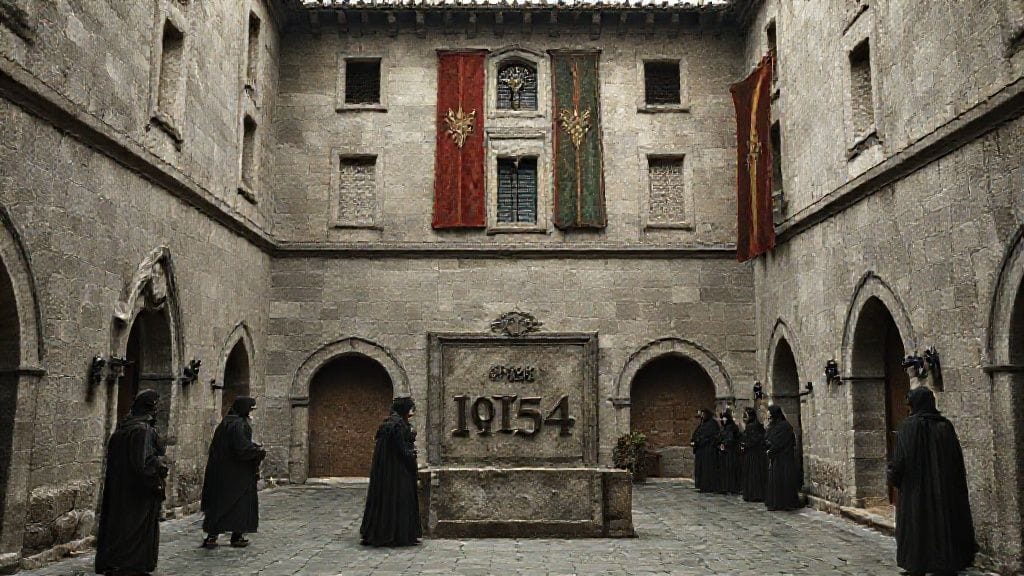
The humid heat of a Sicilian summer clung to the ancient stones of Palermo as a great king neared the end of his journey. The bustling streets, usually alive with traders, clerics, soldiers, and scholars, seemed subdued under the whisper of a profound loss impending. Roger II of Sicily, the architect of a Mediterranean empire, lingered in his royal chamber, his once vibrant presence now frail, shadows flickering across the walls like memories fading into dusk.
It was the year 1154, and though he had ruled for decades with unparalleled vision and might, death was the final arbiter that no crown could resist. In these final moments, amidst aromas of incense, the murmur of prayers, and the soft weeping of courtiers, a monumental chapter in Sicilian history was drawing to a close — a chapter that had transformed a fractured land into a beacon of cultural fusion and political might.
But this was no simple farewell. The death of Roger II sent ripples far beyond Palermo: the Mediterranean world held its breath in anticipation of what would follow the passing of a king who had been equal parts conqueror and statesman, warrior and patron of the arts.
2. Sicily on the Crossroads: The Kingdom under Roger II’s Reign
Sicily was no ordinary island — lying at the crossroads of three continents, it was a nexus of civilizations, languages, and religions. Roger II’s reign had crystallized the myriad influences of Norman knights, Byzantine scholars, Arab administrators, and Latin clergy into a new political reality.
His court in Palermo was a microcosm of this vibrant mosaic — Greek, Arabic, Latin, and Norman tongues intertwined while artisans painted mosaics, poets composed verses, and scientists charted stars. Throughout his four decades on the throne, Roger not only built a centralized state but also pioneered an early form of multicultural governance, a rarity in medieval Europe.
It was a place where Christianity and Islam, Latin and Greek rites, coexisted and often intertwined, sometimes in tension, but often in collaboration. The kingdom was also a strategic jewel coveted by the papacy, the Holy Roman Empire, the Byzantine empire, and Muslim states of North Africa — its stability depended as much on diplomacy as on the sword.
3. The Birth of a King: Roger’s Early Rise to Power
Born in 1095 to a Norman dynasty that had conquered Sicily only a generation earlier, Roger II’s origin was steeped in ambition and opportunity. Even as a child, his noble birth promised a path to power, but the divided Norman holdings in southern Italy required a ruler both cunning and forceful.
By 1127, Roger emerged as the Duke of Apulia and Calabria, before seizing the royal crown of Sicily in 1130, crowned by Antipope Anacletus II in opposition to papal authority — a move that infuriated Rome but cemented Roger’s sovereign aspirations. His kingship marked the first time Sicily was recognized as a kingdom rather than a mere duchy.
His rulership was not uncontested. Balancing skillful diplomacy and military campaigns, Roger subdued rival Norman barons, curbed papal interference, and integrated the island’s diverse populace into a single polity. However, this was only the beginning of a transformation that would define Sicily for centuries to come.
4. Forging a Kingdom: The Unification of Sicily and Southern Italy
Roger’s political genius was his ability to consolidate disparate territories under a single administration. The conquest and unification of mainland regions — particularly Apulia and Calabria — with Sicily proper created a composite yet centralized kingdom stretching from the toe of Italy’s boot to the Mediterranean heart.
This territorial integration was not merely about expansion but functional governance: Roger instituted a royal bureaucracy, standardized coinage, and promulgated legal codes blending Norman law with Byzantine and Arab influences. The Assizes of Ariano, a set of laws he promulgated around 1140, are a testament to his efforts to create order from complexity.
His naval power grew, securing trade routes and intimidating rival powers. The kingdom under Roger was thus both a land power and a maritime force capable of projecting influence across the Mediterranean basin.
5. Vision and Ambition: Roger II’s Political and Cultural Legacy
Beyond territorial gains, Roger II had an incisive vision of what Sicily should represent: a place where cultures merged rather than clashed, where governance was savvy enough to harness diversity rather than fight it.
His patronage of arts and learning was remarkable by medieval standards. He supported translations of scientific treatises from Arabic to Latin, elevated the role of Arab administrators, and encouraged the construction of architectural marvels — blending Norman, Byzantine, and Islamic designs.
Politically, he negotiated a delicate balance with the papacy, alternating defiance and diplomacy to maintain his kingdom’s independence. Roger’s court was a beacon attracting scholars, theologians, and adventurers, fostering a Renaissance spirit in an era often imagined as strictly dark.
6. The Court of Palermo: A Melting Pot of Cultures and Ideas
The capital city itself embodied Roger’s unique kingdom. Palermo was a cosmopolitan marvel where mosques sat beside cathedrals, scholars debated in multiple languages, and artisans crafted works that combined Arab intricacy with Norman grandeur.
The royal court hosted poets reciting in Arabic, officials drafting documents in Latin and Greek, and musicians blending styles from east and west. Such cultural richness imbued the administration with a flexibility and vibrancy unusual for the time, facilitating innovations in administration, literature, and diplomacy.
Significantly, Roger’s appointment of Muslims to key positions challenged contemporary European norms and laid the groundwork for what some historians call a “pluralistic” medieval state.
7. A Troubled Europe: Crusades and Rivalries during Roger’s Era
Roger’s reign coincided with a Europe rife with crusades, religious fervor, and shifting alliances. The First Crusade had recently upended Middle Eastern power dynamics, and the tensions between papacy and empire ebbed and flowed.
Sicily’s strategic location meant that Roger was inevitably drawn into these greater contests. His role as a monarch who embraced elements of Arab culture amid Christian Europe made him a controversial figure for the Latin West.
Nonetheless, Roger managed to maintain his kingdom’s sovereignty by deftly navigating between warring powers, leveraging both marriage alliances and naval strength to protect his realm from external threats.
8. Roger II’s Health Declines: The Shadow of Death Approaches
By the early 1150s, signs of Roger’s frailty emerged. Chronic ailments, perhaps exacerbated by years of relentless travel and war, began to sap his vigor. Still, the king remained engaged with his realm, issuing decrees and meeting diplomats even as his physical strength waned.
The atmosphere in Palermo shifted; courtiers whispered about the inevitable succession question, and factions stirred beneath the surface of the court. For a ruler whose identity was so intertwined with the fate of Sicily, the approach of death posed profound uncertainties.
The king’s final weeks saw family gathered, prayers intensified, and the weighty silence of a looming end settling over the island.
9. The Last Moments: Inside the Royal Chambers of Palermo
On a warm August day in 1154, Roger II took his last breath within the royal chamber adorned with mosaics narrating Christian and classical themes. Surrounded by his closest advisers, clergy, and family members — including his heir William — the great king passed quietly, a stark contrast to the turbulent life he had led.
According to chroniclers, his face bore the peaceful expression of a man reconciled to fate. Witnesses recalled the subdued grief of the court, the tolling of bells, and the ceremonies that followed to mark the passing of a ruler who had become legend.
The news quickly spread through Palermo’s narrow streets and into the ports, carrying with it a mix of sorrow, hope, and apprehension.
10. The News Spreads: Reactions Across Sicily and Beyond
The death of Roger II was not merely a local event; it reverberated from Palermo to distant courts in Constantinople, Rome, and beyond. Muslim traders in North Africa murmured about the end of an era; Western monarchs and the pope recalibrated their strategies knowing a new ruler would soon ascend.
Within Sicily, the populace mourned a king associated with prosperity, relative peace, and cultural flowering. Yet, uncertain times loomed, for the strength of the kingdom was always buoyed by Roger’s personal leadership.
Letters and envoys carried the sad tidings swiftly, prompting a wave of diplomatic activity and sparking ambitions among nobles who now sensed a power vacuum.
11. Immediate Aftermath: The Succession Crisis and Power Shifts
Succession in the medieval world was rarely a simple affair, and Roger’s death triggered immediate political maneuvering. His eldest son, William I, was the legitimate heir, but his reputation differed markedly from his father’s.
William, known later as “the Bad,” lacked Roger’s broad vision and charisma. Key barons and courtiers tested their influence, seeking to assert local autonomy or advance factions that challenged the strong central governance Roger had imposed.
The fragile balance Roger had maintained with external powers also began to shift rapidly, as neighboring rulers eyed Sicily’s vulnerability with hunger.
12. William I Ascends: Continuing or Breaking the Legacy?
William I’s ascension heralded a new chapter — one marked by a return to more conventional Norman rule, increased internal strife, and, in the eyes of many, a retreat from the multicultural openness fostered by his father.
His reign saw revolts and political instability, reflecting both his less diplomatic personality and the pent-up tensions beneath Sicily’s surface. The tolerance and innovation that had characterized Roger’s court slipped, replaced by harsher policies and greater reliance on martial power.
Yet, despite these challenges, William maintained the kingdom’s territorial integrity, navigating a treacherous political environment set in motion by his father’s demise.
13. The Mediterranean Stakes: Sicily’s Role After Roger’s Death
With the king gone, Sicily’s strategic importance in Mediterranean politics increased. The island remained the gateway for trade between Europe, North Africa, and the Near East, ensuring that external powers continued to contest influence in the region.
Roger’s death exposed the kingdom to diplomatic overtures and military threats alike, forcing successors to defend both the borders and the legacy of a kingdom forged amidst diversity and conquest.
Crusaders, Byzantines, the Holy Roman Empire, and Muslim states all recalibrated their interests, keeping Sicily a central piece in the complex chessboard of Mediterranean geopolitics.
14. The Kingdom’s Fragility: Internal Struggles and External Pressures
Despite its strengths, the kingdom Roger II forged was inherently fragile, balanced precariously between different ethnic groups, religious communities, and competing noble houses.
Roger’s death unmasked these tensions, as Arab administrators were gradually replaced by Latin officials, and the religious mix that had defined Sicily began to homogenize under Christian rule.
Internal rebellions such as the Muslim uprising in the 1160s revealed the underlying fault lines, while external pressures from the papacy and empire threatened sovereignty. The question became: could Roger’s successors preserve the complex harmony he had nurtured?
15. Roger II’s Enduring Legacy in Sicilian and European History
Viewed through the centuries, Roger II’s reign symbolizes a high point of medieval cross-cultural synthesis. His kingdom challenged stereotypes of a monolithic Christian Europe by fostering an innovative, pluralistic polity.
Scholars praise his administrative reforms, patronage of science and arts, and political savvy that created one of the Mediterranean’s most powerful and diverse states in the Middle Ages. For Sicilians, he remains a founding figure whose vision shaped the island’s identity.
Roger’s death was not just an end but a moment that crystallized his complex legacy — inspiring both admiration and caution as future rulers grappled with its implications.
16. Memory Carved in Stone and Story: Monuments and Chronicles
The monuments Roger II left in Palermo, especially the majestic Palatine Chapel with its dazzling mosaics, stand as testaments to a kingdom that bridged worlds. Chroniclers like Hugo Falcandus captured the drama of his court and reign, while Arabic and Latin sources attest to his widespread influence.
Over time, myths and tales grew around his persona — the “Great King” who brought peace amid diversity, whose death left a void challenging to fill. These cultural memories continue to shape how Sicily and historians perceive Roger II today.
17. Comparative Kingship: Roger II Amongst Medieval Monarchs
When compared to contemporaries such as Henry II of England or Louis VII of France, Roger II’s blend of military power and cultural patronage sets him apart.
He operated in a unique environment where East met West, creating a kingdom that was early in its multiculturalism and administrative sophistication. His reign poses intriguing questions about monarchy, identity, and governance in the medieval world.
18. Lessons from a King’s Death: Power, Identity, and Empire
Roger II’s death embodies the fragility of political power — a reminder that kingdoms are often held together by the strength and vision of individuals. His passing generated uncertainty but also catalyzed change, highlighting how personal leadership shapes the course of history.
Moreover, his reign challenges modern notions of medieval Europe as closed and intolerant, revealing a past rich with cultural exchange and innovation.
19. Conclusion: The Last Breath of a Visionary Monarch
Roger II of Sicily’s death in 1154 marked more than the passing of a king: it was the close of a chapter that reshaped the Mediterranean world. His life was a testament to ambition, openness, and the possibility of harmonizing diverse peoples under a single crown.
Though his successors struggled to maintain his vision, the kingdom he forged endures in history as a beacon of medieval cosmopolitanism — a bold experiment in unity amid difference.
As Palermo mourned its sovereign and Europe watched, history turned a new page, ever shaped by the echoes of a monarch whose legacy still whispers from the sun-drenched stones of Sicily.
Conclusion
Roger II's passing is a moment layered with emotion, significance, and complexity. It represents the timeless entanglement of personal destiny and political fate — a king whose life embodied a daring synthesis of cultures and whose death heralded both uncertainty and transformation.
His reign offers a powerful narrative not only about conquest but about cultural flourishing, political innovation, and the fragile beauty of diversity. In remembering Roger II, we remember a world where difference did not merely survive, but thrived, against the odds.
Indeed, to gaze upon the mosaics of the Palatine Chapel or to read the chronicles of his time is to feel the pulse of a Mediterranean kingdom unlike any other — a legacy carved by a king who dreamed beyond borders and whose death marked the sunset of a golden age.
FAQs
1. Who was Roger II of Sicily?
Roger II was the Norman king of Sicily, reigning from 1130 until his death in 1154. He unified Sicily and parts of southern Italy into a powerful, culturally diverse kingdom.
2. What made Roger II’s reign unique in medieval Europe?
His kingdom was notable for its multicultural society, combining Latin Christians, Greek Orthodox, Muslims, and Jews, governed through a sophisticated administration blending multiple traditions.
3. How did Roger II die?
Roger II died of natural causes in Palermo in 1154, after a long period of decline in health, surrounded by family and courtiers.
4. What were the immediate consequences of his death?
His son William I succeeded him, but faced internal dissent and external threats, leading to instability compared to Roger’s relatively stable rule.
5. How did Roger II manage religious and cultural diversity?
He employed officials from different religious backgrounds and allowed diverse cultural expressions, fostering tolerance that was rare for the period.
6. What is Roger II’s lasting legacy?
He is remembered for creating a unique medieval kingdom noted for cultural fusion, legal reforms, and political strength, influencing Sicily’s identity for centuries.
7. How did Roger II’s death affect Mediterranean geopolitics?
His death created a power vacuum that external rivals sought to exploit, increasing Sicily’s vulnerability but keeping it central to regional politics.
8. Are there monuments from Roger II’s reign still visible?
Yes, the Palatine Chapel in Palermo is a renowned monument commissioned by Roger, celebrated for its elaborate mosaics and architectural blending of diverse styles.