Table of Contents
- The Fateful Crossing: Frederick I Barbarossa and the Salef River
- A Kingdom in Peril: The Third Crusade’s High Stakes
- The Red Beard’s Resolve: Who Was Frederick Barbarossa?
- The Road to Anatolia: Preparations and Challenges of the German Crusaders
- The Crossing of the Salef River: An Afternoon Turned Tragic
- Eyewitness Accounts: Voices from the Edge of Disaster
- The Immediate Aftermath: Panic, Mourning, and Confusion
- Barbarossa’s Death: Political Shockwaves Across Europe
- The Crusader Army Without Its Leader: Fragmentation and Delay
- Lost in the Waters: Myths and Memories of Barbarossa’s Drowning
- The River’s Legacy: How the Salef River Became a Historical Symbol
- The Impact on the Third Crusade: Strategic and Moral Consequences
- Barbarossa’s Succession: The Fate of His Realm and His Son Henry VI
- The Crusade and the East: Relations with the Seljuk Turks
- Barbarossa’s Death in the Larger Crusading Narrative
- Human Stories of Courage and Despair Along the Salef
- Memorialization: The Emperor in History and Legend
- The Historical Debate: Accident or Fate?
- Reflections on Leadership and Destiny in Crusader Chronicles
- The Role of Geography and Nature in Medieval Warfare and Travel
- Barbarossa’s End as a Turning Point in Medieval Christendom
- How Modern Historians Understand the Event Today
- Cultural Reverberations: Art, Literature, and Music Inspired by Barbarossa
- Conclusion: The Drowning of Barbarossa and the Tide of History
- FAQs on Frederick Barbarossa’s Death at Salef
It was a day drenched in history, yet soaked in tragedy—the sunny sky over the winding Salef River betrayed nothing of the storm gathering beneath its calm surface. June 10th, 1190, a seemingly ordinary moment the Third Crusade would never forget. As Frederick I Barbarossa, the staggering Holy Roman Emperor famed for his fiery beard and indomitable spirit, attempted to cross the turbulent waters of the Salef in Anatolia, fate had other designs.
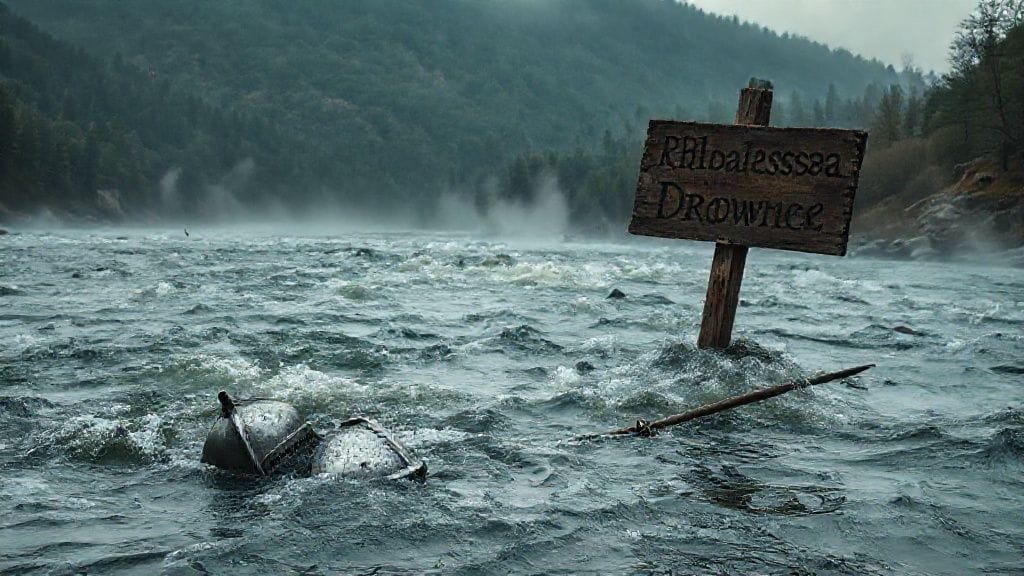
The emperor, mounted astride his noble steed and accompanied by a retinue of weary yet loyal knights and foot soldiers, was pushing the limits of endurance. After months of grueling marches across Europe into the rugged Anatolian terrain, their resolve was tested at the edge of that river. Suddenly, the currents overwhelmed Barbarossa’s horse, dragging both emperor and mount into the deep. Despite desperate attempts, the legendary leader vanished into the depths, swallowed by the same crusading zeal that had propelled him across continents.
This event, far more than a mere incidental death, sent ripples through Christendom’s political and military landscape, altering the trajectory of the Third Crusade and casting a shadow over European aspirations in the Holy Land. But to fully grasp the gravity of Barbarossa's drowning, we must first journey back to understand the man himself and the precarious world that stiffened the blade of the Crusading spirit in the latter half of the 12th century.
The Fateful Crossing: Frederick I Barbarossa and the Salef River
To the casual observer, crossing a river might seem a mundane military operation, but for Frederick Barbarossa’s crusading army, the Salef River was a cruel sentinel guarding Anatolia’s secrets. On June 10th, 1190, the river’s deceptively gentle flow masked powerful undercurrents and hidden whirlpools. The emperor’s attempt to ford the river unveiled the harsh reality of medieval travel, where each step could be the last.
The river, known today as the Göksu, slices through the rugged landscapes of southern Turkey. But in the 12th century, it was a natural barrier amid hostile Seljuk territories. Floodwaters swollen from spring rains filled the riverbed, making the crossing hazardous. For a leader like Barbarossa, famed as much for his physical prowess as his political dominion, the urge to cross despite risk exemplified a broader theme—human tenacity confronting nature’s indifferent force.
A Kingdom in Peril: The Third Crusade’s High Stakes
The death of Saladin’s conquest of Jerusalem in 1187 sent shockwaves throughout Christendom. The fall of the Holy City galvanized European powers to mount a united response—the Third Crusade. Frederick Barbarossa, crowned emperor of a fractured Holy Roman Empire, answered this call not just out of religious zeal but from a desire to restore imperial prestige and unify his realm under a banner of crusading glory.
The journey from Germany to the Levant was a crucible of logistical nightmares, political tensions, and cross-cultural confrontations. Barbarossa’s expedition force reflected a microcosm of medieval society, carrying thousands of knights, infantry, camp followers, and supply wagons—a medieval army on the move through hostile lands.
Barbarossa’s participation was pivotal. He was more than just a military leader; he was a symbol of Christendom’s hope, an emperor who had reconciled internal dissent and projected strength abroad. His loss would leave not just a vacuum of command but a crisis of morale for his forces and their European allies awaiting reinforcements.
The Red Beard’s Resolve: Who Was Frederick Barbarossa?
Born in 1122 into the Hohenstaufen dynasty, Frederick I earned his sobriquet “Barbarossa” or “Red Beard” for his striking auburn facial hair. His life was marked by relentless ambition: from consolidating fragmented German principalities to clashing with the papacy over Holy Roman Empire prerogatives.
Barbarossa was, in many ways, the archetype of medieval kingship—larger than life, imposing, physically formidable, and politically formidable. His campaigns in Italy, including repeated attempts to assert imperial authority over the Lombard cities, demonstrated a will as unyielding as the mountains he crossed.
Blessed with a commanding presence and revered by many, Barbarossa’s leadership entwined with myths and legends. Chroniclers portrayed him as a destined emperor, destined to resurrect a Christian empire at the heart of Europe. His commitment to the crusading cause was as much about personal redemption as dynastic legacy.
The Road to Anatolia: Preparations and Challenges of the German Crusaders
Organizing the army that set out from the Rhineland and Bavaria was an epic feat of medieval logistics. Thousands of men, horses, and supplies required careful planning. The route, stretching over 2,000 miles, would weave through lands ruled by potentially hostile nobles and ethnic groups.
Crossing the Byzantine Empire presented political complexities. Emperor Isaac II Angelos’s suspicious hospitality complicated relations, and the Seljuk Turks awaited the crusading force in the mountainous terrain of Anatolia. The terrain was unforgiving—craggy hills, narrow passes, and unpredictable river crossings would test the endurance of any army.
Disease, exhaustion, and skirmishes slowly whittled the ranks. Nevertheless, Barbarossa’s determination never faltered. Conquests such as the siege of Iconium (modern Konya) in April 1190 underscored his tactical prowess and boosted troop morale.
The Crossing of the Salef River: An Afternoon Turned Tragic
The crossing of the Salef River was marked by overconfidence and miscalculation. The army arrived exhausted from skirmishes and fortification duties at Iconium. The river, swollen from rains and spring melt, was deceptively dangerous.
According to chroniclers, Barbarossa attempted to lead his troops across mounted on his horse. The emperor, clad in chainmail and bearing the weight of command, entered the torrent with confidence. But as the currents took their toll, his horse lost footing on submerged rocks, plunging him into the icy water.
Eyewitnesses recounted desperate rescue efforts, but the current was merciless. Barbarossa’s body was never recovered, deepening the sorrow and mystery around the event. His death at that moment held an almost poetic finality—the great emperor claimed by nature at the height of his crusading ambition.
Eyewitness Accounts: Voices from the Edge of Disaster
Muslim chroniclers and Christian observers alike recorded the event with a mixture of horror and veneration. The Muslim chronicler Ibn al-Athir described a terrible torrent, emphasizing the imperial foolishness in underestimating the river.
Christian chroniclers like Conrad of Querfurt provided poignant details, relating the desperate grief gripping the army. The loss of Barbarossa plunged their ranks into disarray. One can almost hear the echoes of despair through these accounts—a commander, a father, an emperor lost in a blink.
The Immediate Aftermath: Panic, Mourning, and Confusion
News of Barbarossa's death spread like wildfire. The psychological blow to the army was catastrophic; thousands had followed the man they believed invincible. Command passed hesitantly to his son, Henry VI, but the unity and morale were deeply shaken.
The army halted to bury the dead and mourn. Rumors about the fate of Barbarossa’s remains circulated for days, some believing he had faked his death in divine protection, a notion credited to the “King asleep in the mountain” legend.
Ultimately, the crusade’s momentum slowed, and the German contingent fractured and delayed, weakening the combined fronts that had been the hope of reclaiming Jerusalem.
Barbarossa’s Death: Political Shockwaves Across Europe
In Europe, the emperor’s death was a seismic event. The Holy Roman Empire, already riven by internal rivalries, faced a leadership crisis. The succession of Henry VI was secure in theory but complicated in practice by rival noble factions.
The pope and other monarchs received the news with mixed emotions—relief for some, mourning for others. Barbarossa’s aspiration to unify Christendom and lead it was abruptly extinguished. The void left behind would have consequences not only for the Holy Land but for imperial politics in Germany and Italy for decades.
The Crusader Army Without Its Leader: Fragmentation and Delay
Without Barbarossa’s iron will, the crusading force splintered. Some German nobles led fragmented retinues toward the Levant; others returned home or perished in skirmishes.
This dispersal meant that some contingents would fail to link up with Richard the Lionheart and Philip Augustus. The cohesive military pressure needed to challenge Saladin weakened, prolonging and complicating the Third Crusade.
Lost in the Waters: Myths and Memories of Barbarossa’s Drowning
Over time, Barbarossa’s death transformed from a historical tragedy into legend. The “Sleeping Emperor” myth grew, painting him as an immortal ruler who would one day awaken to restore Germany’s glory.
The river itself became sacred in Crusader lore, a symbol of the mercilessness of fate and nature’s power over human ambition. Pilgrims, poets, and historians would revisit the story through the centuries, cementing the event in cultural memory.
The River’s Legacy: How the Salef River Became a Historical Symbol
Also called Göksu, the Salef River’s role has long transcended its modest size. It stands as a geographical witness to medieval ambition and loss. The river’s dangerous currents and rocky bed have been emblems of both nature’s cruelty and the fragile edge humanity treads.
Modern Turkey holds archaeological remnants nearby, and the waters carry the silent pulse of a moment when history and nature conspired to end an empire’s greatest crusade.
The Impact on the Third Crusade: Strategic and Moral Consequences
Barbarossa’s death was a strategic catastrophe. The crusader coalition lost its most experienced and charismatic leader. The expedition’s timing, cohesion, and morale suffered irreparable damage.
Without his leadership, the Germans’ absence forced Richard and Philip to move forward with fewer troops. Though successes followed, the ultimate goal—reclaiming Jerusalem—remained elusive.
Barbarossa’s Succession: The Fate of His Realm and His Son Henry VI
Henry VI ascended amid this crisis, inheriting both the mantle of emperor and the looming shadow of his father’s drowned legacy. His reign was marked by efforts to consolidate imperial authority, yet the ferocity of regional nobles in Germany complicated his rule.
Henry’s untimely death in 1197 further deepened instability. The Hohenstaufen line, while potent, never fully realized the vision Barbarossa pursued. His death by drowning in Salef became a symbolic closing of an era.
The Crusade and the East: Relations with the Seljuk Turks
The Seljuk Turks’ role in the events around the Salef reflects the complex cultural and military dynamics of the time. The Turks controlled much of Anatolia and viewed the crusaders both as invaders and potential allies against other enemies.
The river crossing highlighted not just nature’s dangers but the peril of confronting the strategic terrain of the Seljuks. Barbarossa's death arguably emboldened the Turks, shifting the military balance further before the crusaders reached the Levant.
Barbarossa’s Death in the Larger Crusading Narrative
Barbarossa’s drowning marks a potent narrative pivot—the loss of a commanding European monarch at the threshold of the Holy Land. It signals the limits of medieval crusading zeal and the vulnerabilities beneath its veneer of religious fervor and military might.
The event stands as a reminder of the Crusades’ human cost and the intricate interplay of faith, politics, and fate that shaped that violent era.
Human Stories of Courage and Despair Along the Salef
Amid the grand political tragedy, personal stories emerge. Knights who lost commanders, squires who drowned alongside lords, and common soldiers battling exhaustion reveal the war’s gritty humanity.
Tales of brave rescues, desperate prayers, and shattered hopes paint the crossing not as a statistic but as a tableau of medieval lives buffeted by history.
Memorialization: The Emperor in History and Legend
Centuries later, Barbarossa’s figure endures in European memory. In Germany, he became a symbol of national pride, unity, and the enduring spirit of leadership.
Monuments, folklore, and literature recall the “Red Beard” and his tragic end, blending fact and myth in the making of a medieval mythic hero.
The Historical Debate: Accident or Fate?
Historians have long debated whether Barbarossa’s death was a tragic accident or marked by deeper symbolism, as medieval chronicles often implied divine judgment or destiny.
Modern scholarship views it as a combination of human error and misfortune amidst the inherent risks of crusading journeys. Still, the resonance of his death transcends simple explanation, inviting reflection on history’s caprices.
Reflections on Leadership and Destiny in Crusader Chronicles
Medieval chroniclers often framed Barbarossa’s death through the lens of providence and destiny—a cautionary tale about the limits of power and the inevitability of death, even for emperors.
This echoes broader medieval views on kingship, divine favor, and the fragility of human endeavors against the wider tapestry of God’s will.
The Role of Geography and Nature in Medieval Warfare and Travel
The Salef River crossing underscores an oft-overlooked factor in medieval warfare: the environment.
Natural barriers influenced strategy, movement, and fate. The wilderness of Anatolia exemplified the physical challenges crusaders faced—a gauntlet of nature as much as of human enemies.
Barbarossa’s End as a Turning Point in Medieval Christendom
Barbarossa’s death punctuated a shift in the crusading era, reflecting declining European unity and the limits of martial and religious idealism.
His drowning foreshadowed the complex, fragmented crusading expeditions of the 13th century, where political rivalries often trumped religious goals.
How Modern Historians Understand the Event Today
Contemporary historians analyze Barbarossa’s drowning through critical study of primary sources, archaeological findings, and environmental analysis.
Today’s scholarship views the event with a nuanced perspective on medieval logistics, leadership challenges, and the unpredictability of travel in hostile territory.
Cultural Reverberations: Art, Literature, and Music Inspired by Barbarossa
From Wagner’s “Ring Cycle” to countless medieval romances, Barbarossa’s life and death have inspired artistic creations that reflect Germany’s cultural heritage.
These works immortalize the emperor’s fiery spirit and tragic fate, weaving history and myth into enduring cultural narratives.
Conclusion
The drowning of Frederick I Barbarossa in the Salef River remains one of the most poignant moments of the crusading era—a convergence of human ambition, natural peril, and historical consequence. This event did not simply mark the end of a leader’s life but symbolized the frailty of medieval crusading hope in the face of a vast and untamable world.
Barbarossa’s death resonates across centuries as a testament to the power of leadership, the vulnerability of human endeavors, and the unpredictable forces that shape history’s currents. In the watery depths of the Salef, an empire lost its heart, casting ripples that forever altered the destiny of Christendom and its vision of the Holy Land.
FAQs
Q1: Why was Frederick Barbarossa leading an army across Anatolia in 1190?
A1: Frederick Barbarossa was leading the German contingent of the Third Crusade, aiming to reclaim Jerusalem from Muslim control following Saladin’s victories.
Q2: How did Barbarossa die at the Salef River?
A2: He drowned when his horse slipped and he was swept away by the river’s strong currents during a crossing on June 10, 1190.
Q3: What immediate impact did Barbarossa's death have on the Third Crusade?
A3: His death caused disarray and demoralization among the crusader forces, delaying the campaign and weakening the German army’s role in the crusade.
Q4: Who succeeded Barbarossa in leading his crusading army?
A4: His son, Henry VI, assumed leadership, but the cohesion and strength of the German forces diminished significantly after the emperor’s death.
Q5: Are there any myths associated with Barbarossa’s death?
A5: Yes, a legend arose that Barbarossa did not die but sleeps in a mountain, destined to awaken and restore German glory.
Q6: How is Frederick Barbarossa remembered today?
A6: He is celebrated as a symbol of medieval kingship and German unity, immortalized in folklore, literature, and national history.
Q7: What role did the Salef (Göksu) River play beyond Barbarossa’s death?
A7: The river's crossing was a strategic challenge on the crusader route and has become emblematic of the natural obstacles faced during medieval campaigns.
Q8: How do modern historians view the significance of Barbarossa’s drowning?
A8: They see it as a tragic accident with far-reaching political and military consequences, illustrating the dangers and uncertainties of crusading expeditions.