Table of Contents
- The Final Days in Marrakesh: A Scholar’s Last Breath
- The Twilight of an Era: 12 December 1198, The Death of Averroes
- From Cordoba to Marrakesh: The Journey of Ibn Rushd
- A Mind Ahead of Its Time: The Philosophical Legacy of Averroes
- The Almohad Caliphate: Intellectual Ambitions and Political Realities
- Marrakesh at the Turn of the 13th Century: A City of Power and Paradox
- The Clash of Faith and Reason: Averroes in the Eyes of the Almohad Rulers
- The Final Trial: Exile and Return to the Imperial Court
- The Silent Witnesses: Contemporaries and Chroniclers of Averroes’ Death
- The Burial and the Lost Tomb: Mystery and Reverence in Posthumous Memory
- Philosophical Echoes Across Centuries: Averroes and the Western Renaissance
- Averroes in Islamic Thought: Reverence, Rejection, and Reexamination
- The Influence on Medieval Europe: From Toledo to Paris
- The End of an Intellectual Beacon: The Legacy of the Almohad Decline
- Lessons from a Life: Rationality, Faith, and the Quest for Truth
- The Human Side: Anecdotes and Personal Traits of Ibn Rushd
- The Role of Medicine: Averroes as Physician and His Final Years
- Political Context: The Perils of Intellectual Life under Dynastic Rule
- Rediscovering Averroes: Modern Scholarship and Commemoration
- The Everlasting Dialogue between Philosophy and Religion
On a cold December day in 1198, the city of Marrakesh, the bustling heart of the Almohad Caliphate, was quietly witnessing the passing of a mind whose influence would ripple far beyond the sands of North Africa. The year 1198 marked not just the end of an era for one of Islam's greatest thinkers, but also the beginning of a complicated legacy bridging philosophy, religion, and the birth of modern rational inquiry. Averroes—known in the Islamic world as Ibn Rushd—breathed his last breath surrounded by the conflicting forces of a society unable to fully embrace his vision. His death in Marrakesh on the 10th of December closed a chapter on a turbulent intellectual journey that challenged orthodoxy whilst illuminating the corridors of medieval thought.
The Final Days in Marrakesh: A Scholar’s Last Breath
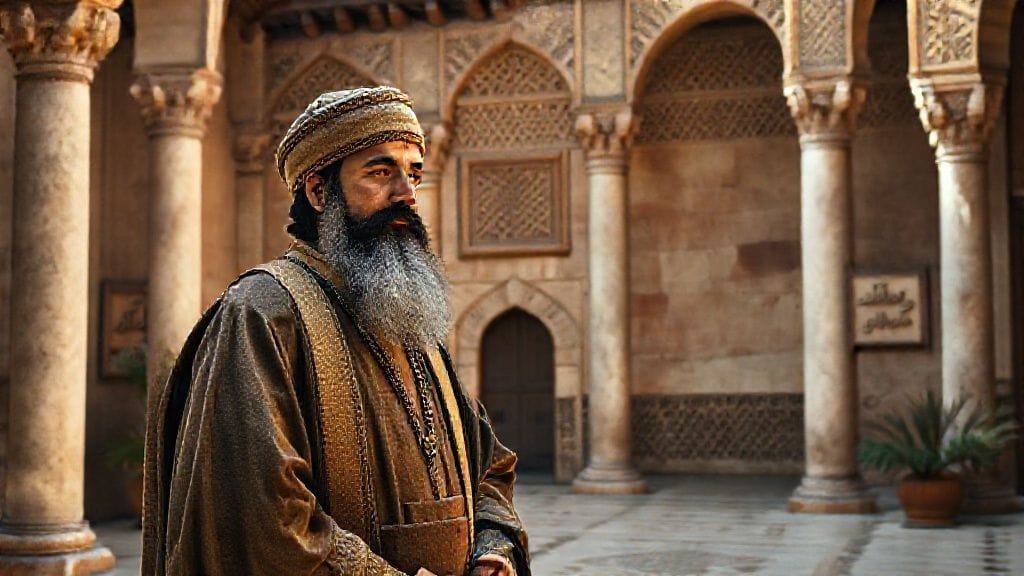
Imagine Marrakesh in December 1198: the air heavy with the spices of the souks, the sound of prayer echoing from minarets, and the restless undercurrents of political power struggling for stability. In a modest chamber within the city's royal precincts lay Ibn Rushd, tired but unbroken. His body weakened by years of study and political hardship, his mind remained as sharp as ever—ruminating on Aristotle’s metaphysics, the nature of God, and the tensions between faith and reason.
As daylight faded, his thoughts wandered to the countless dialogues he had sparked. Despite exile and denunciation, he never ceased his pursuit of truth, defending the compatibility of philosophy and Islam against mounting opposition. His presence in Marrakesh was a testament to resilience; yet, the shadow of death loomed like the winter chill.
It was here in Marrakesh, at the twilight of his life, that Averroes was to leave behind not only his body but an intellectual legacy that would puzzle and inspire generations.
The Twilight of an Era: 12 December 1198, The Death of Averroes
The exact hour of Ibn Rushd’s death is recorded on December 10, 1198. The news spread swiftly across Marrakesh, a city both proud and conflicted over the philosopher’s stature. For the Almohad dynasty—a regime born out of religious reformism and strict theological enforcement—Averroes was both an invaluable advisor and a controversial figure.
In his final moments, the scholar was attended by close disciples and family, a rare moment of intimacy shielding him from a world torn by ideological strife. Chroniclers noted his serenity even as he spoke of the harmony possible between reason and revelation. His demise was mourned quietly; political tensions muted overt displays of grief, but underneath, a profound respect endured.
This death, while seeming a closure locally, was but a prelude to an extraordinary afterlife in the annals of both Islamic and Western intellectual history.
From Cordoba to Marrakesh: The Journey of Ibn Rushd
Born in 1126 in Cordoba, Al-Andalus, Ibn Rushd hailed from a line of distinguished scholars and jurists. His early years were immersed in the vibrant intellectual culture of Muslim Spain—a place where Greek philosophy, Islamic theology, and medical science mingled in an extraordinary synthesis.
Trained as a jurist, philosopher, and physician, Averroes's versatility was legendary. His writings on Aristotle—unrivaled in depth and clarity—earned him the nickname “The Commentator.” Yet his path was not linear; political upheaval and ideological suspicion frequently shifted his fortunes.
The move to Marrakesh, under the Almohad caliphate’s rule, symbolized a final phase where his wisdom was both sought after and feared. The Andalusian maestro found himself at the center of tensions between orthodox theologians and progressive thinkers who resonated with his rationalist ideals.
A Mind Ahead of Its Time: The Philosophical Legacy of Averroes
Averroes’s philosophical corpus was vast, encompassing commentaries on Aristotle’s metaphysics, physics, ethics, and logic. He argued famously for the unity of truth—that philosophical reason and Islamic revelation ultimately harmonize.
His stance defied the prevailing currents of his era, especially against the Ash’ari theology dominant in the Islamic world, which often relegated philosophy as dangerous speculation. Yet, for Averroes, philosophy was not a threat but a necessary tool for understanding the divine.
His insistence on the autonomy of reason would later inspire Renaissance humanists and shape European scholastic debates, earning him posthumous fame as the “father of secular thought.”
The Almohad Caliphate: Intellectual Ambitions and Political Realities
The Almohads, an Islamic reformist dynasty originating in the 12th century, sought to purify religious practice and centralize power. While patronizing arts and sciences, they were intolerant of heterodox views challenging their theological framework.
This dichotomy framed the intellectual environment Averroes inhabited—one where brilliant minds were both cultivated and constrained. The Caliphate's capital, Marrakesh, became a crucible of knowledge but also a cage for thinkers like Ibn Rushd.
The political leadership’s oscillation between admiration and suspicion defined Averroes’s final years, culminating in episodes of exile and reinstatement.
Marrakesh at the Turn of the 13th Century: A City of Power and Paradox
Marrakesh was not merely a backdrop for Ibn Rushd’s death but a character in itself. A thriving metropolis, it was a cultural crossroads bringing Saharan traders, scholars, and officials together.
Yet beneath its vibrant markets and palatial grandeur lay tensions—between tradition and innovation, faith and reason, authority and dissent. The city’s dynamic atmosphere echoed the internal struggles of its most famous resident.
As Ibn Rushd took his last breaths within these walls, Marrakesh mirrored the complex interplay of hope and repression shaping his destiny.
The Clash of Faith and Reason: Averroes in the Eyes of the Almohad Rulers
Ibn Rushd’s philosophical commitments repeatedly placed him at odds with the religious zealotry of Almohad rulers. His unapologetic defense of Aristotelian reason belied the strict piety espoused by the caliphs.
At one point, his works were banned, and he faced exile—testaments to the volatility of holding intellectual independence in a theocratic state. Yet his resilience bore fruit when he was called back to advise on legal and medical matters, reflecting a grudging acknowledgment of his indispensability.
This ambivalence colored his final years in Marrakesh, where loyalty and suspicion danced dangerously close.
The Final Trial: Exile and Return to the Imperial Court
The 1190s were turbulent for Averroes. After falling into disfavor and being exiled to Lucena near Cordoba, he eventually regained favor and was recalled to Marrakesh.
These trials tested not only his endurance but also the limits of intellectual freedom under the Almohads. The oscillation between rejection and rehabilitation underscored the ambiguous space occupied by philosophy in Islamic governance.
His final residence in Marrakesh, however, was marked by relative calm—perhaps a bittersweet recognition of his undiminished influence despite court intrigues.
The Silent Witnesses: Contemporaries and Chroniclers of Averroes’ Death
Our knowledge of Averroes’s death partly comes from accounts by scholars and courtiers who observed the closing scene of his life. Their writings reflect a spectrum of admiration, critique, and political caution.
Figures such as Ibn Tufayl and later generations would recount his death as the loss of a luminary whose light was extinguished too soon—yet whose ideas remained immortal.
These testimonies blend personal reverence and the gravitas of witnessing the end of a monumental figure.
The Burial and the Lost Tomb: Mystery and Reverence in Posthumous Memory
Where exactly Ibn Rushd was buried remains shrouded in mystery. Some traditions claim his resting place is unmarked in Marrakesh, while others hint at lost mausoleums.
This physical absence contrasts with the enduring presence of his intellectual spirit, symbolizing how ideas endure beyond mortal confines.
The way his memory was cared for, suppressed, or celebrated through time reveals much about the evolving relationship between culture and philosophy in Islamic societies.
Philosophical Echoes Across Centuries: Averroes and the Western Renaissance
Strikingly, Averroes’s influence blossomed most profoundly centuries after his death—in Christian Europe. Through translations and scholastic commentaries, his rationalist interpretations fueled the revival of Aristotelian philosophy.
Thinkers like Thomas Aquinas grappled with Averroes’s works, sometimes revering, sometimes contesting his claims, but always acknowledging their significance.
His death in Marrakesh marked the end of a life, but not the end of his impact—the legacy that would help shape the intellectual foundations of the Renaissance and modern science.
Averroes in Islamic Thought: Reverence, Rejection, and Reexamination
Within the Islamic world, Averroes’s legacy has been complex. While sometimes viewed as a heretic by orthodox scholars, modern Islamic philosophers have reclaimed him as a pioneer of rational inquiry.
His attempts to reconcile reason with revelation resonate with contemporary debates over religion and science. His death, therefore, represents not only a historical moment but a continuing dialogue within Islam about modernity and tradition.
The Influence on Medieval Europe: From Toledo to Paris
Ibn Rushd’s texts traveled from the libraries of Marrakesh to the intellectual hubs of Toledo and Paris, igniting scholastic discourse.
Medieval Europe’s rediscovery of Aristotle through Averroes helped dissolve earlier suspicions of classical knowledge, catalyzing educational reforms and philosophical progress.
Thus, the scholar who died in political and intellectual turmoil left a transcultural inheritance that extended far beyond his lifetime and geography.
The End of an Intellectual Beacon: The Legacy of the Almohad Decline
The Almohad Caliphate itself would face fragmentation and decline in the decades following Averroes’s death. The suppression of philosophical thought was both a symptom and cause of the cultural stagnation that ensued.
The loss of Averroes was thus emblematic of the fading of a golden age—a reminder that political and religious rigidity often spell the demise of intellectual flourishing.
Yet, in his death lay the seeds of revival, borne by those who preserved and transmitted his ideas.
Lessons from a Life: Rationality, Faith, and the Quest for Truth
The story of Ibn Rushd’s death is not simply an endpoint—it is a catalyst for reflection on the eternal tensions between faith and reason.
His life and death urge us to consider the courage required to pursue truth amidst opposition and the humility demanded by the interplay of knowledge and belief.
Averroes embodies the perseverance of the human spirit in seeking understanding beyond dogma.
The Human Side: Anecdotes and Personal Traits of Ibn Rushd
Beyond the philosopher and physician was a man known for his kindness, humor, and humility. Anecdotes from his students reveal a teacher deeply committed to education, often engaging in lively debates but always with respect.
His patients remembered his healing hand and gentle demeanor, a testament to a life devoted to service as well as intellect.
These stories bring dimension to a figure too often reduced to his writings.
The Role of Medicine: Averroes as Physician and His Final Years
Averroes was also a renowned physician, whose medical treatises influenced both Islamic and European medicine. His knowledge was highly valued by rulers and commoners alike.
In his final years, he continued advising on health matters for the Almohad court, blending his understanding of body and soul—themes that paralleled his philosophical interests.
His death marked the loss of a healer as much as a thinker.
Political Context: The Perils of Intellectual Life under Dynastic Rule
The Almohad dynasty’s policy oscillated precariously between fostering scholarship and enforcing religious orthodoxy.
Ibn Rushd’s experiences illustrate the fragile position of intellectuals embedded in regimes wary of dissent.
His death thus reminds us of the stakes involved in the pursuit of knowledge under autocratic rule—a drama repeated throughout history.
Rediscovering Averroes: Modern Scholarship and Commemoration
Only in recent centuries has Averroes received fully the recognition he deserves. Scholars across the globe reconstruct his thought, contextualizing it in contemporary debates on pluralism and science.
Museums, conferences, and academic publications celebrate his enduring influence, treating his death not as an end but the birth of perpetual inquiry.
The Everlasting Dialogue between Philosophy and Religion
Averroes’s death crystallizes a dialogue that continues to this day: how can reason and faith coexist in the human search for meaning?
His legacy challenges us to transcend simplistic binaries, embracing complexity in thought and belief.
In the echo of his passing in Marrakesh lies the heartbeat of an intellectual tradition still vibrant and urgent in our time.
Conclusion
The death of Averroes in Marrakesh on 10 December 1198 closes a remarkable chapter of intellectual courage in a world fraught with tensions between faith and reason. Yet, this moment was less an end than a beginning—the beginning of a legacy that would reverberate through centuries, reshape philosophy, and inspire those who dare to think beyond boundaries. Averroes teaches us that the pursuit of truth demands patience, resilience, and above all, the humility to hold seemingly opposing ideas in dialogue. He reminds us that great thinkers are not only defined by the era they inhabit but by the timeless conversations they ignite in the human spirit.
FAQs
Q1: Who exactly was Averroes (Ibn Rushd)?
Averroes was a 12th-century Andalusian Muslim philosopher, jurist, and physician renowned for his extensive commentaries on Aristotle and his efforts to harmonize Islamic theology with rational philosophy.
Q2: Why did Averroes face exile during the Almohad Caliphate?
His rationalist philosophies often clashed with the Almohad rulers’ strict religious doctrine, leading to suspicion and temporary exile when his works were considered threatening to orthodox beliefs.
Q3: What was the significance of Marrakesh in Averroes’s final years?
Marrakesh was the political and cultural capital of the Almohad Caliphate, where Averroes spent his last years, navigating between intellectual pursuit and political constraints.
Q4: How did Averroes’s death impact Islamic philosophical traditions?
While his death marked the end of his personal contributions, his works lived on, later undergoing periods of both rejection and revival in Islamic thought, especially in modern times.
Q5: What is Averroes’s legacy in Western philosophy?
Medieval European scholars translated his commentaries, greatly influencing scholasticism and the Renaissance by reintroducing Aristotelian philosophy through a rationalist lens.
Q6: Is Averroes’s tomb known today?
The precise location of Averroes’s tomb remains uncertain, with some historical accounts suggesting it was unmarked or lost, which adds to the mystique surrounding his memory.
Q7: In what ways did Averroes bridge medicine and philosophy?
As both a physician and philosopher, Averroes treated the human body and intellect as interconnected, authoring medical treatises that combined empirical observation with rational principles.
Q8: How is Averroes commemorated in modern scholarship?
He is celebrated worldwide as a pioneering thinker who contributed to cross-cultural intellectual history, with numerous academic studies, conferences, and cultural projects dedicated to his work.