Table of Contents
- The Mysterious Last Days: Venice in Early 1324
- Marco Polo’s Final Moments: A Departure from the Silk Road
- The Silk Road’s Greatest Chronicler: A Life Shaped by Exploration
- Venice in the Early 14th Century: A Crossroads of Trade and Power
- From Merchant’s Son to World Explorer: Polo’s Journey in Retrospect
- The Polo Family Legacy: Traders, Diplomats, and Storytellers
- The Venetian Reception of Marco Polo’s Tales: Skepticism and Wonder
- Marco Polo’s Health Declines: The Human Side of a Legend
- January 8, 1324: The Death That Closed an Era
- The Buried Legend: Polo’s Tomb and Its Mysteries
- The Death of Marco Polo and the Rise of Venetian Maritime Power
- How Marco Polo’s Passing Influenced Mediterranean Politics
- Cultural Reverberations: Polo’s Stories After His Death
- The Ripple Effect in Europe: Igniting Curiosity about the East
- The Real Impact of Polo’s Death on Cartography and Exploration
- The Immortalization of Marco Polo in Literature and Art
- Venice's Mourning and Celebration: Public Reaction in 1324
- The Polo Manuscript: Authenticity and Legacy
- Rediscovering Marco Polo’s Death Through History and Myth
- Why Marco Polo’s Death Still Resonates Today
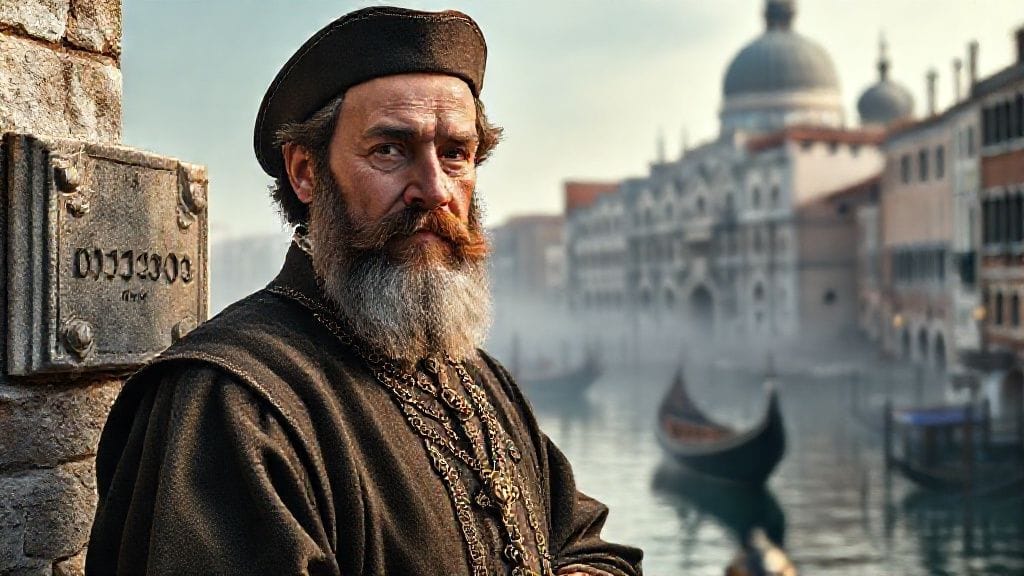
The chilly winds swept through the narrow Venetian canals on that January morning in 1324, carrying with them the sorrow of a city about to lose one of its most remarkable sons. Marco Polo, the Venetian merchant, adventurer, and storyteller, lay on his deathbed in a modest house overlooking the labyrinthine waterways of the lagoon city. The fading light of the winter sun filtered through the fog, casting long shadows over a world that had been forever altered by the tales he had brought back from the East. The bustling mercantile republic seemed to hold its breath as the man who had journeyed farther than any Westerner dared to dream whispered his last words. This was not merely the death of a man, but the closing of a chapter in the story of medieval exploration and cultural exchange.
The Mysterious Last Days: Venice in Early 1324
Venice in the early 14th century was a city both at peace and in flux. Its thriving trade routes spanned the Mediterranean and reached deep into Asia, thanks largely to merchants like Marco Polo and his family. Yet within this thriving urban center, shadowy corridors and stone alleyways concealed rivalries, political machinations, and the unrelenting pressures of an emerging new world order. Marco Polo’s final days were marked by an unusual quiet for a man of his stature, spent largely in reflection and dictation of his memoirs. According to chroniclers, his illness came suddenly, yet with a calm acceptance—a hallmark, some say, of a man who had glimpsed the vastness of the world and was ready to depart.
Marco Polo’s Final Moments: A Departure from the Silk Road
It is said that as he lay sick, Marco called to his faithful companions and whispered to them the stories of his incredible travels once more. The journey that started on the banks of the Venetian canals had carried him across deserts, mountains, and vast empires. But now his voyage was ending at home. The Polo mansion was alive with grief, and many from the city—friends, merchants, even strangers—came to pay their respects. Yet, the precise details of his final hours remain shrouded in mystery, contributing to the mythos surrounding his last breath. The legendary explorer died on January 8, 1324, reportedly uttering a wish that his stories would endure beyond his mortality.
The Silk Road’s Greatest Chronicler: A Life Shaped by Exploration
Before his death, Marco Polo had become famous for the stories he dictated while imprisoned during the conflict between Venice and Genoa—tales that would later be compiled as "Il Milione." These narratives introduced Europeans to the riches and wonders of the East: the Great Khan’s court, exotic spices, lavish cities, and inventions previously unknown in the West. Polo’s chronicles filled the medieval imagination with new possibilities, challenging contemporary geographical and cultural assumptions. His precise role—whether as a factual eyewitness or an inspired storyteller—has been debated for centuries, but no one disputes the transformative impact of his accounts.
Venice in the Early 14th Century: A Crossroads of Trade and Power
At the time of Polo’s death, Venice was asserting itself as a dominant maritime power. The city-state’s wealth depended on expansive trade networks that linked Europe to the Levant, North Africa, and Asia. Venice was not only a hub for commerce but also a melting pot of cultures and ideas. Polo’s experiences epitomized the city’s outward-looking spirit, reflecting the aspirations and uncertainties of European merchants at the dawn of global trade. His passing came at a moment when Venice was stepping into a new era, navigating alliances and rivalries that would define Mediterranean politics for decades.
From Merchant’s Son to World Explorer: Polo’s Journey in Retrospect
Marco Polo’s voyage was no spontaneous adventure. Born into a family of successful Venetian traders, his journeys to the East were strategic as well as daring. Alongside his father Niccolò and uncle Maffeo, he traveled extensively through Central Asia, Persia, and China, gaining unprecedented access to the Mongol Empire. His observations and the economic intelligence he gathered proved invaluable to Venetian interests back home. Polo’s personal growth—from a curious youth to a seasoned envoy—captures the transformation of medieval explorers who were as much diplomats as adventurers.
The Polo Family Legacy: Traders, Diplomats, and Storytellers
The Polo family’s influence extended beyond Marco’s travels. Niccolò and Maffeo were themselves renowned for their earlier expeditions and negotiations with Mongol rulers. Their partnership with Kublai Khan opened diplomatic channels previously unseen by Europeans. The family’s unique position as intermediaries shaped cross-cultural exchanges and enriched the Venetian mercantile class. After Marco’s death, the Polo name remained synonymous with exploration and commerce, inspiring generations to look beyond Europe’s shores.
The Venetian Reception of Marco Polo’s Tales: Skepticism and Wonder
When Marco returned to Venice after two decades away, many locals doubted the veracity of his stories. Some called him a liar, claiming the claims were too fantastic to be true. Others were enthralled by the possibility of such distant lands existing beyond the familiar horizons. Polo’s death catalyzed reflections on his narratives—had Venice lost a visionary, or been entertained by a dreamer? Yet, the enduring popularity of the Polo chronicles suggests that many embraced the challenge his stories posed to medieval European imaginings.
Marco Polo’s Health Declines: The Human Side of a Legend
Despite his fame, Marco Polo’s latter years were marked by poor health. The toll of his arduous travels, compounded by age and chronic ailments, lessened his once robust vigor. Little medical understanding existed at the time, and Polo’s condition likely deteriorated without effective treatment. Yet, his final days were reportedly filled with moments of lucidity and a calm determination to see his stories recorded for posterity. It is a poignant reminder that behind the legend was a man grappling with mortality.
January 8, 1324: The Death That Closed an Era
The day of Marco Polo’s death could be described as both ordinary and historical. Among the mourners were Venetian nobles, merchants, and those who had heard his tales first-hand. Bells tolled in the churches, and the city recognized the passing of a figure whose life had bridged worlds. His burial place, believed to be in the Church of San Lorenzo in Venice, became a site of pilgrimage. Yet, even in death, Polo’s legacy was subject to the same ambiguity that marked his life—a mix of fact, legend, and ongoing discovery.
The Buried Legend: Polo’s Tomb and Its Mysteries
Today, the exact location of Marco Polo’s tomb remains uncertain, entangled in the passages of Venetian history and legend. Records from the period are sparse, and some accounts suggest his remains were moved or lost during later conflicts. This mystery only deepens the allure surrounding his persona. Poets and historians have long speculated on the resting place of the explorer whose stories opened the East to Europe. The tomb signifies not just a physical resting place, but the enduring quest to understand the man behind the myth.
The Death of Marco Polo and the Rise of Venetian Maritime Power
Marco Polo’s death coincided with the rise of Venice as a dominant naval and commercial power. His travels had helped illuminate new trade routes and inspired other merchants and explorers to expand their horizons. The city’s strategic position and maritime prowess ensured it would play a pivotal role in bridging East and West for centuries. Polo’s passing marked the symbolic end of an exploratory generation and the dawn of Venetian economic hegemony in the Mediterranean.
How Marco Polo’s Passing Influenced Mediterranean Politics
The loss of an experienced envoy like Polo had political repercussions. His knowledge of Mongol diplomacy and Asian trade networks was a valuable asset to Venetian statecraft. After his death, Venice had to navigate increasingly complex relations with competing powers in the region without Polo’s unique insight. The shifting alliances and emerging tensions reflected Venice’s continuing ambition to control lucrative trade routes, which Polo’s journeys had helped map and understand.
Cultural Reverberations: Polo’s Stories After His Death
Marco Polo’s death did not diminish the power of his stories; if anything, it intensified the fascination. His memoirs were copied, translated, and circulated across Europe, influencing scholars, cartographers, and adventurers alike. These tales fed the imagination of the Renaissance and later explorers such as Christopher Columbus. Polo’s narrative became a foundational text for the European understanding of Asia and its wonders, leaving a cultural imprint that transcended centuries.
The Ripple Effect in Europe: Igniting Curiosity about the East
By the time of Polo’s death, interest in the East was blossoming in European courts and merchant circles. His descriptions of cities like Xanadu and the grandeur of the Mongol empire inspired a generation to seek new routes and opportunities. Though Polo himself did not live to see the Age of Discovery’s full flowering, his life and death symbolized the beginning of Europe’s outward expansion. The curiosity ignited by his tales helped spark the eventual voyages that would reshape the world.
The Real Impact of Polo’s Death on Cartography and Exploration
The death of Marco Polo closed a life intertwined with the mapping of the unknown. His accounts provided cartographers with some of the earliest detailed depictions of Asia’s geography, influencing maps for decades. Polo’s observations about currencies, customs, and goods enriched European knowledge, aiding explorers and merchants in their quests. The transition after his death marked a shift toward more systematic exploration and eventually the creation of more accurate global maps.
The Immortalization of Marco Polo in Literature and Art
Centuries after his passing, Marco Polo’s image persisted in cultural memory as the quintessential traveler. Writers and artists have invoked his name and exploits to epitomize adventure, discovery, and the bridging of civilizations. His death became a moment of myth-making, inspiring countless adaptations, from medieval illuminated manuscripts to modern film and literature. This immortalization highlights the human need to find heroes in history whose lives opened new worlds.
Venice's Mourning and Celebration: Public Reaction in 1324
Reports of mourning throughout Venice suggest that Polo’s death was felt deeply within the city. Civic records note that Venice marked the occasion with moments of silence and religious ceremonies. Yet, there was also celebration — a recognition of a man who had brought knowledge and prestige to the republic. The dichotomy between grief and honor reflected the complex legacy of a figure who was both a homegrown son and a worldly wanderer.
The Polo Manuscript: Authenticity and Legacy
A lasting question remains over the precise nature of Polo’s memoirs—the "Travels of Marco Polo." Written with the aid of Rustichello da Pisa during his imprisonment shortly after his return, the text’s authenticity and accuracy have been debated endlessly. Yet, whether these stories were entirely factual or sometimes embellished, they endure as a singular testament to a bridge between East and West. Polo’s death lent an urgency to preserving his narrative, which continues to influence global historical discourse.
Rediscovering Marco Polo’s Death Through History and Myth
The enigma of Polo’s final days fuels ongoing historical inquiry. Scholars sift through medieval archives, compare chronicles, and explore Venetian archives to piece together a fuller story. His death is a prism through which we view not just a man, but a turning point in world history—the transition from medieval isolation to global interconnectedness. The challenge to separate myth from reality continues, ensuring Polo’s legacy remains vibrant and contested.
Why Marco Polo’s Death Still Resonates Today
In an era of rapid globalization, the story of Marco Polo’s death reminds us of the courage, curiosity, and vulnerability embedded in exploration. His final moments, set against a city vibrant with commerce and culture, echo the timeless human quest for knowledge and meaning. Polo’s life and death symbolize the bridges between cultures and epochs, encouraging us to embrace our shared history, frailties, and aspirations.
Conclusion
Marco Polo’s death on a cold January day in 1324 was more than the passing of a solitary man—it symbolized the end of an age and the birth of new horizons. His stories, whispered in his final hours and immortalized in manuscripts, dissolved the boundaries between East and West, reshaping European consciousness. Venice mourned the loss of its wandering son while celebrating the enduring gift he had left: a window into a dazzling, unknown world. Today, as we reflect on Polo’s life and death, we are reminded that exploration is both a physical journey and a human aspiration—a quest that continues to define us. The legacy of Marco Polo remains not just in maps or legends, but in the courage to seek beyond the horizon.
FAQs
Q1: What caused Marco Polo’s death?
A1: The exact cause is unknown, but historical accounts suggest declining health due to age and ailments likely related to his arduous travels. Medical knowledge at the time was limited, and he reportedly died peacefully at home in Venice.
Q2: Where was Marco Polo buried?
A2: Polo is believed to have been buried in the Church of San Lorenzo in Venice, though the exact location of his tomb remains uncertain and shrouded in mystery.
Q3: How did Venice react to Marco Polo’s death?
A3: Venice mourned deeply with public ceremonies and religious observances, recognizing Polo as a significant figure whose travels had enhanced the city’s prestige and knowledge.
Q4: Did Marco Polo’s death affect Venetian politics?
A4: His death deprived Venice of a crucial expert on Mongol diplomacy and Asian trade, influencing the city’s strategic decisions and interactions in the Mediterranean.
Q5: How did Polo’s stories influence Europe after his death?
A5: His memoirs inspired exploration, shaped cartographic knowledge, and ignited European curiosity about Asia, paving the way for the Age of Discovery.
Q6: Are Marco Polo’s travel accounts completely accurate?
A6: While some skepticism exists, many historians agree that Polo’s accounts combine factual observations with anecdotes, illuminating a world largely unknown to medieval Europe.
Q7: What is the significance of Marco Polo’s death today?
A7: Polo’s death symbolizes the human drive for exploration, intercultural curiosity, and the bridging of worlds, reminding us to honor journeys—both literal and intellectual—that connect humanity.
Q8: How is Marco Polo remembered in Venice today?
A8: Venice celebrates Polo as a native son and pioneer of cross-cultural exchange, with museums, plaques, and cultural events commemorating his extraordinary life and legacy.