Table of Contents
- The Final Voyage of the Ming Fleet: A Prelude to History
- The Ocean Beckons: Zheng He’s Quest in the Indian Ocean
- The Admiral Behind the Expedition: Zheng He’s Legacy
- Ming China’s Maritime Dreams and the World Beyond
- The Indian Ocean in the Early 15th Century: A Tapestry of Cultures and Commerce
- Setting Sail: The Departure for the Seventh Voyage
- Perils of the Sea: Navigating Unknown Waters and Rough Tides
- The Gentlest Winds and Deadliest Storms: Life on Board
- Political Intrigue in the Ming Court: Support and Opposition
- A Sudden Silence: The Disappearance of Zheng He
- The Tragic Death at Sea: Circumstances and Speculations
- The Responses of the Admirals and Officers Left Behind
- The Ming Imperial Reaction: Mourning or Political Calculation?
- The Vanishing of the Treasure Fleet: A Turning Point in Chinese Maritime History
- Legacy Lost and Found: How Zheng He’s Final Voyage Changed the Indian Ocean
- Echoes Through Time: The Historical Memory of Zheng He’s Last Journey
- The Diplomatic and Commercial Impact After the Admiral’s Death
- Maritime Technology and Navigation Refined by Zheng He’s Expeditions
- Cultural Exchanges and the Flow of Ideas in the 15th-century Indian Ocean
- Reflections on Fate, Exploration, and the Unseen Depths of History
- The End of an Era: The Ming Dynasty’s Retreat from the Seas
- How Today’s World Remembers Zheng He: Monuments and Media
- Conclusion: The Eternal Voyage Beyond Death
- FAQs on Zheng He’s Final Voyage and Death at Sea
- External Resource
- Internal Link
The Final Voyage of the Ming Fleet: A Prelude to History
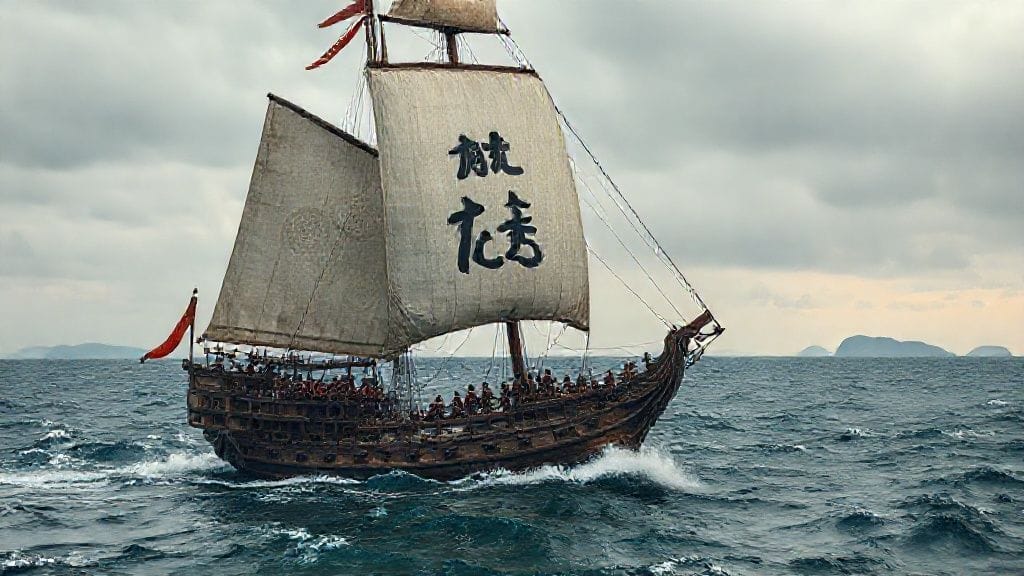
On a humid dawn in the year 1433, beneath heavy skies streaked with thunderclouds, a massive armada of gleaming wooden junks stood anchored off the coast of Calicut, India. The air hung thick with salt and anticipation, the bustling decks alive with sailors preparing for the homeward journey. Yet, a somber shadow loomed over the scene—news whispered quietly through the ranks spoke of illness, harsh seas, and worse: the disappearance of the legendary admiral, Zheng He. The very man who had commanded the greatest treasure fleet the world had ever seen had vanished into the vast, inscrutable expanse of the Indian Ocean during this final expedition.
This moment, shrouded in mystery and maritime tragedy, marks a pivotal point not only in the history of Ming China’s naval enterprise but also in the story of early global exploration. Zheng He’s death at sea symbolized the beginning of the end of China’s grand maritime expeditions, a turning point laden with political nuance, maritime peril, and the fleeting nature of human ambition against the cosmic vastness.
The Ocean Beckons: Zheng He’s Quest in the Indian Ocean
Long before the Europeans carved out their maritime empires, an extraordinary Chinese fleet had already conquered the waves. Led by Zheng He, a eunuch admiral born modestly of Muslim heritage in Yunnan, these voyages from 1405 to 1433 were more than mere explorations—they were masterful assertions of Ming supremacy, diplomacy, and the ambition to knit an intricate web of tributary states around Asia and East Africa.
The Indian Ocean was Zheng He’s great stage—a realm where powerful sultanates, ancient trading cities, and distant empires converged. His fleets carried silk, porcelain, and precious metals; in return, they brought back exotic gifts, spices, and stories of the wide world unknown to many Chinese.
The Admiral Behind the Expedition: Zheng He’s Legacy
Before that final voyage, Zheng He was a colossal figure in his own right. Cast into the labyrinth of Chinese history as a symbol of openness and grandeur, his life was a tale of resilience and transformation. Captured as a child during Ming military campaigns, he rose to become a trusted servant of the Yongle Emperor and the architect of seven epic voyages.
Scholars marvel at his organizational genius—the ability to command hundreds of ships and thousands of men across unpredictable waters was unparalleled. His diplomatic tact was equally impressive: Zheng He was not merely an explorer but a state envoy, who forged alliances, often through gifts and ceremonial recognition, weaving a diplomatic fabric that extended from Southeast Asia to the coast of Africa.
Ming China’s Maritime Dreams and the World Beyond
Zheng He’s expeditions embodied a vision of Ming China as the preeminent maritime power. Under the Yongle Emperor, the empire’s political landscape was tumultuous but inspired by a unified purpose of demonstrating superior massive naval power.
Unlike later European imperialism, Ming China’s voyages were framed less by conquest and more by tributary diplomacy—an extension of Confucian ideological notions infused with realpolitik pragmatism. These sea voyages challenged entrenched geographic and cultural borders, stimulating far-reaching connectivity among distant worlds of the 15th century.
The Indian Ocean in the Early 15th Century: A Tapestry of Cultures and Commerce
Circulating money, mariners, and merchants from the Swahili Coast through Gujarat, the Persian Gulf, and the Malay Archipelago, the Indian Ocean was the mercantile heart beating beneath Zheng He’s routes. Muslim sultans, Hindu traders, Buddhist monks, and African chieftains interconnected in a living network of exchange.
This cultural mosaic was one of opportunity and volatility. Safe passage was never guaranteed, as pirate raids and shifting political alliances punctuated the ocean’s vast spaces. Zheng He’s fleet had to navigate these treacherous waters not only physically but diplomatically.
Setting Sail: The Departure for the Seventh Voyage
In 1431, amidst fanfare and relentless pressure, Zheng He prepared the fleet for what would be the seventh and final voyage. Hundreds of ships, some said to rival European galleons centuries later, were stocked with exotic gifts, tributes, and sufficient provisions.
The voyage was ambitious, perhaps more so than any of the previous ones. The precise purpose remains debated among historians—was it a last diplomatic gambit, a quest to maintain tributary relations, or a demonstration against rising challengers on the maritime stage?
Perils of the Sea: Navigating Unknown Waters and Rough Tides
The ocean had never been kind, and this voyage was no exception. From treacherous monsoons whipping cyclonic fury to shoals invisible beneath the waves, Zheng He’s fleet faced a barrage of natural challenges. Star navigation and rudimentary compasses guided them, yet even the most veteran captains could do little against the biting cold of unfamiliar storms or sudden squalls.
Many sailors fell ill, and tensions grew as the year wore on under relentless strain. Supplies ran low, and the ever-present threat of shipwreck haunted every captain. The large size of the fleet also posed logistical nightmares: managing discipline, disease, and morale across such a floating city demanded constant vigilance.
The Gentlest Winds and Deadliest Storms: Life on Board
Despite the grandeur of hundreds of ships and thousands of crew, the reality for most aboard was harsh. Days were predictable yet grueling—exhaustion and heat were constant companions.
Food was rationed; water often brackish. Yet amidst the hardship, stories circulated—of captains narrowly saved by providence, of distant shores glimpsed through mist, and festive rituals performed to appease the ocean spirits. Belief in the supernatural balanced the uncertainty of the voyage, offering comfort and communal cohesion.
Political Intrigue in the Ming Court: Support and Opposition
Back in Beijing, the imperial court was a battleground of ideas regarding the ongoing expeditions. While the Yongle Emperor had championed Zheng He, his successors viewed the massive fleets with suspicion.
Confucian conservatives decried the cost and resources diverted from domestic governance, while eunuchs and merchants supported continued engagement. This political tension would have profound consequences once news of Zheng He’s fate reached home.
A Sudden Silence: The Disappearance of Zheng He
As the fleet turned eastward to return to China, a grave silence descended. Reports became fragmented, rumors rampant. Zheng He was last seen afflicted by unknown illness—or perhaps lost at sea during a storm.
No official record decisively states the location or conditions of his death, fueling centuries of speculation. Did he succumb quietly on a merchant ship? Was he lost in a violent tempest? The ocean kept its secrets.
The Tragic Death at Sea: Circumstances and Speculations
Without modern medicine or communication, Zheng He’s death was as much a blow of fate as a political event. Chroniclers suggest the admiral died near Ceylon (modern-day Sri Lanka), though some say closer to Southeast Asia.
The death of a revered leader during a voyage undermined morale and forced a reorientation of mission priorities. The fleet’s cohesion weakened; command passed to deputies less experienced and less universally respected.
The Responses of the Admirals and Officers Left Behind
Zheng He’s lieutenants scrambled to maintain command. Some accounts describe them as paragons of stability; others hint at disorder and infighting. The fleet’s monumental size complicated any swift reorganization.
Diplomatic negotiations with coastal rulers were curtailed or hastened; many tributary states sensed Ming vulnerability. The shadow of the admiral’s death rippled outwards, visible in shifts of allegiance and opportunism.
The Ming Imperial Reaction: Mourning or Political Calculation?
When news finally filtered back, the court’s reaction was muted. Official mourning was recorded but quickly subordinated to shifting priorities. The treasure fleets were definitively curtailed within a decade.
The death of Zheng He was not publicly capitalized upon; rather, it became an unspoken marker of the end of an era, dovetailing with the rise of internal political factionalism and shifting imperial aims.
The Vanishing of the Treasure Fleet: A Turning Point in Chinese Maritime History
Zheng He’s death heralded the eclipse of China’s maritime expansionism. The once-mighty fleets, numbering in the hundreds, disappeared, replaced by coastal defenses and land-based concerns.
This retreat contrasted profoundly with Europe’s rising naval powers exploring the Atlantic and beyond. China’s inward turn delayed its involvement in the great age of global exploration and colonization.
Legacy Lost and Found: How Zheng He’s Final Voyage Changed the Indian Ocean
Though the fleets withdrew, Zheng He’s impact on the Indian Ocean world endured. Coastal cities that once welcomed the treasure fleet retained memories of golden gifts and diplomatic ties.
The voyage contributed to the diffusion of technologies and ideas—from navigation to shipbuilding fuelled by intercultural exchange—elements that subtly shaped the region’s later history.
Echoes Through Time: The Historical Memory of Zheng He’s Last Journey
For centuries, China’s maritime history lay dormant, shrouded in official neglect or Confucian disdain. Yet legends of Zheng He’s journeys, particularly his final voyage and mysterious death, fueled folklore, poetry, and modern nationalist resurgence.
His voyages have been revisited as symbols of peaceful exploration and cultural diplomacy in a world too often defined by conquest and war.
The Diplomatic and Commercial Impact After the Admiral’s Death
Post-1433, diplomatic ties with distant allies frayed. Tribute missions declined, and foreign rulers recalibrated their policies toward China.
Trade patterns shifted but did not collapse; merchants found new routes and partners absent the admiral’s protective fleets. The weakening of Ming prestige in maritime Asia opened niches for European and regional powers centuries later.
Maritime Technology and Navigation Refined by Zheng He’s Expeditions
Zheng He's voyages pushed Chinese shipbuilding and navigation to new heights—the treasure ships with multiple masts and watertight bulkheads were marvels of engineering.
The lessons learned during his final voyage informed future naval designs, though such knowledge faded with the fleet’s disbanding, leaving a latent potential unrealized for generations.
Cultural Exchanges and the Flow of Ideas in the 15th-century Indian Ocean
The voyages facilitated more than trade—they were crucibles for cultural and intellectual exchange. Religious art, culinary practices, textile designs, and even botanical species traveled alongside the ships.
Zheng He’s final expedition refracted this kaleidoscope of cultural fusion, reminding the world of the porous and dynamic nature of early global interactions.
Reflections on Fate, Exploration, and the Unseen Depths of History
What can Zheng He’s death at sea teach us? More than a tale of maritime misfortune, it is a meditation on human endeavor confronting the vastness of the unknown.
His story evokes the fragile line between mastery and submission, between glory and oblivion, reminding us that history is woven as much by those who disappear as by those who triumph.
The End of an Era: The Ming Dynasty’s Retreat from the Seas
The cessation of the treasure fleet voyages marked a decisive shift in Ming policy. Internal priorities, court factionalism, and philosophical reorientation toward agrarian focus resulted in naval disengagement.
This retrenchment vastly limited China’s role in global maritime affairs for centuries, shaping the trajectory of Asian and world history.
How Today’s World Remembers Zheng He: Monuments and Media
In the modern era, Zheng He has been rediscovered as a symbol of cultural pride and peaceful diplomacy. Museums, statues, and naval reenactments commemorate his voyages. Globally, he inspires discussions about the nature of exploration and intercultural respect.
His death at sea, once a forgotten tragedy, is now a poignant reminder of the risks and limits of human ambition.
Conclusion
The death of Zheng He during his return voyage in 1433 was far more than the loss of a single man—it marked the twilight of an extraordinary chapter in human history, in which one culture reached boldly beyond its shores. It was a moment when the sea, vast and impartial, reclaimed its sovereign power, reminding us of the delicate threshold between human aspiration and the immutable forces of nature.
Zheng He’s final voyage illuminated the interconnectedness of civilizations centuries before the modern world understood globalization. Despite his tragic end, his legacy sails on—through the stories told on distant coasts, the artifacts preserved in museums, and the stirring realization that exploration is as much about the journey as the destination.
His life and death compel us to reflect on courage and humility, on the tides that have shaped our world, and on the enduring human desire to reach beyond boundaries.
FAQs on Zheng He’s Final Voyage and Death at Sea
Q1: Who was Zheng He and why were his voyages significant?
Zheng He was a Chinese admiral and eunuch who led seven massive maritime expeditions between 1405 and 1433, projecting Ming China’s power and establishing vast trade and diplomatic networks across the Indian Ocean.
Q2: What caused Zheng He’s death at sea during the 1433 voyage?
The exact cause is unknown; it is believed he succumbed to illness or perished during a storm, somewhere near the Indian Ocean, though no definitive documentation exists.
Q3: How did Zheng He’s death affect the Ming treasure fleet?
His death led to the demoralization and eventual disbanding of the treasure fleets. Subsequently, Ming China withdrew from large-scale maritime expeditions.
Q4: What was the political atmosphere in Ming China during the final voyage?
The Ming court was divided, with factions opposing the expensive naval expeditions. The death of Zheng He reinforced calls to end distant voyages in favor of focusing on internal affairs.
Q5: How did Zheng He’s voyages influence trade and diplomacy in the Indian Ocean?
They enhanced maritime trade routes, established tributary relationships, and promoted cultural exchanges between China and diverse Indian Ocean societies.
Q6: In what ways is Zheng He remembered today?
He is honored as a symbol of peaceful exploration and cultural dialogue, with museums, statues, and popular media celebrating his achievements worldwide.
Q7: Why did China stop its maritime expeditions after Zheng He’s voyages?
Political shifts favored isolationism, economic constraints placed limits on expensive voyages, and Confucian ideology prioritized agrarian stability over overseas adventures.
Q8: What lessons do historians draw from Zheng He’s final voyage?
It exemplifies the fragility of even the grandest ambitions in the face of nature and politics, highlighting the balance between exploration and prudence.