Table of Contents
- The Final Dawn: Lorenzo de’ Medici’s Last Hours in Careggi
- Florence at the Crossroads: The Italy of the Late 15th Century
- The Medici Legacy: Power, Patronage, and Politics
- Lorenzo’s Path: From Il Magnifico to the Mortal Man
- The Weight of a Republic: Florence’s Fragile Balance
- The Illness That Silenced a Prince
- Careggi: The Setting of an End and a Beginning
- Reactions Through Florence: Grief in the Streets and Hushed Chambers
- The Power Vacuum: Rivals Eyeing the Throne of Influence
- The Cultural Aftershock: Artists and Writers in Mourning
- The Political Fallout: Shifting Alliances and New Threats
- Italy’s Fragmented Landscape Responds
- The Medici Family After Lorenzo: Trials and Triumphs
- Lorenzo’s Death as a Catalyst for Change in Renaissance Europe
- Remembering Lorenzo: Myths, Monuments, and Memory
- The Echo of Illness and Mortality in Renaissance Politics
- Florence’s Future without Il Magnifico: A City Transformed
- The Role of Lorenzo’s Death in the Italian Wars and Beyond
- Lessons from Lorenzo’s Passing: Power, Fragility, and Legacy
- Conclusion: The End of an Era and the Seed of Modernity
- FAQs: Understanding Lorenzo de’ Medici’s Death and Its Impact
- External Resource
- Internal Link
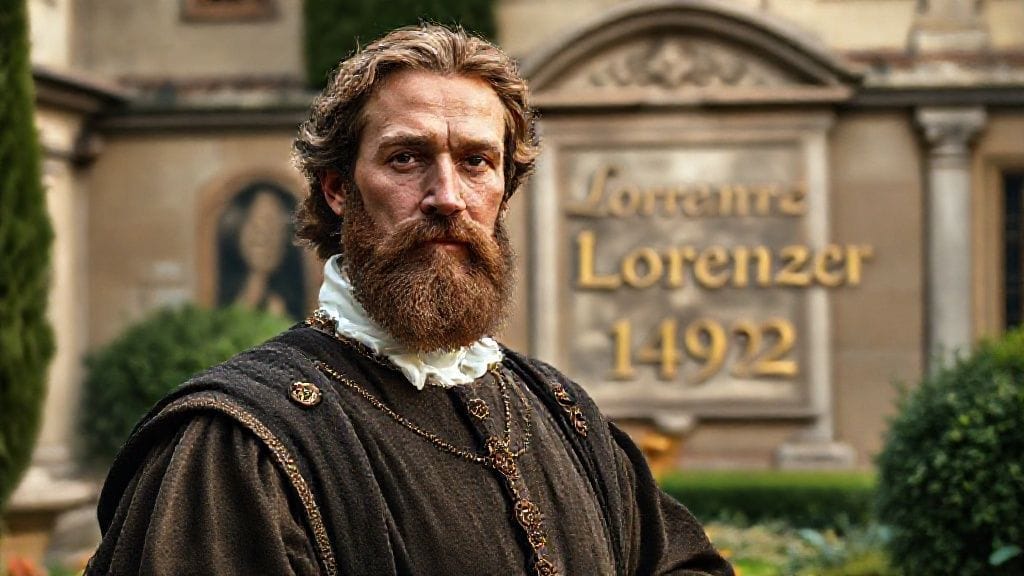
Lorenzo de’ Medici — the Magnificent — breathed his last in the quiet embrace of Careggi, a villa nestled among the rolling Tuscan hills. It was April 8th, 1492, a date that would ripple far beyond the walls of Florence and echo through the corridors of history. The man who had wielded immense power, orchestrated political alliances, and nurtured the bloom of Renaissance arts now faced his final act. Yet, in his death was born both an ending and a profound new beginning for Florence, Italy, and the wider European stage.
This narrative is not just of a man’s demise, but of the fragile human web of power, artistry, ambition, and mortal frailty woven into the vibrant tapestry of Renaissance Italy.
1. The Final Dawn: Lorenzo de’ Medici’s Last Hours in Careggi
In the dawn of April 8, 1492, Lorenzo de’ Medici lay weakened in the cool, stone chamber of the Medici Villa at Careggi. The early morning light filtered softly through the mullioned windows, casting shadows that danced uneasily across his weary face. The air was thick with the scent of laurel and fresh herbs, carefully gathered by attendants in a desperate attempt to soothe his persistent ailment.
Lorenzo, the larger-than-life figure who had commanded armies, shaped culture, and brokered peace among warring factions, was now a fragile man, overcome by the relentless grip of illness. His eyes—usually sharp and commanding—now flickered with fatigue, seeking solace not in power or artistry but perhaps in memory and the solace of faith. His closest allies and family gathered silently, sensing the finality looming in the stillness around him.
"I am ready to go," he whispered, the gravity of his words slipping into the ear of Giovanni, his trusted brother. With a collective breath held in the room and the weight of centuries pressing down, Lorenzo closed his eyes for the last time.
This intimate moment marked the death of a titan—and the end of an era.
2. Florence at the Crossroads: The Italy of the Late 15th Century
To understand the significance of Lorenzo’s death, one must first gaze upon Florence and Italy in the late 1400s—a land of both glory and fracture. Italy was no unified nation but a mosaic of city-states, duchies, and kingdoms, each fiercely protective of its autonomy and often locked in rivalry.
Florence, in particular, was a unique republic, a mercantile powerhouse whose wealth came not from territory but from wool, banking, and commerce. Through shrewd political navigation and patronage of the arts, it had become a beacon of Renaissance enlightenment and ambition.
Yet beneath the cultural flourish ran a steady undercurrent of political instability. The balance of power was fragile—threatened by external ambitions of Milan, Naples, and the Papal States, as well as internal tensions between the oligarchy and the masses.
It was into this volatile setting that Lorenzo de’ Medici’s genius had to be exercised—not only as a financier and patron but as a deft diplomat and ruler operating without official title but with undeniable influence.
3. The Medici Legacy: Power, Patronage, and Politics
The name Medici was synonymous with Florence’s grandeur and complexity. Emerging from modest merchant origins, the Medici family had become the unchallenged architects of Florence’s destiny by the late 15th century. Their banking empire financed kings and popes, their palaces adorned the city’s skyline, and their patronage fueled a cultural Renaissance that dazzled the world.
Lorenzo inherited not simply wealth but a role—Il Magnifico, the magnificent leader who guided Florence with a blend of diplomacy, military acumen, and a profound love for the arts. Under his stewardship, figures like Michelangelo, Botticelli, and Leonardo da Vinci flourished.
But the Medici’s power was a house of cards delicately perched between the aspirations of republicanism and autocratic ambitions. Lorenzo’s genius was in maintaining this balance, projecting strength while nurturing appearances of civic freedom.
4. Lorenzo’s Path: From Il Magnifico to the Mortal Man
Lorenzo had become a subject of awe and contradiction. To his admirers, he was the enlightened patron, the statesman par excellence, the arbiter of peace. To his enemies, he was a manipulative despot cloaked under the guise of republicanism.
Born in 1449 into a world ripe for transformation, Lorenzo’s life was shaped by tragedy and triumph. He survived plots and rebellions, most notably the Pazzi Conspiracy of 1478, which threatened to snuff out his influence and life but instead only solidified his legendary status.
Yet beneath the confident exterior was a man wrestling with his own mortality, vulnerable to the diseases and pressures of his time. By the early 1490s, signs of illness grew apparent, though no one could have fully foreseen how swiftly it would claim him.
5. The Weight of a Republic: Florence’s Fragile Balance
Florence was no monarchy but a republic, with a complex web of councils, guilds, and citizen assemblies. Yet for decades, Lorenzo ruled as a quasi-prince, his informal power cemented by consensus and fear alike.
His death threatened to unravel this delicate equilibrium. Without Il Magnifico’s magnetic force and political savvy, the Republic risked sliding into factional chaos. Rival merchants, noble families, and foreign powers watched keenly for any sign of weakness.
This was not merely the passing of a man, but the testing of Florence’s soul and structure.
6. The Illness That Silenced a Prince
The exact nature of Lorenzo’s final illness remains shrouded in some mystery, though most historians agree that a long deterioration—possibly syphilis or gout complicated by other ailments—gradually eroded his vitality.
In an era before antibiotics, the ravages of such diseases were as psychological as physical, challenging a man of immense willpower and reputation. Lorenzo’s decline was slow but inexorable, marked by intermittent recoveries and relapses.
The sadness of his illness lay not only in the physical suffering but in watching a titan diminish—a reminder of the limits that flesh imposes even on the most powerful.
7. Careggi: The Setting of an End and a Beginning
The Medici villa at Careggi was more than a residence; it was a sanctuary where Lorenzo had nurtured poetry, philosophy, and convivial gatherings of Florence’s intellectual elite. Here, in this pastoral refuge, his final moments assume a poignant contrast with his life’s public grandeur.
Careggi’s tranquil gardens and olive groves witnessed whispers of farewell, prayers, and the quiet grief of those closest to him. The villa itself stands as a symbol: a place where Renaissance ideals blossomed and where the mortal coil finally released one of its brightest stars.
8. Reactions Through Florence: Grief in the Streets and Hushed Chambers
News of Lorenzo’s death spread swiftly across Florence, sparking an outpouring of both public mourning and private anxiety. Citizens lowered banners to half-mast; workshops shuttered temporarily; poets composed elegies.
Yet beneath this sorrow lurked fear. What would become of the Republic without its guiding spirit? Would Florence descend into internecine strife?
The Medici chronicler Angelo Poliziano, himself a witness to the cultural zenith Lorenzo fostered, famously lamented that “the light of Florence had dimmed.”
9. The Power Vacuum: Rivals Eyeing the Throne of Influence
Lorenzo’s absence left space that others were eager to fill. Not all Medici were equally equipped or willing to lead. His son, Piero di Lorenzo de’ Medici, known later as Piero the Unfortunate, lacked the charisma and tact of his father.
Meanwhile, external powers and internal families saw opportunity. The Pazzi family, still bitter from their failed conspiracy, conspired once more. Milanese and Papal ambitions grew bolder.
Florence faced a crossroads—would it preserve Lorenzo’s vision or fracture under the weight of competing interests?
10. The Cultural Aftershock: Artists and Writers in Mourning
For the Renaissance artists and intellectuals who thrived under Lorenzo’s patronage, his death was both a personal and professional tragedy. Medici workshops lost their most generous sponsor, and Florence’s cultural momentum faltered.
Michelangelo, then a youth, felt the absence profoundly. Writers like Poliziano and poets like Angelo Bronzino commemorated the loss not just as patrons gone, but as a rupture in the flow of artistic evolution.
Yet, out of grief, new expressions emerged—a testament to how endings seed beginnings in the realm of art.
11. The Political Fallout: Shifting Alliances and New Threats
Florence’s internal politics became a maelstrom after 1492. The fragile alliances Lorenzo had brokered with Milan, Naples, and the Papacy began to crumble.
Without his guiding hand, Florence hastened toward isolation. Piero’s failed diplomacy led to the city’s temporary expulsion and exile of the Medici by 1494. This upheaval invited foreign invasion and civil unrest.
The death of Il Magnifico thus accelerated a cycle of instability that would reshape Italy’s political map for decades.
12. Italy’s Fragmented Landscape Responds
Lorenzo’s death did not only unsettle Florence; it sent shockwaves throughout the patchwork of Italian states. The balance of power among Milan, Venice, Naples, and Rome was recalibrated.
King Charles VIII of France eyed an opportunity, launching the Italian Wars in 1494, a conflict that would embroil Italy and beyond for decades.
The vacuum Lorenzo left at Florence enabled competing ambitions to unravel the precarious peace he had established.
13. The Medici Family After Lorenzo: Trials and Triumphs
Despite the chaos after his death, the Medici were far from finished. Though initially exiled, they returned to power in 1512, thanks to shifting alliances and political cunning.
However, the shadow of Lorenzo’s unique legacy loomed large. None could match his blend of political acumen and cultural patronage. The family would eventually assume even greater power, becoming dukes and popes, but always haunted by the “Golden Age” Lorenzo had symbolized.
14. Lorenzo’s Death as a Catalyst for Change in Renaissance Europe
Lorenzo’s passing signals a broader transitional moment from the high Renaissance to an era of political turbulence. The flowering of arts and humanism lost a key protector, while European powers pressed aggressively into the Italian peninsula.
In many ways, his death bridges two worlds: the hopeful, confident Renaissance and the fractious, militarized 16th century.
15. Remembering Lorenzo: Myths, Monuments, and Memory
Over time, Lorenzo de’ Medici evolved into a near-mythic figure. His tomb in the Medici Chapel, adorned with Michelangelo’s distinctive sculptures, stands as a somber testament to both his greatness and mortality.
Writers, historians, and artists alike have perpetuated his image as the archetype of Renaissance magnificence—graceful, powerful, ultimately human.
16. The Echo of Illness and Mortality in Renaissance Politics
Lorenzo’s death underlines a fundamental truth: that political power, no matter how radiant, is vulnerable to human frailty. Disease could topple kingdoms as effectively as armies.
His personal suffering was mirrored by a fragile republic, exposing the limits of Renaissance humanism when confronted with the stark realities of life and death.
17. Florence’s Future without Il Magnifico: A City Transformed
Without Lorenzo’s guiding light, Florence faced a painful reckoning. The republic’s eventual decline as a free city-state and its absorption into grand territorial polities mark the closing of an era.
Yet Florence’s artistic and intellectual legacy endured, indebted forever to the patron who made it possible.
18. The Role of Lorenzo’s Death in the Italian Wars and Beyond
The absence of Lorenzo’s stabilizing presence contributed indirectly to the outbreak of the Italian Wars—decades-long conflicts that fractured the peninsula and attracted foreign intervention.
Without the Medici’s delicate diplomacy, Italy became a battleground for larger European ambitions.
19. Lessons from Lorenzo’s Passing: Power, Fragility, and Legacy
Lorenzo de’ Medici’s death teaches us about the transient nature of power and the enduring impact of cultural patronage. It is a tale of how individual vision shapes history, and yet how mortality humbles even the greatest.
His life and passing remain a mirror to the complexities of leadership—where magnificence and humanity intertwine.
20. Conclusion: The End of an Era and the Seed of Modernity
On that spring day in 1492, as Lorenzo de’ Medici drew his last breath in Careggi, Florence mourned not just a ruler but an epoch. The Renaissance’s golden age waned, shadowed by the stirring of new conflicts and challenges.
Yet from this ending sprang new beginnings—political realignments, fresh artistic expressions, and the persistent spirit of a city that continues to inspire.
Lorenzo’s life and death encapsulate the radiant and fragile heartbeat of Renaissance Italy: a luminous moment suspended between dreams and mortality, forever etched in the annals of history.
FAQs
Q1: What precisely caused Lorenzo de’ Medici’s death?
A: While no definitive diagnosis exists, contemporary accounts suggest a decline caused by a chronic illness, likely syphilis, complicated by gout and other ailments common in the era.
Q2: How did Florence cope immediately after Lorenzo’s death?
A: The city experienced profound grief alongside political anxiety, eventually sliding into instability and factional conflicts that resulted in the temporary expulsion of the Medici family.
Q3: Who succeeded Lorenzo as head of the Medici family?
A: His son, Piero di Lorenzo de’ Medici, assumed leadership but proved less capable, earning the epithet "the Unfortunate" due to his ineffective rule and diplomatic failures.
Q4: How did Lorenzo’s death influence the Italian Wars?
A: The loss of Lorenzo’s stabilizing diplomacy created a power vacuum, encouraging French invasion in 1494 and igniting decades of warfare across Italy.
Q5: What role did Lorenzo’s patronage play in Renaissance culture?
A: Lorenzo was a key patron of artists, poets, and scholars, fostering talents such as Michelangelo and Botticelli, and fueling Florence’s status as the cradle of Renaissance art.
Q6: Is Lorenzo remembered positively in modern history?
A: Largely yes; he is celebrated as a central figure of Renaissance humanism and culture, though historians acknowledge the complexities and contradictions of his political rule.
Q7: How did the Medici family regain power after Lorenzo’s death?
A: Through military support from allies and political maneuvering, the Medici returned to Florence’s leadership in 1512, albeit under changing political circumstances.
Q8: What is the significance of Careggi in Lorenzo’s story?
A: Careggi was both a personal retreat and symbol of Renaissance culture, where Lorenzo spent his final moments, embodying the intimate human side of a colossal public figure.