Table of Contents
- The Last Breath in Shiraz: An Immortal Poet’s Passing
- Persia in the Late 14th Century: A Land of Fracture and Flourish
- Hafez: The Enigmatic Voice of Love and Mystery
- The Final Days in Shiraz: Between Legend and Reality
- The Death of Hafez: Oral Tradition and Early Chronicles
- Shiraz as a Cultural Jewel: Its Role in Hafez’s Legacy
- Poetic Immortality: How Hafez’s Works Transcended Time
- From Courtly Circles to Common Folk: Hafez’s Wide Influence
- The Socio-political Landscape of Persia in 1390
- Mysticism and Sufism in Hafez’s Poetry: A Secret Code
- The Mourning of a Nation: Responses to Hafez’s Death
- The Tomb of Hafez: A Shrine of Memory and Inspiration
- The Birth of a Cult: Pilgrimages and Hafez’s Pilgrims
- The Evolution of Hafez’s Reputation through the Centuries
- The Poetic Legacy in Modern Iran and Beyond
- Conclusion: Death as a Beginning — The Eternal Flame of Hafez
- FAQs: Exploring the Life, Death, and Legacy of Hafez
- External Resource
- Internal Link
In 1390, in the ancient city of Shiraz, Persia, a poetic giant exhaled his final breath. His name was Hafez — a man whose verses wove a tapestry of love, mysticism, rebellion, and human longing so profound that centuries later, his presence is still vividly felt. To understand not only the death of Hafez but the living legend it inaugurated, one must travel beyond the mere event: into the heart of a Persia fractured by politics yet shimmering with cultural brilliance; into the soul of a poet who sang for the voiceless, and into a legacy that defied death itself.
1. The Last Breath in Shiraz: An Immortal Poet’s Passing
Imagine Shiraz at sunset, the golden light washing over gardens heavy with roses and cypresses. In a modest house, a man lies surrounded by friends and disciples. Hafez, known as Khwajeh Shams-ud-Din Muhammad Hafez-e Shirazi, whose verses have echoed through the courts and bazaars of Persia, is about to leave this world. The air is thick not just with grief but with a certain reverence, a palpable sense of witnessing the end of something eternal.
The exact moment of Hafez's death is shrouded in poetic myth and imprecise chronicles — an ambiguity befitting a man whose life was as much legend as fact. But this is no ordinary death; it marks the birth of an enduring presence in Persian culture. The act of dying here transforms into an act of becoming—a passage from mortal man to immortal symbol.
2. Persia in the Late 14th Century: A Land of Fracture and Flourish
The late 1300s found Persia caught in the turbulent aftermath of Mongol invasions and the crumbling of the Ilkhanate. By 1390, the fragmentation of power had given rise to regional warlords and emerging dynasties, each contending for control over the rich and strategic lands of Persia. Shiraz, under the rule of the Muzaffarids, was both a political center and a beacon of culture and learning.
While dynasties fell or rose violently, the arts—particularly poetry and mysticism—flourished. It was within this chaotic yet fertile soil that Hafez thrived, showing how culture can blossom amid uncertainty, and how poetry can speak to political fragmentation by turning inward toward human experience and divine love.
The contrast between political instability and cultural efflorescence is key to understanding the time of Hafez’s death: a world breaking apart, yet reaching for beauty.
3. Hafez: The Enigmatic Voice of Love and Mystery
Few poets in history have captured the dialectic of human love, divine ecstasy, and worldly satire with as much nuance and mystery as Hafez. Born in Shiraz around 1315, he was a son of a modest family but grew to become court poet and a voice for both royalty and the common people.
His "Divan," a collection of ghazals, blends exquisite lyricism with provocative ambiguity. His verses celebrate earthly pleasures—wine, gardens, the beloved’s smile—and simultaneously hint at Sufi concepts of unity with the divine. This double-voiced poetry—both profane and sacred—turned Hafez into a figure whose works resist easy classification, inviting endless interpretation and reverence.
4. The Final Days in Shiraz: Between Legend and Reality
The final days of Hafez are as clouded in legend as the man himself. Some accounts evoke a serene, almost mystical calm, as if the poet anticipated the separation from his mortal coil. Others suggest natural illness or the weariness of age.
It is said that Hafez continued to recite poetry even on his deathbed, that his final words were a verse shimmering with hope and transcendence. Whether fact or fiction, these narratives underscore a symbolic truth: that for Hafez, death was intertwined with poetry and divine union.
The city of Shiraz mourned quietly but profoundly, aware that the soul of their culture had just passed—but perhaps opened a new chapter.
5. The Death of Hafez: Oral Tradition and Early Chronicles
No precise death certificate exists for Hafez. Persian historians and biographers pieced together his passing from oral traditions and biographical verses, passed down through generations. The poetic streets of Shiraz wove stories: that he died in 1390, on a night of astronomical significance, or that his death was accompanied by mysterious omens—a sudden bloom of roses in winter or the sound of heavenly music.
These stories were not mere embellishments; they were expressions of the collective grief and recognition that a poet’s death is a community’s loss and a spiritual transformation. In Persian culture, poets have been almost sacred figures; their passing invites both tears and gratitude.
6. Shiraz as a Cultural Jewel: Its Role in Hafez’s Legacy
Shiraz, often called the "City of Poets, Wine, and Flowers," was not just a backdrop to Hafez’s life and death but an active catalyst of his genius. The city's gardens, called “paradise gardens,” the flowing water channels, and the rich intellectual salons became the very ingredients of his poetry.
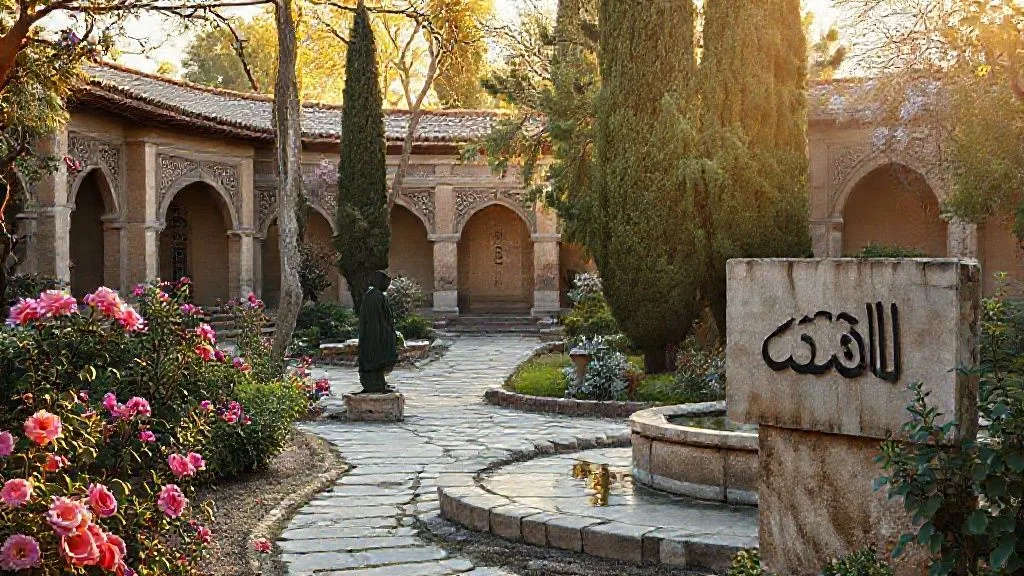
After his death, Shiraz ensured his memory endured. His tomb, initially a simple grave, was later transformed into the Hafezieh shrine—a pilgrimage site attracting seekers of inspiration, romance, and spirituality. Shiraz's identity intertwined with Hafez, becoming a living, breathing monument.
7. Poetic Immortality: How Hafez’s Works Transcended Time
What does it mean for a poet to “live” after death? In Persian tradition, poetry functions as a vehicle for immortality. Hafez’s verses, with their enigmatic wordplay and musicality, have transcended centuries, translated into countless languages, touching hearts across cultures.
During the Timurid and Safavid eras, his poetry was studied, copied by hand, read in private gatherings. It circulated not only as literature but as a guide for ethical and mystical reflection. Even today, Iranians consult Hafez’s Divan for wisdom during celebrations like Yalda, seeking answers through a poetic tradition that bridges past and present.
8. From Courtly Circles to Common Folk: Hafez’s Wide Influence
Though he gained favor with the Muzaffarid rulers, Hafez's poetry resonated beyond palaces into the bazaars and streets. His use of everyday imagery—wine, gardens, taverns—made his verses accessible and alive.
This dual appeal, to elite and commoner alike, helped solidify his status not just as a court poet but as a voice of Persia itself. His words speak of human desires, existential quests, and joyous rebellion; they remain a mirror of the diverse Persian soul.
9. The Socio-political Landscape of Persia in 1390
Hafez’s death coincided with a pivotal moment in Persia: Timur (Tamerlane) was asserting his dominion, reshaping the political map with military campaigns of ruthless scope. The old order was yielding, and cultural centers were vulnerable.
Yet, this era of turmoil also prompted artists and thinkers to seek meaning beyond the chaos. Hafez’s poetry became a refuge and response, layered with Sufi allusions and subtle critiques of power.
10. Mysticism and Sufism in Hafez’s Poetry: A Secret Code
Hafez’s poetry is suffused with Sufi symbolism—wine as divine ecstasy, the beloved as God, the tavern as a place of spiritual awakening. His verses invite readers into a realm where the sacred and profane intertwine.
This mysticism was both a personal path and a coded expression allowing subtle critique in dangerous times. The spiritual messages in his ghazals continue to inspire seekers and scholars alike, decoding the allegories of love and union.
11. The Mourning of a Nation: Responses to Hafez’s Death
When the news of Hafez’s death reached different regions, responses varied from profound grief to poetic tributes. Writers composed elegies that highlighted his genius and the void left behind.
In Shiraz, public mourning fused with celebration, reinforcing the community's cultural identity around the poet. The death, paradoxically, sparked renewed devotion to preserving his memory.
12. The Tomb of Hafez: A Shrine of Memory and Inspiration
The physical resting place of Hafez became an evolving monument. Initially unadorned, it was later marked with inscriptions of his verses and designed with traditional Persian motifs.
The “Hafezieh” is more than a tomb; it is a site where pilgrims gather for inspiration, meditation, and cultural connection. It embodies how death can catalyze a living tradition.
13. The Birth of a Cult: Pilgrimages and Hafez’s Pilgrims
Devotees of Hafez began making pilgrimages to Shiraz long after his death, treating the poet’s works as spiritual guides and the tomb as a sacred space.
This cult of Hafez is unique—a secular saint of Persian literature whose veneration crosses religious boundaries, social classes, and political divides, affirming the power of poetry in cultural identity.
14. The Evolution of Hafez’s Reputation through the Centuries
From the 15th century forward, Hafez’s reputation grew exponentially. Monarchs, scholars, and mystics claimed him as a spiritual ancestor. European Orientalists, enchanted by his mystique, introduced him to the West.
The fluctuations in his reception—from reverence to political symbolism—reflect changing cultural and political landscapes, underscoring the adaptability of his legacy.
15. The Poetic Legacy in Modern Iran and Beyond
In contemporary Iran, Hafez is a national icon, often quoted in political discourse, literature, and daily life. His birthday is celebrated; his poems taught in schools. Globally, Hafez’s poetry has inspired countless translations, adaptations, and academic studies.
He remains a living presence—proof that poetry can bind generations, cultures, and epochs.
Conclusion: Death as a Beginning — The Eternal Flame of Hafez
The death of Hafez in 1390 was not an end but a testament to poetry’s power to transcend mortality. Wrapped in the fragrant air of Shiraz’s gardens, he passed from the temporal into the eternal—a poetic phoenix whose ashes nourish the soul of Persian identity.
Hafez’s life and death illuminate how art emerges from the fragile human experience yet becomes a beacon through the centuries, guiding those who seek beauty, truth, and transcendence. His grave in Shiraz is less a place of silence than a wellspring of voices—whispering, challenging, and inspiring.
As long as roses bloom in Persia and readers open his Divan, Hafez lives.
FAQs
Q1: Who was Hafez and why is he important?
Hafez was a 14th-century Persian poet known for his lyrical poetry focusing on love, mysticism, and human existence. His work holds national and cultural significance in Iran and beyond due to its profound spiritual and literary qualities.
Q2: What were the circumstances of Hafez's death?
Hafez died around 1390 in Shiraz. The details are uncertain and mixed with legend, but it is widely accepted he died of natural causes in his hometown.
Q3: How did the political situation in Persia influence Hafez’s poetry?
Living in a tumultuous period marked by political fragmentation and foreign invasions, Hafez’s poetry subtly addressed themes of power, injustice, and spiritual refuge, often encoded in mystical and symbolic language.
Q4: What role does Shiraz play in Hafez’s legacy?
Shiraz is both the city where Hafez lived and died and the site of his tomb, which has become a major cultural and spiritual landmark preserving his memory.
Q5: How have Hafez’s works influenced Persian culture over time?
His poetry has been central to Persian literature, used in education, spiritual practice, and daily life, contributing to shaping Persian identity and cultural expression over centuries.
Q6: Why is Hafez considered a mystical poet?
His use of symbolic language and themes common in Sufism—such as divine love and unity—renders his poetry deeply mystical and subject to multiple spiritual and philosophical interpretations.
Q7: How is Hafez remembered today?
Hafez is celebrated annually, quoted in political and literary contexts, and remains a key figure in Persian cultural heritage and world literature.
Q8: Where can one find more information on Hafez?
Numerous resources exist, including academic studies, translations of his "Divan," and well-maintained sites like the Hafezieh in Shiraz. Wikipedia offers a detailed introduction as well.