Table of Contents
- Dawn of a Stellar Mind: The World of Ulugh Beg
- The Timurid Dynasty: A Backdrop of Power and Turmoil
- Ulugh Beg’s Early Years: Scholar Born to Leadership
- The Observatory of Samarkand: A Beacon of Renaissance in Central Asia
- Mapping the Heavens: Ulugh Beg’s Astronomical Achievements
- Mathematics and Poetry: The Polymath’s Dual Legacy
- Political Intrigues in the Timurid Court: Fractures Beneath the Surface
- Ulugh Beg’s Governance: Balancing Scholarship with Rule
- The Seeds of Rebellion: Family Betrayals and Ambitions
- The Year 1449: A Kingdom on the Brink
- The Assassination: Betrayal Cuts the Scholar’s Life Short
- The Aftermath: Chaos and Power Struggles in Samarkand
- Legacy in the Stars: How Ulugh Beg’s Work Endured Beyond Death
- Astronomical Science After Ulugh Beg: East Meets West
- Memory and Myth: Ulugh Beg in Central Asian Culture
- Rediscovery: Modern Scholarship and the Revival of Ulugh Beg’s Contributions
- Lessons from a Fallen Star: The Complex Life of a Timurid Prince
- Conclusion: The Eternal Light of Ulugh Beg
- FAQs: Understanding Ulugh Beg’s Life and Death
- External Resource: Wikipedia Link to Ulugh Beg
- Internal Link: Visit History Sphere
Ulugh Beg’s story begins not under the shadow of a battlefield but beneath the infinite canvas of the night sky. Imagine the quiet city of Samarkand in the early fifteenth century — a hub of culture and power at the crossroads of empires — where a prince peers through a giant astrolabe, tracing the paths of stars as others prepare for war or court intrigue. This is the moment when the ideals of knowledge and enlightenment reached their zenith in one of history’s most brilliant yet tragic figures.
The assassination of Ulugh Beg in 1449 wasn’t just the fall of a ruler; it marked the violent extinguishment of a luminous mind whose vision bridged science and sovereignty. His death is a stark narrative of the costs of power and the fragility of intellectual pursuit in the turbulent world of the Timurid dynasty — a lesson etched in the annals of Central Asia but resonating far beyond.
1. Dawn of a Stellar Mind: The World of Ulugh Beg
Born in 1394, Ulugh Beg (meaning “Great Ruler”) was not your typical prince. His upbringing was steeped in the rich intellectual atmosphere of Samarkand, a city famed not only for its splendid architecture but also for its scholarly traditions. The younger grandson of Timur—known in the West as Tamerlane—the boy inherited not only a vast empire but also the weight of a legacy built on conquest. Yet Ulugh Beg’s ambitions took a different path, threading the line between warrior and scientist, leader and learner.
To grasp the magnitude of his intellect, one must picture the cultural fabric of the Timurid Empire, where Persian, Turkic, Mongol, and Islamic scholarly traditions converged and gave birth to a Renaissance centuries before the Italian Renaissance captured European imagination.
2. The Timurid Dynasty: A Backdrop of Power and Turmoil
The Timurid Empire was forged through fire and sword by Timur, an invincible warlord whose campaigns reshaped Eurasia. Yet, beneath the magnificence lay chaos—a maelstrom of rivalries among Timur’s heirs, territorial disputes, and shifting alliances. Samarkand itself oscillated between becoming a flourishing capital and a battleground of internal strife.
In this volatile arena, Ulugh Beg’s position was both a blessing and a curse. As governor of Transoxiana—a central region of the empire including his beloved Samarkand—his rule was constantly challenged by relatives eager to expand their influence. The empire’s fracture set the stage for political turbulence that would culminate in his fatal downfall.
3. Ulugh Beg’s Early Years: Scholar Born to Leadership
Ulugh Beg was groomed in the great madrasahs of Samarkand, where master scholars taught astronomy, mathematics, philosophy, and theology. Unlike many princes distracted by court intrigues or military campaigns, Ulugh Beg immersed himself in academic studies from an early age, studying under talented mentors who reportedly recognized a prodigious intellect.
He combined the disciplines of science and statecraft seamlessly, a hybrid role quite exceptional for his time. His personal passion for astronomy was more than a pastime; it was a calling that would shape his legacy.
4. The Observatory of Samarkand: A Beacon of Renaissance in Central Asia
Perhaps Ulugh Beg’s most enduring tangible legacy is the magnificent observatory he commissioned around 1424–1429. Often regarded as one of the greatest in the medieval world, the Samarkand Observatory was an ambitious architectural and scientific marvel.
Equipped with giant instruments like a massive sextant (about 40 meters in radius) embedded in the ground, the observatory was designed for unprecedented precision in celestial measurements. It was a powerful symbol that Samarkand was not just a political capital but a luminous beacon of knowledge rivaling any equivalent institution worldwide.
5. Mapping the Heavens: Ulugh Beg’s Astronomical Achievements
Ulugh Beg’s team of scholars and astronomers compiled the Zij-i Sultani, a star catalogue listing over 1,000 stars with remarkable accuracy, surpassing previous records by centuries. Their observations corrected earlier Ptolemaic data and influenced later generations of astronomers, including those in Europe.
The meticulous nature of the work showcased a methodical approach to scientific inquiry—observing, recording, verifying—qualities that predated the scientific revolution in the West by nearly two centuries.
6. Mathematics and Poetry: The Polymath’s Dual Legacy
But numbers were only part of Ulugh Beg’s genius. He was also a patron of the arts and a gifted poet, writing verses in Persian that reveal a contemplative mind attuned to both the cosmos and human emotion. His dual dedication to science and culture is emblematic of a Renaissance ideal that blends intellectual curiosity with aesthetic sensitivity.
The prince’s cultured life was a rare melding of East and West, where mathematical treatises sat alongside elegant poetry, each illuminating different facets of existence.
7. Political Intrigues in the Timurid Court: Fractures Beneath the Surface
Yet, this serene intellectual world was shadowed by relentless political intrigue. The Timurid court was a nest of ambition, envy, and betrayal. Ulugh Beg’s scholarly pursuits sometimes drew criticism from rival factions who saw him as neglecting traditional military leadership.
His nephew, Abdal-Latif Mirza, and other relatives considered Ulugh Beg’s rule weak, fostering plots that slowly eroded the prince’s security and influence.
8. Ulugh Beg’s Governance: Balancing Scholarship with Rule
Ulugh Beg was not indifferent to statecraft. As ruler of Samarkand and Transoxiana, he enacted policies to maintain order, promote learning, and support economic stability. He tried to balance his intellectual commitments with practical governance, though his court’s unrest showed the limits of his approach.
Unlike many rulers who depended solely on martial prowess, Ulugh Beg’s vision was that knowledge itself was a form of power—perhaps even ultimate power.
9. The Seeds of Rebellion: Family Betrayals and Ambitions
It is a paradox of history that knowledge and culture could not protect Ulugh Beg from the ancient dynamics of familial betrayal. In 1449, the simmering tensions exploded. His own son, Abd al-Latif, grew increasingly resentful and was implicated in conspiracies fueled by factional rivalries.
The ambition to seize power from the scholar-king moved beyond court whispers to open rebellion.
10. The Year 1449: A Kingdom on the Brink
The spring of 1449 saw the unraveling of Ulugh Beg’s reign. Battles erupted, alliances shifted, and the trust that had held his regime began to collapse. The prince faced not just external enemies but intimate betrayals that made his position untenable.
The Samarkand Observatory, once a site of peaceful celestial observation, stood as a mute witness to the chaos grinding the Timurid dynasty beneath.
11. The Assassination: Betrayal Cuts the Scholar’s Life Short
In October 1449, Ulugh Beg was captured by forces loyal to his son. There are varying accounts of his death—some suggesting execution by sword, others poisoning—but the result was the same: the premature end of a life devoted to illumination.
Legend tells of Ulugh Beg’s lament, mourning the stars even as darkness closed in around him. That a man who charted the heavens should fall victim to the terrestrial machinations of blood and ambition is tragically poetic.
12. The Aftermath: Chaos and Power Struggles in Samarkand
Ulugh Beg’s death threw Samarkand into deeper turmoil. The Timurid dynasty suffered further fragmentation as power struggles intensified. The intellectual flowering he had nurtured faced decline under less enlightened successors.
Still, even in death, his legacy lingered like a comet’s tail—visible but fleeting.
13. Legacy in the Stars: How Ulugh Beg’s Work Endured Beyond Death
Despite his assassination and political eclipse, Ulugh Beg’s astronomical data survived and spread through the Muslim world and eventually reached Europe. His Zij-i Sultani was translated and studied by scholars fascinated by the precision of his star catalogues.
Centuries later, scientists acknowledged that Ulugh Beg’s observations were unparalleled until the advent of telescopic astronomy.
14. Astronomical Science After Ulugh Beg: East Meets West
Ulugh Beg’s contributions underscore the global, interconnected nature of scientific progress. The data and methods developed in Samarkand influenced notable astronomers like Copernicus, who similarly challenged outdated views of the cosmos, paving the way for modern astronomy.
This flow of knowledge between East and West reveals a shared human quest to understand the universe.
15. Memory and Myth: Ulugh Beg in Central Asian Culture
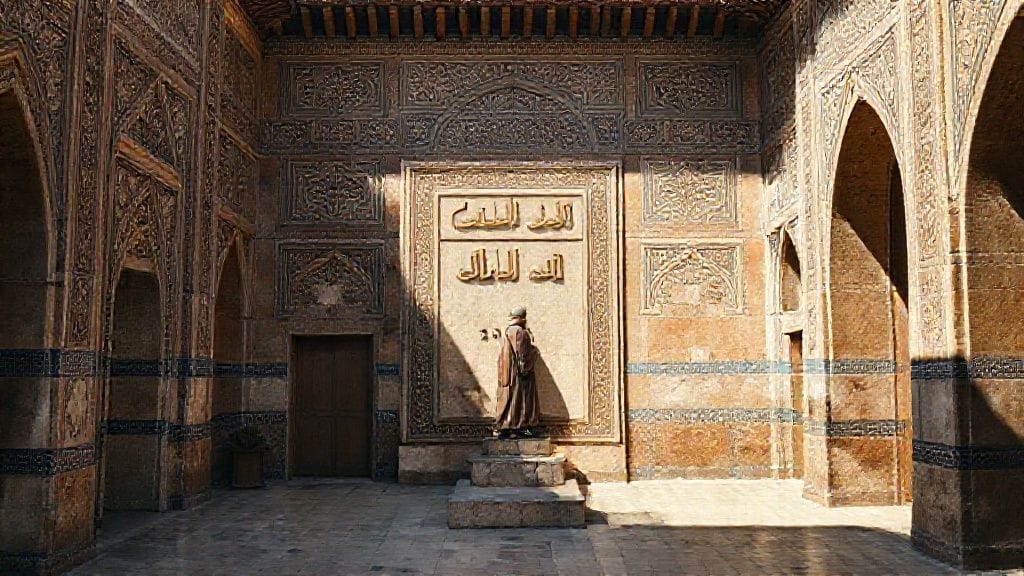
In Central Asia today, Ulugh Beg occupies a place not only in history books but in popular memory. Samarkand’s majestic observatory ruins stand as silent monuments to his intellect and ambition. Cultural narratives celebrate him as a tragic hero — a symbol of peace, wisdom, and the eternal search for truth.
Festivals, poetry, and monuments commemorate his life, blending fact and myth in the region’s collective soul.
16. Rediscovery: Modern Scholarship and the Revival of Ulugh Beg’s Contributions
Only in the 19th and 20th centuries did the West fully recognize the scientific value of Ulugh Beg’s work. Archaeologists excavated the observatory ruins, and historians pieced together his life from manuscripts and chronicles.
Today’s historians and astronomers appreciate Ulugh Beg as a beacon of medieval science, whose efforts remind us that curiosity and creativity thrive even amidst political storms.
17. Lessons from a Fallen Star: The Complex Life of a Timurid Prince
Ulugh Beg’s life underscores a timeless tension—between the pursuit of knowledge and the demands of power. His story shows that genius cannot isolate itself from the human tragedies of ambition and betrayal.
Yet, it also affirms that true greatness often arises from the courage to follow the stars, even when surrounded by darkness.
Conclusion
Ulugh Beg’s assassination in 1449 marks a poignant chapter in the history of science and empire. It is the story of a man who dared to look beyond his earthly realm into the cosmic order and, in his brief reign, tried to harmonize governance with enlightenment. Though betrayal cut his life short, his legacy shines on, reminding us that knowledge transcends the volatile bounds of politics and time.
In the ruins of Samarkand, under the same stars Ulugh Beg once charted, we remember a ruler whose greatest weapon was not the sword but the quest for truth. His life is a testament to the enduring human spirit—a luminous beacon flickering through the centuries, urging us all to strive toward the light of understanding, no matter the darkness we face.
FAQs
1. Who was Ulugh Beg and why is he significant?
Ulugh Beg was a Timurid prince and astronomer born in 1394. He is significant for his scientific achievements, particularly in astronomy, where he created one of the most accurate star catalogs before the telescope era and for establishing a major observatory in Samarkand.
2. What was the Timurid Empire and how did it shape Ulugh Beg’s life?
The Timurid Empire was established by Timur and spanned much of Central Asia and Persia. It was a realm marked by military conquest and cultural renaissance. Ulugh Beg’s life was shaped by the empire’s political struggles and its intellectual traditions.
3. How did Ulugh Beg contribute to astronomy?
He founded the Samarkand Observatory and authored Zij-i Sultani, a catalog cataloguing over 1,000 stars with remarkable precision, improving on ancient Ptolemaic models and anticipating modern astronomical methods.
4. Why was Ulugh Beg assassinated?
His assassination was the result of internal family rivalries and political betrayals. His son and rivals viewed his scholarly focus and rule as weak and sought to seize power.
5. What happened to the Samarkand Observatory after Ulugh Beg’s death?
The observatory declined and was eventually destroyed during subsequent political upheavals, but its ruins remain a symbol of historical scientific excellence.
6. How is Ulugh Beg remembered today?
He is remembered as a great scholar and prince, particularly in Central Asia, where his legacy as both a scientist and cultural icon is celebrated.
7. Did Ulugh Beg’s work influence later astronomers?
Yes, his star catalog and methods influenced Islamic and European astronomers, including those of the Renaissance such as Copernicus.
8. What lessons does Ulugh Beg’s life offer to us today?
His life highlights the tension between the pursuit of knowledge and political power, reminding us that intellectual courage is vital but often vulnerable in volatile times.