Table of Contents
- The Fateful Day: Death at Berkeley Castle
- Edward II: From King to Prisoner
- England in Turmoil: The Prelude to a Monarch’s Fall
- Isabella of France: The Queen’s Secret Hand
- The Rise of Roger Mortimer: Power Behind the Throne
- The Politics of Betrayal and Loyalty
- The Dark Chambers of Berkeley Castle: Imprisonment and Death
- A Mysterious End: Theories and Testimonies
- The Aftermath: Ascension of Edward III
- The Legacy of Edward II: Martyr or Misfit?
- Medieval Justice and Royal Violence
- The Role of Chroniclers: Shaping the King's Memory
- The Queen’s Coup: A Medieval Revolution
- Berkeley Castle’s Shadow: A Place of Legend
- Edward II in Literature and Popular Culture
- The Impact on English Monarchy and Governance
- The Symbolism of Edward’s Death in English History
- Tracing the Bloodlines: Descendants and Dynastic Struggles
- Myths vs. Reality: The King’s Final Moments
- Conclusion: The Death That Changed a Nation
- FAQs – Edward II, His Death, and Legacy
- External Resource
- Internal Link
1. The Fateful Day: Death at Berkeley Castle
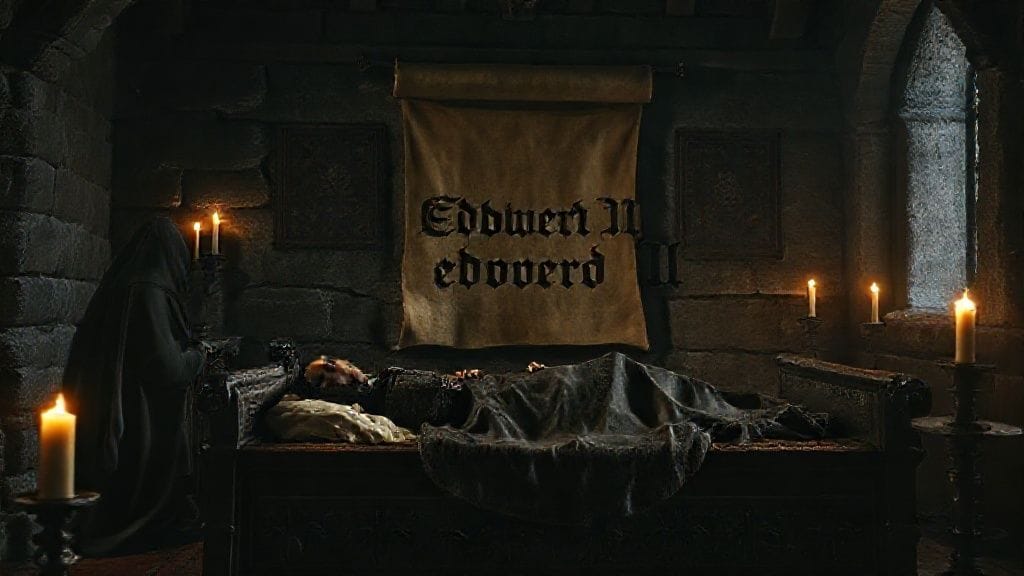
It was on a damp morning in late September 1327, within the grim and shadowed walls of Berkeley Castle in England, that Edward II, a king dethroned and forgotten, met his final fate. The stone corridors, often silent witnesses to the tapestry of royal fortune, echoed with muffled cries and whispered secrets. No grand public execution marked his demise; instead, a whispered act, a quiet extinguishing of a life once crowned by the weight of a nation. The day bore the end of a tragic monarch, his death marking a brutal episode in England’s complex medieval saga.
2. Edward II: From King to Prisoner
Edward II, ascended to the throne in 1307 amid hopes and expectations of a strong ruler to follow his father, Edward I. Yet, from the outset, his reign was marred by missteps, political strife, and the enduring controversy surrounding his favorites—Piers Gaveston and later Hugh Despenser—whose influence alienated the nobility. His inability to command respect on the battlefield and in court sowed seeds of discord. With the defeat at Bannockburn by Robert the Bruce in 1314, his reputation crumbled. By 1326, rebellion brewed as his wife, Queen Isabella, and her ally Roger Mortimer challenged his authority. Captured and deposed in 1327, Edward II’s fall from power was as spectacular as it was tragic.
3. England in Turmoil: The Prelude to a Monarch’s Fall
The England Edward inherited was rife with tension. The costly wars in Scotland drained the treasury and morale. The barons grew restless with Edward’s favoritism and inability to govern effectively. Throughout the 1320s, political factions fought bitterly for influence over the crown and the realm’s resources. The despotic hold of Hugh Despenser particularly fueled noble outrage. Simmering discontent erupted into open revolt as Isabella, leveraging her status as the king’s wife and daughter of the French king, plotted in exile to reclaim power.
4. Isabella of France: The Queen’s Secret Hand
Isabella of France emerges not merely as a spouse but as a strategic force shaping England’s political landscape. Disgusted by Edward's neglect and the Despenser dominance, Isabella fled to France in 1325, where she conspired with Roger Mortimer and sought support to overthrow her husband. Their alliance birthed an invasion in 1326, a campaign fuelled by claims of justice and protection of the realm. Isabella’s role—once overshadowed by the king’s failures—became central in shifting the balance of power, painting her as both avenger and queenmaker.
5. The Rise of Roger Mortimer: Power Behind the Throne
Roger Mortimer, a disgraced nobleman who escaped imprisonment, seized the opportunity to return as the queen’s consort in arms. His leadership during the invasion was ruthless and effective. After Edward’s forced abdication in January 1327, Mortimer effectively ruled England as regent for the young Edward III. His influence was absolute and controversial, combining political acumen with ruthless suppression of dissent. Mortimer’s ascent underscored the fragile nature of medieval kingship, where power could just as easily come from behind the throne as from it.
6. The Politics of Betrayal and Loyalty
Edward II’s downfall was entangled with personal betrayals. Loyalty among nobles was fragile; alliances shifted with fortunes and fear. The Despensers’ downfall was as swift as their rise; condemned by parliament and executed, their fate was a grim warning. Yet, Edward’s own inability to inspire unwavering loyalty or to adapt politically sealed his doom. Court intrigue in this period is a tangled web where love, hate, ambition, and survival coexisted precariously.
7. The Dark Chambers of Berkeley Castle: Imprisonment and Death
After his abdication, Edward II was confined initially at Kenilworth and later at Berkeley Castle. The choice of Berkeley, a formidable fortress, was deliberate—remote, secure, and isolating. Its stone walls concealed the final days of a king who once wielded power unchallenged. Chronicles describe his imprisonment as one of neglect and despair. While officially ‘protected,’ Edward was essentially a prisoner, his fate sealed not by a public decree but by shadowy decisions made in the presence of the queen and Mortimer.
8. A Mysterious End: Theories and Testimonies
Edward’s death is wrapped in mystery and controversy. Traditional accounts suggest he was murdered—one notorious story recounts a brutal method involving a red-hot poker, intended to kill without leaving marks. Modern historians debate the veracity of this grisly tale, yet agree that his death was likely a political assassination designed to prevent his return as a threat. Chroniclers wrote of a sudden illness and rapid decline, while others hinted at a silent execution. More than just a historical fact, his end became a symbol of treacherous political machinations.
9. The Aftermath: Ascension of Edward III
With Edward II’s death, his son Edward III officially took the throne—though only a young boy of 14. The early years of Edward III’s reign were dominated by Mortimer’s regency and Isabella’s influence. Yet, this period was unstable; by 1330, Edward III had seized power from Mortimer through a coup, signaling the rejection of the shadow regency. The death of his father cast a long shadow—Edward III’s rule was in many ways an effort to restore royal authority fractured by the previous generation’s turmoil.
10. The Legacy of Edward II: Martyr or Misfit?
Edward II’s place in history is deeply contested. To some, he was a weak monarch, a ruler undone by his inability to control his barons or the court. To others, he was a tragic figure—a king ahead of his time in emotions and personal affections but out of step with medieval political realities. His death, a cruel end away from the glory of kingship, invites reflection on the nature of power and loyalty. Was he a victim of ruthless politics or the architect of his own demise?
11. Medieval Justice and Royal Violence
Edward II’s murder—or possible murder—is emblematic of medieval justice where political expediency often overshadowed legal principles. The fate of dethroned rulers was seldom mercy; instead, death was a method of final resolution. His end invites comparison with contemporaries across Europe, emphasizing the brutal measures taken to stabilize kingdoms and prevent civil wars. This period reflects the volatile intersection of monarchy, law, and violence.
12. The Role of Chroniclers: Shaping the King's Memory
Much of what we know about Edward II comes from chroniclers like Geoffrey le Baker and the anonymously authored Vita Edwardi Secundi. Their writings, blending fact and moral judgment, formed the basis of his legacy. These chroniclers were often influenced by political factions, which means Edward’s story is filtered through lenses of bias. Their narratives have made Edward both a cautionary tale and a figure of sympathy.
13. The Queen’s Coup: A Medieval Revolution
Isabella’s invasion and Edward’s subsequent deposition mark a rare instance of a queen playing a decisive role in a medieval political coup. Her actions challenged gender norms and the sanctity of the crown. The coup itself exposed the vulnerabilities of medieval kingship and showed how external alliances—such as Isabella’s with France—could decisively alter internal politics.
14. Berkeley Castle’s Shadow: A Place of Legend
Berkeley Castle, the site of Edward II’s final days, stands today as a monument steeped in legend. Its ancient halls and dungeons are reminders of a violent past. The castle’s association with Edward’s death has been perpetuated in folklore, ghost stories, and tourism, turning history into a living narrative that captivates visitors more than seven centuries later.
15. Edward II in Literature and Popular Culture
From Christopher Marlowe’s Edward II to modern novels and plays, Edward’s life and death have inspired artists fascinated by his tragic story. His personal struggles, alleged sexuality, and downfall resonate with audiences exploring themes of power, identity, and betrayal. The king has become an archetype—both victim and villain—within the cultural imagination.
16. The Impact on English Monarchy and Governance
The turbulent reign and death of Edward II precipitated changes in how future monarchs approached consolidation of power. The dominance of baronial factions, restraint on royal favorites, and emphasis on effective governance became a lesson. Edward III’s reign, influenced by his father’s failures, saw efforts to restore royal prestige and centralized authority.
17. The Symbolism of Edward’s Death in English History
Edward II’s death serves as a symbol of the dangers inherent in monarchical rule—where vulnerability to betrayal and political intrigue could unseat even a crowned king. His demise is often cited in discussions about legitimacy, power struggles, and the personal cost of ruling during medieval times.
18. Tracing the Bloodlines: Descendants and Dynastic Struggles
Despite his downfall, Edward II’s lineage persisted. The Plantagenet line continued through Edward III, whose numerous descendants shaped English and European history for centuries. The dynastic struggles rooted in this period laid foundations for future conflicts, including the Wars of the Roses.
19. Myths vs. Reality: The King’s Final Moments
Separating legend from fact remains a challenge in Edward II’s story. The notorious murder tale involving a red-hot poker—dramatic and horrifying—may be more folklore than firearm. Modern research attempts to piece together evidence from sparse records to uncover the truth, but the aura of mystery endures, adding to the king’s tragic allure.
20. Conclusion: The Death That Changed a Nation
Edward II’s death at Berkeley Castle was not merely the extinguishing of a life but the closing of a tumultuous chapter in English history. It underscored the perils of power unbalanced by prudence and loyalty. Yet, through its tragedy, it also paved the way for renewal under Edward III and shaped the contours of monarchy, justice, and governance in medieval England. The echoes of that somber September day resonate still—reminding us that history is often written in shadows, sacrifice, and the complex interplay of human ambition.
Conclusion
The death of Edward II at Berkeley Castle remains one of the most enigmatic and charged events in English medieval history. It captures a man caught between the demands of monarchy and his own limitations; it reveals a court rife with betrayal and shifting power; it reflects the raw, often violent nature of medieval politics. Beyond the grim details lies a deeply human story—of a king undone by love, loyalty, and the ruthlessness of his age. Edward's life and death continue to fascinate because they are not just historical facts, but a mirror held up to the timeless struggles of power, identity, and legacy. In understanding his end, we glimpse the fragile heart of kingship itself.
FAQs
Q1: What were the main causes leading to Edward II’s death?
A1: Political instability, alienation of the nobility due to favoritism, military defeats, and the successful rebellion led by his wife Isabella and Roger Mortimer culminated in his deposition and eventual murder.
Q2: Why was Berkeley Castle chosen as the place of Edward II’s imprisonment?
A2: Berkeley Castle was remote and secure, ideal for detaining a deposed king away from centers of power, minimizing chances of rescue or rebellion.
Q3: What role did Queen Isabella play in Edward II’s downfall?
A3: Isabella was instrumental; after fleeing to France, she forged alliances and led an invasion that forced Edward’s abdication, effectively orchestrating his removal from power.
Q4: Is the story of Edward II’s death by a red-hot poker true?
A4: This gruesome tale comes from later chroniclers and is debated by historians; it may be symbolic or exaggerated, but it underscores the violent nature of his end.
Q5: How did Edward III respond to his father's death?
A5: Edward III eventually took power by overthrowing Mortimer’s regency and worked to restore royal authority and prestige, learning from the failures of his father’s reign.
Q6: How has Edward II’s death influenced English history?
A6: It highlighted the vulnerability of monarchs to internal dissent, influenced governance, and became a dramatic example of medieval political violence shaping the monarchy’s future.
Q7: Are there surviving contemporary accounts of Edward II’s death?
A7: Yes, but they are often biased or incomplete, leaving room for speculation and varying interpretations of the exact circumstances.
Q8: How is Edward II remembered in modern times?
A8: As a tragic figure, often portrayed in literature and drama, embodying themes of love, betrayal, and weak kingship overshadowed by political intrigue.