Table of Contents
- Introduction: A Girl by the Sea Who Changed Science
- Early Life in Lyme Regis
- First Major Discovery: The Ichthyosaur Skeleton
- Struggles and Gender Barriers in Science
- Groundbreaking Fossil Finds
- 5.1 Plesiosaurus: A Creature Beyond Imagination
- 5.2 The Flying Reptile: Dimorphodon
- Influence on Paleontology and Geology
- Mary Anning’s Legacy
- Conclusion: A Lasting Impact Beneath the Cliffs
Introduction: A Girl by the Sea Who Changed Science
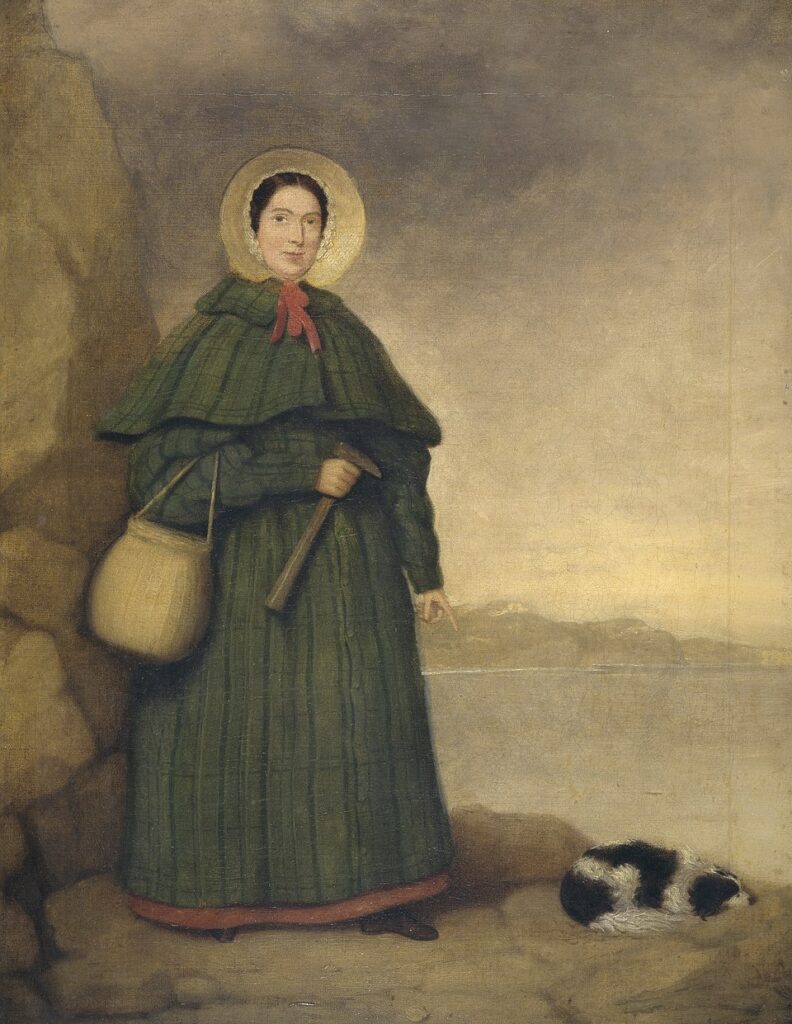
In the small coastal town of Lyme Regis, a young girl named Mary Anning would one day alter humanity’s understanding of prehistoric life. Born into poverty in 1799, Mary was not a trained scientist, yet her fossil discoveries would lay the groundwork for the field of paleontology. Her story is one of resilience, curiosity, and an unshakable love for the Jurassic cliffs of Dorset.
Early Life in Lyme Regis
Mary grew up in a modest home near the dangerous but fossil-rich cliffs of England’s southern coast. Her father, a cabinetmaker, introduced her to the art of collecting “curiosities” from the beach. After his death, Mary’s fossil hunting became not just a passion but a means of survival for her family.
Even as a child, she showed remarkable skill in extracting and preserving specimens—a talent that quickly set her apart from casual collectors.
First Major Discovery: The Ichthyosaur Skeleton
In 1811, when Mary was just 12 years old, she and her brother Joseph uncovered a skull unlike anything they had seen before. Over the next several months, Mary painstakingly unearthed the rest of the skeleton, revealing the first complete Ichthyosaur ever discovered.
This marine reptile, with its elongated body and huge eyes, stunned the scientific community. At the time, such a creature challenged traditional beliefs about Earth’s history, fueling debates over extinction and the age of the planet.
Struggles and Gender Barriers in Science
Despite her groundbreaking work, Mary faced systemic prejudice. As a woman in early 19th-century England, she was barred from joining scientific societies and publishing under her own name. Wealthy male scientists often purchased her fossils, later taking credit for the finds in academic papers.
Her expertise was undeniable—leading geologists and naturalists frequently sought her advice—but official recognition was scarce during her lifetime.
Groundbreaking Fossil Finds
5.1 Plesiosaurus: A Creature Beyond Imagination
In 1823, Mary uncovered the first complete Plesiosaurus skeleton. Its long neck and small head baffled scientists, with some even suspecting the fossil was a hoax. Eventually, the find was accepted, and it became one of the most iconic prehistoric marine reptiles known today.
5.2 The Flying Reptile: Dimorphodon
Mary’s discoveries didn’t stop at marine creatures. In 1828, she found the fossilized remains of a Dimorphodon, a pterosaur that proved flying reptiles once soared over Jurassic seas. This find expanded the scope of paleontology beyond the ocean to the skies.
Influence on Paleontology and Geology
Mary Anning’s meticulous fossil collection and precise observations helped shape the early foundations of paleontology and stratigraphy. Her work influenced major scientific figures, including Henry De la Beche, Richard Owen, and William Buckland, and contributed to early evolutionary theories later developed by Charles Darwin.
She transformed Lyme Regis into a hub for fossil hunters and scientists alike, turning a small fishing town into a landmark of geological history.
Mary Anning’s Legacy
Though she died in 1847 at just 47 years old, Mary’s legacy endures. Today, she is celebrated as one of the most important figures in paleontology. Museums around the world display her discoveries, and her life has inspired books, films, and even a Royal Society blue plaque in her honor.
In 2010, the Royal Society named her among the ten most influential British women in science.
Conclusion: A Lasting Impact Beneath the Cliffs
Mary Anning’s story is a testament to perseverance and passion. Against social and economic odds, she rewrote the story of life on Earth from the windswept cliffs of Dorset. The fossils she uncovered still whisper secrets of a world long gone, reminding us that sometimes, the greatest scientists are those who never carried the title.
For more inspiring historical stories, visit our homepage.
External Link: Mary Anning on Wikipedia