Table of Contents
- The Twilight of a Conqueror: Mehmed II’s Last Days
- The Sultan’s Final Campaign: March to Hünkârçayırı
- The Landscape of Power: The Ottoman Empire in 1481
- Mehmed II: Architect of an Empire
- Shadows of Ambition: Succession and Uncertainty
- The March Northeast: Preparing for War and Reformation
- The Sultan’s Health and the Burden of Empire
- The Moment of Death: Hünkârçayırı, May 3, 1481
- The Immediate Aftermath: Panic and Power Struggles
- Cem and Bayezid: Brothers in Contest
- The Empire at a Crossroads: Governance without Mehmed II
- The Legacy of the Conqueror: From Constantinople to the Balkans
- How Mehmed’s Death Shaped Ottoman Succession Practices
- Reflections of Contemporaries: Chronicles and Letters
- The Cultural and Political Ripples Across Europe
- Mehmed II’s Death in Collective Memory
- The Ottoman Empire’s Evolution Post-1481
- From Tragedy to Triumph: Bayezid I’s Reign
- The Myth and Reality of the Sultan’s Final Moments
- Conclusion: The End of an Era and a New Beginning
- FAQs: Questions About Mehmed II’s Death and Its Impact
- External Resources
- Internal Link
The Twilight of a Conqueror: Mehmed II’s Last Days
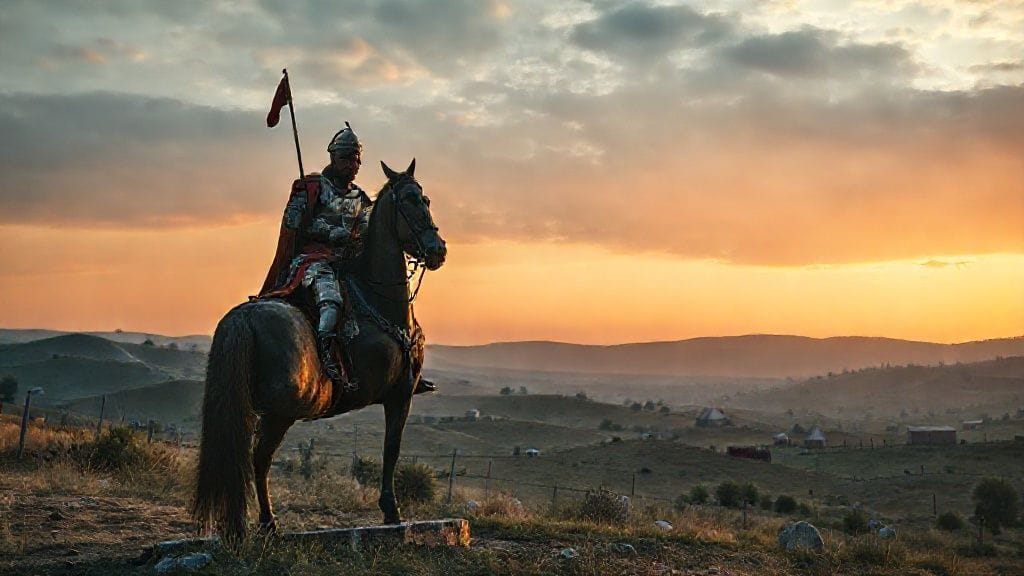
As the late spring winds swept over the plains surrounding Hünkârçayırı near Gebze, the air was thick with anticipation, a heavy mixture of hope and foreboding. The towering figure of Sultan Mehmed II, the conqueror who had shattered the walls of Constantinople, was on his final journey. His silhouette, once the symbol of unstoppable empire expansion, now seemed touched by a fragile mortality. The palpable tension among his retinue foreshadowed a seismic shift not just for the Ottoman throne but for the fate of empires itself.
On May 3, 1481, beneath a restless sky that mirrored the empire’s uncertain future, Mehmed II passed away—his death swift and sudden. But this wasn’t merely the end of a ruler; it was the closing of a chapter in a story of audacity, conquest, and transformation that reshaped the known world.
The Sultan’s Final Campaign: March to Hünkârçayırı
The scene at Hünkârçayırı was far from the splendor of monumental conquests or the majesty of Constantinople’s throne rooms. Instead, it carried the somber mood of both exhaustion and impending conflict. Mehmed had been leading his forces toward the eastern frontiers, preparing yet another campaign to secure his realm’s volatile borders, particularly against the Aq Qoyunlu confederation. It was a campaign that promised renewed glory but ended in personal tragedy.
His death at this staging ground near Gebze—known today as part of the Marmara region of Turkey—shocked the army and set in motion a chain of events that would unravel the tranquility of his reign. Yet the story of this moment begins decades earlier, shaped by his relentless quest for power and vision of an empire without bounds.
The Landscape of Power: The Ottoman Empire in 1481
By the spring of 1481, the Ottoman Empire was a sprawling state, stretching from the fringes of Hungary to the deserts of the Middle East and the straits controlling the Mediterranean and Black Seas. Mehmed II had transformed a once fragmented Anatolian principality into a continental superpower. Yet, this expansion created vulnerabilities—the vast empire was held together by an intricate system of alliances, military discipline, and a ruler with an iron will.
Europe watched with growing anxiety while powerful neighbors jockeyed for advantage. Venice, Hungary, and the Mamluks each calculated what Mehmed’s reign meant for their ambitions. Inside the empire, the elite Janissaries, court officials, and provincial governors balanced loyalty with personal interests, all under the looming shadow of succession.
Mehmed II: Architect of an Empire
Born in 1432, Mehmed inherited the throne as a young man and soon demonstrated his extraordinary mixture of military genius, political calculation, and cultural patronage. His capture of Constantinople in 1453 wasn’t just a military victory but a symbolic shift from medieval to early modern geopolitics—a Turkic sultan claiming the legacy of Rome and Byzantium.
Known as "the Conqueror," Mehmed II combined ruthlessness with vision: he rebuilt the city of Constantinople, fostered architectural achievements, encouraged arts and scholarship, and instilled strict central authority that would become a hallmark of Ottoman governance.
Yet, his era was also marred by personal strife and political intrigue—rivals within the palace, rebel princes, and foreign enemies kept him vigilant until his final days.
Shadows of Ambition: Succession and Uncertainty
Despite his grand vision, Mehmed’s death exposed an unresolved question—who would succeed him? The Ottoman tradition did not follow primogeniture strictly; instead, the strongest claimant often prevailed in a deadly contest among brothers. Mehmed’s sons, Bayezid and Cem, represented different political factions and visions for the empire’s future.
As the Sultan marched to Hünkârçayırı, rumors swirled about internal dissent, plotting, and the fragile health of the sultan himself. The deathbed was not only a personal fate but a catalyst for civil war and foreign intervention.
The March Northeast: Preparing for War and Reformation
Mehmed’s final campaign sought to extend Ottoman influence over eastern Anatolia and the Caucasus, focusing on curbing the rising power of the Aq Qoyunlu under Uzun Hasan. The region was a complex mosaic of tribal loyalties, Persian influences, and Ottoman ambitions.
Hünkârçayırı was chosen as a strategic assembly point where Mehmed’s forces gathered before crossing difficult terrains. The Sultan—despite his declining health—was deeply involved in the planning and command, unwilling to yield to age or illness in front of his enemies.
The Sultan’s Health and the Burden of Empire
The great conqueror’s body bore the strain of constant campaigning, wounds received in battle, and perhaps the overwhelming weight of empire itself. Contemporary sources describe Mehmed II as suffering from severe exhaustion and possibly infectious fever during the final days.
Letters and chronicles from the period hint at a ruler whose physical vigor was eroding even as his mind remained sharp. Some historians speculate that a stroke or sudden illness claimed his life at Hünkârçayırı, but the precise medical cause remains unknown.
The Moment of Death: Hünkârçayırı, May 3, 1481
On that fateful morning, as dawn light filtered through the clouds, Mehmed’s condition grew critical. Surrounded by advisors and family, the Sultan reportedly issued final commands, reflecting a mind still engaged with empire affairs. Within hours, the conqueror breathed his last.
The camp fell into stunned silence—the loss of their leader was not only a personal tragedy but a political earthquake. The soldiers, the bureaucracy, and the court would feel the shockwaves for years to come.
The Immediate Aftermath: Panic and Power Struggles
News of Mehmed II’s death spread rapidly. Without a designated heir unequivocally endorsed, factions within the palace and military jockeyed for control. Some courtiers rushed to secure Bayezid’s position, while others saw opportunity in Cem’s claims.
Foreign courts sensed vulnerability and considered alliances with dissatisfied Ottoman princes. The unity Mehmed had forged seemed precarious, with the empire’s very fabric threatened by internal discord.
Cem and Bayezid: Brothers in Contest
The rivalry between Mehmed’s sons quickly escalated into a bitter contest for the throne. Bayezid, based in Bursa, was swift to consolidate power, leveraging his alliances with key military units and officials. Cem, younger and more charismatic to some factions, fled first to Egypt and then to Europe, becoming a pawn in larger geopolitical games.
This fratricidal conflict set a precedent for future Ottoman successions—marked by civil war, exile, and international interference—that would echo through decades.
The Empire at a Crossroads: Governance without Mehmed II
The central authority that Mehmed II had so painstakingly built was immediately challenged. Administrators debated maintaining strict policies or softening control to prevent rebellions among the recently subjugated territories.
Meanwhile, provinces like the Balkans and Anatolia braced for impact. The stability of trade routes, military defenses, and tax systems hung by a thread as loyalties splintered.
The Legacy of the Conqueror: From Constantinople to the Balkans
Mehmed II’s death was not a mere footnote; it signaled the end of an unparalleled period of transformation. His capture of Constantinople had rewritten history books and inspired generations.
The architectural marvels he commissioned and the cultural projects he patronized created an Ottoman renaissance that blended Islamic tradition with Byzantine heritage. His policies regarding governance, law, and military organization laid foundations lasting centuries.
How Mehmed’s Death Shaped Ottoman Succession Practices
The turmoil unleashed by his passing forced changes in how the empire handled succession. Notably, the grim practice of fratricide—while brutal—became institutionalized to prevent destructive civil wars.
The accession of Bayezid II marked a cautious shift toward stabilizing power but with eyes always vigilant to internal threats. His reign would wrestle with maintaining unity while managing the precedents left by his father.
Reflections of Contemporaries: Chronicles and Letters
Chroniclers such as Tursun Beg and the Venetian envoy Giovanni Maria Angiolello provided vivid accounts of Mehmed’s final days and death. Their writings show a mixture of admiration, fear, and uncertainty at the empire’s future.
Personal letters reveal the shock felt by political allies and enemies alike. A famous quote attributed to a court official captures the mood: “The shadow of the eagle has vanished; now the flock must decide their fate.”
The Cultural and Political Ripples Across Europe
In Europe, Mehmed’s death prompted a blend of celebration and anxiety. Christian monarchs saw potential openings to reclaim lost lands or influence Ottoman policies. Diplomatic missions proliferated as the balance of power teetered.
At the same time, tales of the mighty sultan’s death traveled far, inspiring both caution and respect among the continent’s rulers and chroniclers.
Mehmed II’s Death in Collective Memory
Over time, the narrative surrounding Mehmed’s passing took on legendary qualities. Ottoman historiography lionized his conquests yet somberly recounted the dangers of power’s fragility.
In popular culture and literature, Mehmed II is both the conqueror and the tragic figure whose empire depended heavily on his indomitable will—one that vanished too soon.
The Ottoman Empire’s Evolution Post-1481
Following Mehmed II’s death, the Ottoman state did not collapse; it adapted. Bayezid II’s reign is often seen as a period of consolidation and cautious diplomacy, particularly with European neighbors and rival Islamic states.
This era also witnessed renewed attention to internal governance reforms and cultural flourishing, signifying that death—while disruptive—was not the end of Ottoman ascendancy.
From Tragedy to Triumph: Bayezid I’s Reign
Bayezid II proved a capable ruler, navigating the complex legacy of his father with skill and pragmatism. His initial need to pacify rivals and rebellious factions gradually transformed into policies fostering economic growth, architectural innovation, and relative peace.
His ability to contain internal conflict allowed the empire to endure, setting a stage for future expansions and the iconic reign of Suleiman the Magnificent.
The Myth and Reality of the Sultan’s Final Moments
The exact details of Mehmed II’s death remain partly shrouded in mystery and myth. Some accounts claim he died heroically on the battlefield, while others emphasize illness and physical decline.
Modern historians piece together these stories with caution, highlighting the difficulty of separating legend from fact when examining a figure as monumental as Mehmed II.
Conclusion
Mehmed II’s death at Hünkârçayırı was more than a historical date; it was a powerful narrative moment capturing the vulnerable intersection between human mortality and imperial destiny. His passing brought uncertainty but also the resilience of an empire molded by ambition, culture, and change.
Through chaos and fraternal strife, the Ottoman Empire emerged not weakened but reborn, carrying forward the echoes of its conqueror’s vision. The story of Mehmed II’s final days is a profound reminder of history’s relentless march—where even the strongest fall, but the empire endures.
FAQs
Q1: What caused Mehmed II’s death at Hünkârçayırı?
While exact medical records don’t exist, contemporary accounts suggest illness, possibly a stroke or infectious disease, led to his death. Physical exhaustion from relentless campaigns likely contributed.
Q2: Why was the location Hünkârçayırı significant?
Hünkârçayırı was a strategic military staging ground near Gebze, close to Istanbul. It served as a rendezvous point for forces preparing for eastern campaigns.
Q3: How did Mehmed II’s death affect the Ottoman succession?
His death triggered a civil war between his sons Bayezid and Cem, setting a precedent for future fratricidal conflicts and impacting succession protocols.
Q4: Who was Bayezid II, and how did he handle succession aftermath?
Bayezid II was Mehmed II’s eldest surviving son, who consolidated power quickly. He aimed to stabilize the empire through cautious governance and military strength.
Q5: Did Mehmed II’s death weaken the Ottoman Empire?
Temporarily, yes. There was political instability and external threats, but the empire adapted under Bayezid’s rule and continued expanding in later decades.
Q6: How is Mehmed II remembered today?
He is remembered as the pivotal conqueror of Constantinople, a visionary statesman, and a complex figure symbolizing both ambition and the costs of empire-building.
Q7: What role did Mehmed II’s death play in European politics?
It opened diplomatic and military opportunities for European powers wary of Ottoman expansion, leading to increased alliances and conflicts in the region.
Q8: Are there reliable eyewitness accounts of Mehmed II’s death?
There are chronicles and letters by contemporaries, but these often mix fact and legend. Historians rely on cross-examining these sources to approach the truth.