Table of Contents
- The Final Days in Rome: Pope Boniface VIII’s Last Stand
- The Storm Clouds Over the Papal States
- Boniface VIII: A Pope of Power and Controversy
- The Clash with King Philip IV: Seeds of Conflict
- The Outbreak of Hostilities: Political and Religious Tensions
- The Outrage of Anagni: A Violent Encounter with History
- Boniface’s Capture: The Humiliation of the Papacy
- The Aftermath in Rome: Disorder in the Eternal City
- Death of a Pope: October 11, 1303
- The Intrigues Surrounding Boniface’s Demise
- The Papal States in Turmoil: Governance Without a Head
- Philip IV’s Triumph and the Limits of Royal Power
- The Avignon Papacy: A Turning Point in Church History
- Boniface’s Legacy: Tyrant or Martyr?
- Effects on Church-State Relations in Medieval Europe
- Cultural Reverberations: Art, Literature, and Memory
- Reassessing Boniface VIII Through Modern Historiography
- The Papal Office and Political Authority Post-Boniface
- The Broader European Context: Power Struggles of the 14th Century
- Conclusion: From Death to Legacy – The Enduring Echo of Boniface VIII
- FAQs: Unraveling the Mysteries of Pope Boniface VIII’s Death and Its Aftermath
- External Resource
- Internal Link
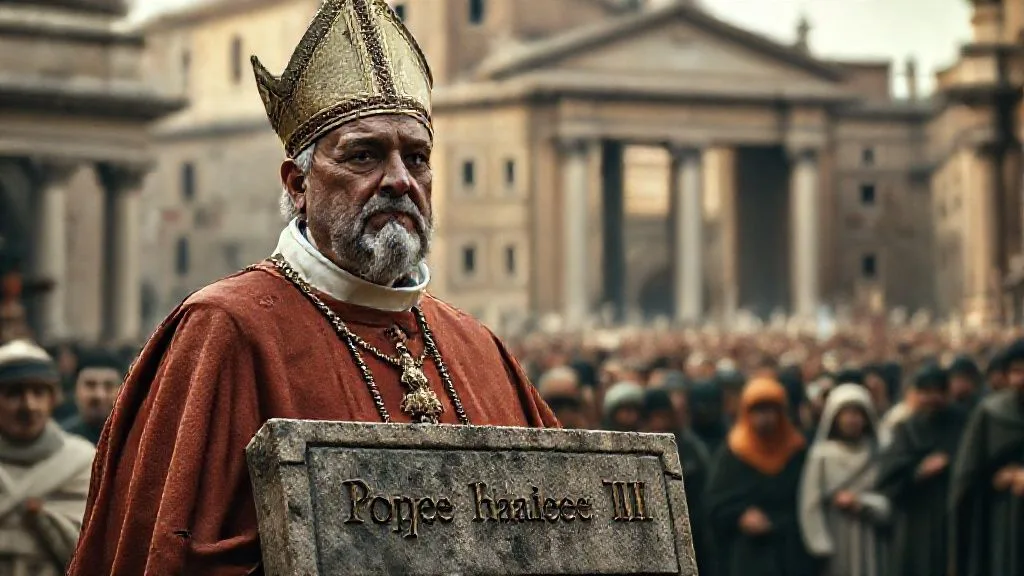
In the dim light of October 11, 1303, the streets of Rome whispered rumors of a man whose power had been both immense and precarious. Pope Boniface VIII, a monarch of the spiritual world, lay gravely ill, a shadow of the formidable pontiff who had once declared, "We hold the keys of heaven and hell." Rome itself seemed to hold its breath, as if the fate of the papacy and the very soul of Christendom hung in fragile balance. This was no ordinary passing; it marked the climax of a harrowing saga of pride, conflict, humiliation, and death — a moment that would alter the course of European history and redefine the relationship between church and crown forever.
The Final Days in Rome: Pope Boniface VIII’s Last Stand
The autumn of 1303 found Boniface VIII isolated within the pale, stone walls of the Vatican, a fortress not against external enemies but encroaching despair. Just weeks before, he had survived a violent assault known as the Outrage of Anagni — a brutal confrontation that stunned Christendom and exposed the vulnerability beneath papal grandeur. His physical wounds barely concealed deeper bruises to his authority and spirit.
Despite illness and humiliation, Boniface’s resolve remained unbroken. He penned letters still asserting papal supremacy, even as forces beyond his control stirred tumult from Rome’s hilltops to the courts of France. But the pope’s health rapidly declined. Fever gripped his body; pain contorted his face. Rome’s citizens whispered that the man who had claimed divine omnipotence was now at mercy's doorstep. Here, at the twilight of his reign, Boniface embodied the fatal collision between spiritual idealism and worldly power.
The Storm Clouds Over the Papal States
The Papal States—vast swathes of central Italy under the pope’s temporal dominion—were no mere backdrop to Boniface’s death but a focal arena of strife. Political instability riddled this patchwork of cities and countryside, fractious barons jostled for influence, and foreign kings eyed the papacy’s weakness with greed. Boniface’s death thus was not merely a private tragedy; it was the unraveling of fragile authority.
Rome itself convulsed with uncertainty. The Italian nobility, resentful of papal interference, bristled at the idea of a weakened pope. Rumors spread of Senate plots, mercenary bands stirring unrest, and the forbidding shadows of rebellion. For the papacy, death in the city was always a moment of danger—vacuum of power bred chaos.
Boniface VIII: A Pope of Power and Controversy
To grasp the import of his death, one must understand the man who sat upon the throne of Saint Peter since 1294. Born Benedetto Caetani, Boniface VIII was no timid cleric. His was a pontificate marked by a striking ambition to cement absolute spiritual supremacy over kings and emperors alike, asserting papal authority as divinely ordained and unchallengeable.
His famous bulls—Unam Sanctam chief among them—articulated a doctrine where salvation hinged on obedience to the pope’s will, a theological claim that incense crowned heads and bishops alike. Yet Boniface’s stubborn pride and ruthless tactics alienated many allies. His attempts to enforce papal taxation and intervene in secular governance sowed resentment, most notably in the ambitious King Philip IV of France.
The Clash with King Philip IV: Seeds of Conflict
The relationship between Boniface VIII and Philip IV the Fair was marked by a tension resonant of a larger European contest: the true locus of power in Christendom. Philip, determined to strengthen royal authority and secure revenues from the clergy within his realm, clashed with Boniface’s crusade for papal supremacy.
These disputes escalated over years, layering grievances of taxation, law, and sovereignty. Philip’s famous declaration that "the king is king" challenged the pope’s claim to oversee monarchs. The battle was part political, part ideological, and deeply personal. Each sought to bend history to his will, and neither would yield easily.
The Outbreak of Hostilities: Political and Religious Tensions
In 1303, tensions exploded. Philip’s emissaries seized Boniface’s financial agents in France, while Boniface excommunicated French officials in retaliation. The pope’s sharpened rhetoric and Philip’s unyielding policies drove both men toward an irrevocable crisis.
European observers watched tensely as papal bulls flew like arrows across borders; rumor mixed with propaganda—the church accused the French king of heresy, while Philip branded the pope a tyrant. Across Italy and France, public opinion split, clerics and nobles choosing sides in a conflict that blurred the boundaries of politics and faith.
The Outrage of Anagni: A Violent Encounter with History
On September 7, 1303, these abstract tensions took brutal physical form in the small town of Anagni, south of Rome. Faced with a gathering of hostile forces backed by Philip IV, Boniface VIII found himself confronted, manhandled, and temporarily imprisoned by the so-called “Outrage of Anagni.” Led by Guillaume de Nogaret—a ruthless envoy and legalist—the French agents stormed the papal palace.
For three harrowing days, the aged pope endured verbal abuse, threats, and even physical violence. According to contemporary chroniclers, Boniface was slapped—a visceral demonstration that no pope was untouchable. The event sent shockwaves far beyond Anagni; the sanctity of the papacy was violated, its invulnerability shattered. Yet the pope was eventually rescued by townsfolk and released, but the humiliation was searing.
Boniface’s Capture: The Humiliation of the Papacy
The capture of Boniface VIII struck at the heart of medieval Christendom, shaking centuries of perceived divine right and authority. It was a spectacle of power turned on its head: a pontiff seized by secular forces, symbolically dethroned before dying weeks later. The image of a captive pope rocked medieval consciousness and became a potent symbol of the rising challenge to church supremacy by emerging nation-states.
This episode, as medievalists often emphasize, presaged the gradual erosion of papal temporal power. Boniface’s treatment revealed how political realities could outmaneuver theology—and foreshadowed the fracturing of medieval Christendom.
The Aftermath in Rome: Disorder in the Eternal City
Following Boniface’s return to Rome, the city seethed with uncertainty. His health was failing, and the political vacuum widened. Factions emerged—some loyal to the Caetani family, others favoring opposition noble houses or foreign influence. Rome’s streets, once the heart of Christendom, became a cauldron of tension and intrigue.
Moreover, the pope’s frail condition prevented him from effectively governing the Papal States, creating opportunities for rivals and local lordships to assert autonomy. This disorder reflected broader challenges to papal territorial control that would persist for decades.
Death of a Pope: October 11, 1303
On October 11, 1303, Pope Boniface VIII succumbed to his illness, dying in relative obscurity compared to the grandeur that had accompanied his election years earlier. His death was met with a mix of relief and trepidation across Europe. Some mourned the loss of a defender of church principle, others celebrated the fall of a tyrant.
The circumstances of his demise—physically weakened, politically isolated, spiritually embattled—cast a long shadow. Many contemporaries interpreted his death as divine judgment or martyrdom, affirming polarized perceptions of his controversial pontificate.
The Intrigues Surrounding Boniface’s Demise
Boniface’s death did not end the storm. Rumors spread of poison or foul play, a testament to the tangled web of alliances and enmities surrounding Rome. The Caetani family sought to protect its interests, while Philip IV maneuvered to influence the papal succession.
The conclave that followed grappled with the legacy of Boniface’s tumultuous reign and the urgent need for reconciliation. The papacy stood at a crossroads—balancing the desire to restore dignity with growing external pressure.
The Papal States in Turmoil: Governance Without a Head
In the interregnum, the Papal States faced uncertainty. Without a decisive pontiff, rival factions contested control, cities fortified themselves, and mercenaries exploited the instability. This vacuum demonstrated how intrinsically linked the pope’s spiritual authority was to his temporal power in Italy.
Yet these troubles also catalyzed reforms and new alliances, hinting at the evolving political landscape of the Italian peninsula in the early 14th century.
Philip IV’s Triumph and the Limits of Royal Power
King Philip IV emerged from the crisis with a wary victory. His power over France was undiminished, and the humiliation of Boniface VIII symbolized a historic turning point: monarchs could challenge, even defy, the pope.
Nevertheless, Philip’s triumph was tempered. The papacy endured, albeit weakened, and the French king soon faced resistance from other quarters—barons, clergy, even his own people—reminding all that power revolved in delicate balances.
The Avignon Papacy: A Turning Point in Church History
Within a decade of Boniface’s death, the papacy entered a new phase—the Avignon Papacy (1309–1377). The seat of Saint Peter moved to France, a shift seen by many as symbolic of the church’s diminished independence and increasing subservience to French kings.
This era, sometimes called the "Babylonian Captivity" of the papacy, was rooted in the very conflicts that marked Boniface’s reign and demise, highlighting the enduring consequences of his struggle with secular power.
Boniface’s Legacy: Tyrant or Martyr?
History has debated Boniface VIII ceaselessly. Hero to some, villain to others, his legacy is complex. His insistence on papal primacy shaped doctrine for centuries, while his personal flaws—pride, vindictiveness, political missteps—reveal a man both human and austere.
Medieval chronicles oscillate between reverence and condemnation, and modern historians continue to reassess his pontificate within the broader currents of medieval political culture.
Effects on Church-State Relations in Medieval Europe
Boniface VIII’s downfall marked a definitive moment in evolving church-state relations. No longer could the pope simply dictate terms to kings; instead, a new political reality was emerging, one in which spiritual and temporal powers collided and negotiated limits.
This shift laid intellectual and institutional groundwork for the later Renaissance, Reformation, and modern secular states.
Cultural Reverberations: Art, Literature, and Memory
The events surrounding Boniface VIII’s death found echoes in art and literature. Dante Alighieri, in the Divine Comedy, immortalized Boniface (as "Papa Boniface") within his scathing critique of corruption and ambition in the church. Artistic representations conveyed the tension between ideal and reality in the late medieval church.
The memory of Boniface’s life and death continues to evoke debates on power, faith, and human frailty.
Reassessing Boniface VIII Through Modern Historiography
Contemporary scholarship employs nuanced readings of Boniface’s reign—contextualizing his actions within medieval norms, recognizing both his visionary ambitions and tragic failings.
By examining papal documents, royal archives, and eyewitness accounts with critical analysis, historians illuminate this controversial pope’s full, textured portrait.
The Papal Office and Political Authority Post-Boniface
In the wake of Boniface VIII, the papal office confronted new challenges: maintaining spiritual leadership while negotiating diminished temporal influence amid rising national monarchies.
The centuries that followed witnessed continual struggles to reconcile religious mission with political realities—a legacy begin in Boniface’s turbulent final years.
The Broader European Context: Power Struggles of the 14th Century
Boniface’s death occurred against a backdrop of broader transformations: economic pressures, emerging centralized states, schismatic threats to the church, and cultural shifts.
His story is but one thread in the grand tapestry of 14th-century Europe, a time of crisis but also of profound change.
Conclusion: From Death to Legacy – The Enduring Echo of Boniface VIII
The passing of Pope Boniface VIII on October 11, 1303, signaled not merely the end of a man, but the fracturing of an era. His life and death personified the clash between spiritual ideals and worldly ambitions—a drama staged upon the ancient stones of Rome, rippling across kingdoms and centuries.
Though his pontificate ended in pain and defeat, Boniface’s legacy endures, provoking reflection on authority, faith, and the complex dance of power that continues to shape human history. His final days remind us, poignantly, of the frailty of even the mightiest, and the indomitable will to leave a mark upon the world.
FAQs
1. Why was Pope Boniface VIII so controversial during his pontificate?
Boniface VIII was controversial because of his aggressive assertion of papal supremacy over secular rulers, particularly through documents like Unam Sanctam, which declared ultimate authority of the pope over all Christians, including kings. His stubbornness and political maneuvers alienated many monarchs and clergy.
2. What led to the conflict between Boniface VIII and King Philip IV of France?
The conflict largely stemmed from Philip’s attempts to tax the French clergy and expand royal authority, which Boniface opposed as an infringement on church privileges. Their escalating disputes over jurisdiction, authority, and finances culminated in violent confrontations.
3. What exactly happened during the Outrage of Anagni?
In September 1303, French emissaries led by Guillaume de Nogaret captured Boniface VIII in Anagni, physically assaulted and imprisoned him briefly to pressure him against French policies. Though local townsmen eventually freed the pope, the event was a shocking violation of papal dignity.
4. How did Boniface VIII’s death affect the Papal States?
His death left a power vacuum leading to political instability, factional infighting, and challenges to papal territorial control. This turmoil weakened papal influence in Italy and set the stage for future conflicts.
5. What was the significance of the Avignon Papacy in relation to Boniface VIII’s death?
The Avignon Papacy began shortly after Boniface's death and represented a period when the papal court resided in France, under the influence of French kings. It symbolized the diminished independence of the papacy, an outcome tied to the struggles Boniface had waged against Philip IV.
**6. How did Dante portray Boniface VIII in his Divine Comedy?**
Dante depicted Boniface VIII harshly, placing him among the corrupt and ambitious clergy in Inferno. He used Boniface as a symbol of the moral decay and political corruption he saw within the church hierarchy.
7. Did Boniface VIII die of natural causes?
While officially his death was due to illness exacerbated by stress and injuries sustained from the Anagni incident, rumors of poisoning and foul play circulated, although these remain unsubstantiated by modern historians.
8. How is Boniface VIII viewed by modern historians?
Modern historians present a balanced view, recognizing his theological contributions and political audacity while critiquing his pride and detrimental decisions that alienated powerful secular leaders.