Table of Contents
- Early Life and Education
- Breakthrough in Crystallography
- The Discovery of Piezoelectricity
- Marriage and Scientific Partnership with Marie Curie
- Nobel Prize and Recognition
- Untimely Death and Enduring Legacy
- Influence on Future Scientific Research
- Conclusion
Early Life and Education
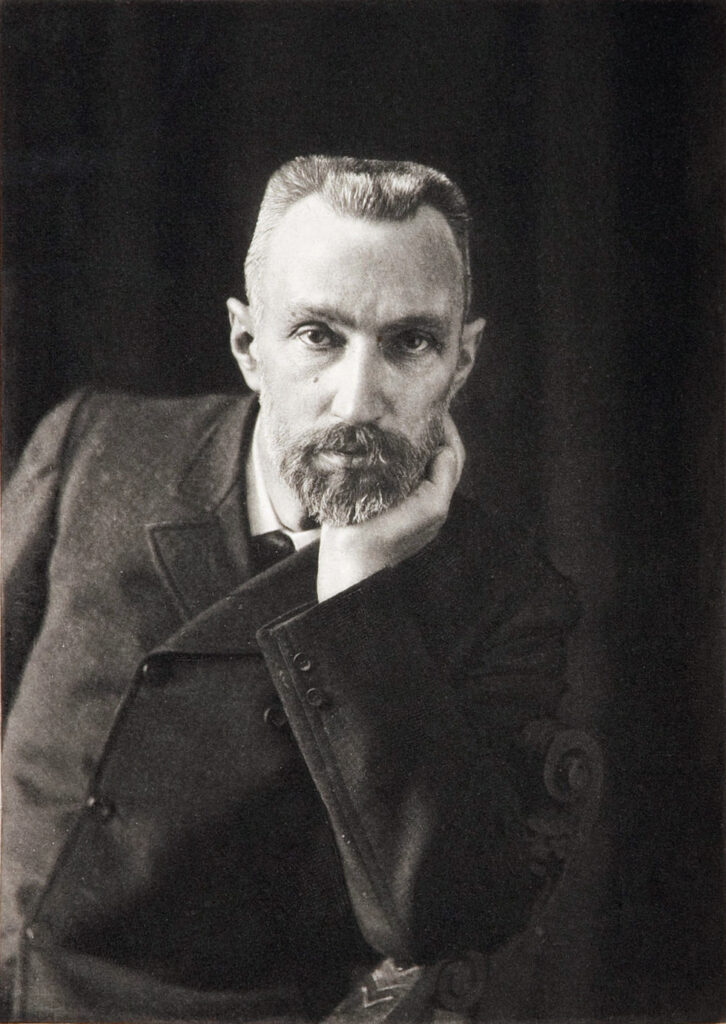
Pierre Curie was born on May 15, 1859, in Paris, France, into a family that valued education and intellectual curiosity. His father, Eugène Curie, was a physician who encouraged his son’s interest in science from an early age. Unlike many children his age, Pierre was educated at home until the age of 16, allowing him to pursue his passion for mathematics and physics without the constraints of conventional schooling. This independent start to his education fostered a mindset of curiosity and self-discipline that would define his career.
At the age of 16, Pierre enrolled at the Faculty of Sciences at the University of Paris. By the time he was 18, he had already completed his degree in physics, a feat that highlighted his exceptional talent and dedication.
Breakthrough in Crystallography
In his early career, Pierre Curie focused on crystallography, the study of crystal structures and properties. Alongside his brother Jacques, he made significant contributions to the understanding of crystal symmetry. The brothers meticulously measured and catalogued the physical properties of various crystals, establishing a foundation for future research in solid-state physics. Their precise observations not only advanced the field but also set a new standard for experimental rigor in science.
The Discovery of Piezoelectricity
Perhaps one of the most groundbreaking moments in Pierre Curie’s early career was the discovery of piezoelectricity in 1880, made in collaboration with Jacques Curie. They found that certain crystals, when subjected to mechanical stress, produced an electrical charge. This phenomenon, called piezoelectricity, has since become integral to countless technologies, from ultrasound imaging to precision sensors in electronics.
This discovery was not just a leap forward in physics—it was an example of how theoretical science could lead to real-world technological innovations.
Marriage and Scientific Partnership with Marie Curie
In 1895, Pierre married Maria Sklodowska, better known as Marie Curie, a brilliant scientist in her own right. Their partnership was one of the most famous in scientific history, characterized by deep mutual respect and shared intellectual pursuits. Together, they embarked on research into the mysterious phenomenon of radioactivity, a term coined by Marie.
The Curies’ collaboration was intense and productive. They discovered two new elements—polonium and radium—revolutionizing the scientific understanding of atomic structure. Pierre’s expertise in precise measurements complemented Marie’s relentless drive and ingenuity, making them an unstoppable team.
Nobel Prize and Recognition
In 1903, Pierre Curie, Marie Curie, and Henri Becquerel were jointly awarded the Nobel Prize in Physics for their work on radioactivity. The award was a recognition not only of their discoveries but also of the meticulous scientific method they employed.
Pierre used the platform provided by the Nobel Prize to advocate for peaceful applications of scientific research and to warn against the dangers of misusing new technologies. His humility and dedication to truth over personal fame set him apart from many of his contemporaries.
Untimely Death and Enduring Legacy
Tragically, Pierre Curie’s life was cut short in 1906 when he died in a street accident in Paris, struck by a horse-drawn carriage. His sudden death was a devastating blow to Marie Curie and the scientific community at large.
Despite his short life, Pierre Curie left an indelible mark on science. His meticulous approach to experimentation, his groundbreaking discoveries, and his collaborative spirit continue to inspire scientists around the world.
Influence on Future Scientific Research
Pierre Curie’s work laid the groundwork for much of 20th-century physics and chemistry. His contributions to crystallography and radioactivity directly influenced the development of quantum mechanics and nuclear physics. Moreover, his discovery of piezoelectricity continues to be fundamental in modern engineering and medical devices.
Many of his scientific principles remain embedded in contemporary research, and his story is often cited as an example of how curiosity, precision, and collaboration can change the world.
Conclusion
Pierre Curie’s life story is one of quiet brilliance and unwavering dedication to science. Born in Paris in 1859, he rose from a home-schooled boy with a love for numbers to a Nobel Prize–winning physicist whose work still resonates today. His discoveries in crystallography, piezoelectricity, and radioactivity transformed the way humanity understands the natural world, proving that scientific curiosity can illuminate the deepest mysteries of the universe.