Table of Contents
- The Last Day of a Master: August 6, 1660
- Madrid in the Mid-17th Century: A City of Art and Turmoil
- Diego Velázquez: The Court Painter’s Rise to Eminence
- A Life Bound to Royalty and Canvas
- The Artistic Landscape of Spain Before Velázquez’s Passing
- The Physical Decline of a Genius: Velázquez in His Final Years
- August 6, 1660: The Final Hours of Diego Velázquez
- The Immediate Repercussions in the Royal Court
- Mourning a Visionary: Public and Private Grief in Madrid
- The Funeral Procession: A City Reflecting on Its Loss
- Velázquez’s Legacy in Painting: Beyond His Death
- The Role of Velázquez’s Death in Shaping Spanish Baroque Art
- How Velázquez Influenced Future Generations, Post-1660
- Political and Cultural Spain: The Broader Context of Velázquez’s Passing
- Artistic Memory and Rediscovery: Velázquez’s Posthumous Reputation
- From Court Painter to Immortal Icon: The Mythologizing of Velázquez
- The Lasting Impact on Portraiture and Realism
- Velázquez and the Spanish Golden Age’s Twilight
- Death and Immortality: Artistic Reflections on Velázquez’s Passing
- Conclusion: The End of an Era and the Birth of a Legend
- FAQs: Understanding Diego Velázquez’s Death and Legacy
- External Resource
- Internal Link
The Last Day of a Master: August 6, 1660
On a late summer afternoon in Madrid, the city seemed unaware that it was losing one of its most luminous souls. Diego Rodríguez de Silva y Velázquez, the esteemed court painter to King Philip IV, lay gravely ill in his modest home, far removed from the grand halls where his brushes had immortalized kings and mythic figures. The sun, as it dipped low on August 6, 1660, cast warm amber hues across the cobbled streets—a poignant light for the final chapter of a man whose vision had forever transformed Spanish art. Inside, the air was heavy, not only with the scent of oil paint and varnish but with grief yet to come. Velázquez’s breathing faltered. The pulse of a creative heart was beginning to fade.
For a generation, he had wielded his brush like a quiet sorcerer; each stroke capturing truth without artifice, revealing nobility not just on canvas but in human spirit. Yet now, as the evening shadows lengthened, Madrid was on the cusp of losing a titan—a man whose death would mark both an end and a new beginning for art in Spain and beyond.
Madrid in the Mid-17th Century: A City of Art and Turmoil
Madrid in 1660 was a city of contradiction and complexity. Declared the capital only a few decades earlier by King Philip II, it had rapidly transformed from a modest town into the nerve center of the Spanish Empire. The streets buzzed with courtiers, soldiers, artists, and merchants, but beneath this vibrancy lay deep political and economic uncertainty. The Golden Age of Spain—marked by military victories and cultural efflorescence—was beginning to falter against a backdrop of wars, debt, and social unrest.
Yet, within its palaces and churches, the flourishing of art was undeniable. Spain’s Catholic monarchy sought to manifest divine grandeur through monumental art patronage. Velázquez, a favored painter of Philip IV, became both witness and architect of this cultural policy. His works adorned palace walls and chapels, blending royal propaganda with raw human emotion. Madrid, thus, was both crucible and stage—where power, faith, and creativity clashed and coalesced.
Diego Velázquez: The Court Painter’s Rise to Eminence
Born in Seville in 1599, Velázquez’s journey to the pinnacle of Spain’s artistic world was shaped by early talent and relentless dedication. His apprenticeship in Seville revealed an unparalleled eye for realism and depth. His move to Madrid at the age of 24 was a turning point, coinciding with his introduction to King Philip IV’s court.
Velázquez's ascent was gradual but steady. By 1623, he secured his appointment as court painter, a position that not only gave him prestige but intimate access to the royal family and nobility. His studio became a place where art and politics spoke in tandem, where the representation of royal power had to balance majesty and humanity. Throughout his career, Velázquez challenged conventions, pushing portraiture to new heights of psychological insight.
A Life Bound to Royalty and Canvas
Velázquez’s life was marked by devotion to his craft and service to the crown. Unlike many artists who worked for multiple patrons, his loyalty to Philip IV was unwavering. He painted kings and queens, dwarfs and jesters alike, capturing the full range of human experience within the regal sphere. His famed works—such as Las Meninas—redefined perspective and viewer engagement, blurring the lines between subject, artist, and observer.
But it was not merely court life that defined him. Velázquez traveled extensively, notably to Italy, where he absorbed Renaissance influences, particularly from Titian and Caravaggio. These trips enriched his palette and compositional techniques, layering Spanish realism with Italian sublimity.
The Artistic Landscape of Spain Before Velázquez’s Passing
By 1660, Spanish art was at a crossroads. The Baroque style, with its drama and emotional intensity, dominated European art, and Velázquez’s work both embodied and transcended these trends. While others pursued overwhelming ornamentation or theatricality, Velázquez practiced restraint and psychological nuance.
His influence was palpable: younger artists emulated his focus on ordinary details and complex character studies. Yet, the broader Spanish Golden Age was dimming as political and economic troubles mounted. Velázquez stood as a last, brilliant flare of an artistic era.
The Physical Decline of a Genius: Velázquez in His Final Years
Despite his accolades, Velázquez was not immune to human frailty. In the months leading to August 1660, his health worsened, with mental fatigue and physical weakness clouding the man whose eyes once enchanted with piercing intensity. Chronic illnesses, possibly aggravated by the rigors of travel and diligent work, sapped his vitality.
Correspondence from contemporaries hints at concern and sorrow, describing a painter slowing down but still dedicated to his art until the end. His final known paintings carry a heavier emotional charge, as if aware of his mortality.
August 6, 1660: The Final Hours of Diego Velázquez
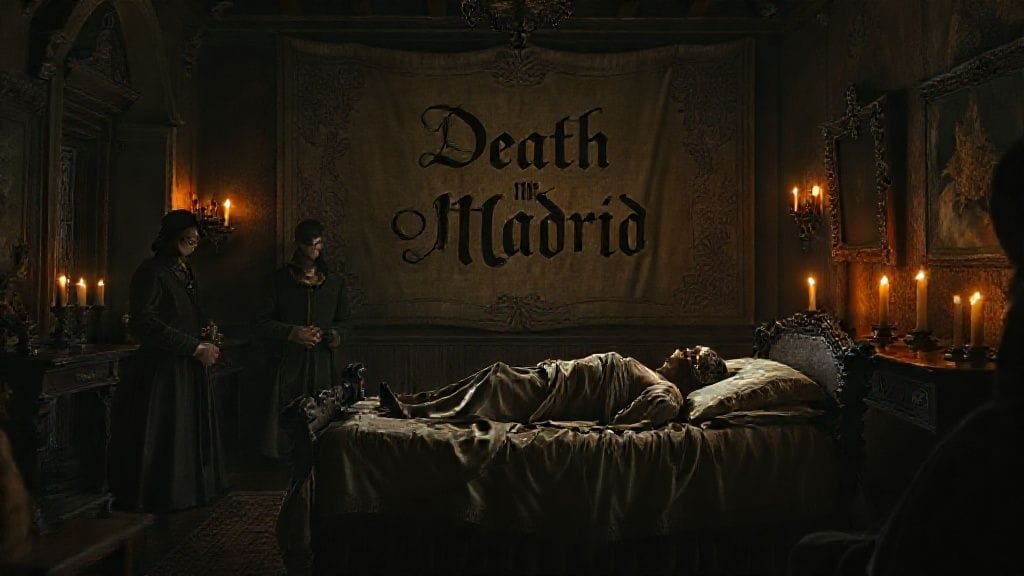
That summer Sunday, Velázquez’s life ebbed quietly. Surrounded by servants and fellow artists, he was reportedly composed, perhaps resigned. According to chroniclers, his passing was peaceful, devoid of dramatic flourish but weighted with profound significance.
King Philip IV, upon hearing the news, mourned deeply, reportedly ordering public mourning and commissioning memorial works. The court painter who had so often captured the monarch’s image had himself become a subject of historical grief.
The Immediate Repercussions in the Royal Court
Velázquez’s death sent ripples through the royal household. He was not merely a painter but an intimate of the court, a custodian of royal image and pride. His absence left a void in the artistic direction of the court’s visual propaganda.
Officials scrambled to appoint successors, but none possessed Velázquez’s unique synthesis of realism and psychological depth. The king’s lamentations echoed a personal loss that transcended professional circles.
Mourning a Visionary: Public and Private Grief in Madrid
Beyond court walls, news of Velázquez’s death stirred mourning among artists, intellectuals, and the broader public. Madrid’s citizens, many of whom had seen his works in churches, convents, and public spaces, felt the departure of a national treasure. Character testimonies from the period reveal a city wrapped in respectful sorrow, reflective of Velázquez’s impact.
Artists organized commemorative gatherings, and patrons pledged to preserve his legacy, signaling a collective recognition of his artistic and cultural importance.
The Funeral Procession: A City Reflecting on Its Loss
Velázquez’s funeral was a solemn affair, matching his stature. Processions made their way from his residence through the streets of Madrid to the Church of San Juan Bautista, where he was interred. The event attracted nobles, artists, and commoners alike, a rare convergence for a man who bridged social divides through art.
Eyewitness accounts remember the procession as imbued with reverence, a parade of sorrow tinged with admiration for the man who had captured the soul of a nation in paint.
Velázquez’s Legacy in Painting: Beyond His Death
Though Velázquez’s brush fell silent in 1660, his influence continued to resonate. His approach to portraiture—focusing on authenticity rather than idealization—would inspire not just Spanish painters but European artists for centuries.
Masters like Francisco Goya and later, Édouard Manet, openly acknowledged Velázquez’s imprint on their work, citing his ability to balance technical mastery with profound humanity.
The Role of Velázquez’s Death in Shaping Spanish Baroque Art
The vacuum left by Velázquez ignited shifts within Spanish Baroque art. Some contemporaries gravitated toward more ornate or dramatic expressions, perhaps attempting to fill the void. However, Velázquez’s death crystallized his style as a gold standard—a beacon of subtlety and depth that cast a long shadow.
Ironically, the loss may have intensified reverence for his oeuvre, as his art became an object of study and emulation among the next generation of painters.
How Velázquez Influenced Future Generations, Post-1660
Velázquez’s posthumous reputation grew steadily. Collections of his drawings and paintings circulated more widely, and art academies proclaimed his techniques essential study. Through reproductions and critical writings, his vision seeped into broader artistic consciousness.
By the 18th and 19th centuries, European Romantic and Realist painters traced direct lines from Velázquez’s innovations to their own explorations of realism and modern portraiture.
Political and Cultural Spain: The Broader Context of Velázquez’s Passing
Velázquez’s death coincided with a Spain entering a period of gradual decline on the world stage. The empire was burdened by war debts and territorial losses. Yet culturally, his passing symbolized the end of an epoch where Spain had led the artistic avant-garde.
In this light, Velázquez became more than a painter—he embodied the apex of Spain’s Golden Age, a cultural icon whose death marked the twilight of national grandeur.
Artistic Memory and Rediscovery: Velázquez’s Posthumous Reputation
Interest in Velázquez surged repeatedly across centuries, often aligned with political and cultural movements that sought to reclaim Spain’s artistic heritage. The 19th century, especially during Romantic nationalism, saw fervent rediscoveries of his works.
Museums dedicated space to his masterpieces; critics and historians elevated his stature, crafting a narrative of Velázquez as the essential Spanish artist—the embodiment of sincerity, innovation, and artistic audacity.
From Court Painter to Immortal Icon: The Mythologizing of Velázquez
It is striking how Velázquez’s death quickened the myth-making process. No longer just a man, he became a symbol—an immortal genius whose life and work transcended mortality. Portraits and writings romanticized his “humble origins” and his quiet revolution against artistic conventions.
This mythos persists today, enriching our understanding not only of art but of Spain’s cultural identity.
The Lasting Impact on Portraiture and Realism
Velázquez’s dedication to truthful likenesses and nuanced expressions reshaped portraiture permanently. His ability to capture fleeting moments of humanity influenced not only royal imagery but also opened doors for modern artistic explorations of identity and perception.
Even now, art historians hail his vision as prescient—an early anticipator of modern realism and the psychological portrait.
Velázquez and the Spanish Golden Age’s Twilight
As August 6 marked Velázquez’s death, it also symbolized the slow fading of the Spanish Golden Age—a cultural peak spanning painting, literature, and music. Just as the empire’s political dominance waned, so too did the era’s great artistic flourishing.
Yet his works endure as luminous beacons amidst this twilight, telling stories that defy time and decay.
Death and Immortality: Artistic Reflections on Velázquez’s Passing
Artists have long grappled with the tension between mortality and the eternal nature of art. Velázquez’s death inspired countless meditations—both visual and literary—on this paradox.
Some of the most poignant tributes underscore how his paintings act as mirrors of the human soul, capturing truths that survive beyond the body's fragile limits.
Conclusion
The death of Diego Velázquez on August 6, 1660, was more than a passing of a man—it was the quiet departure of a visionary who transformed his era’s visual language and left an indelible mark on human creativity. As Madrid’s streets dimmed in the summer twilight that day, the world lost a master whose eyes saw beyond surface beauty to the essence of being.
Yet, Velázquez’s legacy remains vibrantly alive. His art continues to challenge, inspire, and move generations, reminding us that while life is fleeting, true genius carves paths to immortality. In reflecting on his final hours and the centuries that followed, we honor not just an artist, but the enduring power of vision itself.
FAQs
Q1: What were the main causes of Diego Velázquez’s death?
A1: While specific medical details remain unclear, Velázquez’s health had declined due to chronic illness and the physical toll of his demanding career and travels. Age-related frailty likely contributed to his death at 61.
Q2: How did King Philip IV react to Velázquez’s death?
A2: The king mourned deeply, recognizing Velázquez as both a treasured painter and personal confidant. He ordered official mourning and memorials, highlighting the painter’s unique role at court.
Q3: What immediate impact did Velázquez’s death have on Spanish art institutions?
A3: His death created a leadership gap among court artists and influenced shifts toward different Baroque styles. It also spurred institutions to preserve and study his works as exemplary models.
Q4: How has Velázquez influenced modern art?
A4: Artists from Goya to Manet and beyond have cited Velázquez’s innovative use of light, realism, and psychological depth as foundational to modern portraiture and realist movements.
Q5: Where is Diego Velázquez buried?
A5: Velázquez is interred in the Church of San Juan Bautista in Madrid, a site that became a place of homage for artists and admirers.
Q6: How was Velázquez’s legacy preserved in the centuries following his death?
A6: Through museum collections, academic study, and art criticism, Velázquez’s oeuvre remained central to Spanish cultural identity and global art history narratives.
Q7: What does Velázquez symbolize in Spanish culture?
A7: He embodies artistic excellence, the Renaissance spirit of humanism, and Spain’s Golden Age glory, serving as a symbol of national pride and creative endurance.
Q8: Did Velázquez’s death influence political or cultural shifts in 17th-century Spain?
A8: While primarily an artistic loss, his death mirrored broader cultural transitions during an era of political decline, marking the end of an epoch of creativity tied to imperial power.

