Table of Contents
- A Winter’s Day in 1725: The Last Breath of Peter the Great
- The Man Behind the Legend: From Tsar to Emperor
- The Early Fires of Reform: Peter’s Vision for Russia
- The Battle for Modernity: Confronting Tradition and Faith
- The Foundation of St. Petersburg: A Window to Europe
- The Great Northern War: Forging an Empire through Blood and Ice
- The Final Years: Health, Power, and Politics Intertwined
- The Death of an Emperor: February 8, 1725
- Mourning Russia: The Empire’s Reaction to the Great Leader’s Passing
- Succession Crisis: The Uncertain Path after Peter’s Demise
- The Legacy of Reform: Social and Political Ripples in the Empire
- The Rise of St. Petersburg as Russia’s Capital
- Peter’s Vision Anchored in Stone: Architecture and Urban Transformation
- Russia’s New Place on the World Stage
- Memory and Myth: How Peter the Great Lives On
- Conclusion: The Wit and Wounds of a Monumental Reign
- FAQs: Understanding Peter the Great and His Era
- External Resource
- Internal Link
1. A Winter’s Day in 1725: The Last Breath of Peter the Great
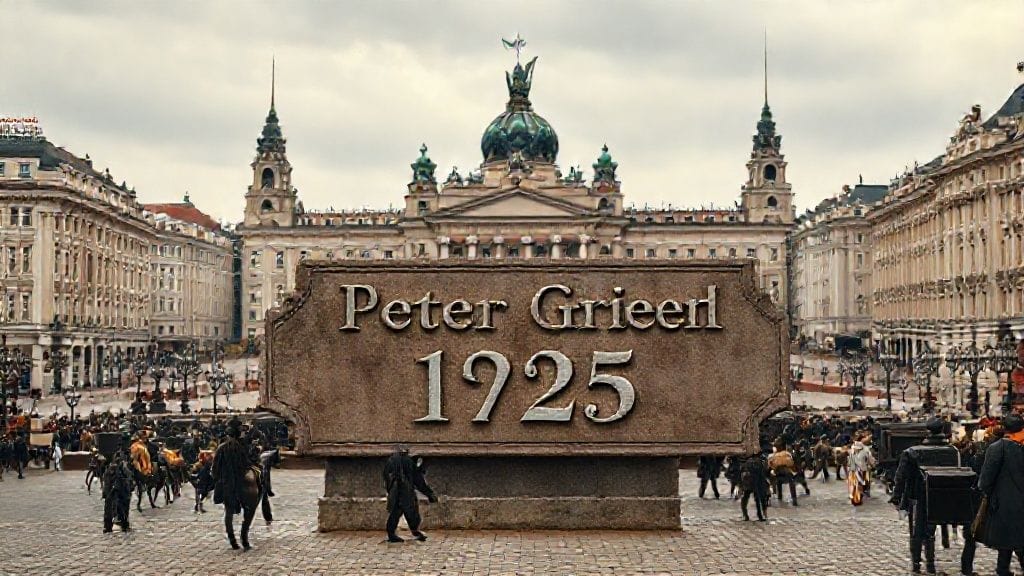
The air in the imperial chambers was hushed, heavy with the scent of candle wax and the cold sharpness of a St. Petersburg winter. Peter Alekseyevich, once a giant astride the vast Russian empire, lay frail and exhausted, his body ravaged by years of relentless toil and hardship. It was February 8, 1725. Outside, the Neva River shimmered beneath an overcast sky, the city he had fought to build sprawling silently into the gray horizon. As the Tsar coughed and murmured his final words, those present sensed that a chapter of history was closing—a chapter written in bold strokes of ambition, pain, and transformation.
This was not merely the death of a man; it was the twilight of an age. Under Peter’s hand, Russia had been forced open to the West, propelled onto the world stage with an iron will. But at what cost, one wondered? The answer lay in the somber faces gathered around his bedside, and in the city itself—a testament to both triumph and torment.
2. The Man Behind the Legend: From Tsar to Emperor
Peter the Great was no ordinary ruler. Born in 1672 amidst palace intrigues and boyar factions, he was the son of Tsar Alexis I and inherited a Russia mired in fragmentation and backwardness. Yet, from boyhood, Peter exhibited a restless spirit, captivated by shipbuilding and Western customs, rare fascinations in a land steeped in Orthodox tradition and isolation.
Accidentally ascending the throne as a teenager after the death of his half-brother, Peter ruled jointly with his half-sister Sophia before ultimately consolidating power. His will was formidable, his methods often ruthless. But he pursued a single, unyielding goal: to drag Russia out of medieval obscurity and into the league of European powers.
When Peter declared himself Emperor in 1721, after the victory in the Great Northern War, he was not just bestowing a new title upon himself—he was declaring Russia’s rebirth. The years that followed would be a crucible for his ambitions and his legacy.
3. The Early Fires of Reform: Peter’s Vision for Russia
From the moment he began exercising true power, Peter embarked on an unprecedented campaign of reform. His eyes were fixed firmly on the West—France, England, the Dutch Republic—nations buzzing with mercantile energy, technological innovation, and centralized governance. He was determined to tear down the archaic walls of Russian society, no matter the cost.
He overhauled the military, introducing conscription and modern drills. The Russian Orthodox Church was subordinated to the state, and the boyars (nobles) were forced to abandon their traditional garb and customs in favor of Western styles—a humiliating but critical part of the transformation. Education, shipbuilding, engineering, and sciences received newfound attention. This was more than reform—it was revolution by royal decree.
Yet Peter’s reforms were often bitterly resisted. The noble elite chafed at the loss of privilege, the clergy bristled at diminished influence, and common people bore the weight of new taxes and conscriptions. The land seemed to tremble under the strain of his ambitions.
4. The Battle for Modernity: Confronting Tradition and Faith
Peter’s war on tradition was a war on many fronts. The Orthodox Church, long a pillar of Russian identity, found itself shackled by Peter’s secular reforms. The infamous “beard tax,” compelling men to shave their long beards in Western fashion, incited outrage and rebellion, seen as an assault on religious and cultural identity.
The patriarchate was abolished, replaced by the Holy Synod—a government-controlled ecclesiastical body—and monasteries lost much of their land and influence. Yet Peter himself remained publicly devout, shrewdly navigating faith’s place in an empire he sought to reforge in his image.
This conflict between heritage and innovation was not internal alone. With Peter’s creation of the Table of Ranks, noble status became tied to service to the state rather than birthright, attempting to reorder society in the spirit of meritocracy. But such radical disruptions left many bruised and bewildered, as Russia’s historical path and Peter’s vision collided violently.
5. The Foundation of St. Petersburg: A Window to Europe
Perhaps no act better symbolizes Peter’s reign than the founding of St. Petersburg in 1703. Driven by the need for a maritime outlet on the Baltic Sea—a “window to Europe,” as he called it—the decision was both strategic and symbolic.
Built upon an inhospitable, swampy terrain at the mouth of the Neva River, the city was carved from wilderness by tens of thousands of serfs, soldiers, and prisoners under brutal conditions. Frostbite, disease, and exhaustion claimed countless lives; it was said that the city was built on the bones of its builders.
Yet the vision was grand. St. Petersburg grew rapidly, its baroque spires and canals importing Renaissance and Baroque architecture, echoing the great capitals of Western Europe. It embodied Peter’s dream of a Russia that was both modern and imperial, a bridge between East and West.
6. The Great Northern War: Forging an Empire through Blood and Ice
Peter’s military campaigns were integral to his project. The Great Northern War (1700–1721), fought against Sweden’s King Charles XII, was a defining crucible. Russia’s defeat early in the war was humiliating, exposing the severe deficiencies in the army and navy.
Peter recommitted himself to comprehensive military reform—building battleships, drilling troops, and expanding arsenals. The harsh Russian winters and scorched earth tactics eventually wore down Swedish forces, culminating in the decisive Battle of Poltava in 1709, where Russian might crushed Swedish ambitions.
This victory was not just military but political. It dismantled Sweden’s dominance in the Baltic, elevated Russia’s status as a European power, and validated Peter’s reforms. But it also came at a devastating human cost: hundreds of thousands had died or suffered in years of conflict.
7. The Final Years: Health, Power, and Politics Intertwined
As the 1720s dawned, Peter’s health deteriorated. His relentless energy was no longer enough to mask the toll of decades of hard living—frequent injuries, an abscess from a leg wound, and ailments that compounded into physical decline.
Politically, Peter faced simmering opposition from nobles weary of his reforms, and struggles over succession loomed ominously. His only surviving son, Alexei, had fled under suspicion of conspiracy before dying under mysterious circumstances in 1718, tightening the shadow of uncertainty.
Aware of his mortality, Peter attempted to secure a smooth transition of power, but no clear successor emerged. His widow, Catherine, and court factions jockeyed for influence, setting the stage for instability.
8. The Death of an Emperor: February 8, 1725
In the cold dawn of February 8, 1725, Peter the Great drew his final breath. Desecrated by pain and frequent illness, yet mentally sharp almost until the end, he reportedly uttered words recalling past glories and unfinished projects.
The official cause of death was chronic urinary tract infection and complications from his old leg wound. Some contemporaries whispered of neglect or medical malpractice, but the fatigue of a life lived at relentless pace was undeniable.
His death left a void immense not just in power, but in the spirit of reform and dynamism that had propelled Russia into a new era. The empire paused, uncertain and tense.
9. Mourning Russia: The Empire’s Reaction to the Great Leader’s Passing
Peter’s death was met with profound sorrow and apprehension. Commoners mourned deeply, bewailing the loss of their transformative ruler, while nobles dreaded the uncertain future.
In St. Petersburg, the city itself seemed to fall into mourning, its bustling streets quieter, its grand canals reflecting a somber sky. The elaborate funeral procession wound from the Winter Palace to the Peter and Paul Fortress, where the tsar was interred.
Yet beneath the grief simmered political jockeying. The great reforms that defined Peter’s reign were incomplete, and his authoritarian style left no easy heir. The empire braced for new storms.
10. Succession Crisis: The Uncertain Path after Peter’s Demise
Peter’s death unleashed a bitter contest for power. Without a legitimate male heir, the throne passed to his widow, Catherine I, a formerly enslaved woman whose elevation shocked many.
Her reign was short and seen by some as a caretaker rule, with court factions wielding influence behind the scenes. This period revealed the fragility of Peter’s systemic changes that had relied heavily on his personal drive.
The following decades would see rapid turnovers on the throne, palace coups, and continued struggles between modernizers and conservatives—a tension that would define Russian politics for generations.
11. The Legacy of Reform: Social and Political Ripples in the Empire
Peter’s reforms rewired the Russian state fundamentally. Though unevenly implemented, they created a centralized bureaucracy, modernized the military, and opened trade connections with Europe.
The Table of Ranks reshaped social mobility, and the church-state relationship was permanently altered. Education initiatives sowed seeds for enlightenment, and Russia embarked on a gradual path toward industrialization.
However, the reforms entrenched autocracy, and the serfdom system remained oppressive. The extreme human toll and cultural alienation provoked resistance and resentment that simmered beneath the surface.
12. The Rise of St. Petersburg as Russia’s Capital
The western-leaning city that Peter founded endured as Russia’s new capital for over two centuries. It became the political, cultural, and intellectual heart of the empire, a showcase of imperial grandeur.
The relocation from Moscow signaled Russia’s strategic pivot toward Europe and modernization, though Moscow retained deep symbolic importance.
St. Petersburg witnessed historic events from the storming of the Winter Palace to revolutions, standing as a silent witness to the empire’s unfolding drama—an enduring monument to Peter’s ambition.
13. Peter’s Vision Anchored in Stone: Architecture and Urban Transformation
Beyond politics and war, Peter left a material legacy in stone and marble. Palaces, cathedrals, canals, and shipyards transformed Russia’s urban landscapes.
The Winter Palace, Peterhof, and the Peter and Paul Fortress expressed a new aesthetic dialogue with Europe. Yet these building projects were grueling to build and emblematic of the forced labor that weighted Peter’s reign.
This fusion of European styles with Russian context created a unique imperial identity, blending modernity with tradition.
14. Russia’s New Place on the World Stage
Peter’s Russia emerged as a major player in European geopolitics. His victory over Sweden and creation of a Baltic fleet expanded Russia’s influence in Northern Europe and beyond.
Russia began participating in alliances, diplomatic circles, and wars with renewed confidence. Its economy gained from increased trade and industrial ventures inspired by Western models.
Yet the transformation was incomplete, and Russia remained a land of deep contradictions and latent tensions.
15. Memory and Myth: How Peter the Great Lives On
Over centuries, Peter the Great has become a figure of myth and legend. His vision and forcefulness continue to inspire and polarize.
Tsarist historians praised his modernizing zeal; Soviet narratives highlighted his revolutionary rupture with feudalism; modern Russia debates his legacy amid questions of Westernization and identity.
Statues, streets, and institutions bearing his name remind the world of a towering figure whose reforms shaped not only Russia, but global history.
Conclusion
Peter the Great’s death on that cold February day was more than the passing of one man; it was the tremulous closing of a transformative era. His reign, marked by visionary reforms, soaring ambitions, brutal methods, and staggering human cost, redefined what Russia was and could become.
His legacy is paradoxical—at once a pioneer of modernization and a figure of autocratic harshness. But such contradictions are the heartbeat of history, the pulse behind greatness and tragedy.
We are left with the echoes of his iron will, the stones of St. Petersburg, and the indelible mark of a ruler who dared to remake an empire, at any cost.
FAQs
Q1: What were the main causes behind Peter the Great’s reforms?
Peter’s reforms were driven by his desire to modernize and Westernize Russia, improve military power, centralize governance, and elevate Russia’s status as a European power after decades of relative isolation and backwardness.
Q2: How did the building of St. Petersburg symbolize Peter’s vision?
St. Petersburg represented a literal and symbolic opening of Russia toward Europe—a new capital built on foreign architectural principles and strategic maritime access that embodied Peter’s break with traditional Russian isolation.
Q3: Why was the Great Northern War significant for Peter’s reign?
The war was key to ending Sweden’s dominance and securing a Baltic port for Russia. It validated Peter’s military reforms and established Russia as an empire on the European stage.
Q4: What were the immediate consequences of Peter’s death for Russia?
Peter’s death led to a succession crisis, political instability, and turmoil within the court. His widow Catherine I took the throne, but the reforms’ momentum slowed and Russia faced internal tensions.
Q5: How did Peter’s reforms affect the Russian Orthodox Church?
Peter reduced the church’s power by abolishing the patriarchate, subordinating religious authority to the state, enforcing cultural reforms like the beard tax, and limiting clergy privileges, leading to resistance and conflict.
Q6: In what ways is Peter the Great’s legacy contested today?
Some view him as a visionary modernizer who propelled Russia forward, while others criticize the cruelty of his methods and loss of traditional Russian culture. His legacy remains complex and interpreted variably depending on historical context.
Q7: What role did Peter’s personal life play in shaping his reign?
Peter’s childhood curiosity, personal charisma, and impulsive nature deeply influenced his reform zeal, but family tragedies and personal health issues also complicated succession and governance.
Q8: How is Peter the Great remembered in modern Russia?
He is celebrated as a founding father of the Russian Empire and a symbol of strength and modernization, with monuments, museums, and cultural references keeping his memory alive across the country.