Table of Contents
- The Silent Dawn of January 21, 1793: A King’s Last Hour
- The Tumultuous Road to the Guillotine
- France on the Brink: The Storm of Revolution and War
- Louis XVI: From Absolute Monarch to Prisoner of the Republic
- The Trial That Shook a Nation: Justice or Revenge?
- The Role of the National Convention: A House Divided
- Public Opinion and the Press: The King's Fate in the Spotlight
- The Execution Unfolded: Scenes on the Place de la Révolution
- The Guillotine’s Shadow: Ritual, Terror, and Symbolism
- Reactions in Paris: From Celebration to Sobriety
- Europe in Shock: Monarchies at the Edge of Panic
- The Radicalization of the Revolution After the King’s Death
- The Execution’s Human Cost: Guards, Spectators, and Regicides
- The Myth and Memory of Louis XVI: Between Tragedy and Legacy
- The Revolutionary Calendar and the New France
- The Historic Significance: Why Did It Matter?
- The Guillotine’s Iconography: Death as a Political Statement
- Historians’ Debates: Was the Execution Inevitable?
- The King’s Family: Fate and Exile in the Revolution’s Wake
- The Long Reign of Louis XVI’s Execution in Historical Memory
- Conclusion: The Final Chapter of the Old Regime and the Rise of the Republic
- FAQs on Louis XVI’s Execution
- External Resource
- Internal Link
1. The Silent Dawn of January 21, 1793: A King’s Last Hour
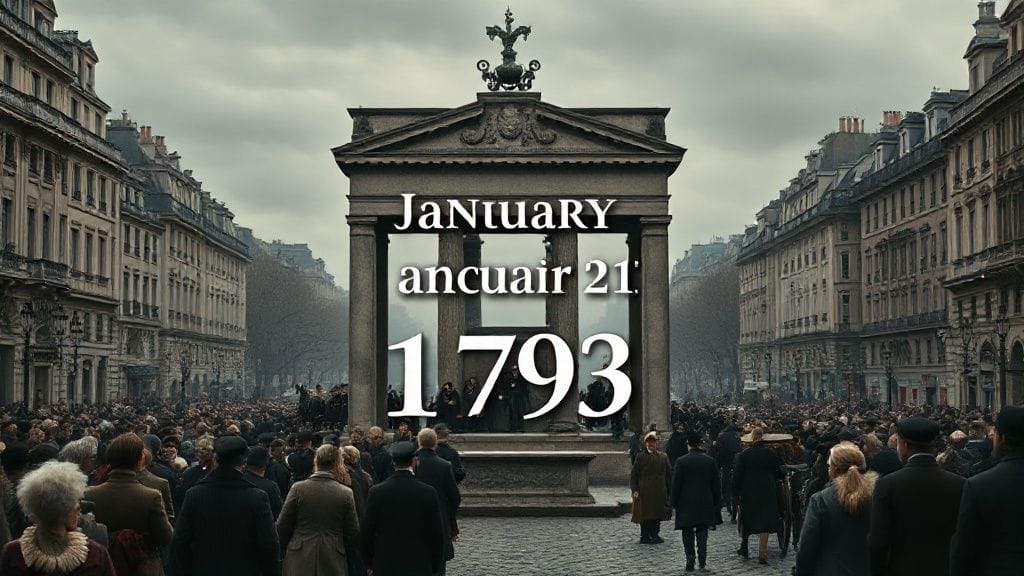
It was a cold, gray morning in Paris, the kind that feels heavy with foreboding. The city’s heartbeat pulsed uneasily beneath a sky smeared with early winter clouds. Down on the Place de la Révolution, thousands gathered, shivering on the cobblestones, their breaths rising in mist as they waited. The guillotine stood tall, an ominous silhouette, its blade freshly sharpened and glinting dully in the pale light. Inside the Conciergerie prison, Louis XVI, once the most powerful monarch in Europe, prepared to face the end of his life. There was no grand farewell or defiant speech. Instead, a subdued man accepted his fate with a quiet dignity that would haunt the annals of history. The execution of Louis XVI was not just the death of a king—it was the death throes of an era.
2. The Tumultuous Road to the Guillotine
Louis-Auguste, the last king of France crowned as Louis XVI, ascended the throne in 1774, inheriting an opulent yet fragile kingdom. Underneath the splendour of Versailles, cracks had begun to appear—debts ballooned from costly wars and royal extravagance, while peasants starved and the middle class clamored for representation. The Estates-General convened in 1789, unwittingly unleashing a revolution that Louis would prove helpless to contain. From the storming of the Bastille to the Flight to Varennes, Louis’s reign spiraled towards an abyss as swift and merciless as the guillotine’s blade.
3. France on the Brink: The Storm of Revolution and War
By the early 1790s, France was a nation in chaos. The ancien régime, with its privileges and rigid social orders, was crumbling. Revolutionary ideals—liberty, equality, fraternity—fanned the flames of dissent but also unleashed waves of violence. The king’s attempted escape and subsequent imprisonment transformed him from a reluctant reformer into a symbol of treachery. Meanwhile, war engulfed Europe as monarchies united to crush the French Republic. In this volatile crucible, the call for justice sharpened into demand for regicide.
4. Louis XVI: From Absolute Monarch to Prisoner of the Republic
Louis XVI’s transformation was dramatic. Once a monarch commanding armies and courtiers, now he was a captive, stripped of power, isolated in the Temple prison. Yet even in captivity, he remained a figure of immense symbolic weight. To some, a martyr; to others, a traitor whose blood would cleanse the nation. His personal demeanor—calm, prayerful, resigned—clashed with the revolutionary rhetoric that painted him as a coward and enemy.
5. The Trial That Shook a Nation: Justice or Revenge?
The trial of Louis XVI in December 1792 was more a political theater than a judicial proceeding. Charges of conspiracy and treason brought by the Girondins and Jacobins alike laid bare the revolutionary fissures. Defended poorly and with limited rights, Louis faced a jury of deputies who debated his guilt feverishly. His measured answers often fell on deaf ears. The critical vote on his death sentence was precariously close—a nation divided between mercy, fear, and the thirst for radical change.
6. The Role of the National Convention: A House Divided
The National Convention embodied the revolutionary tempest. Moderates urged clemency, fearing international backlash and civil war, while radicals saw execution as essential to the Republic’s survival. Figures like Robespierre viewed Louis’s death as a decisive break with monarchy, an act signaling the birth of a new political order. Ultimately, the Convention’s choice reflected a fracturing society teetering on the edge of extremism.
7. Public Opinion and the Press: The King's Fate in the Spotlight
The execution became the focus of daily pamphlets, newspapers, and street conversations. Royalists mourned, conspiracy theories thrived, while revolutionaries celebrated a historic victory. Parisian crowds were fueled by speeches and slogans; the tension between hope for liberty and fear of chaos was palpable. The press shaped narratives—Louis as tyrant or martyr—thus influencing the massive anticipation surrounding the execution.
8. The Execution Unfolded: Scenes on the Place de la Révolution
On that cold morning, Louis was led in a carriage through the streets, past silent witnesses and cheering mobs. His composure was remarkable; he requested his confession be read aloud, asked to speak tender words to the executioner, and showed forgiveness to all. The blade fell swiftly, silencing the last king of France. Yet paradoxically, his death did not conclude the revolution’s violence—it unleashed a new wave of terror.
9. The Guillotine’s Shadow: Ritual, Terror, and Symbolism
The guillotine was never just an instrument of death—it was a symbol powered by ideas of equality and justice. Its brutal efficiency masked a complex ritual that melded modernity with archaic spectacle. The execution of Louis XVI epitomized this paradox: a revolutionary act meant to demonstrate rational justice that also instilled a chilling sense of spectacle and dread across France and beyond.
10. Reactions in Paris: From Celebration to Sobriety
The immediate response in Paris was mixed. Revolutionaries held feasts and parades, viewing the execution as emancipation from tyranny. Yet, beneath the surface, many felt unease—a sober acknowledgment that the killing of a king marked a profound rupture. Even some supporters wondered how it might end, fearing that bloodshed would spiral into unending violence.
11. Europe in Shock: Monarchies at the Edge of Panic
Across borders, the execution triggered fear and outrage. Monarchs felt vulnerable as the old order seemed to crumble. Diplomatic relations shifted as enemies of France coalesced into coalitions aiming to quash revolutionary fervor. Louis’s death was not merely a French tragedy; it was a seismic event shaking the foundations of European power.
12. The Radicalization of the Revolution After the King’s Death
Louis XVI’s execution marked a turning point. The revolution radicalized, inching toward the Reign of Terror. The monarchy’s fall emboldened factions to intensify repression against perceived enemies. Ideals of liberty gained grim undertones; the line between justice and fanaticism blurred as thousands faced the guillotine themselves.
13. The Execution’s Human Cost: Guards, Spectators, and Regicides
Thousands witnessed the event—soldiers, officials, nobles, commoners. Some guards grappled with duties that defied personal loyalty; spectators cried, jeered, or fell silent. The regicides—the deputies who voted for death—carried the burden of history’s judgment, soon facing exile, execution, or disgrace. The execution was not just the king’s death but a collective trauma.
14. The Myth and Memory of Louis XVI: Between Tragedy and Legacy
Louis XVI’s legacy evolved into complex mythologies—some regarded him as a martyr undone by fate and revolution; others as the symbol of an unjust regime. Over centuries, artistic depictions, biographies, and popular remembrances refracted his image through changing ideological lenses, reflecting ongoing debates about monarchy, justice, and revolution.
15. The Revolutionary Calendar and the New France
Just months after Louis’s death, the revolutionary government introduced the Republican calendar, wiping away the old religious and royalist markers of time. This act symbolized France’s dramatic break with its past, attempting to build a new society on secular, rational, and republican principles—an experiment that would last only a decade but forever altered history.
16. The Historic Significance: Why Did It Matter?
Executing a reigning monarch was unprecedented in Western Europe. It signaled a radical rejection of divine right and hereditary power, planting the seeds for modern democracy and nationalism. It symbolized the passage from feudal society to modern political order shaped by the people—not kings.
17. The Guillotine’s Iconography: Death as a Political Statement
The image of the guillotine became a stark emblem of revolutionary justice and terror. Unlike royal executions of old, it promised equality in death, swift and impartial. Yet, it also was a tool of repression, its ubiquity staining the revolution with blood and raising questions about the morality of violent political change.
18. Historians’ Debates: Was the Execution Inevitable?
Scholars have long debated whether Louis XVI’s execution was avoidable or a tragic necessity. Was he a victim of circumstance, misunderstood and weak? Or a monarch who sealed his fate through missteps and stubbornness? These questions linger, underscoring the complexity of revolutionary justice and political morality.
19. The King’s Family: Fate and Exile in the Revolution’s Wake
Marie Antoinette and the royal children endured imprisonment, exile, and death. The queen’s execution in 1793 followed Louis’s fate, while the survival of their offspring sparked dynastic hopes and political intrigue. The personal cost of revolution was borne heavily by the royal family, humanizing the epochal political struggle.
20. The Long Reign of Louis XVI’s Execution in Historical Memory
Nearly two and a half centuries later, the execution remains a haunting symbol. It is commemorated and debated in museums, literature, and public discourse. Louis XVI’s death is both a lesson and a warning about revolution’s promises and perils—the fragility of human power and the volatility of political change.
21. Conclusion: The Final Chapter of the Old Regime and the Rise of the Republic
Louis XVI’s execution was the death knell of the ancien régime and the birth cry of the French Republic. It epitomized the enormous upheaval of the modern era: the battle between monarchy and democracy, privilege and equality. His final moments, etched into history, remind us how the tides of change can sweep away centuries in a single day—where justice, terror, and destiny converge in one fateful act.
FAQs on Louis XVI’s Execution
Q1: Why was Louis XVI executed?
Louis XVI was executed primarily because the revolutionaries viewed him as a traitor who tried to undermine the French Republic by conspiring with foreign powers, especially after his failed flight to Varennes. His death was seen as necessary to ensure the survival of the revolution.
Q2: How did the French public react to the execution?
Reactions were mixed—many revolutionaries celebrated it as the end of tyranny, while royalists mourned deeply. The general populace experienced a range of emotions from jubilation to fear and sorrow.
Q3: What role did the National Convention play in the king’s death?
The National Convention was the revolutionary assembly that tried and sentenced Louis XVI to death. Debates were intense, and the final vote was narrowly in favor of execution without reprieve.
Q4: How did other European monarchies respond?
They were horrified and alarmed; many formed coalitions to oppose the French Republic, fearing revolutionary ideas might spread and threaten their own thrones.
Q5: Did Louis XVI have any final words?
Yes, Louis made a final speech asking forgiveness for any offenses and expressing hope for the peace of the French people. He also declared his faith until the end.
Q6: What happened to Louis XVI’s family after his execution?
His wife, Marie Antoinette, was later executed in October 1793. His children were imprisoned, with varying fates—some died young, while others lived in exile or obscurity.
Q7: How did the execution influence the course of the French Revolution?
It radicalized the revolution, ushering in the Reign of Terror and purges of perceived enemies, as well as solidifying the republic.
Q8: Is the execution of Louis XVI seen as justified today?
Historians remain divided. Some view it as a necessary act to break from tyranny; others see it as a tragic loss that led to excessive violence.