Table of Contents
- The Thronged Streets of Paris: The Day Marie Antoinette Walked to the Scaffold
- The Queen of Contrasts: From Archduchess to French Monarch
- A Childhood Marked by Empire and Expectation
- Marriage of Convenience and Political Alliance: The Union with Louis XVI
- Life at Versailles: Glamour, Gossip, and Growing Discontent
- The French Revolution Ignites: The Fall of a Kingdom
- The Flight to Varennes: Dreams Shattered
- From Crown to Captive: The Royal Family Imprisoned
- The Trial of a Queen: Justice or Revenge?
- The Charges Laid Bare: Treason, Conspiracy, and Decadence
- The Voice Behind the Bars: Marie Antoinette’s Defense
- The Court’s Verdict: Death Sentence Pronounced
- The Last Moments: The Journey to the Guillotine
- A Nation Divided: Reactions Across France and Abroad
- The Guillotine’s Shadow: The Execution’s Tremors Through History
- The Legacy of a Queen: Myths, Rumors, and Reinterpretations
- Feminist Icon or Tragic Victim? The Shifting Image of Marie Antoinette
- The Cultural Afterlife: From Literature to Cinema
- Political Symbolism: How Marie Antoinette’s Death Shaped Revolutionary France
- Reflections on Justice and Revolution: What Marie Antoinette’s Fate Tells Us Today
- Conclusion
- FAQs
- External Resource
- Internal Link
1. The Thronged Streets of Paris: The Day Marie Antoinette Walked to the Scaffold
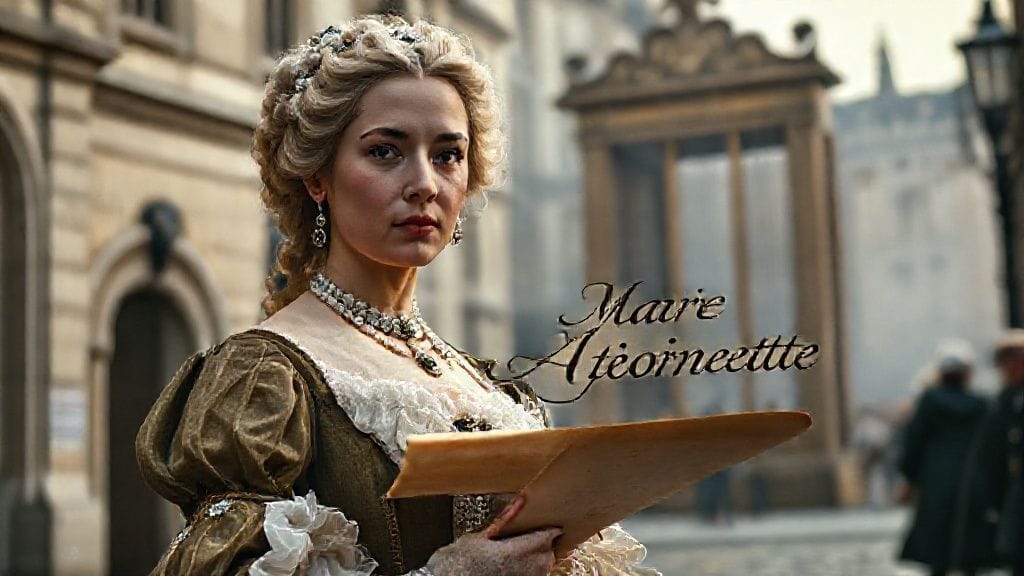
October 16, 1793. The brisk autumn air hung heavy with a mixture of fear, anticipation, and morbid curiosity. Paris was caught in the iron grip of revolutionary fervor, its cobblestone streets lined with masses of citizens, soldiers, and spectators who had gathered to witness a moment both grim and historic—the execution of Marie Antoinette. Draped in a simple white dress, devoid of the jewels and finery that once defined her, the former queen proceeded quietly on foot to the Place de la Révolution. Her figure, once enveloped in royal grandeur, now seemed fragile, yet carried an aura that commanded the attention of a nation at a turning point. This procession was not merely the end of a life but the symbolic execution of the ancien régime itself.
2. The Queen of Contrasts: From Archduchess to French Monarch
Known as the “Austrian woman who ruined France” in the eyes of many revolutionaries, Marie Antoinette remains one of history’s most complex and controversial figures. Born as Maria Antonia Josepha Johanna in 1755, she was married off at 14 to the future King Louis XVI, joining two powerful but often competing dynasties under heavy diplomatic pressure. Her transformation from an impetuous foreign princess to the embodiment of a fading monarchy reflects not only personal struggle but also the inexorable currents of a France that was steadily marching toward upheaval.
3. A Childhood Marked by Empire and Expectation
Wealth, etiquette, and politics shaped Marie Antoinette’s early years in the Habsburg court in Vienna. She was instilled with a strong sense of duty, yet her upbringing was blighted by a loneliness common to royal children, raised under the shadow of dynastic obligations. From a tender age, she was the pawn in the chess game of European powers. The pressure to secure an alliance with France—one of Austria’s historic rivals—was immense, and her marriage was less a personal union and more a diplomatic endeavor intended to stabilize Europe.
4. Marriage of Convenience and Political Alliance: The Union with Louis XVI
When the young Archduchess arrived in France in 1770, expectations clashed with reality. Louis XVI was a shy, indecisive prince, and the French court was a labyrinth of factions and rivalries. Their marriage was slow to blossom emotionally, hampered by personal differences and public scrutiny. Yet, Marie Antoinette quickly became a fashion icon and a symbol of royal opulence. Her lavish spending and foreign demeanor won her admirers but also fierce critics, feeding into the gossip mills and political propaganda that painted her as both frivolous and dangerous.
5. Life at Versailles: Glamour, Gossip, and Growing Discontent
The gilded halls of Versailles seemed to mask a fragile monarchy teetering on the edge of collapse. Marie Antoinette’s reputation as a carefree spendthrift was amplified by enemies and revolutionaries alike. While she held extravagant parties and cherished the arts, the common people of France were burdened by taxes and famine. This disparity between the royal court’s indulgence and the country’s hardship became a tinderbox. As whispers of “Let them eat cake,” although apocryphal, echoed, the queen’s image became a focal point of popular anger.
6. The French Revolution Ignites: The Fall of a Kingdom
By 1789, France was convulsed by political and social crises. The storming of the Bastille ignited a revolution that transcended the monarchy and aristocracy. Marie Antoinette's once-untouchable position became precarious. The royal family’s fate was entwined with the fate of the nation, both drifting into uncertain waters. The queen fluctuated between attempts to negotiate with revolutionaries and periods of retreat into the private chambers of power and influence.
7. The Flight to Varennes: Dreams Shattered
In June 1791, the ill-fated royal escape demonstrated the depths of disconnect between the monarchy and its people. Marie Antoinette and Louis XVI tried to flee Paris in disguise but were captured at Varennes, just hours from the border. This episode shattered what little trust remained and painted the queen definitively as a traitor in many eyes. The illusion of regal invulnerability was broken, replaced by suspicion and bitterness.
8. From Crown to Captive: The Royal Family Imprisoned
Following the monarchy’s downfall in 1792, Marie Antoinette’s life became a series of confinements and humiliations. The queen and her family were held in the Temple prison, deprived of their royal privileges. Letters smuggled out and reports from jail depicted her as both resigned and fiercely defiant. The guillotine loomed ever closer as the revolutionaries accelerated their purge of the ancien régime.
9. The Trial of a Queen: Justice or Revenge?
In October 1793, Marie Antoinette faced the Revolutionary Tribunal. The court was less a forum for impartial justice and more a theater of political vengeance. Accused of treason, colluding with enemy powers, and conspiring to restore monarchy, her trial was a spectacle watched closely at home and abroad. The charges reflected the fear and loathing of a people who had seen their social order upended.
10. The Charges Laid Bare: Treason, Conspiracy, and Decadence
The indictment wove together genuine political concerns and outright propaganda. From financial corruption to illicit intrigues, Marie Antoinette was portrayed as the “Austrian Whore,” a spy for the Habsburgs intent on undermining the republic. Evidence was often circumstantial, and witness testimonies conflicted. Yet the revolutionary climate demanded a scapegoat. Her Austrian origins and perceived moral failings were weaponized to seal her doom.
11. The Voice Behind the Bars: Marie Antoinette’s Defense
Despite the overwhelming tide, Marie Antoinette spoke eloquently in her own defense. She denied charges that tarnished her character and emphasized her role as mother and queen. Witnesses noted her dignity, poise, and resolve even as the walls seemed to close in. Her speeches have been recorded through transcripts and memoirs, revealing a woman both humanized and mythologized by her final stand.
12. The Court’s Verdict: Death Sentence Pronounced
On October 16, 1793, the verdict was delivered: guilty of treason and sentenced to death. The decision echoed through the crowded courtroom and beyond. The queen’s fate was no longer in question. The magistrates had decided not only on a punishment but on symbolically extinguishing a monarch’s lineage and the hopes tied to a vanished world.
13. The Last Moments: The Journey to the Guillotine
Witnesses describe Marie Antoinette’s final hours with striking detail: the cutting of her hair to prepare for the execution, the whispered prayers, the calm acceptance. Her walk to the scaffold was marked by a silent procession; she was led through the same streets where once she had promenaded as a queen. As she ascended the steps beneath the guillotine’s blade, some say she whispered forgiveness, others that she called for her children. Her death resonated as both an end and a powerful new beginning for revolutionary France.
14. A Nation Divided: Reactions Across France and Abroad
News of Marie Antoinette’s execution rippled through Europe. Monarchies trembled, fearing for their own survival. For some revolutionaries, it was justice served; for others, a tragedy. The populace of Paris, fatigued yet fervent, reacted with a mixture of celebration and somber reflection. Internationally, it intensified conflicts and polarized opinions. The queen’s death became a global symbol of the revolution’s ruthless break with the past.
15. The Guillotine’s Shadow: The Execution’s Tremors Through History
Marie Antoinette’s beheading was not merely a personal tragedy; it foreshadowed the Reign of Terror’s bloodshed. The execution demonstrated the revolution’s uncompromising course but also elicited sympathy that complicated the narrative of justice. Historians note how this act influenced revolutionary politics, accelerating radicalism and cleansing factions.
16. The Legacy of a Queen: Myths, Rumors, and Reinterpretations
In death as in life, Marie Antoinette’s image was sculpted by myth. The infamous phrase attributed to her, “Let them eat cake,” was never uttered by the queen, yet the power of rumor endured. Over centuries, portrayals ranged from monstrous aristocrat to misunderstood victim. This transformation underscores society’s shifting perspectives on monarchy, privilege, and revolution.
17. Feminist Icon or Tragic Victim? The Shifting Image of Marie Antoinette
In recent decades, scholars and cultural commentators have revisited Marie Antoinette’s story through new lenses. Some see her as a woman constrained by patriarchal power, navigating impossible expectations. Others debate her complicity in the ancien régime’s failings. Her youth, motherhood, and eventual martyrdom invite empathy and critical reexamination, complicating simplistic condemnations.
18. The Cultural Afterlife: From Literature to Cinema
Marie Antoinette’s story has inspired novels, films, operas, and art. From the romanticized portraits of the 19th century to Sofia Coppola’s 2006 film capturing her early courtship and indulgences, her figure remains deeply embedded in popular imagination. These retellings shape collective memory and raise questions about historical representation and myth-making.
19. Political Symbolism: How Marie Antoinette’s Death Shaped Revolutionary France
Her execution symbolized the republic’s victory over monarchy, yet it also revealed the contradictions within revolutionary ideals. The brutality of the guillotine coexisted with visions of liberty and equality. Marie Antoinette became, paradoxically, both a warning and a martyr, her fate reflecting the revolution’s conflicted moral compass.
20. Reflections on Justice and Revolution: What Marie Antoinette’s Fate Tells Us Today
Looking back, her death forces us to confront darker questions about justice in times of turmoil. Was her execution necessary or avoidable? How do revolutions reconcile the demands for change with human rights? Marie Antoinette’s story remains a cautionary tale about the costs of political upheaval, the perils of demonization, and the resilience of historical memory.
Conclusion
Marie Antoinette’s final journey to the scaffold was more than the death of a queen; it was the dramatic denouement of an epoch defined by radical change. Through the tumult of revolution, she transformed from a foreign princess into a figure of intense national and international significance. Her life and death encapsulate the human dimension of political cataclysm, where personal tragedy intertwines with the fateful tides of history. Ultimately, Marie Antoinette stands as a symbol of the fragility of power, the dangers of extremism, and the enduring human quest for justice and dignity amid upheaval.
FAQs
1. Why was Marie Antoinette executed?
Marie Antoinette was executed primarily on charges of treason and conspiracy against the French Republic. Revolutionaries accused her of colluding with foreign powers and attempting to undermine the revolution.
2. Was the trial fair?
The trial was highly politicized and lacked many elements of due process by modern standards. It was more a spectacle of revolutionary justice than an impartial hearing.
3. What role did Marie Antoinette play in the lead-up to the French Revolution?
Though symbolizing royal excess, Marie Antoinette's direct political influence was limited. She was often scapegoated for broader systemic issues and financial crises.
4. How did the French public view Marie Antoinette?
Public opinion was deeply divided. Many viewed her as a symbol of decadence and foreign influence, while some retained sympathy for her plight as a queen and mother.
5. What impact did her execution have on Europe?
Her death sent shockwaves through the monarchies of Europe, heightening fears of revolutionary contagion and prompting political and military reactions.
6. How has Marie Antoinette’s image evolved over time?
From villain to martyr to cultural icon, her legacy has been reinterpreted in various ways reflecting changing social and political attitudes.
7. Was “Let them eat cake” really said by Marie Antoinette?
No credible historical evidence supports that she ever uttered this phrase. It was likely propaganda used to fuel revolutionary sentiment.
8. Where can I learn more about Marie Antoinette and the French Revolution?
Historical books, documentaries, and reputable online resources such as the linked Wikipedia page provide in-depth information.