Table of Contents
- The Fateful Day: June 21, 1582 in Kyoto
- The Rise of Oda Nobunaga: From Provincial Warlord to Powerbroker
- Japan in Turmoil: The Sengoku Period’s Chaotic Canvas
- Nobunaga’s Vision: Unifying Japan under a New Order
- The Intrigue of Honno-ji Temple: A Sanctuary Turned Trap
- Akechi Mitsuhide’s Betrayal: The Seeds of Treason
- The Night of the Coup: Flames Engulfing Nobunaga’s Sanctuary
- Nobunaga’s Final Hours: Courage, Defiance, and Mystery
- Aftermath in Kyoto: Shockwaves Through the Samurai World
- Mitsuhide’s Short-Lived Triumph: From Traitor to Target
- The Rise of Toyotomi Hideyoshi: Turning Betrayal into Unification
- The Political Earthquake: How Nobunaga’s Death Shifted Power Balances
- Cultural Echoes: Nobunaga’s Legacy in Japanese Arts and Letters
- Myth, Legend, and Memory: The Many Faces of Nobunaga’s End
- The Modern Perspective: Historians’ Debates and New Findings
- What If? Speculating on a Japan without Nobunaga’s Assassination
- The Samurai Code and Honor in the Midst of Treachery
- Foreign Eyes: European Observers and the Impact on Missionaries
- Architecture and Warfare: Nobunaga’s Revolutionary Strategies
- Philosophy and Religion: Nobunaga’s Conflict with Buddhist Sects
- The Geography of Betrayal: Kyoto and Its Historic Political Landscape
- Legacy in Popular Culture: From Cinema to Manga
- Conclusion
- FAQs
- External Resource
- Internal Link
1. The Fateful Day: June 21, 1582 in Kyoto
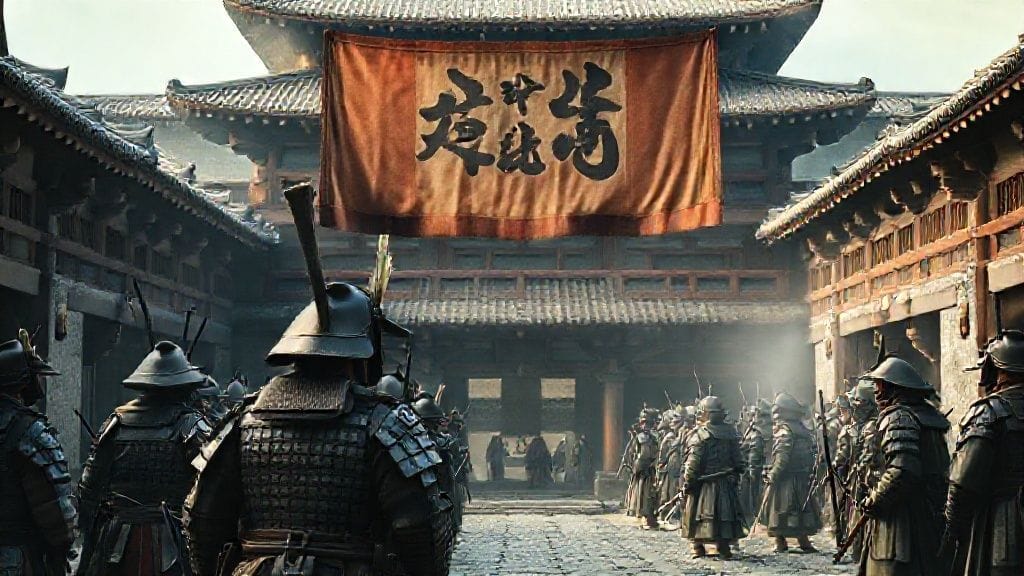
The night air hung thick with smoke, the scent of burning wood pierced the cool Kyoto breeze. Flames licked the wooden temple’s eaves, casting ominous shadows against the deep blue sky. Within the sanctuary of Honno-ji temple, chaos reigned—but amidst the turmoil stood a figure of towering presence: Oda Nobunaga. The warlord, known across Japan as both visionary and ruthless, found himself surrounded by betrayal and fire, a hunted man caught in a midnight trap.
This was no ordinary skirmish. It was an act that would shake the foundations of a fractured nation—a betrayal so profound it echoed through centuries. Nobunaga's assassination on that June night marked an end and a beginning: the violent close of an era and the chaotic stepping-stone toward a unified Japan.
But to understand the full gravity of that night, one must first journey through the turbulent roads leading there—a saga of ambition, war, trust, and betrayal in a land torn apart by endless conflict.
2. The Rise of Oda Nobunaga: From Provincial Warlord to Powerbroker
Born in 1534 in the province of Owari, Oda Nobunaga was far from a destined ruler. The son of a lesser daimyo, his early years were cloaked in conflict and instability. But even as a young man, Nobunaga bore the rebellious streak that would define him—nicknamed “the Fool of Owari” for his unorthodox tactics and blunt demeanor.
Yet beneath that brash exterior lay a cunning strategist. By dismantling rival clans, employing innovative military tactics, and embracing foreign technology and ideas such as firearms, Nobunaga rapidly expanded his influence. His march toward central authority was swift and brutal, marked by both vision and cruelty.
By the 1570s, he controlled a significant slice of central Japan. More than that, Nobunaga brought a distinctive fervor to the unification effort, not simply by conquest, but through fostering new social orders, weakening religious sects that opposed him, and pioneering political reforms.
3. Japan in Turmoil: The Sengoku Period’s Chaotic Canvas
The era in which Nobunaga lived is known as the Sengoku Jidai—the “Age of Warring States”. Japan fractured into hundreds of feuding domains ruled by competing warlords, each vying for power amid shifting alliances, brutal battles, and deep-seated political rivalries.
This century-and-a-half-long period of internecine strife eradicated old systems and gave rise to new orders. It was a time when samurai culture flourished amid violence, castles rose on hilltops as symbols of power, and the old aristocracy crumbled.
Nobunaga was a child of this era, yet he dreamed beyond it: a Japan unified under a single strong ruler, where peace might finally be possible. His military campaigns crushed enemies, but his vision reached beyond mere conquest—it heralded modernization, secularization, and central governance.
4. Nobunaga’s Vision: Unifying Japan under a New Order
Unlike many of his contemporaries, Nobunaga sought to break not only the military but the socio-political chains of the past. He challenged the authority of militant Buddhist sects like the Ikko-ikki, destroyed powerful clans, and welcomed Western traders and missionaries who introduced guns and Christianity.
He was a figure of contradictions: both brutal and enlightened, traditional samurai and modernizer. Nobunaga’s ambition was not merely to amass land, but to remake Japan’s political landscape. His castle in Gifu became a cultural and military hub—a beacon of this new order.
Yet, the more he tightened his grip, the more enemies he made, both within the samurai elite and religious orders feeling threatened by his reforms.
5. The Intrigue of Honno-ji Temple: A Sanctuary Turned Trap
In June 1582, Nobunaga found himself in Kyoto, under the pretense of preparing for further campaigns. He took refuge at Honno-ji temple, not far from the city's imperial heart.
The choice of Honno-ji is telling. Temples were places of sanctuary, protected by oaths and tradition. Yet this sanctuary would turn tragic. On the night of June 21, his trusted general, Akechi Mitsuhide, betrayed him.
Most accounts suggest Mitsuhide surrounded the temple with his forces, catching Nobunaga off guard. The flames that consumed Honno-ji were the flames that consumed a dream.
6. Akechi Mitsuhide’s Betrayal: The Seeds of Treason
Who was Akechi Mitsuhide? Loyal retainer or ambitious opportunist? The question has haunted historians for centuries.
Mitsuhide had served Nobunaga faithfully for years, rising through the ranks due to his intelligence and courage. But tensions between lord and retainer had grown. Some suggest personal insults, possible land disputes, or rivalries fractured this bond. Others speculate a broader political conspiracy.
Whatever the cause, Mitsuhide’s betrayal was swift and total: his forces struck Honno-ji at dusk, cutting off Nobunaga’s escape and setting the temple ablaze.
7. The Night of the Coup: Flames Engulfing Nobunaga’s Sanctuary
Witnesses recount a desperate and harrowing scene. Caught unarmed, with few retainers nearby, Nobunaga faced the onslaught directly. Rather than surrender, he chose death on his own terms.
Reports suggest that Nobunaga committed seppuku—a ritual suicide—or was killed during the chaos. The temple burned through the night, smoke spiraling into Kyoto’s sky as Mitsuhide’s soldiers secured their bloody victory.
But even in death, Nobunaga’s final moments remain shrouded in mystery and legend—did he fight to the end, or flee briefly before his death? History offers a tantalizing silence.
8. Nobunaga’s Final Hours: Courage, Defiance, and Mystery
The accounts of his last hours reveal a man unbowed. Even surrounded by fire and traitors, he reportedly remained calm and resolute.
One famous anecdote tells of Nobunaga calmly writing a poem before his death, accepting fate with dignity. Another narrates his refusal to let his enemies capture him alive—a mark of the samurai’s honor.
Yet the darkness of that night also fuels countless myths: secret escapes, hidden heirs, and enduring curses. It is as if Nobunaga’s death transcended mere fact to become a symbol of Japan’s turbulent soul.
9. Aftermath in Kyoto: Shockwaves Through the Samurai World
Kyoto awoke stunned. The sudden death of the man many saw as the unifier of Japan left a power vacuum and ignited waves of fear and uncertainty.
Nobunaga’s allies were unprepared. Some fled, others scrambled to secure their positions. The political chessboard shifted immediately as warlords recalibrated allegiances, fearful of Mitsuhide’s next move.
The city, once a hub of peace and courtly life, now burned with political tension. The assassination was a catalyst for chaos and a scramble for dominance.
10. Mitsuhide’s Short-Lived Triumph: From Traitor to Target
Mitsuhide, in assuming power, had underestimated the depth of Nobunaga’s network. Within days, Toyotomi Hideyoshi, Nobunaga’s loyal general, mobilized a swift and ruthless counterattack.
At the Battle of Yamazaki, Mitsuhide’s forces were crushed, and the traitor himself perished shortly after. His reign lasted a fragile thirteen days—a blink in history, but a moment charged with consequence.
This rapid collapse underscored Nobunaga’s formidable legacy: even in death, he molded the path of Japan’s reunification.
11. The Rise of Toyotomi Hideyoshi: Turning Betrayal into Unification
Toyotomi Hideyoshi, once a foot soldier, rose spectacularly through the shadows of Nobunaga’s demise. His quick and decisive action after the assassination propelled him toward dominance.
Hideyoshi captured Kyoto, consolidated Nobunaga’s territories, and pursued Nobunaga’s dream of unification. Through a blend of diplomacy, warfare, and strategic marriages, he expanded his power, ultimately controlling all of Japan.
His reign completed the work Nobunaga began—a testament to the enduring influence of the fallen warlord.
12. The Political Earthquake: How Nobunaga’s Death Shifted Power Balances
Nobunaga’s assassination was not merely the murder of a leader, but a seismic event reshaping Japanese politics. Feudal lords reevaluated loyalties; the imperial court maneuvered for influence; religious sects recalibrated their positions.
It highlighted the fragility of power founded on personal loyalty, as well as the brutal realities of Sengoku politics. Nobunaga’s death exposed the vulnerabilities even the most formidable warlords faced.
Yet paradoxically, his policies and vision lived on, propelling Japan toward peace.
13. Cultural Echoes: Nobunaga’s Legacy in Japanese Arts and Letters
More than a warrior, Nobunaga inspired poets, artists, and chroniclers. His clash with Buddhist institutions, patronage of European missionaries, and architectural innovations left deep cultural footprints.
He championed the tea ceremony’s rise by supporting masters like Sen no Rikyu, whose art embodied harmony in a chaotic world—themes mirroring Nobunaga’s quest for order.
Centuries later, Nobunaga would emerge in literature and theatre as a complex figure: tyrant, hero, visionary—his legacy refracted through art’s evolving lens.
14. Myth, Legend, and Memory: The Many Faces of Nobunaga’s End
The story of Nobunaga’s death has been retold countless times—sometimes with accuracy, others steeped in myth.
The “Demon King” nickname paints him as a ruthless overlord; yet tales of his humility and charisma tell another story. Folklore adds ghosts haunting Honno-ji, secret escapes to distant lands, even connections to esoteric spirituality.
Memory turned Nobunaga into a symbol: of ambition, tragedy, and the eternal struggle between fate and will.
15. The Modern Perspective: Historians’ Debates and New Findings
Modern historiography wrestles with Nobunaga’s assassination, parsing sources and questioning established narratives.
New archaeological digs at Honno-ji and reinterpretations of letters from the era shed light on the complexity of the conspiracy. Some scholars argue for wider political plots; others emphasize personal vendettas.
The ongoing dialogue highlights history’s fluidity—how each generation re-examines the past, seeking truths buried in fire and shadow.
16. What If? Speculating on a Japan without Nobunaga’s Assassination
Had Nobunaga survived Honno-ji, what might Japan have become?
Perhaps the Sengoku chaos would have ended sooner, with Nobunaga’s iron-fisted reforms accelerating modernization. Or maybe his brutal methods would have sparked deeper resistance.
These “what ifs” capture our fascination with history’s forks in the road—unfolding alternate Japan, stranger than fiction, but delicately balanced on that June night’s flames.
17. The Samurai Code and Honor in the Midst of Treachery
Nobunaga’s death poses profound questions about bushidō—the samurai code of honor. Mitsuhide’s betrayal was a breach of loyalty, yet contextualized by samurai politics full of shifting allegiances.
Nobunaga himself stretched ethical boundaries—combining ruthless pragmatism and personal charisma. His death at a temple, traditionally a sacred and protected space, underscored the collapse of old rules amid Sengoku’s chaos.
It’s a story of honor, betrayal, and the fragile morality in times of war.
18. Foreign Eyes: European Observers and the Impact on Missionaries
At the time of Nobunaga’s death, Jesuit missionaries flourished in Japan, supported by his openness to Christianity.
European letters from this period reflect shock and cautious optimism. The assassination threatened this fragile alliance between Japan and Europe’s newcomers.
Nobunaga’s death shifted foreign relations, forcing missionaries and traders to navigate a volatile political landscape anew.
19. Architecture and Warfare: Nobunaga’s Revolutionary Strategies
Nobunaga revolutionized Japanese warfare—notably through his use of firearms and castle construction.
His Azuchi Castle, a towering fortress blending military innovation and aesthetic grandeur, symbolized his ambitions.
His tactics—mobilizing arquebusiers in volley fire, rapid castle sieges, and inorganic armies—foreshadowed modern warfare and secured his dominance in battle.
His death interrupted but did not end this transformation.
20. Philosophy and Religion: Nobunaga’s Conflict with Buddhist Sects
Nobunaga’s clashes with militant Buddhist sects like the Ikko-ikki were both religious and political.
He saw their power as an obstacle to central authority and frequently leveled temples, including the destructive Siege of Mt. Hiei.
His assassination at Honno-ji, itself a temple, ironically mirrored these conflicts. The battle between spiritual authority and military power shaped much of his rule.
21. The Geography of Betrayal: Kyoto and Its Historic Political Landscape
Kyoto, Japan’s ancient capital, was the ceremonial heart of imperial power but deluged by Sengoku’s chaos.
Hosting Nobunaga at Honno-ji placed him strategically close to the emperor but into a city crowded with spies, allies, and foes.
The city's topography—its narrow streets, dense buildings—facilitated Mitsuhide’s act. Kyoto was not just backdrop, but active stage of history’s cruel twist.
22. Legacy in Popular Culture: From Cinema to Manga
Oda Nobunaga’s dramatic life and death have captured imaginations worldwide.
Japanese cinema has portrayed him variously as demon and hero—epic films dramatize Honno-ji’s betrayal with cinematic flare.
Manga and video games like “Samurai Warriors” keep his legend alive for new generations, blending fact and fiction into cultural memory.
23. Conclusion
The assassination of Oda Nobunaga at Honno-ji remains one of history’s most gripping tragedies—a moment where ambition met betrayal, and a nation’s fate hung in the balance. His death tore the fragile seams of Sengoku Japan but propelled others to carry forth his dreams, shaping a unified Japan. Through the smoke and flames of that dark Kyoto night, Nobunaga’s spirit continues to challenge and inspire—reminding us of the human drive for power, the costs of betrayal, and the complex dance between history and myth.
24. FAQs
Q1: Who was Oda Nobunaga and why was he important?
A1: Oda Nobunaga was a powerful 16th-century Japanese warlord who began the process of unifying Japan after decades of civil war—known for his military innovations and disrupting established religious powers.
Q2: What led to Nobunaga’s assassination at Honno-ji?
A2: The betrayal by his general Akechi Mitsuhide, likely driven by personal grievances and political ambition, led to a surprise attack on Nobunaga while he was resting in Honno-ji temple.
Q3: How did Nobunaga’s death affect the political landscape?
A3: His death caused immediate instability but was quickly exploited by Toyotomi Hideyoshi, who continued Nobunaga’s unification efforts, eventually controlling the entire country.
Q4: Was Nobunaga’s assassination typical of the Sengoku period?
A4: While treachery was common in this era of constant warfare and shifting alliances, Mitsuhide’s betrayal at a religious sanctuary was particularly shocking.
Q5: What is known about Akechi Mitsuhide’s motives?
A5: Motives remain debated; they range from personal vendettas, desire for power, to political disagreements, but no definitive conclusion exists.
Q6: How is Nobunaga remembered in Japanese culture?
A6: He is a complex figure, sometimes seen as a ruthless tyrant, other times as a visionary unifier, inspiring countless depictions in art, literature, film, and popular media.
Q7: Did Nobunaga’s policies continue after his death?
A7: Yes, many of his reforms and military strategies were adopted and expanded upon by his successors, especially Toyotomi Hideyoshi.
Q8: Can visitors today see Honno-ji temple?
A8: Yes, Honno-ji still stands in Kyoto, rebuilt after the fire, serving as a historical site commemorating Nobunaga’s final stand.