Table of Contents
- A Final Breath in the Land of the Rising Sun
- The Twilight of a Shogun: Tokugawa Ieyasu’s Last Days
- The Man Behind the Legend: Ieyasu’s Rise to Power
- Japan on the Verge of a New Era
- The Creation of a Shogunate: Consolidating Authority
- Sumpu: The Silent Witness to an Emperor’s Farewell
- The Significance of June 1st, 1616
- Rituals, Symbolism, and the Shogun’s Passing
- The Shadow of Death in Early Edo Japan
- Political Reverberations After Ieyasu’s Demise
- The Inheritance: Hidetada and the Continuity of Tokugawa Rule
- Cultural Reflections on Ieyasu’s Legacy
- The Tomb and the Memorial: Sumpu as Sacred Ground
- How Ieyasu’s Death Shaped Japan’s Isolationist Policies
- The Shogunate’s Role in Cementing a Century of Peace
- Ieyasu in Memory and Myth: The Making of a National Icon
- Japan’s Transition from Warring States to Stability
- The Global Context: Japan’s Place in the Early 17th Century
- The Historical Debate: Was Ieyasu’s Death the End or a Beginning?
- Echoes of the Past: Tokugawa Ieyasu’s Continuing Influence
1. A Final Breath in the Land of the Rising Sun
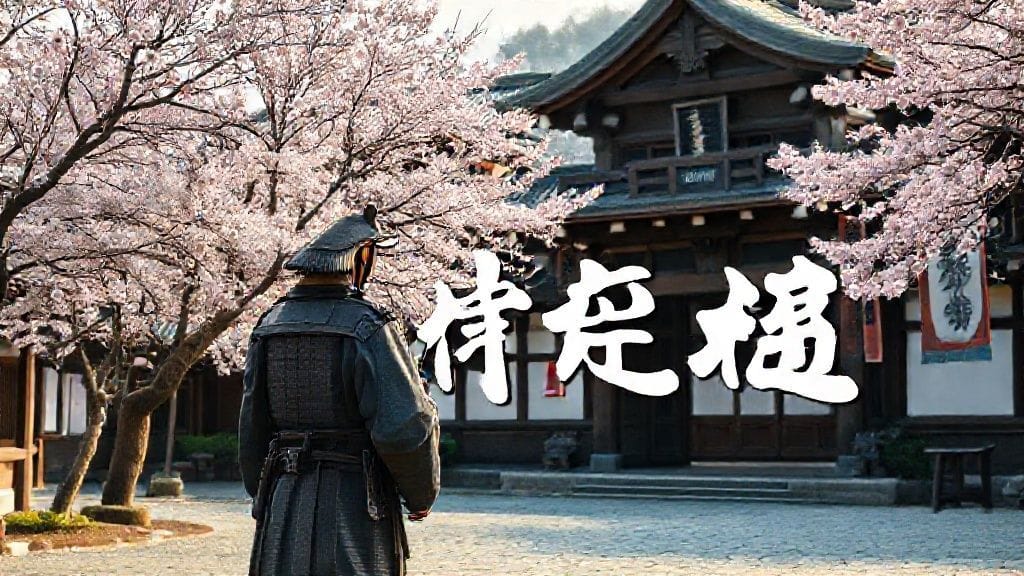
On the quiet morning of June 1, 1616, beneath the calm and verdant skies of Sumpu—present-day Shizuoka—a man whose name would become synonymous with the unification and peace of Japan drew his last breath. Tokugawa Ieyasu, the formidable shogun who had stitched together fractured clans into a singular, powerful state, succumbed not to the bloodshed he had orchestrated during his ascent but to the inexorable passage of time and mortal frailty. Within the walls of his Sumpu castle, vestiges of his once fiery ambition settled into stillness. Birds sang, and the breeze carried the scent of pine and cherry blossoms—an ephemeral backdrop to an end that would redirect the course of Japan’s destiny.
Ieyasu’s death was not merely a private event; it was the fading of a colossus whose decisions and vision had shaped the political, social, and cultural fabric of early 17th-century Japan. The atmosphere was tinged with an almost mystical gravity, one that resonated far beyond the castle’s stone walls, rippling through the daimyo courts, merchants’ quarters, and peasant fields. Japan stood at the precipice of a new era—one promised by the shogun’s lifetime of military mastery and political acumen, but fraught with fresh challenges for his successors.
2. The Twilight of a Shogun: Tokugawa Ieyasu’s Last Days
Ieyasu’s final days were marked by a deliberate withdrawal from public life, a man acutely aware of the weight of his mortality. Accounts from contemporary chroniclers recount a shogun who meticulously prepared for his death—not simply as an end but as a passage towards securing the future stability of Japan. The shogun retired to his castle in Sumpu, removed from the hubbub of Edo’s political center, chosen as a stage where the final act of a grand political drama would unfold with measured solemnity.
Despite his significant health decline, Ieyasu remained mentally lucid and engaged. He issued final directives to his family and trusted retainers, emphasizing unity and peace, stressing the importance of safeguarding the system he had built. His last instructions reflected not only the concerns of a ruler but the reflections of a man who had seen decades of warfare and desired a different path for his country—one grounded in order rather than chaos.
3. The Man Behind the Legend: Ieyasu’s Rise to Power
To truly grasp the poignancy surrounding Ieyasu’s death, one must retrace his remarkable journey from a young boy pledged as a hostage to rival clans, to the unrivaled military genius of his time. Born in 1543 as Matsudaira Takechiyo, Ieyasu’s early years were marked by political instability and constant threat. Through a mixture of patience, pragmatism, and shrewd alliances, he navigated the turbulent Sengoku period—a time when Japan was fragmented, and warlords fought relentlessly for control.
Ieyasu’s story is woven with strategy and diplomacy. His alliances with powerful figures such as Oda Nobunaga and Toyotomi Hideyoshi were critical stepping stones. Yet after Hideyoshi's death, Ieyasu seized a historic opportunity; his decisive victory at the Battle of Sekigahara in 1600 laid the groundwork for the Tokugawa shogunate, ushering in over 250 years of relative peace and stability known as the Edo period.
4. Japan on the Verge of a New Era
The death of Ieyasu coincided with a Japan at once transformed and fragile. The endless wars that had ravaged the land were giving way to centralized rule, urban growth, and increasing cultural sophistication. Yet beneath this veneer of calm, regional rivalries and hidden dissent simmered, waiting to test the robustness of Ieyasu’s legacy.
The Tokugawa regime had introduced a stringent class system and strict social codes intended to prevent the resurgence of unruly conflict. Peace came with a price: isolationism, surveillance, and a rigid hierarchy that restrained the ambitions of many. Ieyasu’s death posed an existential question—would the Tokugawa dynasty endure this critical juncture, or would internal fractures emerge to unravel the order he had forged?
5. The Creation of a Shogunate: Consolidating Authority
Ieyasu’s vision extended beyond winning battles; he was a master architect of political stability. The institution of the Tokugawa shogunate was his crowning achievement—a system that balanced direct control over strategic domains with indirect oversight through a network of loyal vassals. Centralized power in Edo (modern-day Tokyo) and control over the daimyo lords created a structured society markedly different from the chaos of prior centuries.
His reforms encompassed legal codes, administrative frameworks, and even cultural patronage, embedding Confucian ideals and rituals that fortified his authority. Ieyasu’s death thus symbolized a critical test of this system: would it survive on the strength of his policies and institutions, or unravel without his personal charisma and military prowess?
6. Sumpu: The Silent Witness to an Emperor’s Farewell
Sumpu Castle, perched amid fertile plains and mountainous beauty, held a special status in Ieyasu’s life. Though Edo was the political capital, Sumpu was his retirement residence and the site of his death. It symbolized both reflection and transition—a place where the shogun could orchestrate his final legacy away from the battlefield’s roar.
The castle bore witness to Ieyasu’s last moments, but also to an intricate farewell ceremony steeped in meaning. Its grounds became hallowed, destined to house the shogun’s tomb and shrine. Yet Sumpu was more than a mere backdrop; here, tradition and power converged in a poignant tableau as Japan prepared for a new chapter.
7. The Significance of June 1st, 1616
The choice of June 1st as the day marking Ieyasu’s death is etched indelibly in the annals of Japanese history. Medieval Japanese calendars, rooted in lunar cycles and astrological principles, bestowed particular importance on the timing of life events. Ieyasu’s passing on this precise day held symbolic resonance interpreted by contemporaries as an auspicious transition rather than a mere end.
On that day, courtiers and retainers performed solemn rites, blending Buddhist and Shinto practices to honor the shogun’s spirit. The harmonious blend of religious and secular traditions underscored the pivotal role Ieyasu embodied—as both political overlord and almost sacred figure guiding the fate of the nation.
8. Rituals, Symbolism, and the Shogun’s Passing
Japanese death rituals are intricate tapestries of spirituality and social order. For Tokugawa Ieyasu, the rituals surrounding his death were on a grand scale, reflecting his elevated status and the political necessity of fostering legitimacy for his heirs.
His posthumous name, “Tōshō Daigongen,” reflects the belief that he became a protective deity, rising beyond mortal constraints to safeguard Japan eternally. The creation of the Nikko Tōshō-gū shrine, some years after his death, became a pilgrimage site, reinforcing both spiritual continuity and political symbolism.
The processions, offerings, memorial feasts, and public declarations reinforced the narrative of an eternal Ieyasu—one whose soul was constant in guiding the Tokugawa house and by extension, the entire nation.
9. The Shadow of Death in Early Edo Japan
Death, in the context of early 17th-century Japan, was not merely a biological fact but a profound cultural and political moment. The shogun’s death intensified anxieties and hopes alike. It was a time when samurai codes, loyalties, and divine favor were scrutinized intensely.
As news spread, the political landscape shifted cautiously but inexorably. Lords pondered alliances and succession; common folk murmured prayers for stability—aware, as perhaps never before, that this passing might herald both continuity and change. The ever-present shadow of mortality, deeply rooted in Buddhist philosophy, reminded everyone that even the mightiest were bound to the cyclical nature of life and death.
10. Political Reverberations After Ieyasu’s Demise
Ieyasu’s death sent ripples through the corridors of power. His successor, Tokugawa Hidetada—his son—faced the daunting challenge of upholding the settlement his father had wrought. Consolidating power depended not simply on inheritance but on managing the delicate balance among rival daimyo, the imperial court, and religious stakeholders.
Internal plots and subtle power shifts emerged, revealing that the Tokugawa peace, however engineered, required vigilant stewardship. The shogunate responded with tightened regulations, increased surveillance, and expanded bureaucratic institutions to stabilize governance.
11. The Inheritance: Hidetada and the Continuity of Tokugawa Rule
Hidetada’s reign was fundamentally shaped by the weight of his father’s legacy. Though lacking Ieyasu’s battlefield genius, he forged his own path—focusing on internal administration, legal codification, and cultural patronage.
His successful succession reaffirmed the legitimacy of the Tokugawa regime and underscored the importance of institutional continuity over individual charisma. Under Hidetada, the foundations laid by Ieyasu were fortified, ensuring the shogunate’s grip on power for generations.
12. Cultural Reflections on Ieyasu’s Legacy
Beyond politics, Ieyasu’s impact on Japanese culture was profound. His reign coincided with a flowering of arts, literature, and philosophy governed by the ideals of order, hierarchy, and Confucian ethics.
The Edo period’s distinctive cultural identity—marked by ukiyo-e woodblock prints, Noh theater, tea ceremony, and urban sophistication—found its roots in the peace and stability granted by the Tokugawa order. Ieyasu’s death became a moment of cultural reflection, a collective pause that honored both the man and the transformational era he inaugurated.
13. The Tomb and the Memorial: Sumpu as Sacred Ground
Sumpu is more than a historical site; it is a shrine of memory and reverence. Ieyasu’s tomb there became a focal point for pilgrimages, rituals, and historical conscience—a tangible reminder of a man turned legend.
Designed with careful symbolism, the tomb embodies the interplay between Shinto and Buddhist traditions and the political statement of Tokugawa permanence. It stands as a serene monument that anchors Japan’s history, inviting reflection on mortality, power, and legacy.
14. How Ieyasu’s Death Shaped Japan’s Isolationist Policies
One of the long-term consequences of Ieyasu’s passing was the solidification of policies that would isolate Japan from much of the outside world. The sakoku (closed country) policy, implemented by his successors, was influenced by concerns over internal stability and external threats—factors particularly salient after the uncertainty created by the transition of power.
Ieyasu himself had balanced engagement and caution regarding European traders and missionaries. His death, however, precipitated a more conservative approach, leading to strict controls over foreign influence that shaped Japan’s trajectory for centuries.
15. The Shogunate’s Role in Cementing a Century of Peace
The peace ushered in by the Tokugawa shogunate—known as the Pax Tokugawa—was remarkable in its duration and stability. Ieyasu’s death was a pivotal moment in transforming Japan from a land riven by incessant conflict into a society where commerce, culture, and governance flourished.
While challenges persisted, the absence of large-scale warfare was a testament to the effectiveness of the institutions and social structures he had established. It was a peace hard-won and carefully maintained—one that would craft modern Japan’s foundations.
16. Ieyasu in Memory and Myth: The Making of a National Icon
Through centuries of retelling, Tokugawa Ieyasu’s image has oscillated between ruthless warlord and sage ruler, human and deity. Folklore, literature, and modern scholarship have examined his life and death with a mixture of awe and critique.
The posthumous divinity accorded to him underscores a uniquely Japanese blend of history and myth-making, illustrating how death can transform a mortal legacy into enduring national identity.
17. Japan’s Transition from Warring States to Stability
Ieyasu’s death symbolizes the closing of the Sengoku period—a century and a half of fragmentation and near-constant warfare—and the dawn of a new order. This transition was not just political but social and cultural, redefining Japan’s place in the world and the daily lives of its people.
From samurai to merchants, from peasants to nobles, the changes wrought during Ieyasu's lifetime reverberated throughout the fabric of the nation, making his death a significant historical waypoint.
18. The Global Context: Japan’s Place in the Early 17th Century
In 1616, the world was entering a new age of global exploration, colonization, and trade. While European powers extended their reach, Japan’s internal consolidation under the Tokugawa family positioned it uniquely—a powerful, isolated island nation cautiously engaging with the outside world.
Ieyasu’s death occurred amid this complex international backdrop, where trade, religion, and diplomacy intersected with the domestic politics of an evolving Japan.
19. The Historical Debate: Was Ieyasu’s Death the End or a Beginning?
Historians continue to debate the implications of Ieyasu’s death. For some, it marked the end of an era dominated by a singular force of personality; for others, it heralded the solidification of a system that transcended individuals.
Was the Tokugawa shogunate truly the product of Ieyasu’s vision alone, or did his death necessitate adaptation and evolution? This question remains central to understanding the trajectory of early modern Japan.
20. Echoes of the Past: Tokugawa Ieyasu’s Continuing Influence
Today, the echoes of Ieyasu’s life and death resound in Japan’s political culture, historical memory, and national identity. From textbooks to festivals, from shrines to popular media, his legacy permeates.
The death of Tokugawa Ieyasu remains not simply a historical event but a profound narrative about leadership, mortality, and the shaping of a nation—an enduring testament to the delicate balance between power and time.
Conclusion
Tokugawa Ieyasu’s death on June 1, 1616, was far more than the passing of an elderly shogun—it was the closing chapter of a tumultuous epoch and the opening of a period of unprecedented peace and order in Japan. His final breaths in the calm gardens of Sumpu forged a transition that would define Japan for centuries. The man who had once been a hostage became the architect of a shogunate that restrained the urge to war and crafted a society shaped by discipline, culture, and hierarchical harmony.
Yet behind the stone walls of his tomb lies the persistent question that shadows all human endeavor: How much of history is molded by individuals, and how much by the ideas and institutions they leave behind? For Japan, Tokugawa Ieyasu’s death was both an end and a beginning—an immortal legacy etched into the soul of a nation balancing tradition with change. It reminds us that in every ending resides the seed of renewal, and in every legacy, the story of humanity’s ceaseless journey through time.
FAQs
Q1: Who was Tokugawa Ieyasu and why is he significant?
Tokugawa Ieyasu was the founder of the Tokugawa shogunate, the military government that ruled Japan from 1603 to 1868. He unified Japan after a century of civil war, establishing peace and stability that lasted over two centuries.
Q2: What were the circumstances of Tokugawa Ieyasu’s death?
Ieyasu died peacefully on June 1, 1616, at his retirement residence in Sumpu. His death was the result of natural causes, likely illness and old age, after he had carefully prepared his succession and political legacy.
Q3: How did Ieyasu’s death impact Japanese politics?
His death prompted a period of transition and consolidation as his son, Tokugawa Hidetada, took over leadership. The Tokugawa system continued to strengthen, implementing policies that secured peace and centralized authority.
Q4: What role did Sumpu Castle play in Ieyasu’s final days?
Sumpu Castle was Ieyasu’s retirement home and the site of his death. It was chosen for its tranquility and symbolic significance, becoming a sacred place linked to his memory and legacy.
Q5: How is Tokugawa Ieyasu remembered in Japan today?
Ieyasu is revered as a foundational figure in Japanese history, regarded both as a savvy strategist and a deified protector of the nation. His tomb and the Nikko Tōshō-gū shrine remain important cultural and spiritual sites.
Q6: Did Ieyasu’s death influence Japan’s foreign relations?
Yes. After his death, the Tokugawa shogunate increasingly enforced isolationist policies (sakoku), limiting foreign contact and trade to maintain internal stability and control over external influences.
Q7: What cultural developments occurred under the Tokugawa period?
The era saw a flourishing of arts such as ukiyo-e, kabuki theater, literature, and the tea ceremony, all fostered by the relative peace and social order established during Tokugawa rule.
Q8: Why do historians debate the significance of Ieyasu’s death?
There is ongoing debate whether his death marked the end of personalized military rule or the beginning of a system where institutions dominated. It raises questions about leadership, legacy, and the forces that shape history.