Table of Contents
- The Final Days of a Monarch: Philip IV’s Last Breath in Madrid
- The Shadow of Power: Spain’s Global Empire in 1665
- A King’s Burden: Philip IV’s Reign and its Toll
- The Court in Mourning: Reactions to the King’s Decline
- Diplomatic Underpinnings: Europe on the Eve of Change
- The Fall of a Dynasty? Political Intrigues Amid the King’s Death
- The Heir Apparent: The Rise of Charles II
- Consequences Beyond the Palace Walls: Spain’s Fragile Stability
- Spain’s Military and Economic Challenges at the Time of Philip’s Death
- Cultural Flourishing Despite Decline: Art and Literature under Philip IV
- The Legacy of a Complex Monarch: From Patron of the Arts to Political Symbol
- The Crisis of Succession: Struggles that Shaped the Future of Spain
- Madrid as a Stage: How the Capital Responded to the King’s Passing
- The European Context: Rivals and Allies Watching Madrid Closely
- Philip IV’s Death and the Thirty Years of War’s Aftermath
- From Deathbed to History Books: How Philip IV Has Been Remembered
- The Human Side of Monarchy: Anecdotes from Philip IV’s Final Days
- Conclusion: The End of an Era and the Birth of New Ambitions
- FAQs: Understanding Philip IV’s Death and Its Impact
- External Resource: Further Reading on Philip IV of Spain
- Internal Link: Discover More at History Sphere
1. The Final Days of a Monarch: Philip IV’s Last Breath in Madrid
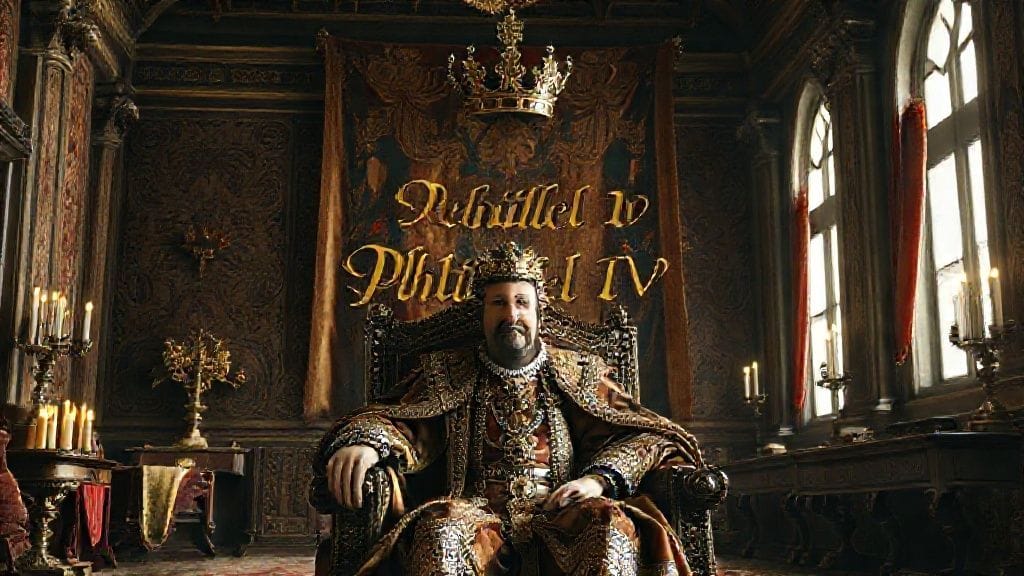
On a humid and heavy evening of September 17, 1665, Madrid’s grand palaces shadowed the restless city below. Inside the royal chambers, Philip IV of Spain lay motionless, a figure diminished by illness and years of exhausting reign. The soft flicker of candlelight danced on the walls, as doctors and courtiers hovered anxiously, a tension permeating the air thicker than Madrid’s September heat.
The once mighty king — commanding an empire on which the sun never set — was now a frail man nearing the end. The corridors echoed with hushed prayers and weighed breaths, the city holding its collective pulse. His death was not just a personal tragedy; it was the prelude to a transformation that would ripple across Europe and redefine the future of a fading imperial hegemon.
Philip IV’s last moments were a delicate blend of solemnity and uncertainty. Surrounded by his trusted advisors and family, the king’s passing was both an end and a beginning, closing a chapter written with grandeur and tragedy.
2. The Shadow of Power: Spain’s Global Empire in 1665
To understand the significance of Philip IV’s death, one must grasp the weight of the Spanish Empire he ruled. In 1665, Spain’s vast territories stretched through Europe, the Americas, parts of Asia, and North Africa. It was a sprawling global dominion marked by a dazzling cultural renaissance and crippling economic challenges.
Yet beneath the surface of its exalted image, Spain was gravely strained. Decades of continuous warfare, fiscal mismanagement, and political complexities eroded its strength. The Habsburg dynasty’s grip was challenged by emerging powers like France and England, hungry for influence and resources.
Madrid, the heart of this empire, was a melting pot of grandeur and decay. The city’s palaces and plazas dazzled with art and ceremony, but poverty and unrest simmered in alleys. Philip IV inherited this Empire of contradictions—a jewel of power tarnished by internal and external challenges.
3. A King’s Burden: Philip IV’s Reign and its Toll
Ascending the throne in 1621 at the tender age of sixteen, Philip IV’s reign spanned over four tumultuous decades. Early optimism gave way to relentless conflict, including the Thirty Years’ War and the Eighty Years’ War against the Dutch rebels. His reign was characterized by a desperate effort to preserve Spanish dominance in the face of inexorable decline.
Philip IV was more than a monarch; he was a patron of the arts, fostering luminaries like Velázquez and Calderón de la Barca, contributing to a cultural golden age even as the empire faltered politically. Yet the king’s health deteriorated, burdened by gout, obesity, and depression.
His personal fragility mirrored his kingdom’s precariousness. The pressures of maintaining Spain’s vast realm, managing court intrigue orchestrated by the powerful Count-Duke of Olivares, and combating fiscal collapse etched years of weariness in Philip’s features. His death was as much an escape from pain as a symbol of a waning era.
4. The Court in Mourning: Reactions to the King’s Decline
As news of Philip’s failing health spread through the sprawling halls of the Buen Retiro Palace, the mood turned somber and tense. Courtiers, nobles, and servants alike grappled with the certainty of imminent change, each pondering their fortunes under a new sovereign.
Despite the ceremonial façade, palpable anxiety gripped the court. Questions swirled—who would control the regency? How would power dynamics shift, especially amidst the Count-Duke Olivares’ influence, recently fallen from grace? Entire factions jockeyed quietly, knowing that the monarch’s death would redraw the political map.
Outside the palace walls, the common people whispered rumors, blending grief and hope. Madrid braced itself for the upheaval to come, caught between reverence for a fading king and the uncertainty of a turbulent succession.
5. Diplomatic Underpinnings: Europe on the Eve of Change
While Philip IV’s final moments unfolded in Madrid, Europe watched attentively. The continent was a chessboard of alliances, enmities, and power plays. France, led by the calculating Cardinal Mazarin and young Louis XIV, was poised to challenge Spain’s supremacy on multiple fronts.
England, still rising from civil strife, eyed Spanish possessions with interest, while the Holy Roman Empire struggled under its own weighty concerns. The death of a major monarch like Philip IV had implications beyond Iberian borders; it threatened to tip balances in favor of ambitious states.
Diplomats in Madrid and beyond prepared for emissaries and declarations, realizing that Philip’s passing could reignite conflicts or pave the way for peace. The fragile diplomacy of 1665 was about to be tested anew.
6. The Fall of a Dynasty? Political Intrigues Amid the King’s Death
Philip IV’s death precipitated a delicate dance of political intrigue within Spain’s court. Though his son Charles II was the designated heir, his youth and ill health invited regency disputes and noble power struggles.
The fading influence of Olivares created a vacuum quickly filled by competing factions—conservatives, reformists, and opportunists—each claiming loyalty to the crown while plotting for their own advantage. Behind closed doors, whispers of rebellion and betrayal circulated.
This fragile balance raised the question looming over Spain’s future: would the Habsburg dynasty hold firm, or would it crumble under the weight of internal discord and external pressure?
7. The Heir Apparent: The Rise of Charles II
Charles II, Philip IV’s son, assumed the throne at just four years old. Known later as "The Bewitched" for his severe physical and cognitive disabilities, Charles’s accession marked the beginning of one of the most challenging reigns in Spanish history.
His minority required a regency, and the power struggles that ensued shaped the next several decades. The young king inherited not only a vast empire but monumental troubles—a declining economy, rebellious provinces, and a court rife with factionalism.
Charles’s reign would be viewed as a tragic denouement to Habsburg Spain’s golden age, colored by mismanagement and the inevitable collapse of imperial grandeur.
8. Consequences Beyond the Palace Walls: Spain’s Fragile Stability
Philip IV’s death did not immediately upend Spain, but it amplified existing vulnerabilities. Economic hardships worsened, tax burdens increased, and regional dissent simmered dangerously close to rebellion.
In the colonies, news traveled more slowly, yet the monarch’s passing intensified anxieties among governors and settlers uncertain about future policies. The empire’s cohesion seemed more fragile than ever, threatening to fray under multiple pressures.
Social unrest grew in cities like Madrid and Seville, where the disparity between elite wealth and popular deprivation became impossible to ignore. Philip’s death was a catalyst revealing the cracks beneath the veneer of imperial splendor.
9. Spain’s Military and Economic Challenges at the Time of Philip’s Death
At the moment of Philip IV’s passing, Spain’s military was exhausted. The prolonged conflicts had drained the treasury, and maintaining vast armies across continents strained resources.
Economically, inflation, neglect of infrastructure, and war debts created a debilitating environment. The silver influx from the Americas, once the empire’s lifeblood, was slowed by piracy and administrative corruption.
The monarchy’s fiscal crises limited Spain’s ability to project power, and Philip’s death thrust this precarious situation into sharper relief, forcing his successors to confront unavoidable reform and decline.
10. Cultural Flourishing Despite Decline: Art and Literature under Philip IV
Paradoxically, the reign of Philip IV witnessed a Renaissance in culture and arts, leaving a legacy that endures long after political fortunes faded. The king's patronage enabled Velázquez to capture intimate portraits of court life, immortalizing moments of vulnerability and grandeur.
Literature, music, and architecture thrived, presenting a stark contrast to the era’s political instability. The arts became both a refuge and a statement of power, a reminder that Spain’s spirit persisted despite its waning empire.
Philip IV himself was deeply involved in this cultural efflorescence, understanding that image mattered even as realities became harsher.
11. The Legacy of a Complex Monarch: From Patron of the Arts to Political Symbol
Philip IV remains a figure of paradox—both the nurturer of Spain’s cultural Golden Age and the emblem of its imperial decline. His reign encapsulated the contradictions of 17th century Spain: grandeur shadowed by decay, authority marred by fragility.
Historians grapple with his legacy; some portray him as passive and overwhelmed by circumstances, others as a dedicated ruler constrained by forces beyond control.
What is undeniable is that Philip’s life and death marked a pivotal moment, a turning point signifying the end of Spain’s dominance and the rise of new European powers.
12. The Crisis of Succession: Struggles that Shaped the Future of Spain
The accession of Charles II, a sickly child, created a succession crisis that became more than a domestic concern. European powers eyed the Spanish throne with interest, anticipating that Spain's fate would influence the continental balance.
In the decades following Philip IV’s death, alliances shifted, marriages were arranged, and conflicts brewed — culminating eventually in the War of Spanish Succession.
The deathbed transition blurred the lines between monarchy and state, revealing vulnerabilities in hereditary succession that would haunt Spain for generations.
13. Madrid as a Stage: How the Capital Responded to the King’s Passing
Madrid, transformed under Philip IV, became more than a capital—it was an emblem of Spanish identity during a troubled era. The news of the king’s death plunged the city into a complex emotional and political moment.
Public ceremonies and mourning rituals combined with whispers of unrest. Streets and plazas were filled with a mix of reverence and uncertainty. The courtiers’ orchestrated displays of grief masked the fragile nerves of a city aware that its place at the heart of an empire was in flux.
14. The European Context: Rivals and Allies Watching Madrid Closely
Europe reacted swiftly to Philip IV’s death. France, under the young Louis XIV, saw opportunity. The Habsburgs’ weakening grip was a moment for recalibration and ambition.
The English and Dutch—two rising maritime powers—adjusted their strategies, while the Holy Roman Empire contemplated its position.
Diplomatic channels buzzed with intrigue; intelligence reports monitored Madrid’s movements. Philip’s death was not simply a Spanish event; it was a continental pivot.
15. Philip IV’s Death and the Thirty Years of War’s Aftermath
Though the Thirty Years War officially ended with the Peace of Westphalia in 1648, its aftershocks were deeply felt during Philip IV’s later years and beyond. Spain’s defeat in the war diminished its political clout, drained resources, and weakened alliances.
Philip’s death symbolically closed the chapter on an era of almost constant European warfare, while simultaneously opening a new phase where Spain’s role was more defensive than assertive.
This legacy shaped the diplomatic and military strategies of his successors profoundly.
16. From Deathbed to History Books: How Philip IV Has Been Remembered
Historical memory of Philip IV is complex and often contradictory. Portrayed occasionally as a tragic figure caught in irreversible decline, or as a cultured monarch whose reign was marked by artistic genius, opinions vary widely.
Literature and art have immortalized his image, while political historians debate his effectiveness. His death became a symbol of change, prompting reflection on monarchy, power, and empire.
17. The Human Side of Monarchy: Anecdotes from Philip IV’s Final Days
Beyond the political drama, Philip IV’s last days were marked by poignant human moments. His physicians struggled desperately against inevitable mortality; his family shared quiet grief, and Valdés, his trusted confessor, recorded intimate moments of spiritual preparation.
One anecdote recounts the king’s final gaze upon a portrait of his beloved wife, Elisabeth of France—an image symbolizing love amid turmoil. Such details remind us that behind monumental history lies the fragile humanity of those who shape it.
Conclusion
The death of Philip IV of Spain on September 17, 1665, marked a critical turning point not only for the Spanish monarchy but for the sweep of European history. It closed the curtain on an era where Spain stood as a dominant global power, even as cracks in its foundation widened relentlessly.
Yet, within this moment of loss and uncertainty, the enduring legacies of art, culture, and dynastic ambition survive, offering a complex portrait of a man and a nation caught between glory and decline. Philip IV’s passing was both an ending and a beginning—the fragile threshold where history’s tides shifted inexorably forward.
FAQs
Q1: What were the main causes of Philip IV’s death?
Philip IV suffered from chronic health problems including obesity, gout, and possibly diabetes, exacerbated by the stresses of ruling a declining empire. His death in 1665 was due to natural causes linked to these ailments.
Q2: How old was Philip IV when he died?
Philip IV died at the age of 60.
Q3: Who succeeded Philip IV as king?
His son, Charles II, succeeded him at the age of four.
Q4: How did Philip IV’s death impact Spain’s political stability?
His death intensified power struggles at court due to Charles II’s minority and frailty, weakening central authority and contributing to internal instability.
Q5: What role did the Count-Duke of Olivares play during Philip IV’s reign?
Olivares was the king’s powerful chief minister who significantly influenced policy and attempted reforms but ultimately fell from favor before the king’s death.
Q6: How is Philip IV remembered in history?
He is remembered as a complex figure—a patron of the arts during Spain’s cultural Golden Age and a monarch during a period of imperial decline.
Q7: How did other European powers react to Philip IV’s death?
They watched closely with opportunism; France and other rivals saw the king’s passing as a chance to challenge Spanish power.
Q8: Did Philip IV’s death influence the War of Spanish Succession?
Indirectly, yes. The difficulties of succession after his death contributed to future dynastic conflicts culminating in that war.