Table of Contents
- The Final Days of the Cardinal: A Nation on Edge
- The Weight of Power: Mazarin’s Unyielding Influence on France
- The Political Chessboard of 17th Century France
- Palace Intrigue: The Cardinal at Vincennes
- The Illness That Changed a Kingdom
- The Monarch’s Shadow: Louis XIV’s Ascendance
- France Poised Between Regency and Absolutism
- The Cardinal’s Death: March 9, 1661 – A Turning Point
- Reactions in Paris and the Provinces: Mourning and Uncertainty
- The Legacy of Mazarin’s Policies: Wars and Peace Negotiations
- Financial Reforms and the Cost of Power
- The Cardinal’s Private Life: Myths and Realities
- The Influence of Mazarin on French Culture and Art
- How His Death Reshaped Louis XIV’s Reign
- Vincennes Castle: A Silent Witness to History
- The Succession of Power: Mazarin’s Proteges and Rivals
- A Europe in Flux: The International Impact
- Lessons from Mazarin’s Final Chapter
- Remembering Mazarin: Historians and the Myth of the Cardinal
- Conclusion: The End of an Era and the Dawn of the Sun King
- FAQs
- External Resource
- Internal Link
1. The Final Days of the Cardinal: A Nation on Edge
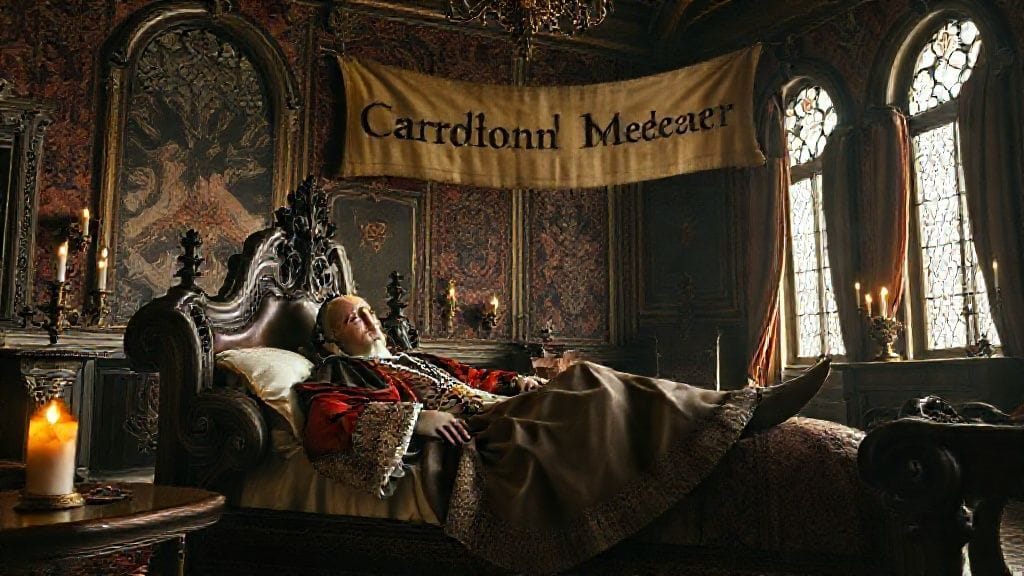
It was a restless March day in 1661 when the subtle yet unyielding hand of Cardinal Mazarin, the masterful architect of French politics, began to falter. Within the cold stone walls of Vincennes Castle, the aged diplomat and statesman lay frail, a stark contrast to the vigor with which he had once commanded nations and courtiers alike. Outside, Paris buzzed with whispers — would the architect of the Peace of Westphalia and the Fronde wars hold on to life, or was France about to lose its most formidable guide?
Cardinal Mazarin was more than a man; he was a symbol of power, strategy, and, for many, a necessary evil. His health declined quietly in an age when medicine could not rescue even the most powerful. His presence in Vincennes, once a fortress turned prison, now a retreat for the ailing cardinal, drew both fear and hope. Fear of the upheaval his departure might cause, hope that a new dawn, under the young king Louis XIV, might lead France toward unrivaled glory.
But Mazarin’s death was not just a personal moment — it was an event weighted with political consequence, social upheaval, and the closing chapter of a formative era in French history. As the candle of his life waned, so did the fragile balance of power that had held France together.
2. The Weight of Power: Mazarin’s Unyielding Influence on France
Jules Mazarin was no ordinary clergyman. From an Italian noble family, he had ascended through the ranks of European diplomacy to become France’s de facto prime minister under the regency of Anne of Austria. His policies and guidance shaped the trajectory of France at a time when the monarchy was fragile, and the country torn by civil wars.
He was the architect behind the negotiations that ended the Thirty Years' War, crafting treaties that positioned France as a dominant European power. His hand was felt in every corner of governance, from financial reforms to diplomatic alliances.
Yet, this power bred enemies. The Fronde, a series of uprisings by nobles and parliamentarians, directly challenged his authority and exposed the fragile nature of royal governance.
By 1661, after years of maneuvering, Mazarin’s grip on power was tenuous — yet undeniably pivotal.
3. The Political Chessboard of 17th Century France
The early 1600s in France were a time of fractious ambitions and fluid loyalties. The monarchy, under the young Louis XIV, was under the guidance of Cardinal Mazarin during the regency of Anne of Austria. The kingdom faced internal strife—the Fronde rebellions challenged the legitimacy of the crown, exposing social fissures and the weaknesses of governance.
European powers watched France closely. Spain, Habsburg Austria, and England each had reasons to influence, ally with, or undermine French dominance.
Inside this volatile environment, Mazarin played a complex game—balancing diplomacy with ruthless political savvy while keeping the fragile monarchy from collapse.
4. Palace Intrigue: The Cardinal at Vincennes
Vincennes Castle, centuries-old and imposing, was a symbol of royal power and imprisonment. Once a fortress protecting Parisian royalty, it had also become a site of exile for royal favorites and political prisoners.
By 1661, Mazarin found himself confined less by physical chains than by his failing health, retreating into the castle’s somber chambers.
Around him, courtiers whispered and plotted, aware that his imminent death would leave a vacuum. His presence at Vincennes was both a strategic withdrawal and a sign of his fragile hold on life and power.
5. The Illness That Changed a Kingdom
Cardinal Mazarin had endured hardships—poison threats during the Fronde, relentless opposition—but nothing proved more merciless than the disease that gripped him in early 1661.
Historical accounts describe bouts of fever, weakness, and respiratory distress. No physician’s remedy could halt the decline.
His illness was not just a personal tragedy but a political crisis. With the regency officially ending, the question of who would steer France’s future loomed large.
6. The Monarch’s Shadow: Louis XIV’s Ascendance
Louis XIV, only 22 years old at the time, had long been overshadowed by his mother and Mazarin. For years, the cardinal had effectively ruled in his stead, guiding decisions and controlling the machinery of state.
But Mazarin’s death presented an unprecedented opportunity for the king.
“L’État, c’est moi” — the famous declaration attributed to Louis XIV — was yet to be pronounced, but the foundations of absolutist monarchy had been laid.
The young king’s tentative steps to assume full control bore the marks of Mazarin’s tutelage, but also his desire to break free.
7. France Poised Between Regency and Absolutism
The death of Cardinal Mazarin marked the end of the regency era and brought France to a crossroads. The country stood at the threshold of absolutism, with Louis XIV ready to centralize power like never before.
The nobility wrestled with this new reality, knowing Mazarin's death meant fewer checks on royal authority but also uncertainty.
For many commoners, hopes were mixed—would peace, prosperity, and order ensue, or would instability continue?
8. The Cardinal’s Death: March 9, 1661 – A Turning Point
On the morning of March 9, 1661, Jules Mazarin passed away quietly at Vincennes, away from the swirling intrigues of the court yet at the epicenter of history.
His death was sudden but expected, culminating a protracted decline.
News spread rapidly, sending shockwaves through Paris and beyond.
In the grand halls of Versailles and the bustling streets of Paris, people absorbed the gravity of the moment.
9. Reactions in Paris and the Provinces: Mourning and Uncertainty
The city of Paris, alive with rumor and political tension, mourned the passing of a man many loved and many despised.
Public funerals drew crowds; lamentations echoed the complexities of Mazarin’s legacy.
Yet beneath grief lay apprehension. The certainty of his control had offered stability, even to his adversaries.
Now, as factions eyed the throne, uncertainty lingered palpably in the air.
10. The Legacy of Mazarin’s Policies: Wars and Peace Negotiations
Mazarin’s diplomacy had secured peace treaties that redefined European borders.
The Treaty of the Pyrenees (1659), for example, ended the long Franco-Spanish War, establishing France as a preeminent power.
He balanced the interests of the crown with a keen eye on European alliances.
His efforts laid groundwork for the grandeur that Louis XIV would champion.
11. Financial Reforms and the Cost of Power
Power, however, came at a price.
Mazarin’s wars and statecraft drained the treasury, leading to heavy taxation and financial strain.
His reliance on talented yet controversial ministers, like Jean-Baptiste Colbert, foreshadowed reforms that would stabilize but also centralize fiscal control.
The economic tensions planted seeds for future unrest but were necessary, in Mazarin’s view, to support royal authority.
12. The Cardinal’s Private Life: Myths and Realities
Often portrayed as a shadowy figure, Mazarin’s personal life was a tapestry of ambition, loyalty, and intrigue.
He amassed one of the richest art collections of the era and was a patron of the arts.
Rumors of his secret liaisons and political manipulations animated salons but blurred the man behind the myth.
Personal letters reveal a complex character, torn between duty and personal aspiration.
13. The Influence of Mazarin on French Culture and Art
Beyond politics, Mazarin shaped the cultural landscape of France.
His patronage nurtured artists, musicians, and writers who would define the Baroque era.
The Mazarin Library, among his many legacies, seeded France’s intellectual future.
His vision extended from the battlefield to the canvas, reflecting his belief in the soft power of culture.
14. How His Death Reshaped Louis XIV’s Reign
Mazarin’s passing liberated Louis XIV from the shadows.
The young king’s decision to rule without a chief minister was revolutionary.
He embarked on an ambitious project to centralize authority, build Versailles, and establish absolute monarchy.
Mazarin’s death thus can be seen as the catalyst for the Sun King’s golden age.
15. Vincennes Castle: A Silent Witness to History
Throughout these final moments, Vincennes Castle stood silent yet imposing—a fortress that had witnessed the volatile swings of French history.
Its walls absorbed secrets, strategies, and farewells.
Today, Vincennes remains a symbol not only of power but of the fragility of human life amidst the tides of history.
16. The Succession of Power: Mazarin’s Proteges and Rivals
Without Mazarin, power dynamics shifted quickly.
His protégés—most notably Jean-Baptiste Colbert—rose to prominence.
Meanwhile, rival nobles seized the moment to assert influence.
The transition was neither smooth nor easy but shaped the political landscape for decades.
17. A Europe in Flux: The International Impact
Mazarin’s death sent ripples across European courts.
France’s rivals recalibrated strategies; allies anticipated changes in diplomatic posture.
The balance of power would shift subtly but inexorably in the years following.
18. Lessons from Mazarin’s Final Chapter
Mazarin’s demise offers lessons on the concentration of power, the fragility of political capital, and the human costs of statecraft.
His life and death underscore the complex interplay between ambition, loyalty, and the inexorable flow of history.
19. Remembering Mazarin: Historians and the Myth of the Cardinal
Historians continue to debate Mazarin’s role—as manipulative usurper or indispensable statesman.
His myth lives in literature, biographies, and popular culture, reflecting France’s ongoing dialogue with its past.
20. Conclusion: The End of an Era and the Dawn of the Sun King
Cardinal Mazarin’s death on March 9, 1661, was not merely the end of a man’s life but the closing of a pivotal chapter in French history.
His stewardship had steered France through chaos to the cusp of grandeur.
With his passing, the Sun King rose to illuminate and transform the kingdom, forever altering the course of France—and European history.
Conclusion
The death of Cardinal Mazarin at Vincennes was a moment dense with historical resonance, one that encapsulates the fragile dance of power, personality, and politics that defined 17th-century France. As he drew his final breath, the kingdom simultaneously grieved and stood on the threshold of transformation—a pivot from regency to absolute monarchy, from instability to the reign of the Sun King. Mazarin’s legacy, rich with diplomacy, reform, and cultural patronage, influenced not only his era but generations to come. His passing serves as a profound reminder that history often turns not with the clash of armies alone, but with the quiet fading of a pivotal life.
FAQs
Q1: Who was Cardinal Mazarin and why was he so influential?
A1: Mazarin was an Italian-born cardinal and the chief minister of France during the regency of Anne of Austria. He influenced French domestic and foreign policy deeply, helping end the Thirty Years’ War and navigating through internal upheavals like the Fronde.
Q2: What circumstances surrounded Mazarin’s death?
A2: He died after a protracted illness on March 9, 1661, at Vincennes Castle, where he had retreated during his declining health. His death marked the end of the regency period and allowed Louis XIV to assume full control.
Q3: How did Mazarin's death impact Louis XIV’s reign?
A3: Mazarin’s death allowed the young king Louis XIV to rule without a chief minister, initiating an era of absolutism and centralization of power, famously declaring “L’État, c’est moi.”
Q4: What was Mazarin’s role in European diplomacy?
A4: Mazarin negotiated key treaties, most notably the Treaty of the Pyrenees (1659), which ended hostilities between France and Spain, significantly altering European political boundaries.
Q5: Why was Vincennes Castle significant in Mazarin’s final days?
A5: Vincennes served as a quiet retreat for Mazarin as his health declined, and historically as a royal fortress and prison, symbolizing the convergence of power and confinement.
Q6: What was Mazarin’s legacy in French culture?
A6: He was a patron of the arts, establishing a significant art collection and cultural institutions such as the Mazarin Library, influencing the intellectual and artistic climate of France.
Q7: Did Mazarin have any notable protégés?
A7: Yes, key figures such as Jean-Baptiste Colbert rose under Mazarin’s patronage and continued to shape French politics after his death.
Q8: How is Mazarin remembered today?
A8: He is remembered as a complex figure—both a skilled statesman and a controversial political figure. His life and death embody the intricacies of power in early modern Europe.