Table of Contents
- Introduction
- Early Life in Diamond, Missouri
- Education Against All Odds
- Tuskegee Institute and Lifelong Mission
- Agricultural Innovations and Peanuts
- Contributions Beyond Peanuts
- Philosophy of Service and Education
- Recognition and Honors
- Later Years and Legacy
- Anecdotes and Cultural Impact
- Lasting Influence on Agriculture
- External Resource
- Internal Link
Introduction
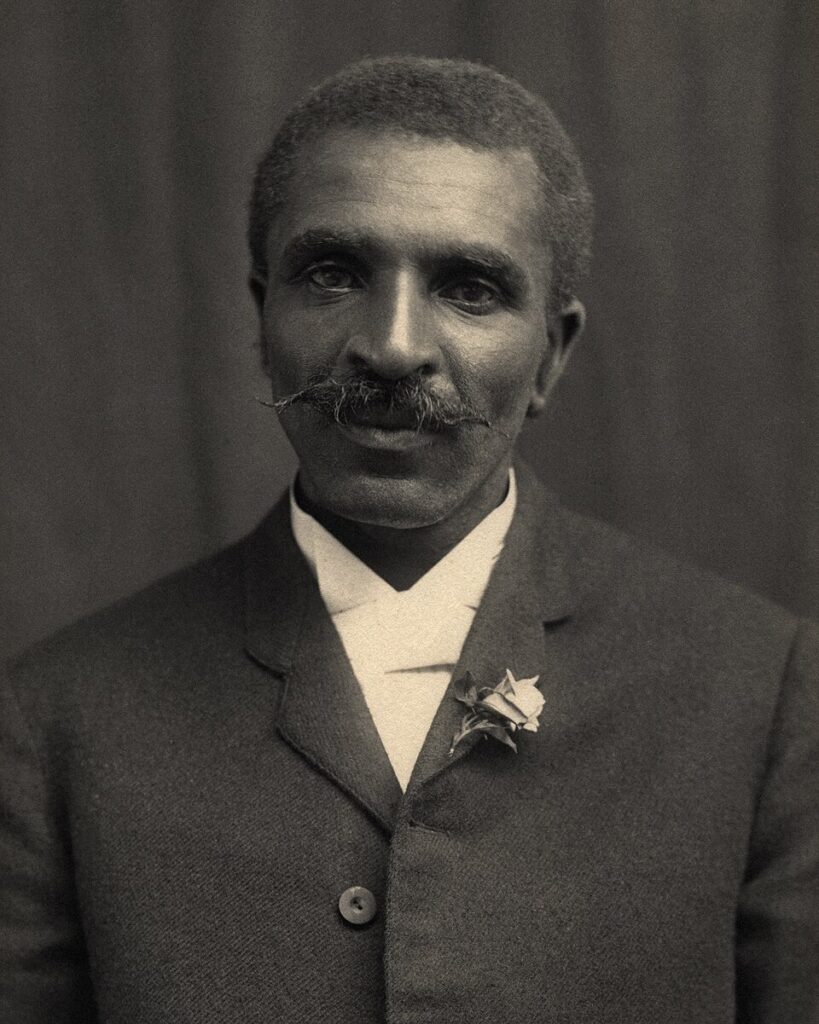
George Washington Carver’s story is one of resilience, genius, and a deep love for both the earth and humanity. Born into slavery around 1864 in Diamond, Missouri, he rose from obscurity to become one of America’s most respected scientists and educators. His groundbreaking agricultural research—especially with peanuts—transformed farming in the southern United States. It’s almost unbelievable, isn’t it? That a man born with so little could contribute so much to science, sustainability, and education.
Early Life in Diamond, Missouri
George Washington Carver was born at the tail end of the American Civil War. His exact birth date remains uncertain, but January 1, 1864, is often cited. His mother, Mary, was an enslaved woman owned by Moses Carver. Tragically, his father died before George’s birth, and his mother was kidnapped by raiders when George was just a baby, never to return.
Raised by Moses and Susan Carver, George was a frail and sickly child, often unable to perform heavy farm labor. Instead, he found solace in exploring nature. He became fascinated with plants, collecting specimens and experimenting with simple farming techniques even as a young boy. This curiosity for the natural world would become his life’s compass.
Education Against All Odds
At a time when education for African Americans was both scarce and dangerous, George pursued knowledge relentlessly. He walked miles to attend a school for Black children and often carried his books in a bundle while working odd jobs to survive.
His journey took him from local schools in Missouri and Kansas to Simpson College in Iowa, where he initially studied art. A teacher, impressed by his botanical drawings, encouraged him to transfer to Iowa State Agricultural College (now Iowa State University). There, he became the first African American student and quickly distinguished himself with his innovative experiments and dedication to agricultural science.
Tuskegee Institute and Lifelong Mission
In 1896, Booker T. Washington invited Carver to head the agriculture department at the Tuskegee Institute in Alabama. Carver accepted, beginning a lifelong commitment to education and community development.
At Tuskegee, he developed innovative farming methods to help poor farmers improve their soil quality and crop yields. He promoted crop rotation—alternating cotton with legumes like peanuts and sweet potatoes—to restore nitrogen to depleted soil. Farmers who followed his advice saw their land come back to life.
Agricultural Innovations and Peanuts
Carver is most famously linked with peanuts, though he never invented peanut butter as many believe. Instead, he discovered over 300 uses for peanuts, including cosmetics, plastics, dyes, and even fuel. His work gave farmers new markets and inspired a generation to think creatively about agricultural products.
But peanuts were just the beginning. Carver also found over 100 uses for sweet potatoes and developed ways to transform waste products into valuable resources. His goal wasn’t profit—it was to empower farmers and reduce dependence on a single cash crop like cotton.
Contributions Beyond Peanuts
While his agricultural work is legendary, Carver’s influence went far beyond crop science. He was an environmentalist long before the term was popular, promoting sustainable farming and soil conservation decades ahead of his time.
He also became a public speaker and adviser to leaders like President Theodore Roosevelt and industrialist Henry Ford. Despite his fame, Carver turned down offers of wealth and refused to patent most of his discoveries, believing that God intended them for the good of all people.
Philosophy of Service and Education
Carver’s personal philosophy was rooted in humility and faith. He saw science as a means to serve humanity, not a tool for personal gain. He often said, “It is not the style of clothes one wears… it is simply service that measures success.”
At Tuskegee, he inspired students not just to become skilled farmers, but to see agriculture as a noble and intellectual pursuit. He encouraged them to solve problems creatively and to find beauty in the natural world.
Recognition and Honors
Carver’s achievements earned him numerous accolades. He was awarded the Spingarn Medal from the NAACP in 1923, met with multiple U.S. presidents, and in 1940 received the Roosevelt Medal for outstanding contribution to science. In 1941, Time magazine named him a “Black Leonardo” for his multifaceted talents.
After his death in 1943, President Franklin D. Roosevelt authorized a monument in his honor—the first national monument dedicated to an African American.
Later Years and Legacy
In his final years, Carver continued to teach, experiment, and share his wisdom. Even as his health declined, he remained active at Tuskegee, walking to his laboratory each day.
When he passed away on January 5, 1943, tributes poured in from around the world. His funeral drew leaders from government, business, and education, all recognizing the extraordinary impact of his life.
Anecdotes and Cultural Impact
One popular story recounts how Carver once declined an invitation from Thomas Edison to work at his lab for a high salary. Instead, he stayed at Tuskegee, explaining that his mission to help farmers was more important than personal wealth.
Another tale describes his gentle demeanor with students, often greeting them in the gardens and encouraging them to “listen to the whispers of the plants.” These human touches made him not just a great scientist, but a beloved teacher.
Lasting Influence on Agriculture
Carver’s work continues to influence agricultural science today. His emphasis on crop rotation, sustainability, and value-added products remains central to modern farming. His belief that science should serve humanity is echoed in global efforts to fight hunger and protect the environment.
More than anything, Carver’s story is a reminder that brilliance can emerge from the humblest beginnings, and that dedication to others can leave a legacy greater than any personal fortune.
External Resource
🌐 Wikipedia – George Washington Carver