Table of Contents
- A Fateful Winter’s Day: Wagner’s Final Hours in Venice
- The Maestro’s Legacy at the End of an Era
- From Leipzig to Venice: The Composer’s Peripatetic Journey
- The Burden of Genius: Wagner’s Life and Illness Before Venice
- The Romantic Appeal of Venice in the 19th Century
- Arrival in Venice: Wagner’s Last Artistic Refuge
- February 13, 1883: The Silent Passing of a Colossus
- The Final Scene: Eyewitness Accounts of Wagner’s Death
- Venice’s Shadow: The City’s Role in Wagner’s Last Days
- The Immediate Aftermath: Mourning and Memory in Europe
- Cosima Wagner’s Vigil: A Widow’s Grief and Resolve
- The Funeral at Venice: Rituals and Reconstructions
- Wagner’s Death and the Politics of Posthumous Reputation
- The Resurrection of Wagner’s Music and Myth after 1883
- Venice as a Monument: Pilgrimage and Wagnerian Tourism
- Controversies Surrounding Wagner’s Death and Burial
- The Composer’s Artistic Immortality Versus Mortal End
- Wagner’s Death in the Context of European Cultural Shifts
- The Composer’s Influence on Music, Philosophy, and Politics
- Venice’s Last Impression on Literature and Art Inspired by Wagner
- Remembering Wagner Today: The Intersection of Genius and Controversy
- Conclusion: The End of a Journey, the Beginning of an Everlasting Echo
- FAQs on Richard Wagner’s Death and Legacy
- External Resource
- Internal Link
1. A Fateful Winter’s Day: Wagner’s Final Hours in Venice
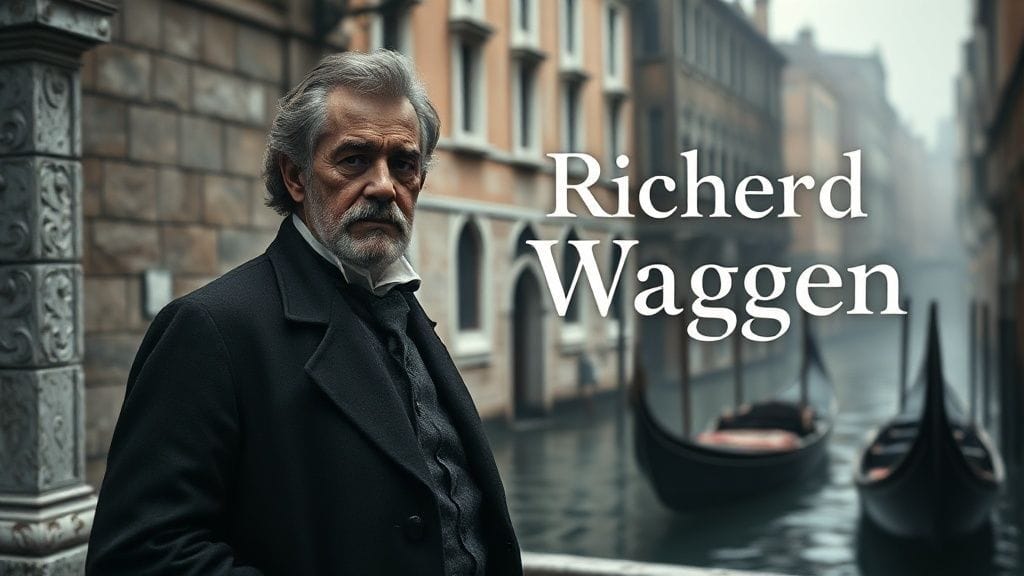
On the cold morning of February 13, 1883, in a small palazzo on the Grand Canal, a man who had shaped the very soundscape of 19th-century Europe breathed his last. Richard Wagner, the composer whose operas had ignited passions, scandalized societies, and transformed music forever, succumbed quietly amidst the Venetian winter’s near-silent fog. The muted bells of Santa Maria della Salute seemed to toll for the passing of a titan, as the city slowly awakened to the news: one of its most illustrious, if contentious, guests was no more.
The room was subdued, filled with the soft flicker of candlelight and the heavy scent of incense. Around Wagner lay remnants of his latest works, sketches of melodies yet unfinished, echoes of his grand vision now abruptly halted. His demise did not erupt with the thunderous applause he had often commanded; instead, it slipped in like a whisper, leaving behind a legacy as monumental as the palazzi encircling him.
Yet this quiet death, so distant from the grandeur of the Bayreuth festivals or the triumphs of his “Ring” cycle, unmasked the vulnerable man beneath the myth — frail, devoured by illness and weariness, seeking refuge in a city of water and dreams. Venice—a fitting final stage for a composer whose art danced between myth, legend, and reality.
2. The Maestro’s Legacy at the End of an Era
By 1883, Richard Wagner was not merely a composer; he was a phenomenon. His name was synonymous with dramatic innovation and ideological controversy. Over five decades, Wagner had transformed opera from entertainment into an all-encompassing Gesamtkunstwerk, or "total work of art," blending music, poetry, theatre, and philosophy into a singular force. His influence radiated beyond the concert halls, stirring political debates, inspiring fervent admirers, and arousing fierce critics.
His music, intensely chromatic and richly orchestrated, had redefined harmonic language, paving the way for modernism in the early 20th century. Yet alongside musical genius, Wagner was a polarizing figure due to his outspoken nationalism and anti-Semitic views, which would echo darkly into later history.
His passing, therefore, marked not only the end of an individual life but the closing of a chapter in European cultural history. The 19th century, with its turbulent mix of Romantic idealism and nascent modernity, had found in Wagner one of its most compelling, and complex, icons.
3. From Leipzig to Venice: The Composer’s Peripatetic Journey
Wagner’s life was marked by constant movement across Europe’s cultural capitals. Born in Leipzig in 1813, he wandered through Dresden, Paris, Munich, and finally Bayreuth, where he built his own festival theatre. Each city shaped his music and philosophy, and each city witnessed slices of his triumphs and failures.
By the early 1880s, Wagner was often traveling for health reasons, seeking climates better suited for his deteriorating physical state. His restlessness was also a symptom of a mind always preoccupied with creation and controversy. Venice was one of his favored places of retreat—a city of reflected images and fragmented realities, mirroring the dualities within Wagner himself.
4. The Burden of Genius: Wagner’s Life and Illness Before Venice
In the months leading to his death, Wagner was ravaged by heart and liver ailments, aggravated by years of battling tuberculosis, heavy smoking, and physical exhaustion. Despite his declining health, Wagner remained mentally sharp, wading through letters, manuscripts, and personal reflections.
His health crisis was a dramatic counterpoint to the intensity of his inner world, a sign of the price borne by a figure who had poured his being into a relentless pursuit of artistic perfection. Cosima, his devoted wife, documented his suffering with heartbreaking detail, fulfilling the dual role of carer and chronicler.
5. The Romantic Appeal of Venice in the 19th Century
Venice in the 1800s was a magnet for artists, writers, and intellectuals seeking inspiration amid its labyrinth of canals, decaying splendor, and temperamental climate. For Wagner, the city embodied a sense of history intertwined with fleeting beauty — an ephemeral dream in stone and water.
The city had long fascinated other great minds: Byron, Wagner’s contemporaries, and a whole host of Romantic figures saw Venice as a symbol of romantic melancholy and artistic rebirth. It was in this atmosphere, charged with nostalgia and mystery, that Wagner sought solace.
6. Arrival in Venice: Wagner’s Last Artistic Refuge
Wagner arrived in Venice in late 1882, accompanied by Cosima and some close attendants. The city’s damp air was a double-edged sword: soothing at times, but also exacerbating Wagner’s respiratory problems.
During these weeks, Wagner’s compositional work continued, though increasingly interrupted by fits of weakness. The lecture halls, salons, and cafés of Venice were a distant echo to the quietness of his room, where he wrestled with the tension between creation and mortality.
7. February 13, 1883: The Silent Passing of a Colossus
On February 13, exactly at dawn, Wagner’s pulse faltered and he passed away. Contemporary accounts often describe the event with almost cinematic gravity — a life lived in storms ended in eerie calm. There was no crowd, no orchestral farewell; just the intimate presence of Cosima and the closest few.
The final notes of a life steeped in grandiosity and drama ebbed away to silence. Yet for those who mourned him, the composer’s departure felt like the closing of a great book, its last page turning softly in the Venetian winter light.
8. The Final Scene: Eyewitness Accounts of Wagner’s Death
Eyewitnesses recalled the profound sadness and reverence surrounding Wagner’s death. Cosima’s detailed diaries provide one of the most intimate views: moments of clarity faded into unconsciousness, the soft closing of eyes that had seen so much passion and pain.
Doctors, attendants, and friends watched helplessly, swathed in the grief of losing the man who had meant so much to Europe’s musical world. Letters sent immediately after bear testimony to shock but also an abiding sense of awe.
9. Venice’s Shadow: The City’s Role in Wagner’s Last Days
Venice, with its historical weight, became inseparable from Wagner’s dying days. The city’s labyrinthine canals and ancient stones seemingly cradled the composer’s final breath. There’s a poetic justice, perhaps, in a man whose works constantly pondered mythological cycles and redemption ending in a city symbolizing both decay and everlasting beauty.
Some contemporaries mused on the symbolism: Wagner's journey from the heart of German Romantic nationalism concluding in an Italian city renowned for its art and multicultural history.
10. The Immediate Aftermath: Mourning and Memory in Europe
News of Wagner’s death spread swiftly, sparking waves of mourning across Germany, Britain, France, and beyond. Various European cities held memorial concerts; music societies debated his legacy.
Yet, amidst the grief, discussions also emerged about his polemics and ideological positions, foreshadowing the ambivalence that has shaped Wagner’s posthumous reputation. The immediate mourning was a mixture of emotional outpouring and critical reflection.
11. Cosima Wagner’s Vigil: A Widow’s Grief and Resolve
Cosima Wagner, herself a formidable figure, assumed the role of guardian to Wagner’s memory. Her detailed diaries shed light on the private, often painful moments following the death, as well as her efforts to preserve his artistic legacy and manage the complicated family and political dynamics.
Her vigilance ensured the birth of the Bayreuth Festspielhaus as a shrine to Wagner’s work but also solidified the narrative of Wagner as a tragic genius.
12. The Funeral at Venice: Rituals and Reconstructions
Wagner’s funeral in Venice was intimate and conducted with careful respect, yet surrounded by the logistical challenges of a foreign city. His coffin was placed in the small, shadowy Trinità church, and later transported to Bayreuth for permanent rest.
The ritual fused Christian solemnity with Wagnerian symbolism, reflecting the complex fusion of faith, art, and nationalism that marked his life.
13. Wagner’s Death and the Politics of Posthumous Reputation
Wagner’s death opened a battlefield over his legacy. The composer’s political beliefs, especially his ties to German nationalism and cultural identity, were weaponized in European discourse.
Cosima’s progeny and disciples strove to enshrine Wagner as the father of German art, while others resisted this co-option. The dichotomy between Wagner’s artistic timelessness and ideological divisiveness remains a subject of historical scrutiny.
14. The Resurrection of Wagner’s Music and Myth after 1883
Paradoxically, Wagner’s death propelled his reputation into new dimensions. The performances of his works expanded globally, festivals multiplied, and a mythic aura enveloped his persona.
Wagnerian music became a symbol for artistic innovation but also served as a cultural flashpoint, invoked by various political movements across decades.
15. Venice as a Monument: Pilgrimage and Wagnerian Tourism
In the decades following the death, Venice became a destination for Wagner enthusiasts. Pilgrimages recreated the journey of the maestro in his final days, transforming sites in the city into loci of remembrance and artistic devotion.
Travel writers and musicians documented this phenomenon, weaving Venice itself into the Wagnerian legend.
16. Controversies Surrounding Wagner’s Death and Burial
Even in death, Wagner was not free from controversy. Questions arose about the conditions of his burial, the manner in which his remains were handled, and ideological disputes spilled into the management of his funerary sites.
These controversies underscored the unresolved tensions between Wagner’s genius and the ideological legacies he left behind.
17. The Composer’s Artistic Immortality Versus Mortal End
The contrast between Wagner’s mortal frailty and the enduring power of his music remains striking. While his body succumbed to disease in Venice, his compositions continue to reverberate worldwide, a testament to the paradox of art transcending human limitation.
This duality invites reflection on mortality, creativity, and the imprint of a singular human life.
18. Wagner’s Death in the Context of European Cultural Shifts
Wagner’s death occurred at a moment when Europe was on the cusp of modern transformation. Industrialization, political upheaval, and shifting artistic paradigms were challenging the Romantic ideals Wagner embodied.
His passing symbolized the close of a period that had defined the 19th century’s cultural imagination and the emergence of new modernist voices.
19. The Composer’s Influence on Music, Philosophy, and Politics
Beyond music, Wagner’s ideas influenced philosophers like Nietzsche and thinkers of the time, infiltrating political ideologies and cultural discourses.
His operatic dramas explored myth, power, and redemption in ways that sparked both admiration and critique, offering fertile material for later academic and artistic exploration.
20. Venice’s Last Impression on Literature and Art Inspired by Wagner
Venice itself entered artistic narratives entwined with Wagner’s story. Writers and painters inspired by the composer found in the city a metaphor for fleeting grandeur and artistic mystery, fueling works well into the 20th century.
This interweaving shaped a cross-cultural legacy celebrating both man and place.
21. Remembering Wagner Today: The Intersection of Genius and Controversy
Today, Wagner’s legacy is a complex tapestry. Celebrated for musical innovations yet scrutinized for ideological stances, his life and death continue to provoke debate.
Venice remains a poignant symbol in this dialogue — a city that witnessed the final breath of a man whose music refuses to die.
22. Conclusion: The End of a Journey, the Beginning of an Everlasting Echo
Richard Wagner’s death in Venice on February 13, 1883, was both an end and a beginning. The mortal coil of a composer who had reshaped the artistic cosmos finally unraveled in a city steeped in history and myth.
Yet from that quiet death grew a legacy that defies silence. His operas still echo in opera houses worldwide; his ideas pulse through the veins of music, philosophy, and cultural history.
Venice, with its labyrinthine canals and reflective waters, perhaps best captures the essence of Wagner’s final act — a complex reflection of genius, fragility, and a timeless journey beyond.
FAQs
Q1: What were the main causes of Richard Wagner’s death in Venice?
A1: Wagner died primarily from heart failure compounded by tuberculosis and liver disease. His health had been in decline due to years of heavy smoking, respiratory ailments, and general exhaustion.
Q2: Why was Wagner in Venice at the time of his death?
A2: Wagner sought a milder climate to alleviate his health problems and was drawn to Venice’s unique atmosphere, which he also valued for artistic inspiration and retreat.
Q3: How did Cosima Wagner influence Wagner’s legacy after his death?
A3: Cosima acted as the guardian of Wagner’s memory, diligently managing his estates, overseeing the Bayreuth Festival’s development, and controlling the narrative around his life and work.
Q4: What immediate impact did Wagner’s death have on European cultural circles?
A4: His death triggered widespread mourning and memorial performances. It also intensified debates about his dual legacy: musical genius and controversial political views.
Q5: How did Venice contribute symbolically to Wagner’s final days?
A5: Venice, with its decaying beauty and rich artistic heritage, symbolized both the transience and immortality of art—resonant themes in Wagner’s work and life.
Q6: Were there controversies surrounding Wagner’s burial?
A6: Yes. Disputes arose over where Wagner should be buried and how his remains should be treated, reflecting broader debates about his ideological legacy.
Q7: In what ways did Wagner’s death symbolize a cultural shift in Europe?
A7: His passing marked the end of the Romantic era’s dominance, giving way to modernist movements cautiously confronting his artistic and ideological heritage.
Q8: How is Wagner’s death commemorated in Venice today?
A8: Sites associated with his last days attract enthusiasts and scholars. Venice remains a place of pilgrimage for those interested in the composer’s life and work.