Table of Contents
- The Final Day: Paris, May 22, 1885 — A City Holds Its Breath
- Victor Hugo: The Man Behind the Legend
- From Troubled Youth to National Icon: The Making of a Literary Titan
- The Political Exile and the Poet of the People
- The Literary Masterpieces that Shaped a Century
- Victor Hugo’s Health Declines: The Prelude to Goodbye
- The Last Hours: Family, Friends, and Farewell
- Death in the Heart of Paris: A Nation Mourns
- Funeral Preparations: From Private Grief to Public Spectacle
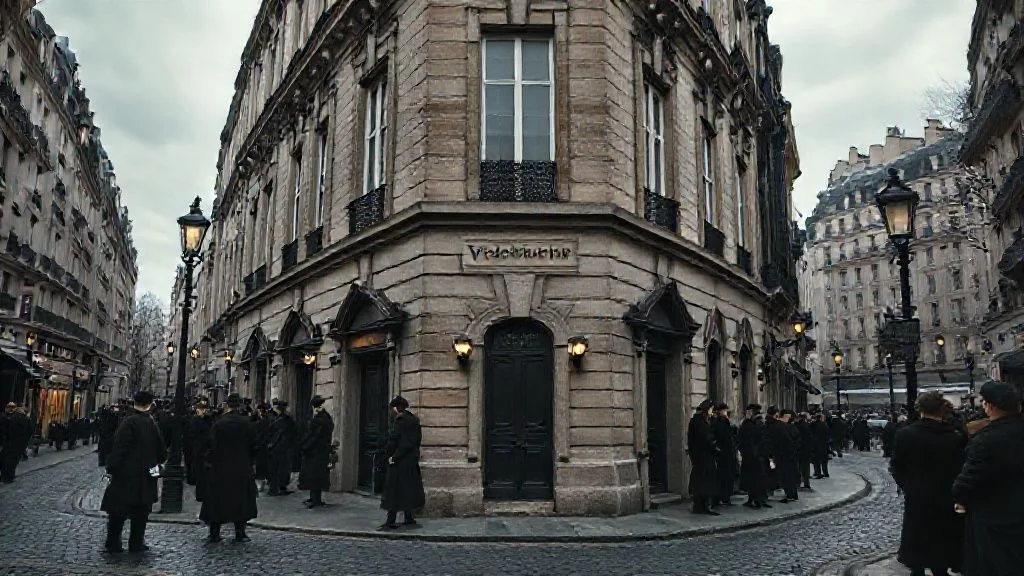
- Paris in Mourning: A City Draped in Black
- The Funeral Procession: Millions Line the Streets
- The Panthéon and Posthumous Honors: Immortalizing a Legend
- Political and Cultural Reverberations of Hugo’s Passing
- The Legacy of Victor Hugo in Literature and Society
- The Continuing Inspiration: Hugo’s Echo Throughout Modern Times
- Controversies and Myths Surrounding His Death and Burial
- Remembering Hugo Today: Memorials, Museums, and Commemorations
- Conclusion: The End of an Era, The Birth of a Legacy
- FAQs: Understanding Victor Hugo’s Death and Impact
- External Resources
- Internal Link to History Sphere
The Final Day: Paris, May 22, 1885 — A City Holds Its Breath
The sun cast its gentle light over the Seine as the heartbeat of Paris slowed on that somber Friday, May 22, 1885. The air was thick with anticipation, grief, and a restless procession of whispered names — Victor Hugo. At precisely 8:15 p.m., the voice that had stirred revolutions, woven tales of human suffering and hope, finally fell silent. The great poet, novelist, playwright, and philosopher was no more. But the silence he left behind roared across the city like thunder, echoing far beyond the cobbled streets of France’s capital.
It was a death that not only marked the end of a remarkable life but marked a collective turning point for an entire nation. Paris, a city never short on drama, paused to grieve its greatest son. Candles flickered in windows, church bells tolled with a mournful cadence, and the hum of everyday life was muted by the shadow of a titan’s passing. Yet, even in death, Victor Hugo’s presence was undeniable — larger than life, immortalized in the hearts of millions.
Victor Hugo: The Man Behind the Legend
Victor-Marie Hugo was not merely a writer; he was a force of nature. Born on February 26, 1802, into a France shaken by revolution and empire, Hugo’s life was intertwined with the tumult of a century marked by dramatic upheavals. A prodigious talent who debuted as a poet at an astonishingly young age, he evolved into a literary colossus whose works would come to define the French Romantic movement and inspire social consciousness worldwide.
He was a man of contradictions: aristocratic in origins yet fiercely democratic in vision; a cultural traditionalist with a relentless urge for progressive change; a poetic dreamer balanced by a politician’s pragmatism. Hugo’s pen was his sword, attacking injustice, pleading for freedom, and celebrating human dignity.
From Troubled Youth to National Icon: The Making of a Literary Titan
Hugo’s early years were marked by personal tragedy and political turbulence. His father, a general under Napoleon, exposed young Victor to the shifting tides of loyalty and power. Yet, from this instability, Hugo drew inspiration, channelling his restless genius into poetry and drama. By his late teens, his works were already garnering critical attention, reflecting the romantic ideals of emotion, individualism, and a fierce attachment to nature and beauty.
His early successes, including plays like Hernani (1830), challenged the classical tragedy norms and ushered in a new era of French theatre, igniting riots and debates alike. This youthful rebellion foreshadowed a lifetime of artistic courage and political engagement.
The Political Exile and the Poet of the People
Perhaps one of the defining chapters of Hugo’s life came in the wake of the rise of Napoleon III. A staunch republican and critic of authoritarianism, Hugo found himself exiled from France in 1851, living on the Channel Islands for nearly two decades. Far from a mere retreat, this exile was a creative cauldron. It was in Guernsey and Jersey that he composed some of his most enduring works, including Les Misérables and Les Contemplations, which spoke powerfully to themes of justice, freedom, and the human condition.
This period also crystallized Hugo’s role as the “voice of the oppressed,” wielding literature as a weapon against tyranny and social injustice, transcending national boundaries and inspiring liberation movements across Europe.
The Literary Masterpieces that Shaped a Century
Few writers in history have managed to blend artistry and moral outrage as Hugo did. Les Misérables (1862) remains a monumental achievement — a tapestry of intertwined lives, suffering, redemption, and hope set against the backdrop of post-revolutionary France. Its characters—Jean Valjean, Javert, Cosette—continue to haunt readers and audiences worldwide.
Other works, from the gothic grandeur of The Hunchback of Notre-Dame (1831) to the soaring visions of his poetry, cemented Hugo as a master storyteller. His literature offered not only aesthetic beauty but also a ruthless, compassionate examination of society's ills, urging reform and empathy.
Victor Hugo’s Health Declines: The Prelude to Goodbye
By the early 1880s, age and the toll of his ceaseless endeavors weighed heavily on Hugo. Yet, even as his physical vigor ebbed, his intellectual flame did not falter. Friends observed his increasing frailty, his shortness of breath, and a persistent cough that hinted at deeper health issues. Rumors of his deteriorating condition stirred public anxiety — the man who had seemed so indomitable was mortal, after all.
Doctors diagnosed him with heart failure compounded by lung problems. Through the spring of 1885, Hugo’s condition worsened quietly at his residence on Avenue d’Eylau in Paris. Those closest to him prepared for the inevitable but refused to surrender to despair.
The Last Hours: Family, Friends, and Farewell
On the evening of May 22, surrounded by his children and caregivers, Hugo’s breathing grew labored. Witnesses would later recall a scene filled with a poignant mixture of calm, prayers, and lingering disbelief. The great poet’s eyes, said to have “seen the soul of the world,” closed gently, his final breath syncing with the tolling bells of distant churches.
The death of Victor Hugo was not just a personal family tragedy but a moment that united France in collective mourning. News spread rapidly—Parisian cafés fell silent, newspapers printed editions in tribute, and thousands gathered spontaneously to pay their respects.
Death in the Heart of Paris: A Nation Mourns
Victor Hugo’s passing was the death of an era. The French government quickly declared a state funeral, recognizing him as a national treasure. Crowds swelled in the days that followed, flooding streets and public squares. Poets, politicians, ordinary citizens, all converged in homage to the man who had given voice to their struggles, hopes, and pride.
The outpouring was immense — estimated at over two million people attended the funeral procession. Paris transformed into a vast cathedral of grief, its monuments and bridges adorned with black drapery, flags at half-mast, and flowers.
Funeral Preparations: From Private Grief to Public Spectacle
The preparations reflected the magnitude of Hugo’s impact. His coffin was placed in the City Hall’s Hôtel de Ville, displayed on a catafalque decorated in golden motifs and surrounded by laurel wreaths and candles. Poets and statesmen gave eulogies exalting Hugo’s genius and his unwavering commitment to justice.
The spectacle was as much political as it was cultural — a symbolic affirmation of republican values at a time when France struggled to reconcile conflicting ideals.
Paris in Mourning: A City Draped in Black
In the days following his death, Paris wore its sorrow visibly. Shops shuttered, theatres dimmed their lights, and Parisians dressed in mourning attire to mark the loss. The city’s landmarks seemed to lean closer to the river, as if bowing to the memory of the man who had immortalized its streets, people, and spirit.
Photographers captured the throngs and ceremonies, ensuring the moment would echo across generations far beyond the flicker of candle flames and the rustling of mourning veils.
The Funeral Procession: Millions Line the Streets
On June 1, 1885, the funeral procession began. It was an event unprecedented in its scale and emotion. Starting from the Hôtel de Ville, the cortege wound through the vast boulevards, past the Louvre, the Champs-Élysées, and finally converging at the Panthéon.
People sang hymns, recited verses, and many wept openly. Spectators spilled into the streets from dawn until dusk, a sea of black stretching across Parisian landmarks. The mood was a mixture of solemnity and celebration — a tribute fitting a man whose works had bridged the personal and the political, despair and hope.
The Panthéon and Posthumous Honors: Immortalizing a Legend
Victor Hugo’s final resting place was to be the Panthéon, the mausoleum reserved for France’s greatest minds and heroes. His interment in the crypt aligned him with the likes of Voltaire, Rousseau, and Zola, a pantheon of intellectual giants.
Despite some initial political resistance—Hugo’s republicanism clashed with conservative factions—his arrival at the Panthéon cemented his status as the voice of France itself. Memorial plaques, statues, and a steady flow of visitors continue to honor his memory to this day.
Political and Cultural Reverberations of Hugo’s Passing
The death of Victor Hugo occurred at a pivotal moment in French history. The Third Republic, still fragile, found in Hugo’s legacy a unifying symbol. Politicians of various stripes invoked his words to bolster their claims to justice and democracy.
Culturally, Hugo’s passing marked the waning of Romanticism but also the birth of modern literary and social consciousness. His fearless critiques of society’s injustices inspired future movements, including socialism, human rights advocacy, and modern literary realism.
The Legacy of Victor Hugo in Literature and Society
Victor Hugo’s literary influence is immeasurable. Beyond Les Misérables and The Hunchback of Notre-Dame, his daring use of language, structure, and themes shaped the trajectory of European literature. He was a master of narrative empathy, weaving complex characters that embodied the universal human struggle.
Socially, Hugo championed causes ahead of his time: abolition of the death penalty, rights of the poor, and freedom of the press, to name a few. His works remain timeless guides in the quest for justice.
The Continuing Inspiration: Hugo’s Echo Throughout Modern Times
It is incredible to consider how Hugo’s shadow stretches into modernity. His novels have been adapted countless times—stage musicals, films, television series—each retelling reaffirming his relevance to new generations.
His vision of humanity, his courageous questioning of authority, and his unyielding belief in progress continue to inspire writers, activists, and ordinary citizens worldwide. Hugo remains a beacon against oppression and a testament to the power of the written word.
Controversies and Myths Surrounding His Death and Burial
As with many larger-than-life figures, Hugo’s death attracted myths and controversies. Some questioned whether his heart was preserved separately, a rumor fueled by later scientific findings. Political factions disputed details of the funeral’s arrangements, using the spectacle as a battleground for ideological supremacy.
Yet, these stories—rather than diminishing his stature—only remind us of the complexity and passion that surrounded Victor Hugo’s life and death.
Remembering Hugo Today: Memorials, Museums, and Commemorations
Paris is dotted with memorials commemorating Victor Hugo—the Place des Vosges where he lived, the vast Library bearing his name, and numerous statues immortalizing his image in bronze. The Maison de Victor Hugo stands as a museum shrine.
Annually, literary societies and human rights advocates celebrate his birth and death anniversaries. His words, inscribed on walls and in hearts, keep the flame alive.
Conclusion: The End of an Era, The Birth of a Legacy
Victor Hugo’s death on that May evening in 1885 closed the final chapter of a life that was anything but ordinary. His voice, once a clarion call amid political storm and social injustice, ceased to speak aloud—but it did not fade. Instead, it echoed through the ages, immortalized in the culture, politics, and collective consciousness of France and the world.
His life’s journey—from a poet’s solitary room to the Panthéon’s solemn crypt—reminds us that art and courage can alter the course of history. Hugo’s death was not simply the loss of a man; it was the transformation of memory into myth, history into heritage.
His legacy endures, a beacon lighting the way through darkness, inviting every generation to dream, to fight, and to hope.
FAQs
1. Why was Victor Hugo’s death such a significant event in France?
Hugo was not just a literary figure but a symbol of the French spirit—his works championed justice, freedom, and the marginalized. His death united a nation mourning the loss of its cultural and moral compass.
2. How did Victor Hugo’s political beliefs influence his life and death?
A staunch republican and critic of authoritarian rule, Hugo’s political stance led to his exile and shaped his writings. His death resonated politically, reinforcing republican ideals during a fragile era.
3. What were the major works that defined Victor Hugo’s legacy?
Les Misérables and The Hunchback of Notre-Dame are his most famous novels, but his extensive poetry and plays also deeply influenced French literature and social thought.
4. How did Paris commemorate Victor Hugo’s death?
Paris went into extensive mourning, with public ceremonies, a massive funeral procession, black draping of monuments, and his interment in the Panthéon, honoring him as a national hero.
5. What controversies surrounded his funeral and burial?
Political disputes arose regarding hygiene and ideology behind the state funeral and his Panthéon burial. Rumors about his heart’s preservation also sparked myths.
6. How is Victor Hugo remembered today?
Through museums, statues, public spaces named after him, literary celebrations, and countless adaptations of his works, Hugo remains a living presence in French culture and beyond.
7. Did Victor Hugo influence political movements after his death?
Yes, his advocacy for social justice and freedom inspired later political and human rights movements throughout the 19th and 20th centuries.
8. How did Hugo’s death impact French literature?
His death marked the transition from Romanticism to realism and modern literary forms, but his themes and style continued to influence writers deeply.