Table of Contents
- The Final Winter of 1881: A City in Mourning
- Fyodor Dostoevsky’s Last Days: An Intimate Portrait
- The Literary Titan’s Collapse: February 9th, 1881
- Russia at the Brink: The Socio-Political Climate of the Late 19th Century
- Life and Times of Dostoevsky: Shadows and Brilliance
- The Weight of Faith and Fatalism: Dostoevsky’s Philosophical Legacy
- St. Petersburg: The Silent Witness to an Endless Sorrow
- The Medical Struggle: Illness and Death in 19th Century Russia
- The Final Farewell: Funeral Rites and Public Grief
- Reactions Across Russia and Beyond: The World Reflects
- How Dostoevsky’s Death Marked the End of an Era
- Literary Influence: Posthumous Reverberations in Russian Letters
- Political Aftershocks: The Author as a Symbol of Turbulent Russia
- Memory and Memorials: Keeping Dostoevsky Alive in the Capital
- The Contested Legacy: Dostoevsky in Modern Scholarship
- Conclusion: The Eternal Pulse of a Voice Silenced Too Soon
- FAQs: Unpacking Dostoevsky’s Death and Enduring Impact
- External Resource: Wikipedia Link
- Internal Link: Visit History Sphere
When February dawned over St. Petersburg in 1881, the bitter cold seemed to seep deeper than the frozen Neva’s ice, gripping the city with a melancholy that foreshadowed profound loss. Inside a modest apartment, nestled amid the sprawling metropolis’s grand avenues and shadowy canals, Fyodor Dostoevsky, one of Russia’s most profound and tormented souls, drew his final breath. As the bells toll echoed faintly from nearby cathedrals and the streets bustled with oblivious passersby, a towering literary light flickered and faded. That day, Dostoevsky’s death marked not just the end of a man’s life, but the dimming of a voice that had dared to plunge into the darkest recesses of human nature and soul.
The Final Winter of 1881: A City in Mourning
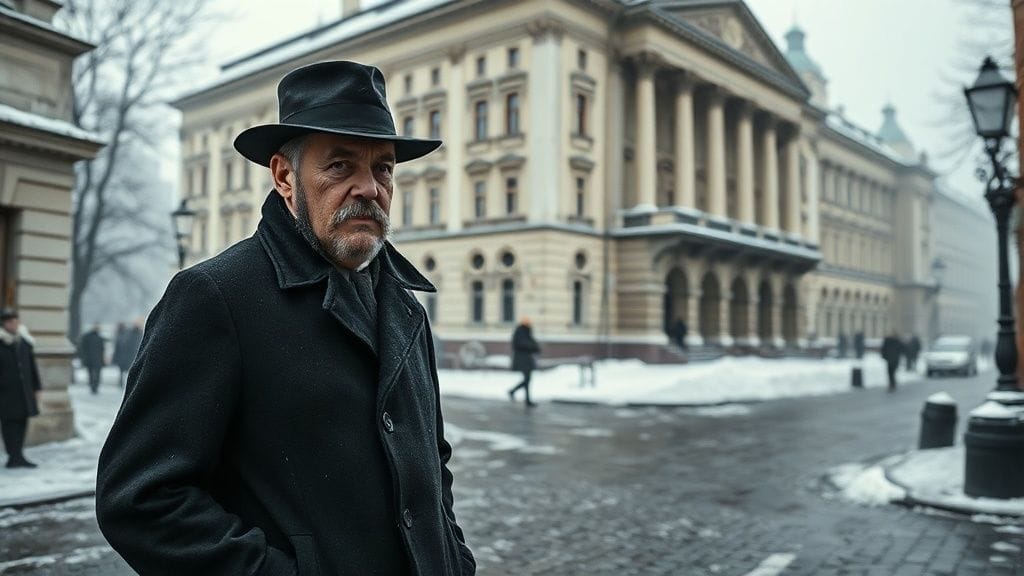
St. Petersburg was a city of contradictions—imperial splendor and stark poverty, faith and doubt, hope and despair. In early 1881, the icy winds cracked the city's ornate facades and ruffled the somber moods of its inhabitants. The political world was on edge; the Tsar, Alexander II, had been assassinated just two weeks prior, casting the empire into a shadow of uncertainty. Amid this turbulence, the death of Fyodor Dostoevsky struck like a quiet, personal catastrophe. Citizens marked the passing of the man who had laid bare their conscience and fears. His death was not merely a private sorrow for family and friends but a rung in the upheaval of Russia itself.
Fyodor Dostoevsky’s Last Days: An Intimate Portrait
In the weeks that led to his death, Dostoevsky’s health was fragile, plagued by epileptic fits and the ravages of chronic illness. Friends and family gathered around, offering whispered prayers and recounting memories of a man whose passionate intensity had never dimmed, even as his body waned. Accounts tell of him reading aloud from his works, a faint smile sometimes breaking through the pallor of his face, as if to remind those near him that ideas and words have lives longer than flesh. His beloved wife, Anna Snitkina, chronicled the torment and grace in his final hours with a devotion that spoke volumes of their bond.
The Literary Titan’s Collapse: February 9th, 1881
On the day Dostoevsky passed, a serene, frostbitten morning bled slowly into twilight. The city’s usual clamour was toned down by a quietude that seemed to anticipate the loss. His last seizure was severe, a battle between the fragile human form and the relentless shadow of neurological illness. Surrounded by those who loved him, the great author slipped away at 3:30 pm Russian time. The hushed world outside contrasted the storm of thought and emotion within. His death, while expected by some, was a knife twisting in the heart of Russian literature and those who loved it.
Russia at the Brink: The Socio-Political Climate of the Late 19th Century
To understand the significance of Dostoevsky’s death, one must peer into the complex tapestry of Russia’s late 19th-century societal changes. Alexander II’s era had been marked by reform and repression, liberation and reaction. The mind of Dostoevsky was deeply entangled in these currents. He witnessed the emancipation of the serfs, the growing revolutionary movements, and the existential anxieties of a nation striving for identity amid rapid modernization and enduring autocracy. His works floated atop this turbulent sea, his voice at once prophetic and despairing. The Russia he left behind was one simmering with unrest and yearning for transformation.
Life and Times of Dostoevsky: Shadows and Brilliance
Born in 1821, Dostoevsky's life was an epic of human endurance against dark tides. From the death of his mother when he was young, to his harrowing imprisonment in Siberian labor camps, to his literary rebirth, Dostoevsky’s biography reads like a novel—sometimes tragic, sometimes transcendent. Throughout, he wrestled with themes of faith, morality, suffering, and redemption in a world increasingly disenchanted. His novels—Crime and Punishment, The Brothers Karamazov, Notes from Underground—are milestones of existential literature, exploring the labyrinths of conscience and the abyss of human despair.
The Weight of Faith and Fatalism: Dostoevsky’s Philosophical Legacy
Dostoevsky’s death signifies the culmination of a journey steeped in spiritual struggle. A devout Orthodox Christian, he sought to reconcile man’s fallibility with divine grace. His writings convey intense dialogues between reason and faith, freedom and determinism. On his deathbed, reportedly, he clung to Christian hope, embodying his lifelong conflict between darkness and light. His philosophical legacy challenges readers to confront their own moral labyrinths—making his death a symbolic silence after a relentless questioning that resonated far beyond 19th-century Russia.
St. Petersburg: The Silent Witness to an Endless Sorrow
The city that bore Dostoevsky mirrored his complexities. St. Petersburg was often depicted in his works as a place of claustrophobia and spiritual suffocation, yet also a stage for redemption. The labyrinthine alleys, the harsh winters, the distinct mix of grandeur and decay, all contributed to his creative ethos. It was fitting that the city witnessed the passing of its most sensitive chronicler. His funeral procession wound through streets eager and yet reluctant to say goodbye, as if the cobblestones themselves remembered the footsteps of a giant.
The Medical Struggle: Illness and Death in 19th Century Russia
Medical care in 1881 Russia was rudimentary and often fatal. Dostoevsky’s suffering from epilepsy—a disease poorly understood at the time—and the effects of chronic cardiovascular disease typify the limited treatments available. His doctors were equipped with compassion but lacked the means to arrest his decline. In a haunting episode, the very city that inspired his literary genius was powerless to save him from the physical frailty that had shadowed much of his adult life.
The Final Farewell: Funeral Rites and Public Grief
On the day after his death, St. Petersburg’s intellectual elite and common citizens alike gathered to mourn. The funeral was solemn; the Orthodox rite echoing the metaphysical gravitas that characterized Dostoevsky’s existence. His burial at Tikhvin Cemetery in the Alexander Nevsky Monastery placed him among the pantheon of Russian greats—Tchaikovsky, Mussorgsky, others who had shaped Russian identity. Yet for many, the grave was less a place of closure than the starting point of a legacy renewed by collective memory.
Reactions Across Russia and Beyond: The World Reflects
News of Dostoevsky’s death traveled swiftly. Writers, philosophers, and ordinary readers across Europe and America grappled with the loss. Leo Tolstoy lamented the passing of one of Russia’s few true conscience-keepers. Intellectuals acknowledged how Dostoevsky’s unflinching exploration of human nature had opened new avenues for literary modernity. Even critics who disagreed with his views recognized his singular genius. His death was mourned as the extinguishing of a flame that had illuminated the darkest human truths without respite.
How Dostoevsky’s Death Marked the End of an Era
More than the loss of an individual, Dostoevsky’s death symbolizes the closing of a chapter in Russian culture. The 19th century’s great debates between Westernizers and Slavophiles, between faith and nihilism, found in Dostoevsky a fulcrum. After his passing, new intellectual currents emerged, signifying changes in art, politics, and spiritual thought. The Russia of Dostoevsky’s youth was fading, supplanted by the revolutionary storms of the 20th century and the rise of ideologies that would challenge religion and literature alike.
Literary Influence: Posthumous Reverberations in Russian Letters
In the decades following his death, Dostoevsky’s influence deepened. Writers such as Andrei Bely, Vladimir Nabokov, and even Western existentialists like Jean-Paul Sartre and Albert Camus navigated the philosophical ground Dostoevsky had laid. His exploration of psychological depth set the stage for modern narrative forms. Academics and critics dissected his prose, while playwrights and filmmakers adapted his timeless scenes of suffering and redemption. To this day, his literary presence dominates discussions on human complexity and morality.
Political Aftershocks: The Author as a Symbol of Turbulent Russia
Dostoevsky’s death occurred at a volatile political moment, but his ideas persisted as ideological lightning rods. Conservatives hailed him as a defender of Orthodoxy and traditional values; revolutionaries saw him as a warning against nihilism and moral decay. His multifaceted legacy has been appropriated, debated, and contested by diverse political movements. The tensions he explored between individual freedom and social order continue to resonate in Russian political discourse and global debates about authority and conscience.
Memory and Memorials: Keeping Dostoevsky Alive in the Capital
Today, St. Petersburg houses numerous sites dedicated to his memory—the modest flat where he died, museums filled with artifacts, statues that silently guard the corners of Nevsky Prospect. Pilgrims and tourists alike walk the city tracing his footsteps, feeling the weight of history in its streets. His grave remains a site of quiet reflection, a physical anchor for a soul whose voice remains vital. These memorials keep alive Dostoevsky’s extraordinary presence, a reminder that even death cannot still the human search for meaning.
The Contested Legacy: Dostoevsky in Modern Scholarship
Scholars grapple with Dostoevsky’s work in light of contemporary questions—psychology, theology, and politics. His apparent contradictions—between a conservative faith and radical empathy for outcasts—make him a complex subject of analysis. Modern readings debate his views on gender, society, and mental illness, enriching and sometimes challenging canonical interpretations. Yet this very contestation underscores his enduring relevance. Dostoevsky remains not a relic, but a living dialogue between past and present.
Conclusion: The Eternal Pulse of a Voice Silenced Too Soon
The death of Fyodor Dostoevsky on that cold February day in 1881 was both an end and a beginning. While his mortal frame succumbed to time, his ideas and emotions surged beyond the constraints of life and death. He had exposed the fractures in the human soul and the pain of existence with unyielding honesty. In the silent streets of St. Petersburg and the hearts of readers worldwide, his legacy continues to pulse with vitality. To remember Dostoevsky is to remember the complexity of being human—dark and light entwined forever.
FAQs
Q1: What caused Fyodor Dostoevsky’s death?
A1: Dostoevsky suffered from epilepsy and chronic cardiovascular ailments. His death on February 9, 1881, was due to complications arising from his longstanding health issues, culminating in a severe epileptic seizure.
Q2: How did the political climate of Russia in 1881 influence Dostoevsky’s works?
A2: Living through a period marked by reform and repression, Dostoevsky’s writing was deeply influenced by the social tensions of Russia, especially debates over faith, nihilism, and revolutionary ideologies, embodying the struggles of a society on the brink of transformation.
Q3: What was the public reaction to Dostoevsky’s death?
A3: Dostoevsky’s death was widely mourned in Russia and abroad. Intellectuals, writers, and common citizens recognized the loss of a literary giant whose exploration of morality and psychology had reshaped the cultural landscape.
Q4: How did Dostoevsky’s philosophy shape Russian thought?
A4: His fusion of Orthodox Christian beliefs with psychological insights created a unique worldview that challenged both Western rationalism and radical nihilism, influencing Russian literature, philosophy, and even political ideologies.
Q5: Where is Dostoevsky buried, and how is he commemorated?
A5: He is buried at Tikhvin Cemetery in the Alexander Nevsky Monastery in St. Petersburg with other notable Russian figures. The city honors him through museums, his former residence, statues, and literary festivals.
Q6: Did Dostoevsky’s death have an impact on Russian politics?
A6: While not a political actor himself, Dostoevsky’s death symbolized a shift. His complex views were co-opted by various factions, highlighting the ideological conflicts that foreshadowed revolutionary changes in Russian society.
Q7: How has modern scholarship interpreted Dostoevsky’s legacy?
A7: Modern scholars continue to debate his literary style, philosophical messages, and social views, making his work a fertile ground for interdisciplinary analysis in literature, theology, psychology, and political studies.
Q8: Why does Dostoevsky remain relevant today?
A8: His deep exploration of human nature, morality, faith, and existential struggle speaks across time and culture, offering insights into the enduring questions that confront every human being.