Table of Contents
- The Fateful Day: Shelley’s Last Voyage
- The Man and the Myth: Who Was Percy Bysshe Shelley?
- The Winds of Romanticism: Shelley’s Place in a Changing World
- Troubled Waters: The Voyage to Viareggio
- The Storm on the Mediterranean: Nature’s Fury Unleashed
- Discovery on the Shore: The Tragic Morning After
- The Company Lost: Edward Williams and Charles Vivian
- Theories and Speculations: What Really Happened?
- Shelley’s Legacy at Sea and on Land
- The Funeral Pyre: Death and Commemoration in Italy
- Grief and Controversy: Mary Shelley’s Response
- The Poetic Immortality of Death by Water
- Early 19th-Century Attitudes Toward Drowning and Death
- The Italian Coast in 1822: Political and Social Context
- Posthumous Fame: Shelley’s Rising Star in Letters
- Artistic and Literary Reactions to Shelley’s Death
- The Place of Viareggio in Shelleyan Lore
- Impact on Romantic Literature and Subsequent Generations
- The Environmental and Nautical Challenges of Mediterranean Sailing
- Remembering Shelley Today: Memorials and Cultural Memory
The Fateful Day: Shelley’s Last Voyage
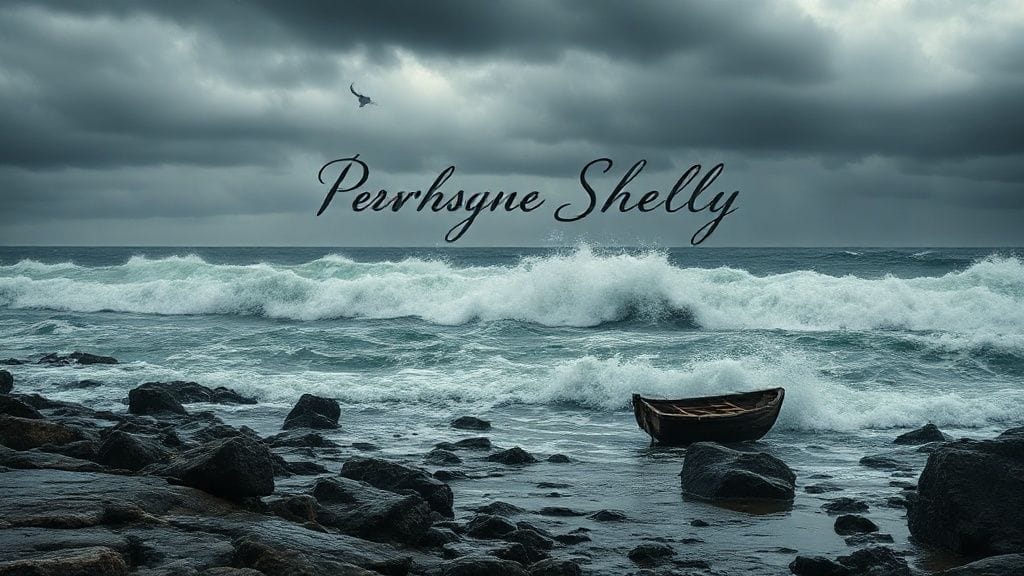
It was the early dawn of July 8th, 1822, along the rugged coastline near Viareggio, a small fishing village nestled like a jewel on the Tuscan shore. The sea, often a source of solace and inspiration for the great poet Percy Bysshe Shelley, had turned vengeful. Fierce gusts drove towering waves into the shoreline as a fragile sailing vessel was consumed by the restless waters. All that remained the next morning was a shattered hull and scattered remnants of canvas and timber. Among them, the body of one of England’s most fervent Romantic poets—drowned, stolen forever by the Mediterranean.
In an instant, the world lost Percy Bysshe Shelley—not just a man, but a lyrical voice of rebellion and hope, whose life had been as tempestuous and brilliant as the skies above that doomed sea. The night had raged with nails of cold rain and soaring winds that broke the courage of men and craft alike. It was a cruel baptism by the sea, sealing Shelley’s fate and echoing his poems’ haunting meditations on nature, mortality, and the sublime.
But this grim tableau was only the beginning of a story mingled with myth and sorrow, love and loss, facts and mystery. Who was this man who met his end in such lonely fashion? How did the waves claim him? And what legacy did he leave behind, rippling through generations like the endless tides?
The Man and the Myth: Who Was Percy Bysshe Shelley?
Born on August 4, 1792, into a privileged English family, Percy Bysshe Shelley was a figure of contradictions. A radical thinker and impassioned idealist, Shelley rejected social conventions with a fiery moral compass, championing liberty, equality, and poetic imagination. His works, from Queen Mab to Ozymandias, pulsated with political vision and ethereal beauty.
Yet Shelley’s life was marked by scandal and exile. His outspoken atheism and advocacy of free love estranged him from society and his own family. After a series of tumultuous relationships and personal losses, he settled in Italy, seeking refuge and creative sanctuary. It was in this Mediterranean exile that he produced some of his most profound poetry, walking the line between idealistic dreams and harsh reality.
His friends and contemporaries saw him as a man of extraordinary charm and fierce intellect, a visionary haunted by the weight of the world’s injustices. But few could have imagined that his fate would be decided not by man or martyrdom, but by the unpredictable cruelty of the sea.
The Winds of Romanticism: Shelley’s Place in a Changing World
The early 19th century was an era of upheaval and transformation. The aftermath of the French Revolution, the Napoleonic Wars’ close, and the Industrial Revolution’s gathering steam cast long shadows over Europe’s intellectual landscape. The Romantic movement arose as a passionate response—championing emotion over reason, nature over machinery, and individual spirit over the stifling grip of tradition.
Shelley stood at the very heart of this cultural tempest. His poetry celebrated the sublime forces of nature—storms, seas, and skies—as metaphors for human freedom and spiritual transcendence. But his ideals often put him in conflict with the conservative order, forcing him abroad and into the company of like-minded exiles such as Lord Byron and John Keats.
Italy itself was a crucible of romantic ideals, with its sun-drenched landscapes, ancient ruins, and restless political ferment. For Shelley, the country was a refuge and a stage from which he could dream of a better world—but also where the harsh elements would test the fragile limits of his mortal existence.
Troubled Waters: The Voyage to Viareggio
In the summer of 1822, Shelley and his close friend Edward Ellerker Williams planned a pleasure cruise along the Tuscan coast on the Don Juan, a small schooner. Accompanying them was Charles Vivian, a companion who shared their adventurous spirit and thirst for freedom.
What began as a serene journey became fraught with peril as unseasonable weather approached. The Mediterranean in summer, while often benign, could turn treacherous without warning. Local fishermen warned of storms on the horizon, and the skies darkened ominously.
Yet Shelley, determined and restless, chose to sail on. His mind whirled with poetic reveries even as the clouds gathered. The sea had always been both muse and menace, a symbol in his works of chaotic beauty and destruction. But on this day, it would not grant clemency.
The Storm on the Mediterranean: Nature’s Fury Unleashed
As the vessel made its way near the shores of Viareggio, a tempest of sudden ferocity struck. Fierce winds tore at sails and rigging, while waves as tall as houses crashed against the small boat. Darkness engulfed the sky, lightning fractured the night, and thunder roared like an angry god.
Shelley and his companions faced a fight not only for their voyage’s survival but for their lives. Eyewitnesses would later speak of the violent squall that dashed their hopes. Visualizing the chaos, one understands the terror of men adrift at the mercy of relentless, swirling waters.
The schooner floundered, caught between rock and abyss. As the rigging snapped and the mast broke like a reed, the men were thrown into the churning sea.
Discovery on the Shore: The Tragic Morning After
When morning broke with blood-red light, fishermen discovered the remains of the vessel scattered along the rocky beach below the dunes. The sea, having expended its wrath, lay deceptively calm.
Among the debris washed ashore was the body of Shelley, coffin-bound by salt and seaweed. It was Edward Williams and Charles Vivian whose fate remained less certain, though it was later established all had perished in the same watery grave.
Shelley’s corpse was recovered—tragically, he had drowned before the rescue could come. His death was as swift as it was cruel, an abrupt end to a life filled with poetic yearning.
The Company Lost: Edward Williams and Charles Vivian
Edward Ellerker Williams was more than just a friend; he was a kindred spirit and fellow exile. Like Shelley, Williams sought in Italy what the restrictive English society denied—a freer existence and intellectual camaraderie.
Charles Vivian, less well-known, was also part of this intimate circle, sharing in the joys and risks of travel. All three men perished together, emblematic of a generation of young radicals who lived and died on their ideals, sometimes literally cast against the world’s harsh edges.
Their loss was felt deeply by those who survived, especially Mary Shelley, who struggled to reconcile grief with the need to safeguard her husband’s reputation.
Theories and Speculations: What Really Happened?
The mystery surrounding Shelley’s death sparked various accounts and theories. Was it misjudgment of the weather? A tragic accident? Or could human error or equipment failure have contributed?
Some accounts suggested the Don Juan was ill-prepared for the conditions, its small size vulnerable to the sudden storm. Others hypothesized that Shelley’s own impulsiveness led him into danger. The lack of definitive eyewitness testimony has left space for speculation, mythmaking, and romantic embellishment.
Moreover, contemporary reports reflected the confusion and chaos typical after maritime disasters, where facts blend with legend—foreshadowing the poet’s own blending of reality and imagination.
Shelley’s Legacy at Sea and on Land
While his body was claimed by the sea, Shelley’s spirit roared beyond mortal limits. His death by drowning immortalized his image as a poetic martyr to the forces of nature and liberty.
Back on land, Shelley’s influence grew steadily—his works became templates of Romantic idealism and political dissent. His physical loss underscored the fragility of human life against elemental power but jolted the literary community into deeper appreciation.
Drowned near Viareggio, Shelley came to symbolize the eternal struggle between humanity’s fragility and creative resilience.
The Funeral Pyre: Death and Commemoration in Italy
Following the recovery of his body, Shelley was cremated on the beach near Viareggio, according to the rites of local custom. Mary Shelley and acquaintances watched as the flames consumed the mortal remains.
The funeral pyre itself seemed almost an enactment of one of Shelley’s own poetic images—fire and wind mingled, transforming flesh back into elemental force. A copy of his poem Adonais, an elegy to the young poet Keats who had died earlier that year, was placed amid the ashes—a symbolic communion of Romantic souls.
The site of the pyre, once humble and solitary, has since become a pilgrimage point for admirers worldwide.
Grief and Controversy: Mary Shelley’s Response
Mary Shelley, widow of Percy, was shattered by the loss yet resilient. Trusted with noble memorialization, she saw to the preservation of Shelley’s writings and memory.
But her grief was shadowed by controversy: Shelley’s radical views and personal scandals complicated public commemoration. Some detractors used his unconventional life to diminish his legacy.
Nevertheless, Mary’s tireless efforts ensured that posterity would know Shelley as more than a drowned poet—but as a visionary revolutionary whose voice transcended death.
The Poetic Immortality of Death by Water
Drowning has long held a symbolic place in literature and mythology—death by water often signifies cleansing, transformation, or tragic beauty. For Shelley, this poetic fate echoed his themes of nature’s vastness and the fragility of man.
Throughout history, great artists lost to the sea have acquired a mystical aura. Shelley’s drowning near Viareggio elevated him to such mythic status, embodying the Romantic ideal of the artist consumed by the sublime.
His death remains poetic not only in fact but in metaphor, inspiring countless reflections on mortality and genius.
Early 19th-Century Attitudes Toward Drowning and Death
In Shelley’s time, drowning was both a common hazard and a deeply unsettling form of death. Lacking modern rescue technology, seafaring perils evoked fear and respect for nature’s unpredictable power.
Religious and philosophical attitudes often interpreted drowning as a test of the soul—ambiguous, sometimes tragic, sometimes transcendent. For a man like Shelley, atheist and revolutionary, death by water defied conventional religious consolation, but reinforced his own complex relationship with nature and mortality.
The Italian Coast in 1822: Political and Social Context
Italy in 1822 was fractured, still under various foreign and local rule, a patchwork of kingdoms and republics simmering with revolutionary sentiment. Tuscany, where Viareggio lies, was under nominal Habsburg influence but culturally vibrant.
This political backdrop added layers to Shelley’s presence in Italy—as a foreign radical amidst simmering unrest. The lure of freedom and beauty contrasted starkly with the real dangers of travel and exile.
The unquiet seas mirrored the unquiet politics, weaving Shelley’s death into a broader European story of transformation and upheaval.
Posthumous Fame: Shelley’s Rising Star in Letters
Though Shelley never achieved widespread fame in his lifetime, death paradoxically opened the gates to literary immortality. His works spread throughout Europe, influencing writers, thinkers, and politicians.
By mid-century, Shelley was recognized as not merely a great poet but as a pioneer of modern expression, revolutionary and visionary. His drowning near Viareggio became part of the mythos that elevated his voice to that of a prophet silenced too soon.
Artistic and Literary Reactions to Shelley’s Death
The literary world mourned fervently. Lord Byron famously lamented the loss of his “brilliant friend.” Keats’s elegy Adonais resonated anew, a poignant tribute to kindred spirits extinguished young.
Artists and poets created images of Shelley that balanced heroism and vulnerability, amplifying his story as a symbol of Romantic tragedy.
His death inspired new waves of creativity and critique, defining an era’s emotional and intellectual heartbeat.
The Place of Viareggio in Shelleyan Lore
The small Tuscan town of Viareggio became immortalized as the final chapter of Shelley’s earthly journey. The beach where he was cremated, the ruins along the shore, and local oral history have all preserved his memory.
Even today, Viareggio hosts commemorations and cultural events recalling that fateful July night. Walks on the moonlit coast evoke Shelley’s restless spirit—the sea both grave and muse.
Impact on Romantic Literature and Subsequent Generations
Shelley’s life and death left indelible marks on literature. His fearless expression, melding politics and poetry, inspired figures from the Pre-Raphaelites to modernists and beyond.
Romantic literature took on new dimensions of personal sacrifice and cosmic struggle, partly shaped by the shadow of Shelley’s watery demise.
His example inspired generations to embrace risk, creativity, and reform, forging paths toward freedom of expression.
The Environmental and Nautical Challenges of Mediterranean Sailing
Sailing in the Mediterranean during the early 19th century was a perilous enterprise. Weather forecasts were rudimentary, charts incomplete, and vessels vulnerable to sudden storms like the one that overwhelmed Shelley.
Navigating coastal shoals, unpredictable winds, and sudden squalls required skill and luck. For Shelley’s small schooner, these natural challenges proved fatal.
Understanding these conditions adds realism to the tragedy and honors the human cost behind romantic legend.
Remembering Shelley Today: Memorials and Cultural Memory
Percy Bysshe Shelley remains cherished worldwide as an emblem of poetic genius and idealistic rebellion. His Viareggio death site is a locus of remembrance.
Memorials, plaques, and literary festivals celebrate his legacy. Scholars continue to examine his works and life, seeking insights into his enduring relevance.
Shelley’s death on the sea still speaks across centuries—a reminder of the intertwining forces of art, nature, and mortality.
Conclusion
Percy Bysshe Shelley’s death, drowned near Viareggio’s rugged shores, was a tragic punctuation mark to a life saturated with passion, idealism, and defiance. This maritime catastrophe, far from silencing his voice, transformed it into an eternal echo across waves and time.
His demise was the fusion of man and nature—both creator and victim of the sublime forces he so loved to evoke in verse. The sea that claimed him also immortalized him, casting Shelley forever as a poet whose life and death were inseparable from the elemental power of the world he sought to change.
In loss, there is profound human resonance. Shelley’s watery grave reminds us of the fragility of dreams amid the vastness of existence. Yet, his words continue to inspire, to challenge, and to awaken the restless spirit of freedom in every generation.
His story urges us to embrace life’s uncertainties with courage and to find beauty even in the darkest depths—because like the sea, the human soul is vast, turbulent, and endlessly profound.
FAQs
Q1: What caused Percy Bysshe Shelley’s death?
A1: Shelley drowned during a sudden storm while sailing near Viareggio, Italy, on July 8, 1822. The small schooner was overwhelmed by turbulent Mediterranean seas and severe weather.
Q2: Who were the companions lost with Shelley?
A2: Edward Ellerker Williams, a close friend and fellow traveler, and Charles Vivian, also aboard the schooner, perished alongside Shelley.
Q3: How did Mary Shelley react to Percy’s death?
A3: Mary Shelley was devastated but remained committed to preserving Percy’s literary legacy. She arranged his cremation and later worked to publish and promote his works.
Q4: Was there speculation about foul play in Shelley’s death?
A4: No credible evidence suggests foul play; the death is generally attributed to accidental drowning caused by a severe storm.
Q5: How did Shelley’s death influence Romantic literature?
A5: His tragic death enhanced his mythic status, inspiring poets and artists to explore themes of mortality, heroism, and the sublime in nature.
Q6: Why was Shelley in Italy at that time?
A6: Shelley lived in Italy to escape social ostracism in England due to his radical views and to find inspiration among the country’s rich cultural and natural landscapes.
Q7: Where was Shelley buried?
A7: Shelley’s body was cremated on the beach near Viareggio. His ashes were later moved several times, and a memorial exists in Rome’s Protestant Cemetery.
Q8: How is Shelley remembered today?
A8: Shelley is commemorated through literary studies, memorials near Viareggio, and global celebration of his poetry and ideals.

