Table of Contents
- The Final Dawn: October 12, 1870, Lexington, Virginia
- A Life’s Twilight: Robert E. Lee’s Last Days
- The Legacy of a Confederate General
- The Lee Family Amidst Turmoil
- Lexington in the Post-War South: A City in Transition
- Medical Science and Mortality in 1870
- Facing Death: Robert E. Lee’s Resilience and Dignity
- The Immediate Reaction: Grief and Reverence
- The Funeral Procession and Public Mourning
- Reflections on Lee’s Military Career and Controversies
- The Role of Washington College and Lee’s Presidency
- Hero or Villain? Diverging Historical Narratives
- The Changing Memory of Robert E. Lee Through Generations
- The Southern Identity and the Cult of the Lost Cause
- Robert E. Lee’s Death in the Context of Reconstruction America
- Monuments, Memorials, and the Politics of Memory
- The Family Graveyard: A Final Resting Place
- Lee’s Death and the Shaping of American Memory
- Lessons Learned: Leadership, Morality, and Legacy
- Conclusion: The End of an Era and the Beginning of a Dialogue
- FAQs About Robert E. Lee’s Death and Legacy
- External Resource
- Internal Link
The Final Dawn: October 12, 1870, Lexington, Virginia
The morning of October 12, 1870, dawned quietly over Lexington, Virginia—an unassuming town nestled among the Blue Ridge Mountains. The fall air was crisp, tinged with the mellow scent of aging leaves and the distant, muted hum of rural life. But inside the modest room of Washington College’s modest president’s house, an atmosphere far heavier than the autumn mists prevailed. There, in the fading light, Robert E. Lee, once the most celebrated Confederate general, lay gravely ill. His breath was shallow, his strength long since waning. The hour was near, not just for a man whose body was surrendering, but for an epoch embodied by his singular presence—the fading of the Confederacy’s torchbearer and the slow, bitter reckoning of a nation still reeling from civil war.
A Life’s Twilight: Robert E. Lee’s Last Days
Robert E. Lee’s final months were marked by the slow erosion of vitality, a man encumbered not merely by illness but by the immense weight of history. The general had survived fields strewn with death, the cannon roars of Appomattox, and the turbulent aftermath of a war that had sundered his beloved South. But now, it was a disease concealed beneath the pleasantries of his final days—pneumonia—that claimed him. Those who surrounded him recalled his stoicism; even amongst his fading faculties, Lee remained a figure of solemn resolve. His reflections, filtered through a lifetime of honor, duty, and loss, painted the portrait of a man confronting mortality with an almost serene acceptance.
The Legacy of a Confederate General
Lee was more than a general; he was a symbol. To millions of Southerners, he represented martial honor, the ideal of sacrifice, and a fraught but undeniable devotion to regional identity. Yet, behind the veneration lay an intricate tapestry of contradiction: Lee the slaveowner, Lee the military tactician who fought for a cause many considered treasonous, Lee the reluctant participant who refused to oppose Virginia itself. By the time of his death, the general had become a living repository of Confederate memory, yet also a figure whose legacy would be dissected, contested, and reinterpreted for generations ahead.
The Lee Family Amidst Turmoil
In the autumn of 1870, Lee’s family—his wife Mary Anna, children, and close confidants—watched over him with a mixture of hope and heartache. The war had not only reshaped Robert E. Lee's public life but had exacted a heavy toll on his kin. Their modest household bore silent witness to the scars both visible and invisible, with tales whispered in quiet corners about sacrifice, survival, and the uncertain future awaiting a family forever linked to the Confederacy’s cause. The domestic reality behind Lee’s stately public image was one of struggle, endurance, and an abiding hope for reconciliation.
Lexington in the Post-War South: A City in Transition
Lexington itself was emblematic of the South’s postbellum predicament. The town that housed Washington College, where Lee now served as president, wrestled with economic hardship and societal upheaval. Once a thriving community, Lexington had been scarred by the ravages of war and the tumultuous task of reconstruction. Yet, it was a place where old traditions met new realities—a crucible of Southern identity in flux and an apt stage for the final act of a man who had come to personify much of the region’s pride and pain.
Medical Science and Mortality in 1870
The medical world in 1870 was simultaneously hopeful and helpless. Pneumonia, a condition now treatable, was then often a death sentence. Lee’s illness progressed under the care of the era’s limited medical knowledge—men with basic instruments, herbal remedies, and rudimentary understandings of infection. The absence of antibiotics, the frequent complications, and the lack of effective interventions meant many patients marked their final days in quiet suffering. Lee’s death, therefore, was not only a historical moment but also a reflection of 19th-century medicine’s boundaries.
Facing Death: Robert E. Lee’s Resilience and Dignity
Contemporaries recounted Lee’s final moments with a mixture of awe and sorrow. Though plagued by weakness, the general retained his signature dignity, his calm voice offering prayers and even modest blessings to those around him. The spiritual dimension of his passing was palpable; Lee’s piety, grounded in his Episcopalian faith, framed his death not as an end but as a passage to peace. Those present described a serene farewell, a stark contrast to the tumultuous life that had preceded it.
The Immediate Reaction: Grief and Reverence
News of Lee’s death spread swiftly through Lexington and beyond, stirring waves of grief that resounded across the South. For many, Lee was not simply a man but an icon whose demise closed the final chapter of a lost cause. The emotional resonance transcended politics; it was a collective mourning for an era, a region, and a set of ideals. Public tributes poured in, letters of condolence reached his family, and communities prepared to honor their fallen hero with solemn ceremonies.
The Funeral Procession and Public Mourning
Lee’s funeral carried the weight of ritual and remembrance. The procession, winding through Lexington’s streets, was observed by throngs of mourners whose faces bore the tangled expressions of respect, sorrow, and nostalgia. His body was laid to rest in the Lee family crypt at the University Chapel, a quiet resting place honoring not only the man but what he symbolized for many. The dedication of his tomb became a post-war act of memory, a symbolic reclaiming of Southern pride amid the bitter realities of defeat.
Reflections on Lee’s Military Career and Controversies
Even in death, Lee’s military career provoked debate. Forever etched in history as the Confederate general who challenged the Union with tactical brilliance, his decisions—from Gettysburg to surrender—invited enduring scrutiny. Critics pointed to his defense of slavery and insurrection; supporters lauded his personal honor and the complexity of his allegiance. His military legacy became a prism through which the Civil War itself was reexamined, a story of heroism and hubris woven into the nation’s collective consciousness.
The Role of Washington College and Lee’s Presidency
From 1865 until his death, Robert E. Lee had dedicated himself to rebuilding Washington College (now Washington and Lee University). His tenure as president was marked by reconstruction not only of the institution but of Southern hope through education. Lee’s focus on discipline, moral education, and reconciliation bore fruit in shaping generations of leaders. His death, therefore, was mourned as the loss of an educator and moral guide as much as of a military legend.
Hero or Villain? Diverging Historical Narratives
Lee’s legacy prompted polarized views that have only deepened over time. For some, he was a paragon of Southern honor and the embodiment of noble sacrifice. For others, he symbolized the defense of slavery and rebellion against the United States. These conflicting narratives have shaped the contentious debates surrounding Confederate memory, race relations, and regional identity, debates that remain alive well into the 21st century.
The Changing Memory of Robert E. Lee Through Generations
Over the ensuing decades, Robert E. Lee’s image evolved with changing political and social currents. Monuments rose in his honor, and his story was woven into the “Lost Cause” mythology, romanticizing the Confederate fight while downplaying its foundations. Yet, subsequent generations revisited these tales with critical eyes, challenging mythologies and seeking more nuanced appraisals. The trajectory of Lee’s memory reflects broader shifts in American attitudes toward history, race, and reconciliation.
The Southern Identity and the Cult of the Lost Cause
Lee’s death marked not only the loss of a man but the crystallization of the “Lost Cause”—a cultural movement that sought to exalt Confederate ideals as honorable and just. This ideology, centered on figures like Lee, framed Southern defeat as a tragic but noble struggle, providing a framework for regional pride amid defeat. Today, historians view this phenomenon with complexity, recognizing its influence on race relations, segregation, and American memory politics.
Robert E. Lee’s Death in the Context of Reconstruction America
The years following the Civil War were a turbulent, transformative period for America. Lee’s death in 1870 coincided with the closing phases of Reconstruction, a time characterized by contested federal policies, social realignments, and racial tensions. Lee’s passing thus echoed beyond Virginia—symbolizing the South’s uncertain future, the challenges of reunification, and the unresolved legacies of war and emancipation.
Monuments, Memorials, and the Politics of Memory
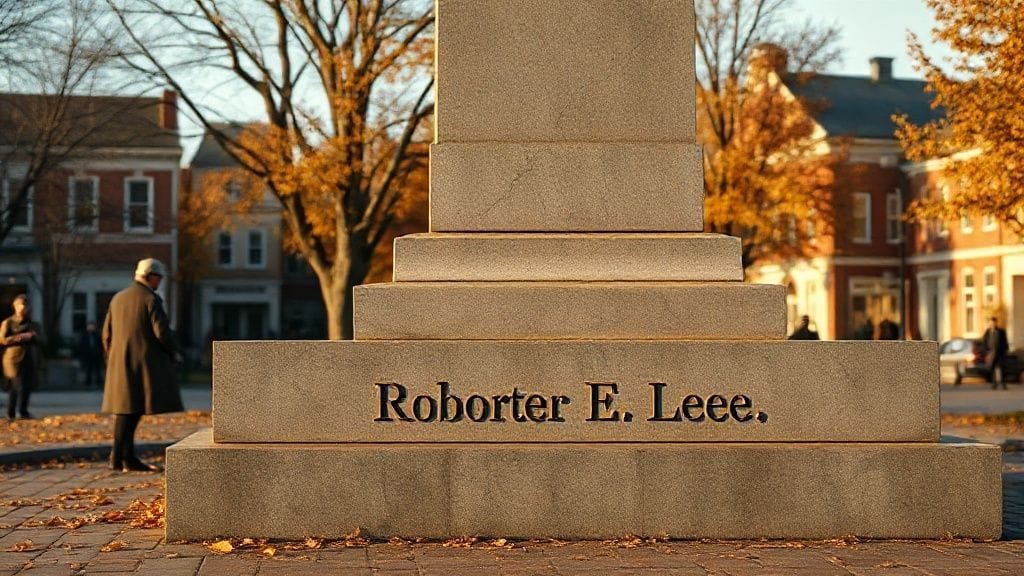
The posthumous veneration of Lee fueled the erection of statues, plaques, and educational institutions bearing his name. These memorials have sparked intense debate over public history, memory, and the role of Confederate symbols. The conversations surrounding these monuments illustrate the enduring power of Lee’s image in American cultural and political life, as communities wrestle with how to remember a deeply divided past.
The Family Graveyard: A Final Resting Place
Robert E. Lee’s tomb in Lexington is a modest yet dignified homage, nestled within the University Chapel grounds. The graveyard holds the remains of the Lee family, creating a somber place of reflection on blood, legacy, and memory. Visitors often describe a solemn experience marked by reverence for the man and the complex story of the Old South he represents.
Lee’s Death and the Shaping of American Memory
The death of Robert E. Lee was more than the passing of an individual; it was a moment that shaped how America would remember and reconcile its Civil War wounds. Lee’s storied life and death have become touchstones in the ongoing national dialogue about honor, division, and unity—a symbol through which the past is continually negotiated and reinterpreted.
Lessons Learned: Leadership, Morality, and Legacy
Lee’s death invites contemplation on the intricate intersections of leadership, morality, and historical legacy. His life story, culminating in his final breath, underscores the ambiguities of allegiance and conscience in a fractured nation. Studying his death helps illuminate the challenges faced by leaders in times of conflict and reconstruction, opening crucial discussions on forgiveness, responsibility, and the power of memory.
Conclusion
Robert E. Lee’s death on that quiet October day in 1870 was the fading of a figure larger than life, a man whose presence had come to embody the hopes, tragedies, and contradictions of the American South. Yet, his passing was not simply a closing of a chapter; it was an invitation—a call to grapple with the profound complexities of history. Through grief, memory, and debate, the story of Lee is woven into the American fabric, a story that remains deeply human and hauntingly unfinished. The legacy he left behind challenges us to look beyond black-and-white narratives and to embrace the richness and pain of a shared past.
FAQs
Q1: What exactly caused Robert E. Lee's death?
Robert E. Lee died from pneumonia, an illness that, in 1870, was often fatal due to limited medical knowledge and lack of antibiotics.
Q2: How was Lee’s death received across the United States, especially in the North?
While the South mourned deeply, reactions in the North were more varied—ranging from respect for Lee’s personal honor to indifference or criticism of his role in the Confederacy.
Q3: What role did Washington College play in Lee’s post-war life?
After the war, Lee became president of Washington College, dedicating himself to education and reconciliation, helping to rebuild the South’s intellectual and moral landscape.
Q4: Why is Robert E. Lee such a controversial figure today?
Lee’s legacy intertwines military valor with his service to a slaveholding, secessionist regime, leading to ongoing debates over how he should be remembered or commemorated.
Q5: How did Lee’s death influence Southern identity after the Civil War?
His death symbolized the end of an era and became a focal point for the “Lost Cause” narrative, which shaped Southern memory and identity for decades.
Q6: Where is Robert E. Lee buried?
Lee is entombed in a family crypt at the University Chapel in Lexington, Virginia—a place that has become a historical site of homage and reflection.
Q7: Did Lee express any regrets about the Civil War in his final days?
Though Lee maintained a dignified composure and expressed hope for reconciliation, he did not openly repudiate his decisions or role in the Civil War during his last days.
Q8: How has the public memory of Lee changed since his death?
Over time, Lee’s image shifted from a romanticized Southern hero to a contested figure, reflecting broader social and political changes in the United States.

