Table of Contents
- The Twilight of an Era: Kyoto, January 1867
- The Life of Emperor Kōmei: Tradition Bound and Troubled
- Japan’s Turbulent Mid-19th Century: Cracks in the Shogunate
- Diplomacy and Discord: Foreign Pressure and Internal Strife
- The Emperor’s Role: Silent Guardian or Subtle Power?
- Winter Shadows over Kyoto: The Final Days of Emperor Kōmei
- The Night of January 30: Death in the Imperial Court
- Mourning an Emperor: Rituals and Reverberations
- The Political Aftershock: From Kōmei’s Passing to Meiji’s Dawn
- Kyoto’s Changing Face: From Imperial Heart to Modern Capital
- The Succession of Emperor Meiji: Youth and Revolution
- Legacy of Kōmei: The Last Traditional Emperor?
- Imperial Isolation vs. National Transformation
- Human Stories: Courtiers, Sages, and Citizens in Kōmei’s Time
- The Emperor’s Death as Symbol: Tradition’s End or Continuity?
- The Global Context: Japan’s Place in a Changing World
- Reflections on Power, Change, and Mortality
- Conclusion: The End of an Era and the Birth of Modern Japan
- FAQs: Understanding Emperor Kōmei and His Time
- External Resource
- Internal Link
1. The Twilight of an Era: Kyoto, January 1867
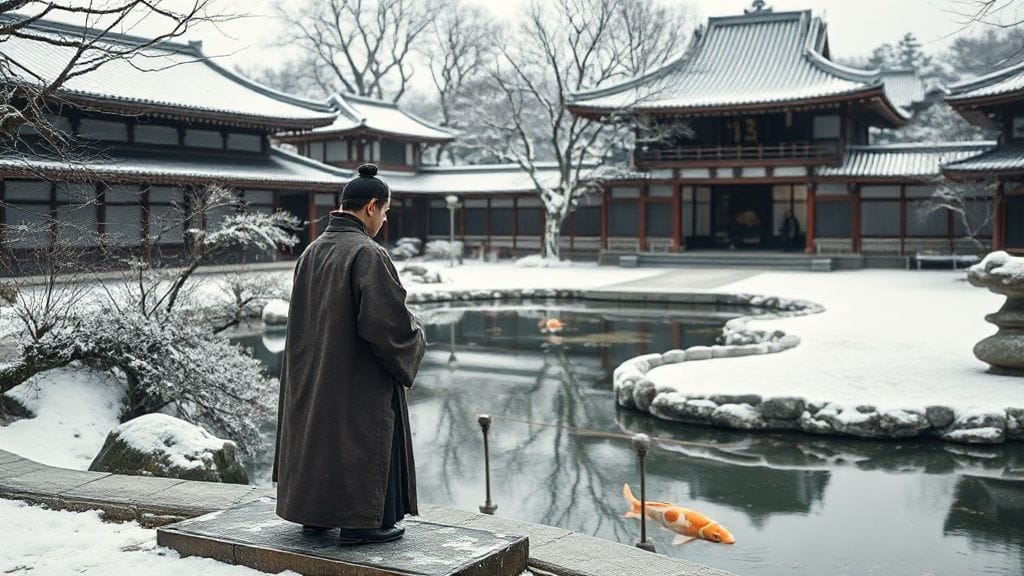
A frigid winter wind swept through the narrow lanes of Kyoto’s Imperial Palace. Clouds hung low over the ancient city, the cloak of dusk creeping rapidly as the day waned. In a dimly lit chamber, Emperor Kōmei lay struggling with a relentless illness, the weight of decades pressing upon his frail frame. Outside, the world was fracturing; the centuries-old Tokugawa shogunate teetered on collapse, while foreign ships had embroidered the coastline with their ominous weights.
January 30, 1867, marked the end of an emperor’s life but, more poignantly, the symbolic curtain descending on centuries of imperial tradition. It was a quiet death, but its echoes would resound through the coming decades, shaping Japan’s passage from feudal isolation to modern nationhood.
2. The Life of Emperor Kōmei: Tradition Bound and Troubled
Born in 1831 as Prince Osahito, Kōmei ascended the Chrysanthemum Throne in 1846 at just fifteen years old. Unlike the famed—though often distant—emperors before and after him, Kōmei’s reign coincided with exceptional upheaval. Japan had, since the early 1600s, adopted a policy of sakoku — near-total isolation. But by the 1850s, foreign powers forcibly peeled back the island kingdom's veil, thrusting Kōmei into a maelstrom of ideological and political conflict.
A man deeply rooted in Confucian and Shintō traditions, Emperor Kōmei resisted the waves of foreign intrusion. Unlike many of his predecessors, he became increasingly vocal in disapproval of the shogunate’s concessions to Western powers. Behind his unassuming presence murmured a spirit of defiance, yearning for the restoration of imperial power and the preservation of Japan’s cultural soul.
3. Japan’s Turbulent Mid-19th Century: Cracks in the Shogunate
The Tokugawa shogunate, ruling Japan since 1603, maintained a delicate balance: centralized military rule under the shōgun, with the emperor as a ceremonial figurehead secluded in Kyoto. This system cracked under pressure from both foreign and domestic forces.
Commodore Matthew Perry's arrival in 1853 demanded the opening of Japan’s ports, igniting heated debates and factionalism within the ruling class. Samurai factions split between accommodation and outright rejection, and the emperor’s court, long relegated to the sidelines, quietly voiced opposition to the shogunate’s compromises.
By the 1860s, movements advocating for sonnō jōi (“Revere the Emperor, Expel the Barbarians”) gained traction, encapsulating the volatile national mood. Emperor Kōmei found himself a reluctant yet powerful symbol for these rising tides of nationalism and change.
4. Diplomacy and Discord: Foreign Pressure and Internal Strife
The arrival of Western gunboats, missionaries, merchants, and diplomats unsettled centuries-old Japanese sensibilities. Unequal treaties burdened the shogunate with onerous conditions, including extraterritoriality for foreigners and opening ports that had been sealed for centuries.
Kōmei’s court perceived these developments as threats not just to sovereignty but to the spiritual essence of Japan. Emperor Kōmei’s resistance was not merely political; it came from a deeply felt conviction that Japan’s identity was at stake.
At the same time, factional violence raged. The Shimonoseki incidents, clashes in Kyoto streets, and assassinations punctuated the years leading to his death, signaling a society on the edge of revolution.
5. The Emperor’s Role: Silent Guardian or Subtle Power?
Though his political power was officially limited, Kōmei exercised a more subtle influence. He granted audiences to reformist domains and courtiers, in effect providing legitimacy to forces opposing the shogunate from 1863 onwards.
But his role remained paradoxical: an emperor ensconced in ritual and tradition, yet caught in a transforming world. His cautious opposition to the shogunate’s policies made him a symbol for those who sought restoration of imperial rule—even as he grappled with the overwhelming complexities of his era.
6. Winter Shadows over Kyoto: The Final Days of Emperor Kōmei
By late 1866, Kōmei’s health deteriorated sharply. The winter in Kyoto was harsh, and the political tensions cast long shadows over the palace. The emperor, reportedly suffering from smallpox or possibly tuberculosis (historians remain divided), withdrew from public life as his strength ebbed.
Yet whispers reached the capital streets: the aging emperor, a living emblem of Japan’s old world, was fading. Courtiers and retainers busied themselves with rituals and prayers, hoping against hope for a miracle. The present felt fragile; the future uncertain.
7. The Night of January 30: Death in the Imperial Court
On the evening of January 30, 1867, Emperor Kōmei passed quietly, surrounded by attendants who had witnessed the slow decline. Contemporary accounts describe a serene finality, almost as if the old Japan itself breathed out its last breath through him.
His death was not announced immediately; it was shrouded in the court’s ritual secrecy. The news reverberated through Kyoto and beyond—both a moment of mourning and a signal of change imminent.
8. Mourning an Emperor: Rituals and Reverberations
The imperial court’s response was steeped in tradition. The elaborate funeral rites honored not only a sovereign but a guardian of millennia of cultural continuity.
Yet beneath the formal grief, an undeniable tension persisted. Japan was on the brink of sweeping reform. The powerful consensus that the shogunate’s hold was breaking only deepened with Kōmei’s passing, igniting both hope and fear among the elites.
9. The Political Aftershock: From Kōmei’s Passing to Meiji’s Dawn
In a swift but carefully managed succession, Prince Mutsuhito became Emperor Meiji. At just 15 years old, the new emperor symbolized youth, potential, and, paradoxically, a rupture with the past.
The political space left vacant by Kōmei’s death accelerated processes that would culminate in the Meiji Restoration of 1868. The shogunate, weakened and delegitimized, would soon fall, and Japan would hurl itself into modernization and global engagement.
10. Kyoto’s Changing Face: From Imperial Heart to Modern Capital
While Tokyo (formerly Edo) ultimately emerged as Japan’s political capital, Kyoto remained the sacred imperial seat during Kōmei’s reign. The city’s traditional wooden temples, narrow streets, and imperial palaces echoed with centuries of history even as the pressures of modernization began to reshape Japan’s urban and political landscapes.
Kōmei’s death symbolized the end of Kyoto’s unchallenged place as the nation’s spiritual axis.
11. The Succession of Emperor Meiji: Youth and Revolution
Emperor Meiji’s ascension marked a new chapter. Though his early reign was carefully managed by elder statesmen, "Meiji" would become synonymous with Japan’s rapid transformation into an industrialized, centralized state.
The young emperor’s rule was both a continuation and a break from Kōmei’s legacy—a bridge between the old imperial order and a new, modern nation.
12. Legacy of Kōmei: The Last Traditional Emperor?
Historians often characterize Kōmei as a last bastion of the old imperial spirit—deeply traditional, resistant to foreign intrusion, and a guardian of Japan’s cultural heritage.
His death became a metaphor for the end of isolation and the beginning of modernization. Though overshadowed by Meiji’s sweeping reforms, Kōmei’s reign and demise remain crucial for understanding the emotional and spiritual landscape of mid-19th century Japan.
13. Imperial Isolation vs. National Transformation
Kōmei embodied the tension between a ancient isolationist worldview and an unavoidable transformation dictated by global pressures. His reluctance to bow to foreign powers reflected a cultural anxiety that modernization both endangered and promised renewal.
He stood as a symbol of sovereign dignity but also of vulnerability.
14. Human Stories: Courtiers, Sages, and Citizens in Kōmei’s Time
Beyond politics, Kōmei’s reign was lived and felt by countless individuals—loyal retainers, Confucian scholars, peasants, and courtiers—each caught in moments of hope, fear, and turmoil.
One courtier recounted, “Though he did not wield the sword, his spirit was sharper than any blade.”
These voices help us see Kōmei not only as an emperor but as a man amid societal collapse and rebirth.
15. The Emperor’s Death as Symbol: Tradition’s End or Continuity?
The notion of an emperor’s death in Japan goes beyond biography; it represents cosmic and cultural shifts. Kōmei’s passing was both a rupture with the past and a prelude to renewal.
Where some saw an end to centuries-old rituals, others perceived seeds of continuity amid upheaval.
16. The Global Context: Japan’s Place in a Changing World
Internationally, 1867 was a moment when empires clashed and empires crowned. The death of Emperor Kōmei happened as Japan’s neighbors—in China and Korea—also grappled with western intrusion and internal crises.
Kōmei’s Japan was a case study in how a deeply traditional society confronted the relentless forces of global modernity.
17. Reflections on Power, Change, and Mortality
Emperor Kōmei’s death confronts us with timeless questions: How does power endure and wane? How do societies balance tradition and innovation? And how does mortality mirror the fate of nations?
His passing was a poignant reminder that history is shaped not only by leaders' actions but also by their human fragilities.
Conclusion
Emperor Kōmei’s death on January 30, 1867, was quiet yet earthshaking. It marked the twilight of an era in which Japan stood at a gulf—between isolation and engagement, tradition and change, old order and revolution. His life embodied the struggles of a nation trembling under the weight of foreign pressure and internal upheaval.
Yet from his passing emerged a phoenix in the form of Emperor Meiji and the Meiji Restoration, setting Japan on a trajectory that would reshape Asia and the world. The death of Kōmei was more than the fall of an emperor; it was the closing of a chapter and the first breath of a new epoch.
In remembering Kōmei, we remember a man and a moment where history pivoted—where age-old rituals met the dawn of the modern age, and where the soul of a nation was both mourned and reborn.
FAQs
Q1: What were the main causes of Emperor Kōmei’s death?
The exact cause remains debated, with theories including smallpox, tuberculosis, or complications from other illnesses. His frail health was exacerbated by the stresses of his reign.
Q2: What role did Emperor Kōmei play in Japanese politics?
Though officially ceremonial, Kōmei exerted influence behind the scenes by opposing the shogunate’s foreign policies and lending moral support to imperial loyalists.
Q3: How did Kōmei’s death affect the fall of the Tokugawa shogunate?
His death removed a conservative figurehead but also accelerated political momentum towards imperial restoration under Emperor Meiji, precipitating the shogunate’s demise.
Q4: Who succeeded Emperor Kōmei?
His son, Emperor Meiji (Prince Mutsuhito), succeeded him, heralding a new era of modernization for Japan.
Q5: Why is Emperor Kōmei considered the last traditional emperor?
Because his reign embodied the isolationist and ritualistic imperial traditions before Japan’s rapid modernization and opening to the world.
Q6: How did the people of Kyoto react to his death?
The death was mourned with deep rituals in the imperial court and by citizens, though it also fueled uncertainty about the nation’s future.
Q7: What was the significance of Kyoto during Kōmei’s reign?
Kyoto was the imperial capital and spiritual heart of Japan, symbolizing the continuity of the imperial line and Japanese tradition.
Q8: How is Emperor Kōmei remembered today?
Kōmei is recognized as a symbol of Japan’s transition from feudal isolation to early modernization—a guardian of tradition at the cusp of transformation.