Table of Contents
- The Passing of a Legend: August 13, 1910
- Florence Nightingale: A Life Dedicated to Service
- England in the Early 20th Century: A City Poised Between Tradition and Modernity
- The Final Days in London: Nightingale’s Last Moments
- Public Mourning and the Response of a Nation
- The Evolution of Nursing: Nightingale’s Enduring Legacy
- Beyond the Battlefield: How War Shaped Her Mission
- Statistical Reformer and Social Advocate: Her Impact on Public Health
- The Scutari Experience: Birth of Modern Nursing Practices
- The Role of Women in the Victorian and Edwardian Eras
- Remembering Nightingale: Monuments, Memorials, and Cultural Memory
- The Emergence of Professional Nursing Schools After 1910
- Nightingale’s Death and the Transformation of Healthcare Policies
- The Global Impact of Nightingale’s Philosophy and Methods
- Her Writings and Correspondences: Insights into a Stubborn Visionary
- The Contrast Between Public Adoration and Personal Solitude
- The Lasting Influence on Military Medicine and Hospital Design
- The Social Reform Landscape in Edwardian England
- Public Health Post-Nightingale: The Move Towards Sanitation and Hygiene
- A Humanizing Portrait: Quotes and Anecdotes from Friends and Colleagues
- The Nightingale Fund and Its Expansion After Her Death
- How History Remembers Florence Nightingale
- Conclusion: The Light That Never Faded
- FAQs About Florence Nightingale’s Death and Legacy
- External Resource
- Internal Link
1. The Passing of a Legend: August 13, 1910
On a rather unremarkable August afternoon in 1910, London quietly witnessed the end of an era. Florence Nightingale, the woman whose very name had become synonymous with nursing, compassion, and reform, breathed her last in her modest home on 10 South Street, Mayfair. Though London was a sprawling, modernizing metropolis throbbing with the energy of the Edwardian age, this city—and indeed the world—paused, if only briefly, to reflect on the departure of a woman who had transformed how humanity viewed suffering and care.
The air that day was imbued with a poignant stillness. Far from the public eye, yet impossibly connected to it by an invisible thread of respect and gratitude, Nightingale’s death marked not just the end of an individual life but a symbolic closure of a century marked by turmoil, reform, and the slow emergence of modern medical science.
But it was more than a closure; it heralded a transformation.
2. Florence Nightingale: A Life Dedicated to Service
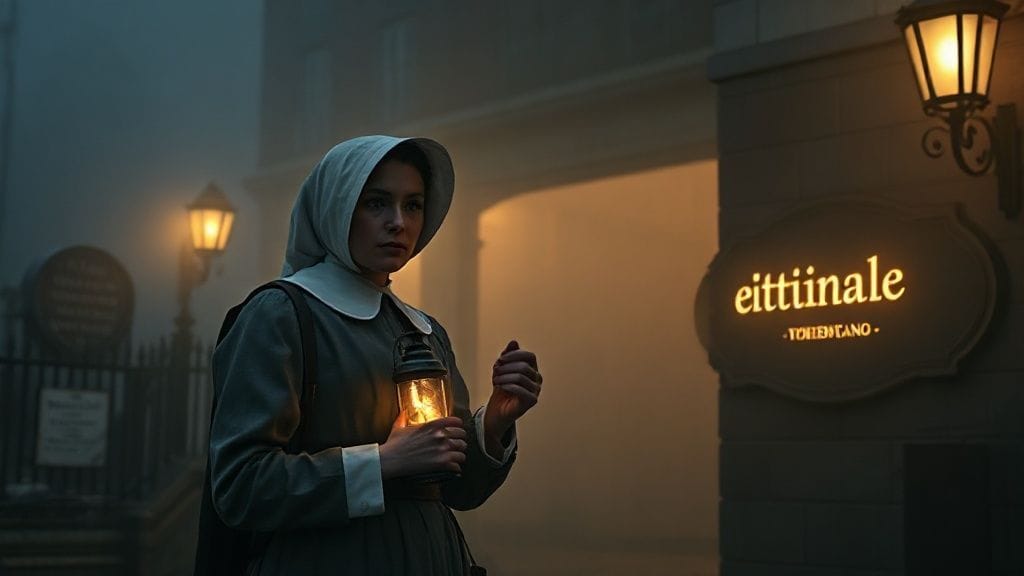
Born on May 12, 1820, into a wealthy British family, Florence Nightingale’s path was set early not by privilege but by a fierce calling. Against the expectations of Victorian high society, she pursued nursing—not as a domestic help but as a humanitarian mission. Her participation in the Crimean War (1853–1856) rightfully earned her the moniker "The Lady with the Lamp." As soldiers returned from the battlefields of Crimea, Nightingale’s relentless efforts in improving hygiene, hospital conditions, and patient care saved thousands of lives.
Her career was not merely that of a caregiver but that of an epidemiologist, statistician, and activist. Using data to argue for systemic changes, she laid the foundation for professional nursing and public health reforms that resonated worldwide.
3. England in the Early 20th Century: A City Poised Between Tradition and Modernity
London in 1910 was a city of contrasts. The Edwardian period was characterized by economic prosperity and imperial grandeur, but beneath the surface bubbled tensions: workers’ movements, suffragettes fighting for women’s rights, and questions about class and social welfare. The health of the populace was uneven, with slum conditions still prevailing in many areas, despite advances in public health.
The memory of Nightingale’s reforms was very much alive, though nursing as a profession was still evolving. Hospitals were becoming institutions, moving away from charitable houses to centers of scientific medicine, and the echoes of Florence’s pioneering work guided these changes.
4. The Final Days in London: Nightingale’s Last Moments
By 1910, Florence Nightingale was deeply frail, having suffered from years of chronic illness attributed in part to what we now recognize as brucellosis—contracted during her years in Crimea. She had withdrawn from public life but remained engaged intellectually, dictating letters and reports that continued to influence policy.
Her final days were marked by a quietness unusual for a woman of such energy. Close family and devoted aides surrounded her. Despite her ailments, she maintained an astonishing clarity of mind until the very end. On August 13, she passed away—not in grandeur nor fanfare but in peaceful solitude in her London home.
5. Public Mourning and the Response of a Nation
News of her death spread quickly, and tributes poured in from across Britain and the world. Newspapers lauded her as a paragon of Victorian virtue and modern humanitarianism. Crowds gathered outside her home, flowers left in homage, and memorial services held in Westminster Abbey and other prominent locations.
The British government recognized her contribution with formal honors, a reflection of how deeply her work had penetrated national consciousness—not merely as a symbol of care but as an agent of social change.
6. The Evolution of Nursing: Nightingale’s Enduring Legacy
Before Nightingale, nursing was often seen as a menial task for poor women with little training. Post-1910, her legacy became institutionalized as nursing schools modeled their curriculum on her teachings and philosophy. Her emphasis on hygiene, patient dignity, and scientific discipline set standards that professionalized nursing worldwide.
Her vision also saw the role of nurses as advocates and educators, pivotal in preventive medicine and community health.
7. Beyond the Battlefield: How War Shaped Her Mission
The Crimean War revealed the shocking neglect in military hospitals—unsanitary wards, poor nutrition, and lack of proper care. Nightingale’s reform efforts there became the blueprint for military and civilian nursing alike. Subsequent wars, including the Boer War and the conflicts of the 20th century, built upon these foundations.
Her work prompted governments to realize that well-maintained healthcare systems were not luxuries but strategic necessities.
8. Statistical Reformer and Social Advocate: Her Impact on Public Health
Nightingale’s pioneering use of statistics—and particularly her invention of the "coxcomb" diagram—was revolutionary. She presented complex mortality data in a compelling visual form that rallied political will toward sanitary reform.
Beyond hospitals, she advocated for clean water, ventilation, and housing reforms. She understood that health was inextricably tied to social conditions—a perspective ahead of its time.
9. The Scutari Experience: Birth of Modern Nursing Practices
Her work in the military hospital at Scutari (modern-day Üsküdar, Istanbul) embodied her philosophy of care: cleanliness, nutrition, ventilation, and compassion. Nightingale personally supervised nursing staff, trained hundreds of women, and established protocols still recognizable today.
The experience solidified her reputation and proved that empathetic care combined with hygiene could dramatically reduce mortality.
10. The Role of Women in the Victorian and Edwardian Eras
Florence Nightingale’s life unfolded against the backdrop of restrictive gender norms. The Victorian ideal of womanhood emphasized domesticity and submission, yet Nightingale’s career defied these roles. She became an early feminist figure, carving a professional space for women within public life.
Her success challenged the social order and paved the way for women’s greater presence in medicine, education, and public service.
11. Remembering Nightingale: Monuments, Memorials, and Cultural Memory
Throughout the 20th century and beyond, Florence Nightingale was commemorated through statues, hospital wards bearing her name, and the establishment of International Nurses Day on her birthday. Her image as the torchbearer of nursing is ever-present, evoking ideals of care and sacrifice.
Her personal home in London became a place of pilgrimage, and her story has inspired countless artistic and literary works.
12. The Emergence of Professional Nursing Schools After 1910
Following her death, training programs proliferated in Britain and across the Commonwealth. The Nightingale Fund, established through public donations during her lifetime, expanded scholarships and nursing education initiatives.
Nursing evolved from a loose occupation into a respected profession, with regulatory bodies enforcing standards rooted in her principles.
13. Nightingale’s Death and the Transformation of Healthcare Policies
Her passing marked a turning point in healthcare policy. Governments recognized the essential role nurses play in public health infrastructure. The War Office institutionalized nursing corps, while civilian hospitals adopted reforms in sanitation, record-keeping, and care protocols.
This period also saw the increasing specialization and scientific rigor within nursing, influenced heavily by Nightingale’s holistic approach.
14. The Global Impact of Nightingale’s Philosophy and Methods
Florence Nightingale’s influence was not confined to Britain. She corresponded with reformers worldwide, impacting hospital design in India, Australia, and the United States. Her insistence on hygiene and proper training became universal norms.
Her methods helped reduce infant mortality, improve sanitation, and shape health policy internationally, contributing quietly but profoundly to modern medicine.
15. Her Writings and Correspondences: Insights into a Stubborn Visionary
Nightingale’s voluminous letters and reports reveal a mind as determined as it was compassionate. She engaged in fierce debates with politicians and military officials, refusing to compromise on standards of care.
Her writings provide a window into her frustrations with bureaucracy, her belief in data-driven reform, and her enduring faith in human dignity.
16. The Contrast Between Public Adoration and Personal Solitude
Despite her public stature, Nightingale lived much of her life in relative isolation, especially following her health declines after Crimea. Her diaries and letters reveal bouts of loneliness and exhaustion.
This duality humanizes her—caught between the heavy mantle of public expectation and the personal cost of relentless commitment.
17. The Lasting Influence on Military Medicine and Hospital Design
Her work influenced the architectural design of hospitals, with an emphasis on natural light, ventilation, and clean surfaces—principles that remain fundamental in healthcare facilities design.
Military medical services adopted her standards rigorously, benefiting soldiers in later conflicts and civilian care alike.
18. The Social Reform Landscape in Edwardian England
Nightingale’s era was one of social awakening. Issues like poor housing, work conditions, and educational inequalities came to the forefront, with public health central to reform debates.
Her legacy intersected with broader movements to improve the quality of life for Britain’s growing urban working classes and the rural poor.
19. Public Health Post-Nightingale: The Move Towards Sanitation and Hygiene
After her death, the sanitary revolution accelerated. Governments invested in sewer systems, clean water supplies, vaccination programs, and nutrition.
Nightingale’s work contributed to a new understanding of disease prevention, making the environment a frontline in fighting illness.
20. A Humanizing Portrait: Quotes and Anecdotes from Friends and Colleagues
Contemporaries described Nightingale as both formidable and tender. One nurse recalled: “She could command a room with a look but was never without warmth for the suffering.” Lord Mountbatten later said, “Her light still shines brighter than ever.”
Such testimonies reveal the human heart behind the legend.
21. The Nightingale Fund and Its Expansion After Her Death
The public funding mechanism she inspired continued growing, financing hospitals, training establishments, and scholarships, thus institutionalizing her mission.
This financial legacy ensured that her dream of accessible, effective, and compassionate healthcare lived on.
22. How History Remembers Florence Nightingale
Today, she stands as a symbol of courage, reform, and empathy. History honors her not only for saving lives but for revolutionizing attitudes towards health and caregiving.
Her story is taught in schools worldwide, a beacon for those who serve others.
23. Conclusion: The Light That Never Faded
Florence Nightingale’s death in August 1910 was less an end than a passing of the torch. Her life bridged Victorian idealism and modern humanitarianism. Through sheer force of will, intelligence, and compassion, she forged a new path for nursing and public health.
A century later, her light continues to illuminate the corridors of hospitals, the hearts of caregivers, and the pages of history. In remembering her, we remember the power of one person to change the world through dedication and kindness.
FAQs About Florence Nightingale’s Death and Legacy
Q1: What were the main causes of Florence Nightingale’s death?
A: Nightingale suffered from chronic illnesses, including brucellosis likely contracted during the Crimean War, and chronic fatigue. By 1910, she was frail and succumbed peacefully in her London home.
Q2: How did the British public react to her death?
A: There was widespread mourning and respect, with tributes in newspapers and memorials nationwide. Her death was seen as the loss of a national heroine.
Q3: What impact did Nightingale’s death have on nursing as a profession?
A: Her death galvanized efforts to professionalize nursing, leading to the expansion of training programs and institutional reforms inspired by her methodologies.
Q4: Why is Florence Nightingale considered a pioneer in statistics?
A: She used innovative statistical graphics, like the "coxcomb," to present mortality data, persuading policymakers to adopt sanitary reforms.
Q5: How did her work influence hospital design?
A: Nightingale advocated for hygiene, light, and ventilation in hospital construction, principles that remain central to healthcare facility designs.
Q6: Did Nightingale face opposition during her career?
A: Absolutely. She often clashed with military and government officials resistant to change, yet her persistence eventually led to reforms.
Q7: How is Florence Nightingale celebrated globally today?
A: International Nurses Day, celebrated on her birthday May 12th, honors her contributions. She remains a symbol of compassionate care worldwide.
Q8: What was the Nightingale Fund?
A: A fund established through public donations to support nursing education and hospital improvements, continuing after her death to expand her vision.