Table of Contents
- Introduction
- Early Life in Kusumapura
- Education and Intellectual Environment
- The Aryabhatiya: His Magnum Opus
- Place Value System and Zero
- Calculating Pi and Trigonometry
- Aryabhata’s Astronomy: Heliocentric Insights
- The Concept of Earth’s Rotation
- Influence on Indian Calendars
- Transmission of Knowledge to the Islamic World
- Legacy in Medieval Europe
- Criticism and Misinterpretations
- Influence on Later Indian Scholars
- Aryabhata’s School and Disciples
- Cultural and Religious Context
- Lasting Mathematical Influence
- Aryabhata in Modern India
- Honors and Namesakes
- Anecdotes and Stories
- External Resource
- Internal Link
Introduction
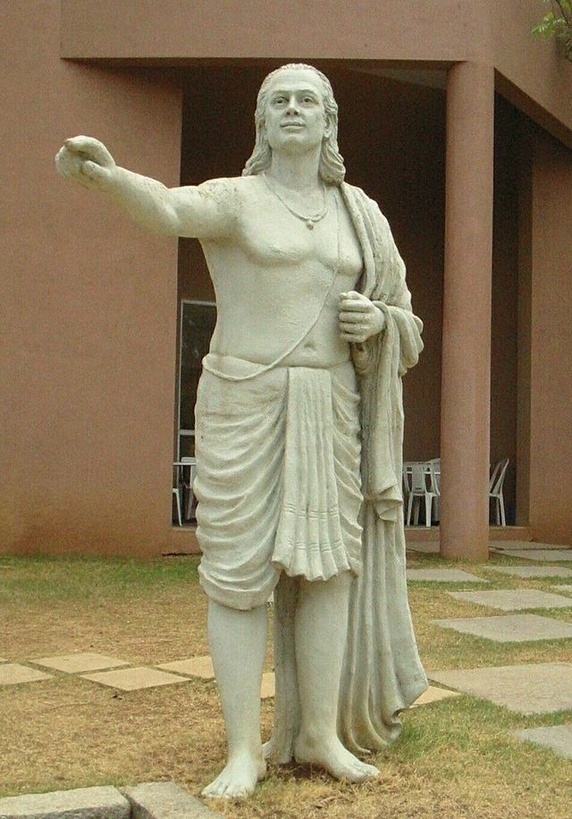
Aryabhata biography introduces one of the earliest and greatest minds in the history of science. Born in 476 CE in Kusumapura (believed to be near modern-day Patna, India), Aryabhata left an indelible mark on mathematics and astronomy. His magnum opus, the Aryabhatiya, set the stage for discoveries ranging from the concept of zero and the place-value system to astonishingly accurate astronomical calculations. Imagine: more than 1,500 years ago, Aryabhata was suggesting that the Earth rotated on its axis and proposing methods to calculate eclipses with remarkable precision!
Early Life in Kusumapura
Little is known about Aryabhata’s family or childhood, but historians place his birth in Kusumapura, a renowned center of learning in the Gupta Empire. This city was home to the Nalanda University, one of the world’s first great universities, which likely shaped Aryabhata’s education.
Education and Intellectual Environment
Aryabhata’s education would have immersed him in Sanskrit, Vedic traditions, and mathematics. The Gupta era was a golden age of science, fostering advances in mathematics, astronomy, literature, and art. It was within this stimulating environment that Aryabhata began his intellectual journey.
The Aryabhatiya: His Magnum Opus
Written around 499 CE, the Aryabhatiya is Aryabhata’s most famous work. Compact yet profound, it consists of 121 verses covering arithmetic, algebra, plane and spherical trigonometry, and astronomy. Unlike earlier works, it presented knowledge systematically, making it accessible for scholars across generations.
Place Value System and Zero
Aryabhata is credited with using the place-value system, a revolutionary step that paved the way for the modern decimal system. While the explicit concept of zero as a numeral evolved later, Aryabhata’s work laid essential groundwork for its adoption.
Calculating Pi and Trigonometry
Aryabhata calculated π (pi) to remarkable accuracy, giving a value of 3.1416, correct to four decimal places. He also introduced sine functions in trigonometry, which he called ardha-jya (half-chord). His trigonometric tables influenced Indian and later Islamic mathematics.
Aryabhata’s Astronomy: Heliocentric Insights
Aryabhata proposed that the apparent movement of stars was due to the Earth’s rotation, not the heavens moving around us. This was a revolutionary thought centuries before Copernicus in Europe. He even hinted at heliocentrism by considering planetary motions relative to the Sun.
The Concept of Earth’s Rotation
Aryabhata boldly stated that the Earth rotates on its axis once every 24 hours. While controversial at the time, this concept represented a leap in human understanding of the cosmos.
Influence on Indian Calendars
His models of lunar and solar cycles shaped the Indian calendar system, influencing religious rituals and timekeeping practices that persist to this day.
Transmission of Knowledge to the Islamic World
Aryabhata’s works were translated into Arabic during the Abbasid Caliphate, where scholars such as Al-Khwarizmi and Al-Biruni cited his methods. Through these channels, his ideas reached the Islamic Golden Age and eventually medieval Europe.
Legacy in Medieval Europe
Though often indirectly, Aryabhata’s insights traveled westward, shaping the foundations of modern astronomy and mathematics. His decimal system and trigonometric methods laid the groundwork for European advances centuries later.
Criticism and Misinterpretations
Not all of Aryabhata’s ideas were accepted in his time. Some scholars misinterpreted his heliocentric hints or rejected them due to religious beliefs. Yet his persistence in mathematical reasoning distinguished him from purely scriptural cosmology.
Influence on Later Indian Scholars
Aryabhata founded a school of thought that influenced later Indian mathematicians such as Brahmagupta and Bhaskara I. His legacy persisted for centuries, keeping Indian mathematics at the forefront of global knowledge.
Aryabhata’s School and Disciples
His followers, known as the Āryapakṣa, carried forward his mathematical and astronomical methods, ensuring that his teachings did not fade away.
Cultural and Religious Context
Aryabhata’s work combined scientific reasoning with the cultural and religious traditions of his time. While deeply embedded in Indian cosmology, he dared to propose ideas that challenged orthodox views.
Lasting Mathematical Influence
His introduction of algebraic equations, sine tables, and place-value numeration positioned India as a leader in mathematical innovation. Without Aryabhata, modern arithmetic might look very different today.
Aryabhata in Modern India
Today, Aryabhata is celebrated as a national hero in India. In 1975, India’s first satellite was named Aryabhata in his honor, symbolizing the continuity of Indian scientific excellence.
Honors and Namesakes
His legacy is remembered in schools, research institutions, and even lunar craters named after him. These honors underline the global recognition of his contributions.
Anecdotes and Stories
Legends describe Aryabhata as a quiet genius, deeply focused on unraveling the universe’s mysteries. His mathematical verses were often recited like poetry, blending art and science seamlessly.