Table of Contents
- The Final Days of a Silent Pioneer
- Brno at the Turn of the Century: A City in Flux
- The Austro-Hungarian Empire: A Melting Pot of Nations and Ideas
- Gregor Mendel’s Last Breath: January 6, 1884
- A Life Steeped in Science and Humility
- The Quiet Passing of a Monk in the Shadows of Empire
- Obscurity in Death: The Neglect of Mendel’s Legacy
- Brno’s Augustinian Abbey: The Sacred Ground of a Scientist
- The State of Genetics at the Time of Mendel’s Death
- Mendel’s Family, Friends, and Colleagues: Witnesses to His End
- Posthumous Recognition: The Rediscovery of Mendel’s Work
- Mendel’s Influence Beyond Austria-Hungary: Seeds Across the Globe
- The Intersection of Faith and Science in Mendel’s Life and Death
- Political and Cultural Reverberations in Brno After 1884
- The Legacy of a Forgotten Giant Reborn in Modern Science
- Reflections on Mortality, Discovery, and Historical Memory
- Mendel’s Grave and the Pilgrimage of Science Enthusiasts
- The Evolution of Genetics Since Mendel’s Passing
- The Human Side of a Scientific Icon’s Death
- Mendel in the Collective Memory of Austria, Czechia, and the World
- How Mendel’s Final Chapter Resonates in Today’s Scientific Endeavors
- Conclusion: The End as a Beginning
- FAQs: Untangling the Threads of Mendel’s Final Days and Legacy
- External Resource
- Internal Link
1. The Final Days of a Silent Pioneer
On a cold January morning in 1884, as the crisp winter sun filtered through the small windows of the Augustinian Abbey in Brno, a man’s breath became his last. Gregor Johann Mendel—monk, teacher, gardener, and father of genetics—slipped quietly away, leaving behind a legacy almost invisible to his contemporaries but destined to overhaul the very fabric of biology. The door to the dimly lit chamber closed softly, as the final chord fell on a life that had unfolded in serene contemplation but would echo tumultuously through the scientific world decades later.
That morning was neither marked by fanfare nor grand ceremony. There were no throngs to witness the passing, no immediate outpouring of grief or recognition. Instead, it was a quiet, almost unnoticed moment within the broader grandeur of the Austro-Hungarian Empire, which still held sway over the city of Brno. Yet, beneath this silence lay a story of extraordinary intellect, modesty, and a scientific revolution waiting patiently to bloom.
2. Brno at the Turn of the Century: A City in Flux
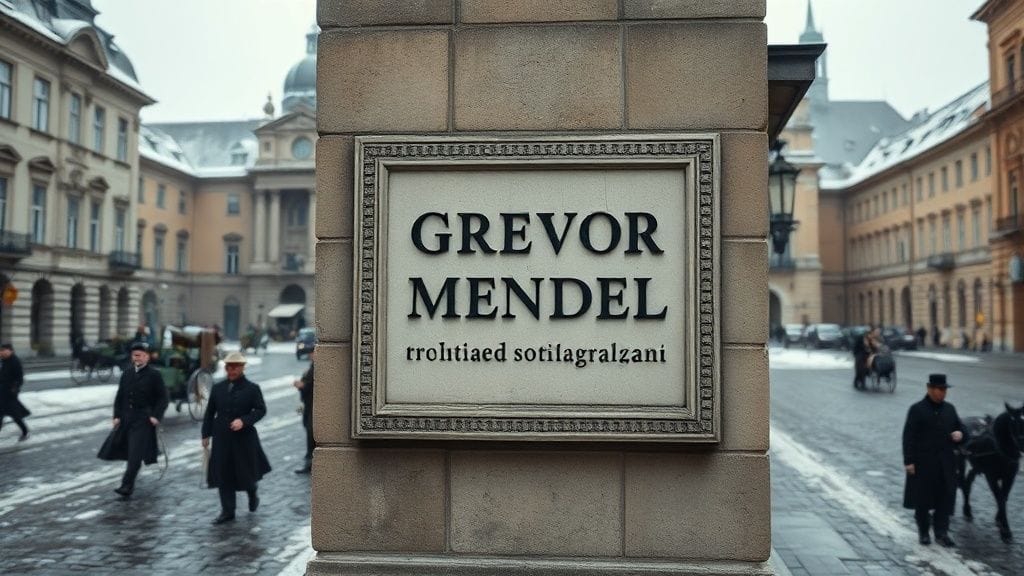
To understand Mendel’s death and its muted immediate aftermath, one must first picture Brno, the city he called home for decades. Nestled in the mining and industrial heartland of Moravia, Brno in the 1880s was a city balancing tradition and modernity. Horse-drawn carriages rattled alongside the expanding railroad, marketplaces buzzed with a mosaic of ethnicities—Czech, German, Slovak, Hungarian—and ideas converged in cafés, churches, and universities.
It was a place where empire met local identity, where rapid industrial growth began transforming social structures, and where intellectual endeavors were both encouraged and constrained by the weight of imperial orthodoxies. In this dynamic setting, Mendel lived a quiet life, his scientific pursuits often overlooked against the backdrop of political strife and social transformation.
3. The Austro-Hungarian Empire: A Melting Pot of Nations and Ideas
The immense Austro-Hungarian Empire was a realm held together by complex alliances, yet simmering with ethnic tensions and nationalist aspirations. Its borders stretched across much of Central and Eastern Europe, from Vienna to Budapest, Prague to Lviv. Moravia, the historical region encompassing Brno, was a key node—economically and culturally—within this vast, diverse empire.
Yet the empire’s very size was a double-edged sword—offering a fertile ground for knowledge exchange, yet simultaneously breeding neglect and fragmentation. For Mendel, this meant scientific endeavors were at risk of being swallowed by bureaucratic inertia, linguistic divides, and an often indifferent intellectual elite.
4. Gregor Mendel’s Last Breath: January 6, 1884
On January 6, 1884, Gregor Mendel succumbed quietly to his long-standing health ailments, including chronic kidney disease. Reports from the time describe the abbot’s final days as dignified, marked by the solemnity of his monastic community. Colleagues observed a man who refused any grand acknowledgement of his own importance—humble to the last.
Mendel’s health had been deteriorating for months. In December 1883, he experienced worsening symptoms of renal failure, a condition poorly understood at the time and untreatable. The pastoral care of the abbey surrounded him, but no medicine could prevent the inevitable. The abbey's small infirmary was the stage of his last acts—solitude, reflection, and silent surrender.
5. A Life Steeped in Science and Humility
Mendel was no ordinary monk. From early on, his fascination with nature and patterns led him to meticulous experiments with pea plants in the abbey’s garden. Yet, despite his groundbreaking insights into heredity, he remained largely unrecognized in his lifetime. His work was published in an obscure journal in 1866 and widely ignored.
Even as abbot of the monastery—a post he was elected to in 1868—he maintained his quiet demeanor, blending scientific curiosity with a genuine devotion to the spiritual and communal life. His death did not prompt sudden acclaim; rather, it closed the book on a man who had embraced both faith and reason in balance.
6. The Quiet Passing of a Monk in the Shadows of Empire
It is striking how Mendel’s death faded into the everyday hum of imperial life, overshadowed by larger political events and the rising tide of industrial modernity. No public eulogies marked the occasion, no scientific societies clamored to honor the man who had unwittingly laid the foundation for modern genetics.
Truly, Mendel’s passing was the end of an era hidden in obscurity—an echo swallowed by time in a multi-ethnic city indifferent to one of its finest minds. His monastic community honored him in their own solemn manner, but the outside world carried on.
7. Obscurity in Death: The Neglect of Mendel’s Legacy
Though Mendel’s 1866 paper had been published, it languished in relative anonymity throughout his life and long after his death. The scientific establishment at the time focused on Darwinian evolution and other biological theories, often dismissing Mendel’s genetically mechanistic explanations as curiosities or irrelevant.
It was not until the early 20th century, decades after Mendel’s death, that a handful of scientists independently “rediscovered” his work and recognized its import. For Mendel himself, death came before the flowering of his influence.
8. Brno’s Augustinian Abbey: The Sacred Ground of a Scientist
The abbey in Brno was more than just home to Mendel’s final days; it was where his scientific journey and spiritual vocation converged. The garden where Mendel conducted his experiments remains a symbol of the harmonious blending of nature and knowledge.
This sacred ground houses Mendel’s grave and reflects the monastic life that shaped his worldview—one where the mysteries of creation and the laws of inheritance were part of a larger quest for understanding.
9. The State of Genetics at the Time of Mendel’s Death
When Mendel passed away, genetics did not exist as a formal discipline. The scientific community explored inheritance through the lens of Darwinism, blending hypotheses of blending inheritance and natural selection that did not yet grasp the discrete units of heredity Mendel posited.
The scientific tools and concepts to verify and build upon Mendel’s findings—like chromosomes and DNA—were decades away. Thus, his death predated the scientific awakening to his genius.
10. Mendel’s Family, Friends, and Colleagues: Witnesses to His End
Personal correspondence and the accounts of those close to Mendel paint a picture of a man cherished for his kindness and dedication. Though his scientific work went largely unrecognized, his close circle—fellow monks, students, and friends—knew the extent of his intellectual passion.
After his death, some of these individuals quietly endeavored to preserve his documents and ideas, allowing Mendel’s legacy to survive in the shadowed corners of libraries and archives.
11. Posthumous Recognition: The Rediscovery of Mendel’s Work
It was around 1900, some 16 years after Mendel’s death, that three scientists—Hugo de Vries, Carl Correns, and Erich von Tschermak—independently confirmed and celebrated the patterns Mendel had described. This moment reshaped biology, giving birth to the field of genetics.
Suddenly, Mendel’s death was seen less as an end and more as a quiet prelude to revolution.
12. Mendel’s Influence Beyond Austria-Hungary: Seeds Across the Globe
Mendel’s principles transcended borders quickly once rediscovered, influencing genetic research in laboratories from Europe to the United States. His simple pea plant experiments provided the blueprint for understanding heredity in all life.
Ironically, his death in a relatively obscure abbey within the Austro-Hungarian Empire contrasts sharply with the worldwide scientific awakening that followed in his name.
13. The Intersection of Faith and Science in Mendel’s Life and Death
Gregor Mendel’s life and indeed the circumstances of his death underscore a profound dialogue between science and religion. As a monk, he saw no opposition between his faith and his experiments; rather, he sought the divine patterns expressed through nature.
His passing within the sacred walls of the abbey epitomizes this synthesis—a man who navigated both spiritual devotion and empirical inquiry until his last moments.
14. Political and Cultural Reverberations in Brno After 1884
Though Mendel’s death was quiet, Brno itself was a city on the cusp of dramatic changes—from burgeoning nationalism to industrial growth that reshaped society. The echoes of empire’s decline would soon rumble through Central Europe.
Mendel’s scientific heritage would come to be a source of local pride, symbolic of Brno’s cultural complexity and its contributions to global knowledge.
15. The Legacy of a Forgotten Giant Reborn in Modern Science
Mendel died nearly invisible to history’s spotlight, but his discoveries catalyzed the biological sciences’ largest leaps. Today, his name is synonymous with genetics—they teach his laws in classrooms worldwide.
The contrast between Mendel’s quiet death and his towering legacy is stark. He was a genius who lived humbly and died quietly, only later appreciated as the father of modern genetics.
16. Reflections on Mortality, Discovery, and Historical Memory
Mendel’s death invites us to ponder how greatness can be overlooked in its time and how scientific progress builds upon unseen foundations. The silence that greeted his passing reminds us that history is often shaped not by grand moments alone but by quiet perseverance.
His story speaks to the fragile nature of memory, the patience of discovery, and the human side of scientific endeavor.
17. Mendel’s Grave and the Pilgrimage of Science Enthusiasts
To this day, visitors to Brno pay homage at Mendel’s grave, a modest tombstone nestled in the abbey’s cemetery. Scientists, historians, and curious travelers come to honor the man who changed how we understand life itself.
The site has become a pilgrimage—a testament to enduring respect and admiration.
18. The Evolution of Genetics Since Mendel’s Passing
Following Mendel’s death, the field exploded. The discovery of DNA’s structure, the mapping of genomes, and contemporary gene editing all trace their lineage back to the humble pea plants nurtured by Mendel’s hand.
His death marks a symbolic beginning of a scientific lineage that continues to transform medicine, agriculture, and ethics.
19. The Human Side of a Scientific Icon’s Death
While Mendel’s discoveries are often discussed in sterile scientific terms, his death reminds us he was a man—and one battling illness, doubt, and obscurity. The tenderness of his final days and the care of his monastic community reveal a deeply human story.
This dimension enriches our understanding of science as a deeply personal human endeavor.
20. Mendel in the Collective Memory of Austria, Czechia, and the World
Brno, now in the Czech Republic, embraces Mendel as a local hero and global icon. Austrian and Hungarian histories also stake claims to his legacy, a reminder of shifting borders and the complexities of identity.
His death in 1884 is thus a moment that belongs to multiple cultures, reflecting the intertwined history of Central Europe.
21. How Mendel’s Final Chapter Resonates in Today’s Scientific Endeavors
In contemporary gene editing, personalized medicine, and evolutionary biology, Mendel’s legacy is undeniable. The quiet death of the man who first described hereditary units seems distant from the bustling, high-tech labs of today.
Yet, his fundamental insights continue to guide science and inform discussions about ethics and human identity.
22. Conclusion: The End as a Beginning
The death of Gregor Mendel on January 6, 1884, in the muted cloisters of Brno was not the end of a story but the closing of a quiet prologue. His passing, wrapped in the delicate shroud of obscurity, belies the seismic impact his work would soon wield.
Mendel’s life and death remind us that the deepest truths of nature may lie hidden, that recognition often comes late, and that humility and persistence can change the world—long after one’s last breath.
The monk who sowed the first seeds of genetics lies buried in silence, but his discoveries have blossomed into a garden that nourishes all humanity.
FAQs
Q1: What were the primary causes of Gregor Mendel’s death?
A1: Mendel died from complications related to chronic kidney disease, likely exacerbated by the limited medical understanding of renal ailments at the time. His health declined over months leading to his passing on January 6, 1884.
Q2: Why was Mendel’s work largely unrecognized during his lifetime and immediately after his death?
A2: Mendel published his findings in an obscure scientific journal, and the prevailing scientific paradigms did not accommodate his discrete laws of inheritance. Interest in genetics only revived toward the early 20th century, well after Mendel’s death.
Q3: How did the political context of the Austro-Hungarian Empire affect Mendel’s scientific career and death?
A3: The empire’s complex bureaucracy, linguistic diversity, and political tensions hindered widespread scientific communication. Mendel’s work remained regional, and the empire’s focus was not on advancing genetics, which contributed to the neglect of his discoveries.
Q4: What role did the Augustinian Abbey in Brno play in Mendel’s life and death?
A4: The abbey was Mendel’s spiritual home, his workplace, and the environment for his genetic experiments. It was also where he spent his final days, cared for by his monastic community, underlining the intimate relationship between his faith and science.
Q5: When and how was Mendel’s work rediscovered?
A5: Around 1900, three scientists—Hugo de Vries, Carl Correns, and Erich von Tschermak—independently confirmed Mendel’s principles and brought them to scientific prominence, marking the birth of modern genetics roughly 16 years posthumously.
Q6: How is Mendel remembered today in Brno and around the world?
A6: Mendel is celebrated as the father of genetics, with monuments, museums, and his grave in Brno serving as pilgrimage sites. His legacy is worldwide, foundational to modern biology and genetic science.
Q7: Did Mendel’s faith conflict with his scientific work?
A7: No. Mendel integrated his religious beliefs with his scientific curiosity. He viewed his research as uncovering God’s order in nature, embodying a harmony rather than conflict between faith and science.
Q8: How does Mendel’s death symbolize broader themes in the history of science?
A8: Mendel’s quiet death epitomizes how groundbreaking discoveries can be overlooked initially, highlighting the patience and humility often necessary in the pursuit of knowledge and the unpredictable nature of historical recognition.