Table of Contents
- The Final Days of an Emperor: December 1891 in Paris
- From Throne to Exile: The Journey of Pedro II
- The Twilight of the Brazilian Empire: Background to Pedro II’s Reign
- A Monarch for the People: The Enlightened Emperor’s Legacy
- Political Storms and Growing Unrest in Brazil
- The Military Coup of 1889: The End of an Era
- The Exile Begins: Pedro II’s Departure from Brazil
- Life in Paris: A Fallen Emperor in a Foreign Land
- The Quiet Decline: Health and Spirits Waning
- December 5th, 1891: The Death of Pedro II
- The World Reacts: Mourning a Monarch Abroad
- Brazil’s Response: A Nation Torn Between Empire and Republic
- The Symbolism of Pedro II’s Demise for Brazilian Identity
- Cultural and Historical Legacy: Beyond the Crown
- The Emperor’s Memory in Modern Brazil
- Lessons from the Life and Death of Pedro II
- Conclusion: An End and a Beginning
- FAQs: Understanding the Last Emperor of Brazil
- External Resource
- Internal Link
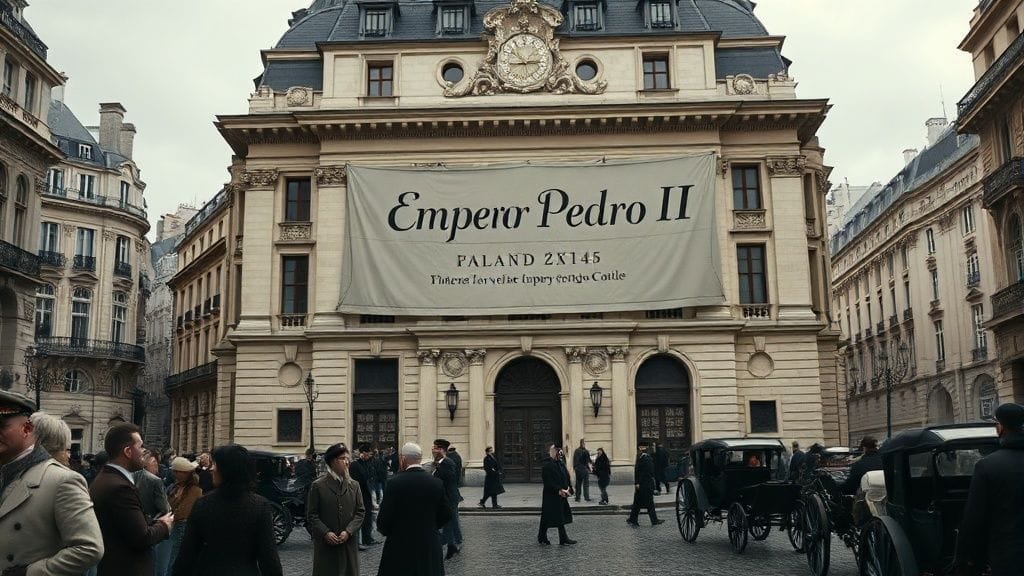
December 5th, 1891 was a cold, overcast day in Paris—a city alive with light and sound, but burdened with an unexpected shadow. In a modest hotel apartment on the Left Bank, the air hung heavy with a somber stillness. The figure lying there was no ordinary man, but the last emperor of Brazil, Pedro II. His breathing shallow, his thoughts drifting between the past and a foreign present, he embodied not just the fragility of a man, but the fading light of an entire era. The great Emperor, who had reigned over a vast and diverse land for nearly 58 years, exiled and forgotten by the republic that replaced his throne, was slipping quietly away from the world he once ruled.
This was no mere death of a monarch; it was the close of a chapter that had shaped Brazil's very soul. An emperor who had guided his nation through independence, modernization, and tumultuous political change, Pedro II’s demise symbolized both loss and transformation. Paris, the cultural heart of 19th century Europe, witnessed the final breath of a figure whose story still resonates across continents and centuries.
To understand the profound impact of Pedro II's death, one must embark on a journey through the life and times of this remarkable ruler, a man whose intelligence, humility, and vision set him apart in an age often defined by power struggles and shifting allegiances.
From Throne to Exile: The Journey of Pedro II
Born in 1825, Dom Pedro II ascended the Brazilian throne at the tender age of five, after the abdication of his father, Dom Pedro I. Yet, it was a long road before the boy emperor could rule in his own right, his adolescence shaped by regents and political turbulence. Once he took control, his reign spanned a half-century of modernization, cultural patronage, and attempts at national unity.
But the late 19th century was not kind to monarchs—even those as enlightened as Pedro II. The republicans, emboldened by liberal ideas and military discontent, gained ground. The winds of change blew harshly, culminating in the peaceful but decisive coup of November 15, 1889, which deposed the emperor and proclaimed Brazil a republic.
The Twilight of the Brazilian Empire: Background to Pedro II’s Reign
When Pedro II assumed power fully in 1840—having been declared of age early due to national unrest—Brazil was a young empire, still grappling with the remnants of colonialism and slavery. The emperor’s reign coincided with sweeping reforms: the gradual abolition of slavery culminating in the Lei Áurea (Golden Law) in 1888, the fostering of education and the arts, and a cautious yet firm approach to parliamentary rule.
Pedro II was a polymath and a patron of the sciences and culture, fluent in multiple languages, correspondent of literary and scientific luminaries, and an ardent believer in progress through knowledge. His humility and dedication made him beloved by many, but his detachment from the military brewing beneath the surface would prove fatal.
Political Storms and Growing Unrest in Brazil
The empire’s political landscape was marked by growing divisions in the late 19th century. The coffee oligarchs, military officers, abolitionists, and republicans all jostled for influence. The military, upset over budget cuts and perceived disrespect, aligned increasingly with republican ideologies promising reform and stronger civilian control.
Moreover, the abolition of slavery in 1888 alienated powerful landowners without offering compensation or alternative labor solutions, causing economic and social dissonance. Pedro II’s reluctance to use force or decisively confront the republican threat contributed to his downfall.
The Military Coup of 1889: The End of an Era
In the early hours of November 15, 1889, a contingent of army officers staged a coup that ended the monarchy without bloodshed. Pedro II, hearing of the proclamation of the republic, reportedly expressed resignation mixed with quiet sadness. The old emperor refused to resist violence, saying, “My only desire is to peacefully withdraw.”
Exiled and humiliated, Pedro II was forced to leave the land he had served for nearly six decades, crossing the Atlantic toward Europe with a broken heart.
Life in Paris: A Fallen Emperor in a Foreign Land
Paris welcomed the former emperor, but it was a city far from the palaces and tropical landscapes he had known. Pedro II lived modestly, supported by a pension from the Brazilian government that the new republic begrudgingly provided.
Despite his reduced circumstances, Pedro II maintained an interest in literature, science, and art, visiting museums and attending concerts. However, the emperor’s loneliness and declining health were palpable; the once vibrant and energetic ruler was now diminished.
The Quiet Decline: Health and Spirits Waning
The man who had survived cholera and countless political storms was now prey to a combination of tuberculosis and heart failure. Letters from his last months reveal a melancholy spirit, reflecting on the loss of Brazil and the pain of exile.
His final days were marked by visits from loyal friends and foreign dignitaries who recognized his greatness and mourned the passing of a gentler era.
December 5th, 1891: The Death of Pedro II
On this December day, the Emperor Pedro II passed away quietly, aged 66, in his Paris apartment. Newspapers across continents reported the emperor’s death with reverence, recalling his wisdom and kindness.
In Brazil, the news stirred mixed feelings—nostalgia among monarchists and indifference or unease from republican officials uneasy about reviving imperial sympathies.
The World Reacts: Mourning a Monarch Abroad
European capitals paid homage to the fallen emperor, many recognizing the peaceful and progressive nature of his rule. Admirers from intellectual circles penned prose and poetry honoring his memory, immortalizing Pedro II as a symbol of enlightened leadership.
Brazil’s Response: A Nation Torn Between Empire and Republic
Brazil itself wrestled with the legacy of Pedro II. His death underscored the fragility of the new republic and reawakened debates around monarchy versus republicanism, tradition versus modernization.
For many, the emperor embodied a lost sense of unity and national pride; for others, a reminder of a bygone era incompatible with the future.
The Symbolism of Pedro II’s Demise for Brazilian Identity
Pedro II’s death crystallized a rupture in Brazilian history—the formal end of imperial governance and the birth pains of republicanism. His image became both a beacon for monarchist nostalgia and a cautionary tale about resistance to necessary political change.
Cultural and Historical Legacy: Beyond the Crown
More than a ruler, Pedro II was a patron of sciences and arts whose reign saw the expansion of railroads, encouragement of natural sciences, and development of educational institutions.
His vast correspondence and collections contributed to Brazil's cultural heritage and inspired future generations.
The Emperor’s Memory in Modern Brazil
Though monarchy was abolished, Pedro II’s reputation has been rehabilitated in Brazilian memory. Statues, coins, and books celebrate his dedication, humility, and vision.
His tomb, eventually repatriated from France to Brazil decades later, became a pilgrimage site for those honoring the nation’s imperial past.
Lessons from the Life and Death of Pedro II
Pedro II’s life teaches about the highs and lows of leadership—the challenges of navigating order and change, the importance of adapting to political currents, and the human cost of revolution.
His death, dignified and quiet, reminds us that history is shaped not only by battles, but by the intimate ends of those who lived its most dramatic moments.
Conclusion
The death of Emperor Pedro II in Paris on December 5th, 1891 was more than the passing of a monarch—it was the quiet finale of a vibrant chapter in Brazil’s evolution. His life, marked by intellect, resilience, and a longing for progress, left an indelible mark. Though exiled and forgotten in his final days, Pedro II’s legacy endures, bridging past and present, empire and republic.
Through his story, we glimpse the complexity of leadership and the mutable nature of history itself. His demise in a foreign city was simultaneously an end and a poignant symbol of transformation, reminding us that the fall of a ruler often heralds the birth of a new historical epoch.
FAQs
1. Who was Emperor Pedro II and why is he significant?
Pedro II was the second and last emperor of Brazil, reigning from 1831 until his deposition in 1889. He was known for his intellect, cultural patronage, and efforts to modernize Brazil through education, science, and the abolition of slavery.
2. What led to Pedro II’s exile in France?
Growing republican sentiment, military dissatisfaction, and political unrest led to a peaceful coup in 1889 that overthrew the monarchy. Pedro II chose exile over conflict and moved to Paris with his family.
3. How did Brazil react to the death of Pedro II?
Reactions were mixed—monarchists mourned deeply while republicans maintained political distance. The event reignited debates about Brazil’s identity and the legacy of the empire.
4. What is the historical importance of Pedro II’s reign?
His reign modernized Brazil significantly, ending slavery and fostering economic and cultural growth. He also helped maintain national unity during a period of internal and external challenges.
5. Why did Pedro II’s health decline in exile?
The stress of exile, aging, and diseases like tuberculosis weakened him, leading to his death in 1891.
6. How is Pedro II remembered in Brazil today?
He is respected as a wise and benevolent ruler, with his memory preserved in monuments, literature, and the historical narrative of the nation.
7. Did Pedro II attempt to regain his throne?
No. Pedro II accepted the new republican order and never sought to reclaim power, living his final years in dignified exile.
8. What does Pedro II’s death symbolize historically?
It symbolizes the definitive end of the Brazilian Empire and the complex birth of the republic, reflecting broader political and social transformations in Latin America.