Table of Contents
- The Last Sunrise of Sitting Bull: December 15, 1890
- A Landscape Marked by Struggle: The Standing Rock Reservation in the Late 19th Century
- Sitting Bull: A Life Forged by Resistance and Vision
- The Ghost Dance Movement: Hope in the Face of Despair
- A Gathering Storm: The U.S. Government’s Response to Native Resistance
- The Arrest that Turned Deadly: From Negotiation to Tragedy
- The Clash at Standing Rock: December 15, 1890 Unfolds
- Sitting Bull’s Death: A Nation’s Heartbreak
- The Role of the Indian Police: Between Duty and Desperation
- The Immediate Aftermath: Shockwaves through the Plains
- The Impact on the Lakota People: Mourning, Fear, and Survival
- The Wounded Knee Massacre: From Sitting Bull’s Death to a Greater Catastrophe
- The Ghost Dance Legacy: Spiritual Revival or Cultural Defiance?
- Political Consequences: U.S. Policy Tightens Its Grip
- Remembering Sitting Bull: Myth, Memory, and Identity
- Historical Reassessments: Honoring a Leader’s Complex Legacy
- How Standing Rock Shapes Contemporary Native Activism
- The End of an Era: The Closing of the American Frontier
- Voices from the Past: Eyewitness Accounts and Oral Histories
- A Monument to Peace: Sitting Bull Today
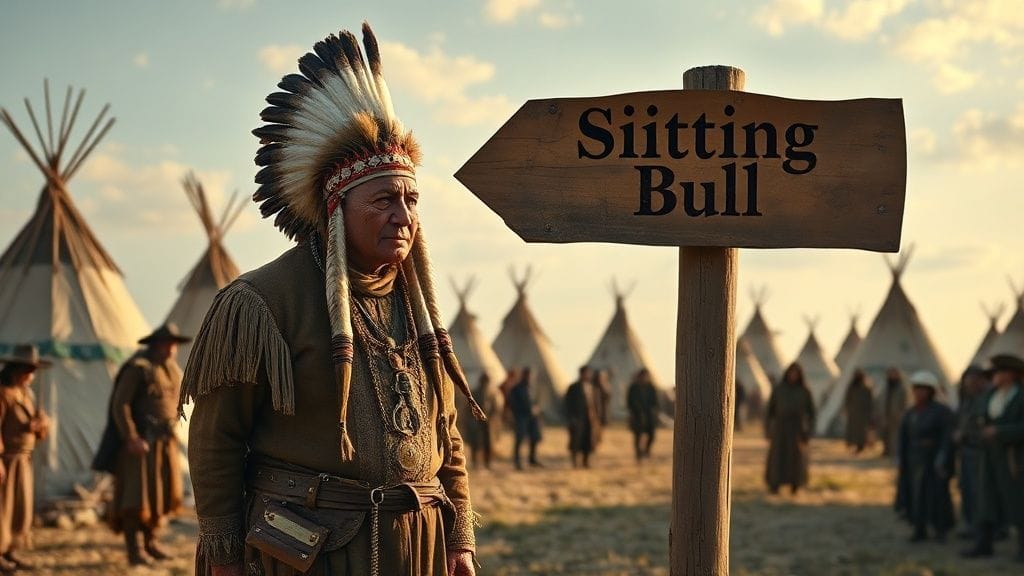
On a frigid December morning in 1890, somewhere on the plains of the Standing Rock Reservation, the air was heavy with tension yet pierced by the haunting cries of a people clinging fiercely to their dignity and traditions. Sitting Bull, the great Lakota Sioux leader whose very name conjured images of defiance and spiritual strength, was no longer among the living. His death—an event as symbolic as it was tragic—marked a painful turning point in the brutal saga of the American Indian Wars. The story of that day, December 15th, is woven from fear and misunderstanding, hope and despair, violence and loss. It tells not only of a man’s fate but also of the twilight of a culture struggling to survive the relentless forces of colonization.
The Standing Rock Reservation, straddling the vast expanses of present-day North and South Dakota, was then a place caught in the cold grip of history’s inexorable march. Native communities like the Lakota found themselves pushed to the edges, fighting to retain their land, their religion, and most importantly, their freedom. Sitting Bull—Tatanka Iyotake—had been a towering presence for decades: a wise chief, a fierce warrior, and a spiritual guide whose leadership during the Battle of Little Bighorn still echoed loudly in collective memory.
But by 1890, the tides had shifted violently. The hope sparked by the Ghost Dance, a spiritual movement promising renewal and the restoration of Native ways, was seen by U.S. authorities as a threat demanding suppression. Sitting Bull’s resistance turned from political to spiritual, and ultimately, to tragedy.
The arrest attempt turned deadly, and in the chaos, Sitting Bull was shot and killed by Indian police members—Native men caught in a tragic role as enforcers of federal decrees. His passing was mourned across the plains, but it was also the prelude to the horrific massacre at Wounded Knee, which would soon scar the buffalo grass forever.
Yet, even in death, Sitting Bull’s legacy cast a long shadow—he became a symbol not only of Native resistance but of the resilience of identity amid erasure. To understand December 15, 1890, is to peer into a crucible of culture, violence, and the desperate will to survive against overwhelming odds. This article will journey through that fateful day and its profound aftermath, unraveling the threads of a story that continues to resonate more than a century later.
A Landscape Marked by Struggle: The Standing Rock Reservation in the Late 19th Century
The latter decades of the 19th century were an era of profound upheaval for Native American nations in the Northern Plains. The Standing Rock Reservation, established in 1868 by treaty, was meant to provide a homeland for the Lakota Sioux and their allies after decades of relentless conflict and territorial displacement. Instead, it became a gilded cage.
By 1890, the reservation's rolling grasslands and river valleys bore the marks of change—forced reductions of territory, the arrival of government agents, and the gradual erosion of traditional ways. The promise of protection under U.S. law stood in stark contrast to the mounting pressures of poverty, famine, and increasing surveillance. Native peoples were coerced to abandon their nomadic lifestyles, shorn of buffalo and autonomy, and reshaped into a version of “civilized” farmers.
Yet, beneath the surface, tensions simmered. Native spirituality persisted quietly alongside government mandates, and the cultural landscape remained fiercely contested. Standing Rock became one of the last bastions of resistance, a place where the struggle to uphold identity and sovereignty was fought anew, amid growing despair.
Sitting Bull: A Life Forged by Resistance and Vision
Sitting Bull was not merely a leader; he was a living embodiment of Lakota resilience. Born around 1831, his life stretched across an era of profound collision between Native America and expanding U.S. power. Earliest known for his courage in battle, Sitting Bull rose to prominence as a chief and spiritual leader who combined shamanistic insight with tactical genius.
His role at the Battle of Little Bighorn in 1876—where General Custer suffered one of the most infamous defeats in U.S. military history—secured his place in history. But it was his steady voice and spiritual teachings that inspired the hope of renewal during dark times. Even as military defeat and forced removals mounted, Sitting Bull advocated for unity, cultural perseverance, and spiritual prayer in his people’s fight for survival.
However, his defiance made him a target. Forced into exile in Canada for several years, he returned to the U.S., where the government sought to neutralize his influence. Still, Sitting Bull’s presence at Standing Rock remained a potent symbol of native nationalism and spiritual endurance.
The Ghost Dance Movement: Hope in the Face of Despair
By 1890, despair deeply gripped many Native American communities. The Ghost Dance, a new spiritual movement introduced by the Paiute prophet Wovoka, spread rapidly across the Plains. Its vision promised a resurrection of ancestors, the return of the buffalo, and the disappearance of white settlers.
Sitting Bull, intrigued by this powerful hope, permitted its practice among his people. The dance was more than ritual—it was an act of resistance, a collective yearning for deliverance. Yet, from the perspective of U.S. authorities, the Ghost Dance appeared ominous and dangerous. They saw it not as a peaceful spiritual revival but as a precursor to armed rebellion, a spark that could ignite widespread unrest.
A Gathering Storm: The U.S. Government’s Response to Native Resistance
Washington’s response was swift and uncompromising. General Nelson Miles and other army officials demanded the suppression of any form of native resistance. The reservation was heavily policed, and tensions mounted as Native leaders who supported the Ghost Dance were rounded up or threatened.
Sitting Bull’s influence was seen as an inciting factor, and agents pushed to arrest him before the spiritual movement could tip into violent revolt. What was intended as an arrest would spiral into chaos and bloodshed.
The Arrest that Turned Deadly: From Negotiation to Tragedy
On the cold morning of December 15, 1890, Indian police—composed mainly of Native men enlisted by the U.S. government—and federal agents moved to detain Sitting Bull at his cabin. Their mission: to prevent any further encouragement of the Ghost Dance.
Accounts differ, but tensions erupted almost immediately. Whether from fear, anger, or confusion, a scuffle began. A shot rang out, and amidst the chaos, Sitting Bull was fatally shot—legend says by a police officer named Red Tomahawk.
The violence quickly escalated as Sitting Bull’s followers resisted, turning the arrest into a deadly clash. This moment was not merely the killing of a man—it was a violent shattering of hope.
The Clash at Standing Rock: December 15, 1890 Unfolds
What followed the shooting was a whirlwind of violence. The compound erupted as Sitting Bull’s supporters fought desperately back against Indian police and soldiers. Men, women, and children took flight, and fear rippled swiftly through the reservation.
The killing reverberated widely. Sitting Bull’s death was a catastrophic blow to the Lakota—leaders and followers alike questioned what future remained after such a loss. It shattered a fragile peace and set off a chain reaction leading inexorably toward the dark tragedy of Wounded Knee, mere weeks later.
Sitting Bull’s Death: A Nation’s Heartbreak
For the Lakota, Sitting Bull’s death was a profound rupture. More than a political leader, he was a spiritual anchor. His passing left a void filled with sorrow, anger, and uncertainty.
Major Native newspapers described the mood as “bereavement upon bereavement,” and oral histories speak of a community broken. The death at Standing Rock became not just a headline, but a deep wound marking the fracturing of a people’s hopes.
The Role of the Indian Police: Between Duty and Desperation
The Indian police played a tragic role on that December day, caught between orders and kinship. These Native lawmen were agents of a colonial administration that forced them into often untenable positions.
Their actions, while controversial, reflected the complexity of reservation life—loyalty and survival choices amid a landscape of coercion and resistance. This nuance is crucial to understanding Standing Rock beyond simple dichotomies of oppressor and oppressed.
The Immediate Aftermath: Shockwaves through the Plains
News of Sitting Bull’s death spread quickly. Across the Dakota territories and beyond, Indigenous communities felt an acute sense of vulnerability.
Federal troops beefed up presence on reservations; fear of rebellion increased. Yet despite fear, the Lakota persisted in their cultural practices, intensifying the spiritual longing embodied in the Ghost Dance. But this surge of resistance was met with brutal suppression.
The Impact on the Lakota People: Mourning, Fear, and Survival
Winter deepened, and with it, the suffering. The Lakota faced starvation, cold, and dislocation. Sitting Bull’s death meant more than loss of a figurehead; it represented a crushing defeat of sovereignty and spiritual life.
Families grieved; others fled. The very fabric of Lakota life strained under these conditions. Yet, in these darkest hours, the resilience of the people shone through stories of communal care, oral remembrance, and subtle defiance.
The Wounded Knee Massacre: From Sitting Bull’s Death to a Greater Catastrophe
Only seventeen days later, on December 29, 1890, U.S. troops confronted a group of Lakota near Wounded Knee Creek. What began as a disarmament quickly turned into a massacre: approximately 150 to 300 Native men, women, and children were killed.
The shadow of Sitting Bull’s death stretched over this event as both moments were intertwined in a narrative of repression and loss that epitomized the end of armed Native resistance in the Plains.
The Ghost Dance Legacy: Spiritual Revival or Cultural Defiance?
In the years that followed, the Ghost Dance was alternately vilified and romanticized. While it failed to fulfill its apocalyptic prophecies, its significance endured as a symbol of Native spiritual resilience.
Sitting Bull’s tacit support of the dance highlighted his unwillingness to surrender hope, and the movement inspired future generations in their quest for cultural survival amid colonization.
Political Consequences: U.S. Policy Tightens Its Grip
The government’s response hardened after 1890. Laws increasingly curtailed Indigenous freedoms and aimed at forced assimilation.
Sitting Bull's death and the Wounded Knee Massacre were used to justify these measures under the guise of “peace,” but in truth, they marked a crushing of Native autonomy on reservations.
Remembering Sitting Bull: Myth, Memory, and Identity
Over time, Sitting Bull became an icon not only for Native Americans but for the wider American public. His image was mythologized—sometimes as a noble savage, sometimes as a heroic symbol of resistance.
This duality complicates his memory, but also ensures his place as a central figure in narratives of Native identity and the American frontier.
Historical Reassessments: Honoring a Leader’s Complex Legacy
Modern historians and Indigenous scholars have sought to reclaim a fuller picture of Sitting Bull—recognizing his strategic acumen, spiritual depth, and the tragic context of his death.
His story is no longer a simple tale of defeat but a testament to the enduring human spirit amid brutal colonization.
How Standing Rock Shapes Contemporary Native Activism
Today, Standing Rock remains a powerful symbol in Native struggles for sovereignty, environmental protection, and cultural preservation.
The echoes of Sitting Bull resonate in protests, such as the 2016-2017 pipeline resistance, where indigenous voices rallied to protect land and water, drawing from ancestors’ legacies.
The End of an Era: The Closing of the American Frontier
Sitting Bull’s death symbolized the final chapters of the so-called "Wild West" and the conquest of the frontier.
By 1890, the landscape and its peoples had been irrevocably transformed, the buffalo nearly extinct, and the Native way of life under siege, pointing toward a new, complicated era in American history.
Voices from the Past: Eyewitness Accounts and Oral Histories
The story of December 15, 1890, is enriched by testimonies from Native survivors and government personnel. These diverse perspectives offer insights into the confusion and heartbreak of that day, reminding us how history is lived and experienced.
A Monument to Peace: Sitting Bull Today
More than a century later, Sitting Bull remains a figure of reverence and reflection. Statues, museums, and commemorations honor him not merely as a leader who “fought back,” but as a symbol of the enduring quest for justice, dignity, and cultural survival.
Conclusion
December 15, 1890, was a day heavy with sorrow and weighty significance. The death of Sitting Bull was more than the fall of a great chief; it was the palpable end of an era on the Plains, a closing chapter of a fierce resistance against overwhelming forces. Yet, in remembering Sitting Bull, the narrative does not end with loss. It continues with the echo of his vision—the strength of a people who, despite brutal attempts at erasure, have endured and thrived. Through a veil of tears and bloodshed, hope flares anew: a testament to resilience, identity, and the unyielding pursuit of dignity. Sitting Bull’s legacy lives on as a beacon illuminating the complex history of Native America and a compelling reminder of the human costs buried within the story of the American frontier.
FAQs
1. Why was Sitting Bull killed?
Sitting Bull was killed during an attempt by U.S. authorities to arrest him, fearing he would encourage resistance linked to the Ghost Dance movement. The arrest turned violent, resulting in his death as an effort to suppress Native spiritual and political defiance.
2. What was the Ghost Dance, and why did it alarm the U.S. government?
The Ghost Dance was a spiritual movement that prophesied the restoration of Native lands and way of life. U.S. officials saw it as a threat that could lead to rebellion, prompting them to crack down harshly on its practitioners.
3. How did Sitting Bull’s death affect the Lakota people?
His death was a devastating blow to Lakota morale and leadership, leading to increased fear and instability. It also precipitated a chain of events culminating in the Wounded Knee Massacre, further devastating the community.
4. Who were the Indian police, and what role did they play?
The Indian police were Native men employed by the federal government to enforce reservation laws. At Sitting Bull’s arrest, they acted under U.S. orders but were caught in a tragic conflict involving kin and government demands.
5. What is the connection between Sitting Bull’s death and the Wounded Knee Massacre?
Sitting Bull’s death heightened tensions and fear among the Lakota and U.S. authorities alike, setting off a sequence of violence that culminated in the massacre just two weeks later.
6. How is Sitting Bull remembered today?
He is revered as a symbol of Native resistance, spiritual leadership, and cultural survival. His legacy inspires contemporary Native activism and remains a poignant part of American history.
7. Did the Ghost Dance movement have lasting effects?
While it did not bring the promised restoration, the Ghost Dance served as a powerful form of spiritual resistance, influencing Native identity and resilience well beyond its immediate timeframe.
8. What lessons can modern society draw from the events at Standing Rock and Sitting Bull’s death?
These events caution against misunderstanding and suppressing indigenous cultures and highlight the costs of colonial violence. They remind us to seek respect, justice, and reconciliation with Native peoples.