Table of Contents
- The Fateful Day at Camp Robinson: September 5, 1877
- The Last Stand of a Legendary Leader
- The Rise of Crazy Horse: From Youth to War Chief
- Early Clashes: The Battle for the Plains
- The Great Sioux War: Context and Tensions
- The Ghost Dance and the Waning Resistance
- Captivity and Surrender: The Path to Camp Robinson
- The Atmosphere at Camp Robinson: Tensions Behind the Fence
- The Controversial Circumstances of Crazy Horse’s Death
- Eyewitness Accounts: Contradictions and Clarity
- The Immediate Aftermath: Shock and Mourning
- The Fate of the Northern Cheyenne and Oglala Lakota Post-1877
- Crazy Horse in American Memory: Myth and Reality
- The Political Stakes of Native American Resistance
- A Nation Transformed: The Closing of the American Frontier
- Crazy Horse’s Legacy in Native American Culture
- The Role of U.S. Government Policies in the Tragedy
- The End of an Era: Indigenous Sovereignty on the Brink
- Symbolism and Commemoration: Statues and Stories
- Revisiting September 5th: Modern Perspectives and Debates
- Conclusion: The Human Face Behind an Icon
- FAQs: Understanding the Death of Crazy Horse
- External Resource
- Internal Link
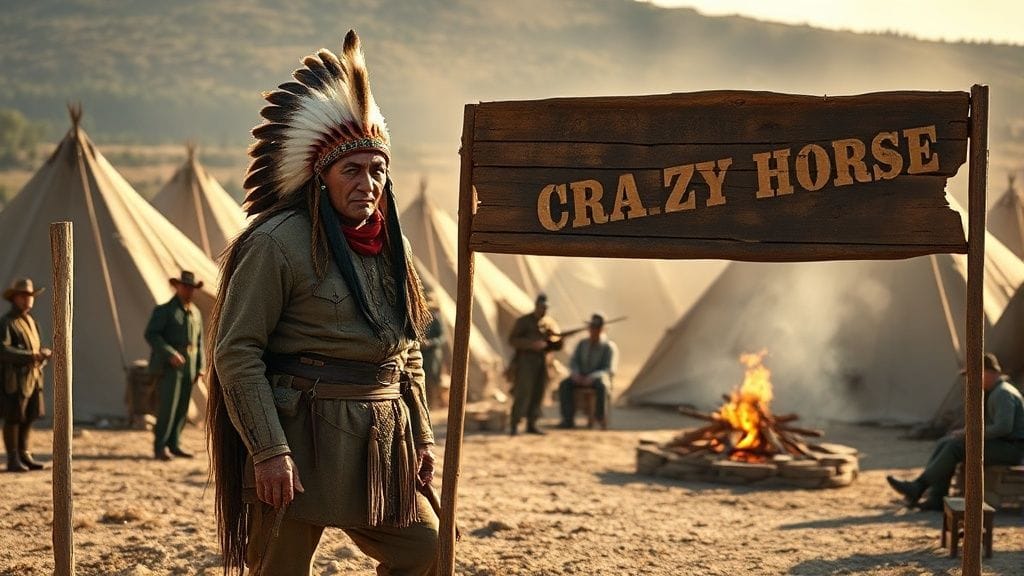
On the bleak morning of September 5, 1877, the air around Camp Robinson, Nebraska, was heavy with a mixture of suspicion, fear, and an unspoken tragedy that was about to unfold. Beneath the ashen sky, amid the harsh winds that swept across the plains, stood Crazy Horse — a towering figure of resistance, a man whose name had sparked both terror and admiration among settlers and soldiers alike. Yet on this day, his legend took a tragic, final turn. With a bayonet wound to his side, Crazy Horse, the Oglala Lakota war chief who had once fiercely defended his people’s sacred lands, slipped away from this world. His death was not just the fall of a warrior; it marked the symbolic end of an era of Native American resistance against a relentless expansionist tide.
But to grasp the full weight of this moment, we must step back and immerse ourselves in the sweeping currents of history that shaped Crazy Horse’s life—and death.
The Fateful Day at Camp Robinson: September 5, 1877
The morning of Crazy Horse’s death was anything but ordinary. The fort buzzed with tension as soldiers and Native Americans—now prisoners under strict guard—navigated an uneasy reality. Crazy Horse, who had surrendered the previous year amid promises of peace, found himself increasingly confined, both physically and politically. His freedom, once vast as the plains, was now shackled by bars and suspicion.
The pivotal moment came when an altercation broke out during an attempt to transfer Crazy Horse to a different guard post. What exactly transpired is a matter of conflicting recounts. Some say Crazy Horse resisted arrest, fearing deception. Others argue he merely resisted a show of force. The result was brutal: a soldier’s bayonet found its mark, piercing the chief’s ribs. In the chaos that followed, Crazy Horse’s life ebbed away, and with it, a crucial chapter of indigenous resistance ended.
The Last Stand of a Legendary Leader
Crazy Horse’s passing was not simply a death; it embodied the crushing of hope for many Native Americans during the late 19th century. Known for his uncanny battlefield instincts and fierce defense of Lakota lands, Crazy Horse was a symbol of defiance. His leadership during the Battle of the Little Bighorn (1876) had earned him a fearsome reputation by turning U.S. military might on its head.
But unlike many who chose to continue fighting or go into exile, Crazy Horse opted for surrender—an act born of pragmatism but laden with mistrust and anguish. His death at Camp Robinson revealed the harsh predicament faced by indigenous leaders: the impossible choice between survival and resistance, negotiation and strength.
The Rise of Crazy Horse: From Youth to War Chief
Born around 1840 in the Black Hills region, Crazy Horse rose under severe early hardships. Stories of his childhood abound with tales of courage: from outwitting enemies to acts of spiritual devotion. His rise was not a simple tale of conquest but a testament to the hope and frustration of a people fighting to maintain a fragile way of life against invasion.
By his late twenties, Crazy Horse had earned his place as war chief among the Oglala Lakota, recognized not merely for his combat prowess but for his visionary leadership. His early victories were punctuated by a deep belief in Lakota spiritual traditions, including visions that he claimed foretold his destiny.
Early Clashes: The Battle for the Plains
The 1860s saw mounting conflict between Native Americans and the increasingly encroaching American settlements. Treaties were signed and broken, lands were seized, and tensions erupted into violence. Crazy Horse fought alongside other Plains leaders to protect their lands during a series of clashes and battles.
His most famous military achievement—leading warriors in the Battle of the Little Bighorn—was a stunning, albeit temporary, victory against General Custer’s 7th Cavalry. This victory echoed across the nation, spurring both fear and anger, which would tighten the noose around the Sioux peoples in the years to come.
The Great Sioux War: Context and Tensions
The Great Sioux War of 1876-77 was the culmination of decades of tension. The discovery of gold in the Black Hills—hallowed ground for the Lakota—ignited a clash of interests that the U.S. government was unwilling to compromise on. Attempts to remove Native Americans to reservations led to fierce conflicts, alternating between battle and negotiations under increasingly coercive terms.
While Crazy Horse’s resistance was fierce, many Lakota were divided, some opting for accommodation or fragmentation. The United States sought to obliterate the traditional ways of life through military dominance and legislative pressure, making any form of resistance a matter of life or death.
The Ghost Dance and the Waning Resistance
Following Crazy Horse’s death, the Native American resistance did not end abruptly. The Ghost Dance movement, emerging in the late 1880s, embodied a last spiritual stand against the relentless displacement. It promised revival of the dead and the return of ancestral lands. The hope was palpable but fleeting, crushed irreversibly at the Wounded Knee massacre in 1890.
The death of Crazy Horse thus foreshadowed a broader cultural and political demise—an era where indigenous peoples would face systemic assimilation attempts that sought to extinguish their identities entirely.
Captivity and Surrender: The Path to Camp Robinson
Crazy Horse’s surrender to U.S. forces in May 1877 was a turning point marked by exhaustion and strategic necessity. The pressure from relentless military campaigns had left him with little choice but to accept terms—though always wary of betrayal.
He and his band of followers were taken to Camp Robinson, a military outpost in Nebraska intended to house Native American prisoners. The atmosphere there was grim; distrust permeated every exchange, and conditions were harsh. The fort was a stark symbol of the loss of freedom—a place where warriors were caged rather than celebrated.
The Atmosphere at Camp Robinson: Tensions Behind the Fence
Within the confines of Camp Robinson, the dynamics between prisoners and soldiers were fraught. Crazy Horse, ever vigilant, was careful not to appear weak but was subject to constant monitoring. The soldiers, many hardened by war and prejudice, saw the Native leaders as dangerous instigators.
The psychological warfare was intense. Rumors spread, alliances formed and broke down, and each day held the threat of violence. This environment, charged with tension, set the stage for the tragic climax.
The Controversial Circumstances of Crazy Horse’s Death
The exact series of events leading to Crazy Horse’s fatal injury have sparked debate among historians. Some accounts portray him as actively resisting disarmament, a defensive act to protect his followers. Others suggest he was trying to retreat peacefully when provoked.
The soldier identified as delivering the bayonet wound was Private William Gentles, who reportedly acted under orders after tensions escalated. The incident inflicted a deep wound from which Crazy Horse never recovered, and he died later that day.
The ambiguity of this moment has fueled ongoing discussion—was it murder, a desperate act of control, or an unfortunate tragedy born from a collision of fear and misunderstanding?
Eyewitness Accounts: Contradictions and Clarity
Several soldiers and Native witnesses offered differing versions of the altercation. For example, Little Big Man, a Lakota, gave testimony that has been both corroborated and challenged. Some claimed Crazy Horse was trying to flee, others that he wanted to avoid capture by soldiers known for brutality.
These variations underscore the complexity of interpreting history through the prism of trauma, cultural difference, and political agendas. But they also humanize Crazy Horse, showing him as a man caught in a desperate moment.
The Immediate Aftermath: Shock and Mourning
News of Crazy Horse’s death rippled quickly through Native and non-Native communities alike. For many Lakota, it was a blow that pierced the soul of their resistance. Ceremonies of mourning were conducted in traditional ways, with songs and speeches lamenting the loss.
U.S. military leaders portrayed the event as a necessary step in pacifying the Plains, but for many, it marked a profound injustice. The stark contrast between narratives showed how Crazy Horse’s death became a symbol of deeper conflicts about land, freedom, and survival.
The Fate of the Northern Cheyenne and Oglala Lakota Post-1877
With the fall of Crazy Horse, leadership among the Sioux was fractured. The Northern Cheyenne and Oglala Lakota faced forced relocations, broken treaties, and cultural suppression. Their populations dwindled under adverse conditions in government reservations.
Yet, despite these hardships, indigenous communities fought to preserve their identities, passing down Crazy Horse’s story as a beacon of resilience and pride.
Crazy Horse in American Memory: Myth and Reality
Over time, Crazy Horse evolved into a mythic figure in American memory—part warrior hero, part martyr. His image has been appropriated, romanticized, and sometimes distorted, a symbol wielded by many for different causes.
Beyond clichés, however, lies a complex man who wrestled with impossible choices. Understanding this dual legacy is key to appreciating both the man and what his death signified.
The Political Stakes of Native American Resistance
Crazy Horse’s resistance was never just local—it challenged the very legitimacy of U.S. expansionist policies. His defiance highlighted the moral and political quandaries facing a nation that claimed “manifest destiny” yet destroyed indigenous sovereignty.
His death marked a warning: resistance could be crushed by brutality, but it also underscored the deep-rooted injustices that would fuel generations of activism.
A Nation Transformed: The Closing of the American Frontier
The late 19th century was a period of rapid transformation. Railroads, settlement, and industrial expansion were redefining the United States. The American frontier, once seen as boundless, was closing, and with it, the cultural landscapes of Native America were being irrevocably altered.
Crazy Horse’s death was emblematic of this closing—the loss not only of land but of autonomy and a way of life.
Crazy Horse’s Legacy in Native American Culture
Among the Lakota and other tribes, Crazy Horse remains a powerful symbol. His name is invoked in stories, songs, dances, and contemporary activism. He embodies resistance, honor, and a deep spiritual connection to the land.
Cultural celebrations and the ongoing fight for indigenous rights carry forward his memory as a guiding light.
The Role of U.S. Government Policies in the Tragedy
The policies that led to Crazy Horse’s demise stemmed from federal decisions to suppress Native cultures and consolidate control. Forced removals, broken treaties, and military campaigns were parts of a systematic attempt to absorb indigenous lands and peoples.
His death at Camp Robinson was not an isolated tragedy but an outcome shaped by these deliberate political frameworks.
The End of an Era: Indigenous Sovereignty on the Brink
By 1877, indigenous sovereignty had been pushed to its limits. Crazy Horse’s death symbolized the fragility of Native autonomy, as tribal nations were confined to reservations and subjected to federal authority.
This moment foreshadowed decades of struggle for recognition and rights that continue to this day.
Symbolism and Commemoration: Statues and Stories
In the decades following, Crazy Horse’s image was immortalized through various monuments and oral traditions. The Crazy Horse Memorial in South Dakota, begun in 1948 and still under construction, stands as a testament to his enduring power.
Yet, these commemorations also provoke debate about representation, memory, and healing.
Revisiting September 5th: Modern Perspectives and Debates
Today, scholars, Native activists, and historians examine Crazy Horse’s death with renewed attention to context and nuance. Discussions center on the ethics of historical memory, colonial violence, and cultural revival.
September 5 remains a day of reflection, a symbol of loss but also of hope and resilience.
Conclusion
Crazy Horse’s death at Camp Robinson did not just end a life—it closed a chapter of resistance that reverberates through history. He was a man caught in the violent upheavals of his time, a leader whose commitment to his people transcended death. His story reminds us of the profound human costs of conquest and the enduring spirit that survives even in the darkest moments.
In remembering Crazy Horse, we confront the intertwined legacies of conflict, courage, and the quest for justice—a tale as relevant today as it was on that fateful September day.
FAQs
Q1: Who was Crazy Horse and why is he important?
Crazy Horse was a war leader of the Oglala Lakota, renowned for his resistance against U.S. government forces during the Great Sioux War, notably at the Battle of Little Bighorn. He symbolizes Native American resistance and leadership.
Q2: What circumstances led to Crazy Horse’s death at Camp Robinson?
After surrendering in 1877, Crazy Horse was held at Camp Robinson. During an attempt to disarm or move him, a violent altercation occurred, resulting in a bayonet wound that proved fatal. The precise details remain debated.
Q3: How did Crazy Horse’s death affect Native American resistance?
His death marked a significant blow to Native resistance efforts in the Northern Plains, contributing to further loss of autonomy and the eventual confinement of tribes to reservations.
Q4: What was the Great Sioux War and how was Crazy Horse involved?
The Great Sioux War (1876-77) was a series of battles over the Black Hills region and Native American sovereignty. Crazy Horse was a key figure in these conflicts, leading Lakota forces against the U.S. Army.
Q5: How is Crazy Horse remembered today?
Crazy Horse is honored as a cultural hero and symbol of Native American resistance, with monuments, stories, and ongoing cultural commemorations preserving his legacy.
Q6: Was Crazy Horse’s death considered murder or accidental?
Historians debate this point. Some see it as a tragic consequence of mistrust and excessive force, others as a necessary act by U.S. soldiers to maintain control, reflecting broader colonial violence.
Q7: What role did U.S. government policies play in the death of Crazy Horse?
Federal policies aimed at subjugating Native peoples—through forced removal, military action, and cultural suppression—set the conditions that led to Crazy Horse’s capture and death.
Q8: How do Native communities today view Crazy Horse?
He remains a revered figure, symbolizing bravery, resistance, and cultural survival. His story is integral to the identity and history of many Plains tribes.

