Table of Contents
- January 30, 1948: A Day That Shook a Nation
- The Man Who Moved Millions: Gandhi’s Life and Vision
- The Streets of New Delhi: The Setting of Tragedy
- Growing Shadows: The Political Climate of Post-Partition India
- Sectarian Strife and the Rise of Extremism
- Nathuram Godse: The Man Behind the Gun
- The Final Walk: Gandhi’s Last Public Appearance
- The Fateful Encounter: The Assassination Unfolds
- Immediate Aftermath: Shockwaves Across India and the World
- Mourning a Mahatma: Public Grief and National Trauma
- Trial of the Assassin: Justice and Controversy
- India’s Fragile Democracy Tested
- The Death That Strengthened Nonviolence
- Gandhi’s Enduring Legacy in Modern India
- International Reverberations: A Global Loss
- Revisiting the Assassination in Historical Memory
- Gandhi in Popular Culture and Literature Post-1948
- Myths, Facts, and Debates Around the Killing
- Lessons on Tolerance and Political Violence
- Conclusion: The Eternal Light of Gandhi's Ideals
- FAQs About Gandhi’s Assassination
- External Resource
- Internal Link
January 30, 1948: A Day That Shook a Nation
On a chill winter afternoon in the heart of New Delhi, a serene crowd had gathered at Birla House to witness a moment of quiet prayer, a peaceful ritual spearheaded by a man known worldwide as the Mahatma — “Great Soul” — Mahatma Gandhi. The air was heavy with hopefulness, reverence, and a deep longing for unity in a country still bruised by the fresh wounds of partition. Suddenly, the crowd’s hushed prayers were shattered by the crack of a gunshot, a single bullet piercing the calm to end a life that symbolized peace itself.
The man who had championed nonviolence, who had stirred millions to overthrow colonial rule not by force but through unwavering conviction, was no more. This was not just a political assassination; it was the murder of a dream, an ideal that Gandhi embodied. Yet, even with that final, fatal shot, Gandhi’s light refused to be extinguished. The events of January 30, 1948, are not simply the story of a tragic death—they mark a poignant turning point in the modern history of India and the world.
The Man Who Moved Millions: Gandhi’s Life and Vision
Few figures in history have encapsulated the power of peaceful resistance as poignantly as Mohandas Karamchand Gandhi. Born in 1869 in Porbandar, a princely state on the western coast of India, Gandhi’s early years seemed commonplace. Yet, upon traveling to South Africa to practice law, he encountered racial discrimination that ignited in him a deep, transformative commitment to justice.
His political journey intertwined personal austerity with an unyielding faith in ahimsa — nonviolence. From battling British colonial authority through the Salt March to architecting the mass civil disobedience campaigns, Gandhi reshaped political struggle into an ethical doctrine. His vision was not merely the political independence of India, but a society where communal harmony, rural self-sufficiency, and spiritual value guided life.
However, the road to independence was tumultuous and divisive. As the British loosened their grip post-World War II, India faced another harsh reality — the fracturing of its social fabric along religious lines, particularly between Hindus and Muslims. Gandhi’s efforts increasingly focused on fostering peace amid rising communal tensions.
The Streets of New Delhi: The Setting of Tragedy
Birla House, situated on New Delhi’s central road, served as Gandhi’s residence in the capital. It was here that, most days at sunset, Gandhi would sit cross-legged on a small platform underneath a sprawling Neem tree, leading evening prayers attended by devotees, admirers, and the occasional foreign dignitary.
The area itself was a microcosm of India’s fragile democratic hope—marked by the tension between the old colonial administration’s residual order and the young nation’s fermenting hopes and fears. New Delhi was still in the throes of post-partition chaos: refugees poured in, violence flared unpredictably, and the political class grappled with the gargantuan task of nation-building.
On January 30, 1948, the relentless buzz of the capital seemed to pause, as if the city itself sensed the gravity of the moment. Gandhi, frail and often delicate at 78, was resolute to continue his marches and prayers to heal the country. But shadows lurked close.
Growing Shadows: The Political Climate of Post-Partition India
The euphoria of August 1947’s independence was quickly tempered by the bitter realities of partition. The drawing of new borders carved Punjab and Bengal, compelling one of the largest mass migrations in human history — nearly 15 million people crossing from one side to the other, often amid violent pogroms.
India was fractured not just geographically but psychologically. Communal hatred had intensified, leaving deep wounds between Hindus, Muslims, and Sikhs. The nascent Indian government, led by Prime Minister Jawaharlal Nehru and supported by leaders like Vallabhbhai Patel, sought to consolidate unity but found itself daunted by the centrifugal forces of sectarianism.
In this volatile context, Gandhi’s call for peace, reconciliation, and resistance to revenge was both heroic and threatening. To some Hindu extremists, his insistence on fasting to stop retaliatory violence against Muslims was seen as betrayal. His emphasis on forgiveness seemed weak to those thirsting for retribution.
Sectarian Strife and the Rise of Extremism
Among the political undercurrents brewing in 1947 and early 1948 was the rise of extremist factions vocally opposed to Gandhi’s moderate and conciliatory approach. Organizations like the Rashtriya Swayamsevak Sangh (RSS) and individuals inspired by radical nationalism viewed Gandhi’s preachings as obstacles to what they perceived as the true strengthening of Hindu India.
Nathuram Godse, a former member of the RSS and later a pamphleteer for the breakaway Hindu Mahasabha, embodied this bitter resentment. He believed Gandhi’s tolerance had compromised Hindu interests and blamed him for what he deemed meekness towards Muslims and Pakistan. The depth of frustration on the extremist right grew as Gandhi’s influence swelled, and the fragile fabric of peace in India seemed poised to tear apart.
Nathuram Godse: The Man Behind the Gun
Nathuram Vinayak Godse was born in 1910 in Pune, Maharashtra, into a Brahmin family. His early life followed a path consistent with the conservative Hindu milieu of the time, shaped by rigid orthodox values and a nationalist fervor. Initially a fervent follower of Gandhi, Godse’s ideology radicalized after witnessing the partition violence and Gandhi’s repeated fasts demanding clemency for Muslims.
He came to view Gandhi as compromising Hindu pride and interests, believing the Mahatma’s pacifism weakened the Hindu community at a crucial historical juncture. Godse’s hatred coalesced into a dark resolve — he saw assassination as the only means to "save" India from Gandhi’s policy of appeasement.
Though Godse acted largely alone in the killing, he was not isolated ideologically, drawing on a broader network of disaffected nationalists who bemoaned Gandhi’s position.
The Final Walk: Gandhi’s Last Public Appearance
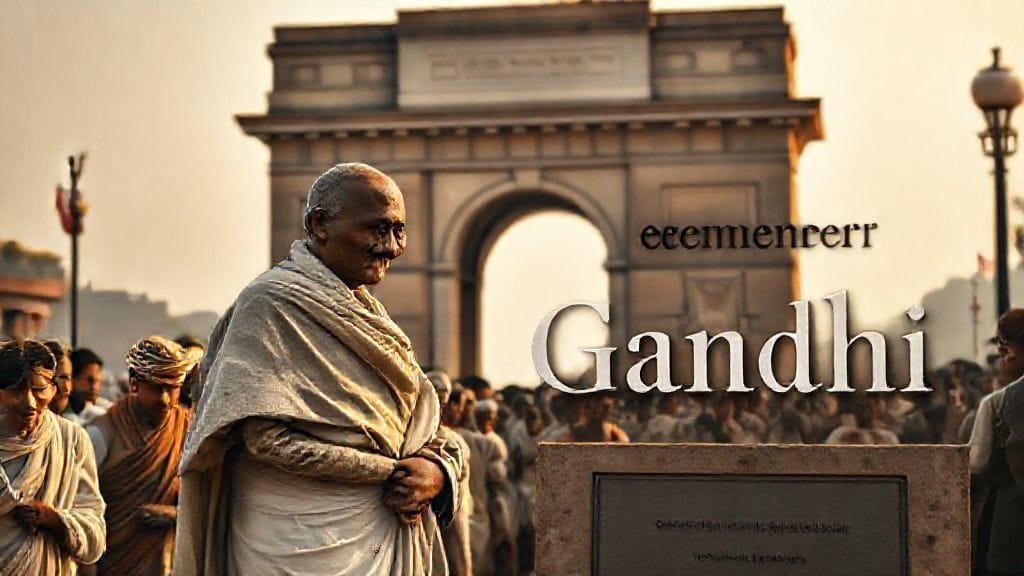
On the fateful afternoon, Gandhi was preparing for his daily prayer gathering at Birla House. Clad in his simple dhoti and shawl, he moved with deliberate calm despite the frailty of his eighty-year-old body. Photographers and journalists took their positions, capturing history in motion as the Mahatma stepped out into the waning light.
Gandhi’s demeanor was serene, almost ethereal — a spiritual leader walking with the quiet confidence of one who embodied his beliefs to the last breath. He greeted his followers with a gentle smile, a vision starkly contrasting the gathered pain of a nation still riven by sectarian wounds.
The Fateful Encounter: The Assassination Unfolds
As Gandhi moved amid his devotees, bowing to them one by one, Nathuram Godse approached cautiously, blending in with the crowd. With three shots fired at close range, the Mahatma collapsed. The peaceful gathering erupted into chaos as cries rang out, and panic swept through the crowd.
Godse was quickly overpowered and arrested. Gandhi’s attendants tried vainly to stem the bleeding, but the bullet wounds were fatal. His last words reportedly invoked divine forgiveness for his assassin and called for peace — an ultimate testament to the ethos that had defined his life.
Immediate Aftermath: Shockwaves Across India and the World
News of Gandhi’s assassination rippled like wildfire, shattering the fragile hopes of a still-young nation. India plunged into mourning, and yet the violence that had haunted the preceding months did not immediately subside.
Across the globe, leaders issued statements of grief and solidarity. The United Nations observed moments of silence, while citizens from America to Africa paid homage to the “Father of the Nation.” Gandhi’s death was seen not only as a loss to India but as a blow to the universal quest for peaceful resistance.
Mourning a Mahatma: Public Grief and National Trauma
The funeral procession drew millions, a sea of sorrow stretching through the streets, symbolizing an outpouring of collective heartbreak. Leaders and common people alike reflected on the void Gandhi left behind — a void both spiritual and political.
In villages and cities, prayers and vigils were held, while newspapers grappled with commemorating a life that had transformed history yet ended abruptly in violence. Gandhi’s assassination was experienced as a stark national trauma—a brutal interjection into the narrative of hope.
Trial of the Assassin: Justice and Controversy
The subsequent trial of Nathuram Godse and his co-conspirators stirred the Indian legal and political system. Godse admitted to the assassination, using the courtroom as a platform to justify his actions as patriotism defending Hindu interests.
The proceedings exposed bitter ideological battles within India’s psyche, yet ultimately Godse was sentenced to death and executed in 1949. The trial marked not only an attempt at legal closure but also a reckoning with the dangerous forces of political fanaticism.
India’s Fragile Democracy Tested
Gandhi’s assassination came at a crucial juncture — mere months after India’s independence. The event tested the resilience of the young democracy. Prime Minister Nehru invoked Gandhi’s ideals to promote unity and uphold constitutional rule, but the tensions between secular democracy and religious nationalism remained unresolved.
The government took measures to ban extremist groups like the RSS temporarily, but the ideological fissures that led to Gandhi’s death presaged ongoing political challenges.
The Death That Strengthened Nonviolence
Ironically, Gandhi’s violent death underscored and renewed the global appeal of nonviolent resistance. Figures such as Martin Luther King Jr. and Nelson Mandela drew inspiration from Gandhi’s life and teachings, cementing him as a symbol of peaceful struggle.
India, too, recommitted itself publicly to the values Gandhi espoused, though the path remained arduous. His assassination became a somber reminder that peace is fragile, requiring vigilance and courage.
Gandhi’s Enduring Legacy in Modern India
Seventy-five years on, Gandhi remains India’s most iconic figure. His principles underpin the nation’s self-image, even as the country wrestles with political currents far removed from his vision.
Monuments, museums, academic studies, and public holidays honor him. Yet debates endure about his relevance and the complexities of his ideas, especially in a country confronting new challenges of pluralism and democracy.
International Reverberations: A Global Loss
The reverberations of Gandhi’s assassination reached far beyond India’s borders. The killing signaled to the world that political violence could cut down even the most revered advocates of peace, serving as both a warning and a call to action.
International peace movements, anti-colonial struggles, and human rights activists found in Gandhi’s tragic death a powerful rallying cry to pursue justice without bloodshed.
Revisiting the Assassination in Historical Memory
Over decades, historians have analyzed Gandhi’s assassination not merely as an isolated crime but as a symptom of broader societal tensions involving religion, nationalism, and identity.
The narratives have evolved with new archival discoveries and shifting political climates, enriching our understanding of both the man and the fate that befell him.
Gandhi in Popular Culture and Literature Post-1948
From films to novels, songs to plays, the story of Gandhi’s life and death has permeated cultural consciousness worldwide. Depictions grapple with his saintly mystique and human frailties, offering nuanced portraits that continuously reshape public memory.
The assassination scene is especially etched in cinematic and literary retellings, a dramatic climax charged with profound symbolic meaning.
Myths, Facts, and Debates Around the Killing
Several myths surround Gandhi’s assassination: conspiracy theories, disputed roles of political organizations, and contested motives. Scholars and journalists have sought to disentangle these layers, aiming to present an evidence-based account.
Yet some elements remain shrouded in ambiguity, fueling ongoing debates that underscore the complexities of India’s historical trajectory.
Lessons on Tolerance and Political Violence
The assassination presses an urgent lesson: the destructive potential of intolerance and extremism within politics. Gandhi’s death exemplifies how fractured social fabric and hatred can culminate in acts that rip apart the very democratic ideals societies aspire to uphold.
It serves as a call for vigilance, dialogue, and mutual respect.
Conclusion: The Eternal Light of Gandhi's Ideals
Mahatma Gandhi’s assassination was a rupture that reverberated far beyond a single dark day in New Delhi. It was a stark reminder of the vulnerabilities that come with pursuing justice through peace amid a world prone to violence.
Yet, even in death, Gandhi’s luminous commitment to nonviolence continues to inspire generations — a testament that ideals, unlike bullets, can transcend the mortal coil and light the path toward a more compassionate and just world.
FAQs About Gandhi’s Assassination
Q1: Why was Mahatma Gandhi assassinated?
A1: Gandhi was assassinated because extremist Hindu nationalists, led by Nathuram Godse, opposed his conciliatory stance toward Muslims and his efforts to foster peace during communal strife, perceiving him as compromising Hindu interests.
Q2: Who was Nathuram Godse?
A2: Nathuram Godse was a Hindu nationalist and former member of the RSS who believed Gandhi's policies weakened India. He assassinated Gandhi, arguing in court that it was to protect Hindu India.
Q3: How did the Indian government respond to Gandhi’s assassination?
A3: The government condemned the assassination, arrested Godse and conspirators, temporarily banned extremist organizations, and reinforced commitments to democracy and secularism under Prime Minister Nehru.
Q4: What was the impact of Gandhi’s assassination on India’s communal tensions?
A4: While Gandhi’s death initially deepened sorrow and fear, it also galvanized efforts toward peace, though communal tensions persisted and required ongoing political and social work to address.
Q5: How is Gandhi’s assassination remembered internationally?
A5: It is seen as a tragic loss of a global symbol of nonviolence and justice, inspiring worldwide peace movements and human rights activism.
Q6: How did the assassination affect the global perception of nonviolent resistance?
A6: Gandhi’s violent death paradoxically strengthened the appeal and moral authority of nonviolent resistance as a powerful political tool worldwide.
Q7: Has Gandhi’s assassination influenced Indian politics today?
A7: Yes, it remains a reference point in the ongoing struggle against political extremism, hate crimes, and efforts to uphold the pluralistic ethos of the Indian republic.
Q8: What are some myths surrounding the assassination?
A8: Various conspiracy theories implicate different groups or suggest hidden motives, but scholarly consensus holds that Godse acted largely out of personal radical nationalist ideology.