Table of Contents
- The Twilight of a Tyrant: Moscow, March 5, 1953
- The Man Behind the Legend: Stalin’s Rise and Reign
- The Shadow Empire: The USSR in the Early 1950s
- The Final Days: Stalin’s Health Deteriorates
- A Silent Night of Terror: The Last Moments in the Kremlin
- The Morning After: Discovering Stalin’s Body
- The Immediate Shockwaves: Soviet Leadership in Mourning and Maneuvering
- Public Mourning and Propaganda: The Cult of the Leader’s Death
- The Funeral: Moscow’s Somber Goodbye
- Power Vacuum: The Struggle to Define the Post-Stalin Era
- The Thaw Begins: Early Signals of Change in Soviet Policy
- Repression and Memory: Stalin’s Shadow over Soviet Society
- International Reactions: East, West, and the Cold War Calculus
- The Personal Stories: Families, Soldiers, and Citizens Grappling with Loss
- The Myth and the Man: Stalin’s Death in Soviet and Global Consciousness
- Legacy and Historiography: How Remembering Stalin Has Evolved
- Lessons from the End of an Era: Power, Fear, and Mortality
- Conclusion: The Weight of Silence after Stalin
- FAQs: Unraveling the Mysteries Around Stalin’s Death
- External Resource
- Internal Link
1. The Twilight of a Tyrant: Moscow, March 5, 1953
It was a cold, gray morning in Moscow on March 5, 1953. The city, wrapped in a heavy blanket of winter fog, felt unusually still beneath the overcast sky. Inside the vast, imposing Kremlin walls, a hush had settled—a silence laden with anxiety and hidden dread. For over three decades, Joseph Stalin had cast a colossal shadow over the Soviet Union, an omnipresent force both feared and revered. But now, as dawn broke on that fateful day, the unthinkable was revealed: Stalin was dead.
The news would ripple across the sprawling empire and the globe beyond, triggering waves of grief, shock, and cautious hope. Yet, the death of the Soviet dictator was not merely the passing of a man. It was the end of an epoch marked by unprecedented terror, brutal repression, ideological fervor, and geopolitical upheaval. The very fabric of Soviet society, and indeed much of the world, was about to be rewoven.
2. The Man Behind the Legend: Stalin’s Rise and Reign
Joseph Vissarionovich Stalin was not born into power; he clawed his way from the margins of Georgian clerical society to the pinnacle of a world superpower. His rise was marked by cunning stratagems, ruthless purges, and an unyielding grip on authority. Following Lenin’s death in 1924, Stalin systematically eliminated rivals, transforming himself into an unchallengeable dictator by the late 1920s.
Over the next two decades, his rule reshaped the Soviet Union both physically and psychologically. Industrialization projects and collectivization campaigns forged a modern state but at an unspeakable human cost. The Great Terror of the late 1930s decimated the party, army, and intelligentsia. Millions were exiled, imprisoned, or executed. Stalin built not just a state but a cult of personality, where his image was omnipresent, his word unchallengeable.
But Stalin was also a strategist par excellence. His decisions during World War II, controversial and costly, eventually led the USSR to victory, altering the global balance of power. By the early 1950s, he was the undisputed leader of the Eastern bloc, ruling through fear and ideology, but also confronting an increasingly complex Cold War world stage.
3. The Shadow Empire: The USSR in the Early 1950s
The Soviet Union at the dawn of the 1950s was a paradox. On paper, it was a mighty industrial and military powerhouse, a beacon of proletarian revolution. In reality, it was a place of constant surveillance, political repression, and everyday scarcity.
Citizens lived under the omnipresent gaze of the secret police, the NKVD, later the MGB, whose networks infiltrated every aspect of life. Intellectual freedom was suffocated. The arts served the state. The economy was centrally planned with heroic figures like the “Stakhanovites” glorified to push productivity.
Yet beneath the surface, fissures appeared. The trauma of war, the strains of rapid modernization, and the absurdity of daily life created a fragile patchwork. Stalin's death would expose those fractures, leading to both liberation and peril.
4. The Final Days: Stalin’s Health Deteriorates
In February 1953, subtle but ominous signs emerged. Stalin had grown increasingly withdrawn. He canceled meetings and spent days alone in his private quarters in the Kremlin’s Kuntsevo Dacha. Rumors whispered in the corridors of power about the leader’s failing health.
On the night of February 28 into March 1, Stalin suffered a massive cerebral hemorrhage. Found several hours later lying on the floor—too weak to speak or move—his closest aides hesitated, paralyzed between fear and uncertainty. The dictator’s usual medical team was summoned, but like all matters regarding Stalin, treatment was cautious and secretive, inhibited by a climate of terror and paranoia.
The days that followed were tenuous; Stalin was unconscious, slipping in and out of awareness. The courtiers gathered, their loyalty tested, the future uncertain. The supreme ruler was dying.
5. A Silent Night of Terror: The Last Moments in the Kremlin
Throughout those long, dark hours, the Kremlin was a hive of suppressed panic and whispered conspiracies. Stalin lay isolated, a man who had destroyed friends and enemies alike now incapacitated and utterly vulnerable.
Family members were kept at bay. Ministers and generals feared poisoning or entrapment. Decisions were delayed by protocol and mistrust. Outside, Moscow continued unaware, the winter cold closing in.
At the stroke of midnight on March 5, Stalin finally succumbed—his life extinguished quietly within the forbidding walls that had witnessed decades of his reign. Yet even in death, the question lingered: what would come next?
6. The Morning After: Discovering Stalin’s Body
When Stalin’s death was publicly announced that morning, the news was met with an almost surreal mixture of grief and disbelief. Soviet citizens mourned the loss of their “Father of Nations” with a fearful reverence that mingled adulation with the unspoken memory of terror.
The government immediately moved to control the narrative. Official bulletins framed Stalin as a great statesman and hero, ignoring the horrors beneath the surface. His body was embalmed and prepared for the famously grand Soviet funeral rites.
Behind the scenes, power players began to emerge from the shadows, each plotting their own path in a world without Stalin’s iron fist.
7. The Immediate Shockwaves: Soviet Leadership in Mourning and Maneuvering
Stalin’s death created an unprecedented power vacuum at the heart of Soviet politics. Figures like Lavrentiy Beria, Georgy Malenkov, Vyacheslav Molotov, and Nikita Khrushchev subtly shifted their alliances and ambitions in a high-stakes game.
Beria initially stood to gain, controlling internal security forces and having intimate access to the leader’s final hours. Yet, his notorious reputation made others wary. Khrushchev’s eventual rise to power was far from assured—it was a battle of wits, influence, and brutality.
The country’s governing structures, so long dependent on Stalin’s singular will, struggled to adapt to a new collective leadership.
8. Public Mourning and Propaganda: The Cult of the Leader’s Death
In the weeks following Stalin’s death, the Soviet regime orchestrated a massive campaign of mourning. Portraits of the deceased leader adorned every street corner, while radio broadcasts and newspapers extolled his virtues and accomplishments.
Millions lined the streets of Moscow, some weeping openly, others silently concealing a tumult of emotions: fear, relief, uncertainty. The rituals of grief served both as catharsis and as a powerful assertion of continuity.
Yet beneath the public spectacle, an unspoken question persisted: how to reconcile the man’s towering myth with the brutal reality his rule had imposed?
9. The Funeral: Moscow’s Somber Goodbye
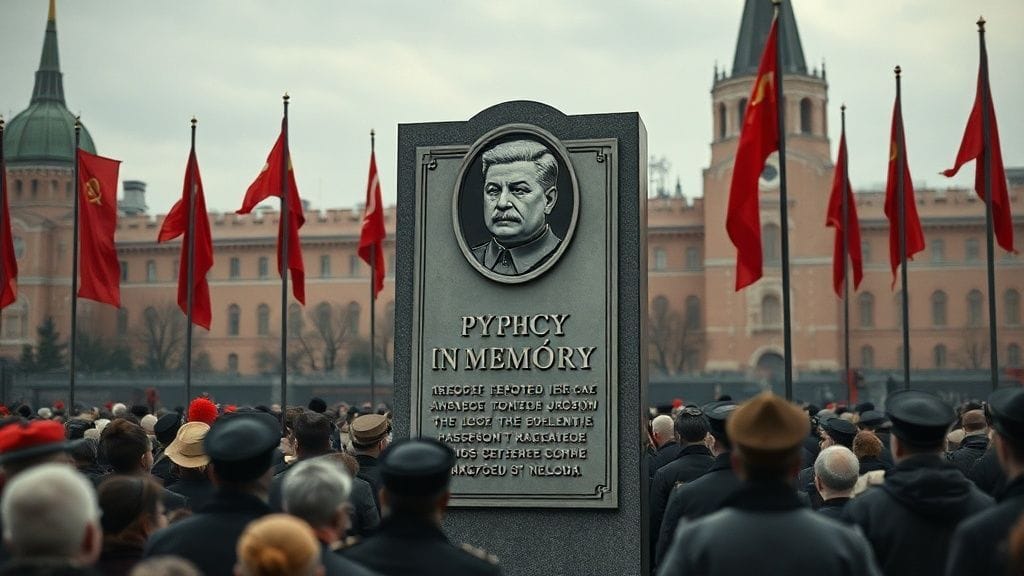
Stalin’s funeral on March 9 was a monumental event, blending solemnity with state grandeur. Hundreds of thousands, including foreign dignitaries, gathered in Red Square to pay their respects.
His body lay in state in the House of the Unions, surrounded by flowers and mourners. The procession was carefully choreographed, with speeches lauding his leadership and sacrifice for the Soviet cause.
But the event also marked a bitter turning point—the symbolic end of a terrifying chapter. For many, it was impossible to celebrate the life of a man whose legacy was etched in fear and blood.
10. Power Vacuum: The Struggle to Define the Post-Stalin Era
With Stalin gone, the Soviet Union faced a profound question: who would fill the void—and could the country survive beyond the cult of personality? The ensuing months witnessed intense politicking and intrigue.
Khrushchev emerged as a central figure, promoting subtle reforms and distancing himself from some of Stalin’s excesses. Beria’s abrupt fall and execution in December 1953 removed a powerful rival, but the legacy of terror persisted.
The Communist Party sought to reassert control, experimenting with collective leadership while wrestling with Stalinism’s contradictions.
11. The Thaw Begins: Early Signals of Change in Soviet Policy
By the mid-1950s, cracks appeared in Stalinist orthodoxy. Khrushchev’s “Secret Speech” in 1956, denouncing Stalin’s crimes, shocked the party and the world. This moment marked the beginning of the “Khrushchev Thaw,” a tentative loosening of repression and censorship.
De-Stalinization affected culture, politics, and international relations, although limits remained. The Soviet system was still rigid, but hope flickered that the unbearable nightmare of Stalin’s terror might finally be tempered.
12. Repression and Memory: Stalin’s Shadow over Soviet Society
Long after his death, Stalin’s shadow continued to haunt the USSR. Political repression left deep scars, prisons and gulags lingered. Families of victims struggled to reclaim dignity and truth amid official silence or denial.
The cult of Stalin was gradually dismantled but never completely erased. Memory became a battleground between those who remembered terror and those who wished to forget or rewrite history.
13. International Reactions: East, West, and the Cold War Calculus
Stalin’s death sent shockwaves beyond the Soviet borders. Western powers cautiously observed the potential for change but remained wary.
In Eastern Europe, regimes aligned with Moscow anticipated shifts in policy but feared instability. The Cold War would continue in new forms, with Stalin’s death both an endpoint and a catalyst for the geopolitical chessboard of the mid-20th century.
14. The Personal Stories: Families, Soldiers, and Citizens Grappling with Loss
Beyond politics, Stalin’s death was deeply personal for millions. Families who had lost loved ones in purges experienced complex emotions—grief mixed with anger and relief.
Veterans, factory workers, peasants, and intellectuals all navigated a new reality. The silence left by Stalin’s passing was a heavy burden, pregnant with fear of the unknown.
15. The Myth and the Man: Stalin’s Death in Soviet and Global Consciousness
Stalin’s demise cemented his place as one of history’s most enigmatic and controversial figures. His death transformed him from a living tyrant into a symbol—of power taken to terrifying heights, of ideology twisted by cruelty.
Globally, artists, writers, and historians grappled with his legacy, oscillating between condemnation and grudging respect for his role on the world stage.
16. Legacy and Historiography: How Remembering Stalin Has Evolved
Scholars over decades have debated Stalin’s death and aftermath. Archival revelations post-USSR collapse have shed light on the machinations surrounding his final moments.
His death remains a lens through which to examine dictatorship, totalitarianism, and revolutionary ideals subverted by brutality.
17. Lessons from the End of an Era: Power, Fear, and Mortality
Stalin’s death invites reflection on the nature of absolute power and its limits. The culmination of a life defined by paranoia and violence ended not in glory but silence.
His passing forced a nation to confront its trauma and inquire whether it could redefine itself beyond fear.
18. Conclusion: The Weight of Silence after Stalin
Joseph Stalin’s death was more than an event—it was a seismic rupture echoing across generations. The man who had ruled through terror left behind a fractured empire and a complicated legacy.
Yet, from the frozen stillness of that Moscow morning onwards, history moved inexorably towards change—sometimes painful, often uncertain, but always profoundly human.
19. FAQs: Unraveling the Mysteries Around Stalin’s Death
Q: What caused Joseph Stalin’s death?
A: Stalin died from a massive cerebral hemorrhage (stroke) on March 5, 1953, after being found incapacitated in his Kremlin residence.
Q: How did Stalin’s death affect the Soviet leadership?
A: It led to a power struggle among top officials, ultimately resulting in Nikita Khrushchev’s rise and the beginning of de-Stalinization.
Q: Was there any foul play suspected in Stalin’s death?
A: Some historians speculate possible poisoning or neglect due to internal conspiracies, but no conclusive evidence exists.
Q: How did the Soviet public react to Stalin’s death?
A: The public expressed a mixture of genuine grief, fear, and relief, shaped by decades of propaganda and terror.
Q: What changes followed Stalin’s death in Soviet policy?
A: Policies slowly shifted towards less repression, culminating in Khrushchev’s Secret Speech and a thaw in political and cultural life.
Q: How is Stalin’s death remembered today?
A: It remains a symbol of the end of Stalinist terror and a turning point in Soviet history, analyzed critically by historians worldwide.
Q: What was the international reaction to Stalin’s death?
A: Global powers watched attentively for signs of policy shifts, concerned about potential instability during the Cold War.
Q: Did Stalin’s death lead to immediate reforms?
A: Reforms were gradual and cautious, as the Soviet system wrestled with the legacy of repression and Stalin’s cult of personality.